
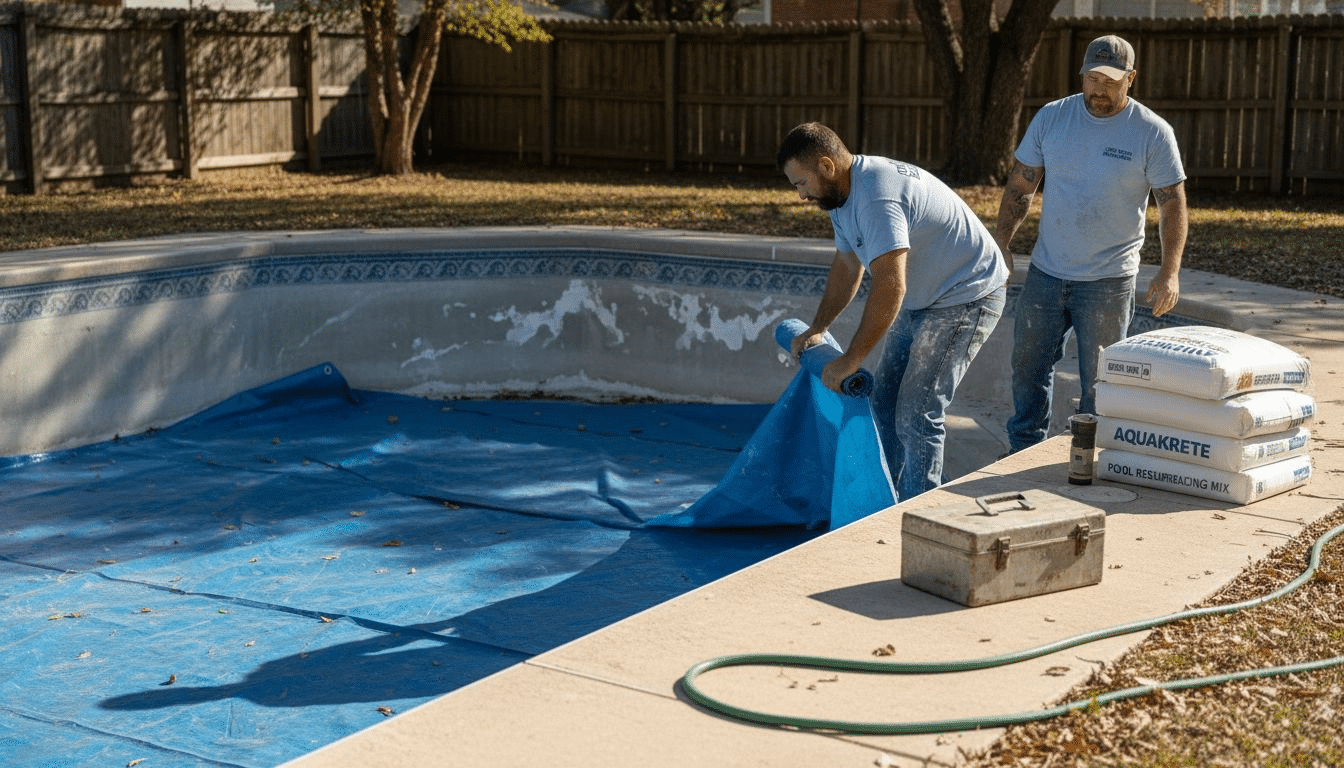
Cracked plaster and faded finishes can make any backyard pool in Central Florida lose its sparkle. When the surface begins to feel rough or signs of damage appear, it’s more than just an eyesore. Pool resurfacing is the key to restoring both beauty and safety, giving homeowners a chance to create a luxurious outdoor oasis while protecting their investment. Discover how modern resurfacing techniques can revitalize your pool with durable finishes and lasting appeal.
Table of Contents
- Defining Pool Resurfacing And Common Myths
- Types Of Pool Resurfacing Finishes Explained
- How The Pool Resurfacing Process Works
- Costs, Timelines, And Factors To Consider
- Comparing Resurfacing To Other Renovation Options
Key Takeaways
| Point | Details |
|---|---|
| Importance of Pool Resurfacing | Pool resurfacing is essential for maintaining the structure and safety of your swimming pool, addressing issues like cracks and leaks. |
| Diverse Finish Options | Homeowners can choose from various finishes, each with unique benefits, costs, and maintenance needs to enhance their pool’s appearance. |
| Professional Process | The resurfacing process is technical and should be handled by professionals to ensure longevity and optimal performance of the pool. |
| Cost-Effective Renovation | Resurfacing is generally 30-50% less expensive than full remodeling, making it a smart choice for budget-conscious homeowners. |
Defining Pool Resurfacing and Common Myths
Pool resurfacing is a critical maintenance process that breathes new life into aging swimming pools. Swimming pool resurfacing involves completely removing the old, worn-out surface and applying a fresh, smooth finish that restores both appearance and structural integrity.
Understanding pool resurfacing requires recognizing its core purpose: protecting and revitalizing your pool’s surface. The process addresses multiple issues that develop over time:
- Structural cracks and damage
- Surface stains and discoloration
- Rough or deteriorating pool textures
- Water leakage points
- Loss of aesthetic appeal
Many homeowners mistakenly believe pool resurfacing is purely cosmetic, but it’s actually a critical maintenance strategy. Pool resurfacing goes far beyond simple visual improvements, serving as a fundamental method of preserving your pool’s long-term performance and safety.
Professional pool resurfacing can extend your pool’s functional lifespan by up to 15 years when performed correctly.
Common myths about pool resurfacing often prevent homeowners from taking timely action. Some believe the process is unnecessarily expensive or disruptive, but modern techniques have made resurfacing more efficient and cost-effective than ever before.
Pro tip: Schedule professional pool inspections every 3-5 years to catch potential resurfacing needs before major damage occurs.
Types of Pool Resurfacing Finishes Explained
Pool resurfacing offers homeowners multiple finish options to transform their swimming pools. Each finish brings unique aesthetic and functional characteristics that can dramatically enhance your pool’s appearance and performance. Concrete pool advantages make certain finishes particularly appealing for Florida homeowners.
The most popular pool resurfacing finishes include:
- Plaster: Classic white or colored finish, most affordable option
- Aggregate: Includes exposed and polished varieties with decorative stones
- Pebble aggregate: Highly durable with natural stone appearance
- Quartz aggregate: Offers enhanced color and texture options
- Tile: Premium finish with maximum design flexibility
- Fiberglass: Smooth, low-maintenance surface with integrated color
Each finish type offers distinct benefits and considerations for pool owners. Aggregate finishes, for instance, provide superior durability and visual interest compared to traditional plaster, while tile finishes allow for completely customized design expressions.
Premium pool resurfacing finishes can increase your property value by up to 7% and enhance outdoor aesthetic appeal.
Homeowners should consider factors like budget, maintenance requirements, desired aesthetics, and local climate when selecting a pool resurfacing finish. Florida’s intense sunlight and humidity make some finishes more suitable than others, particularly those with excellent UV and chemical resistance.
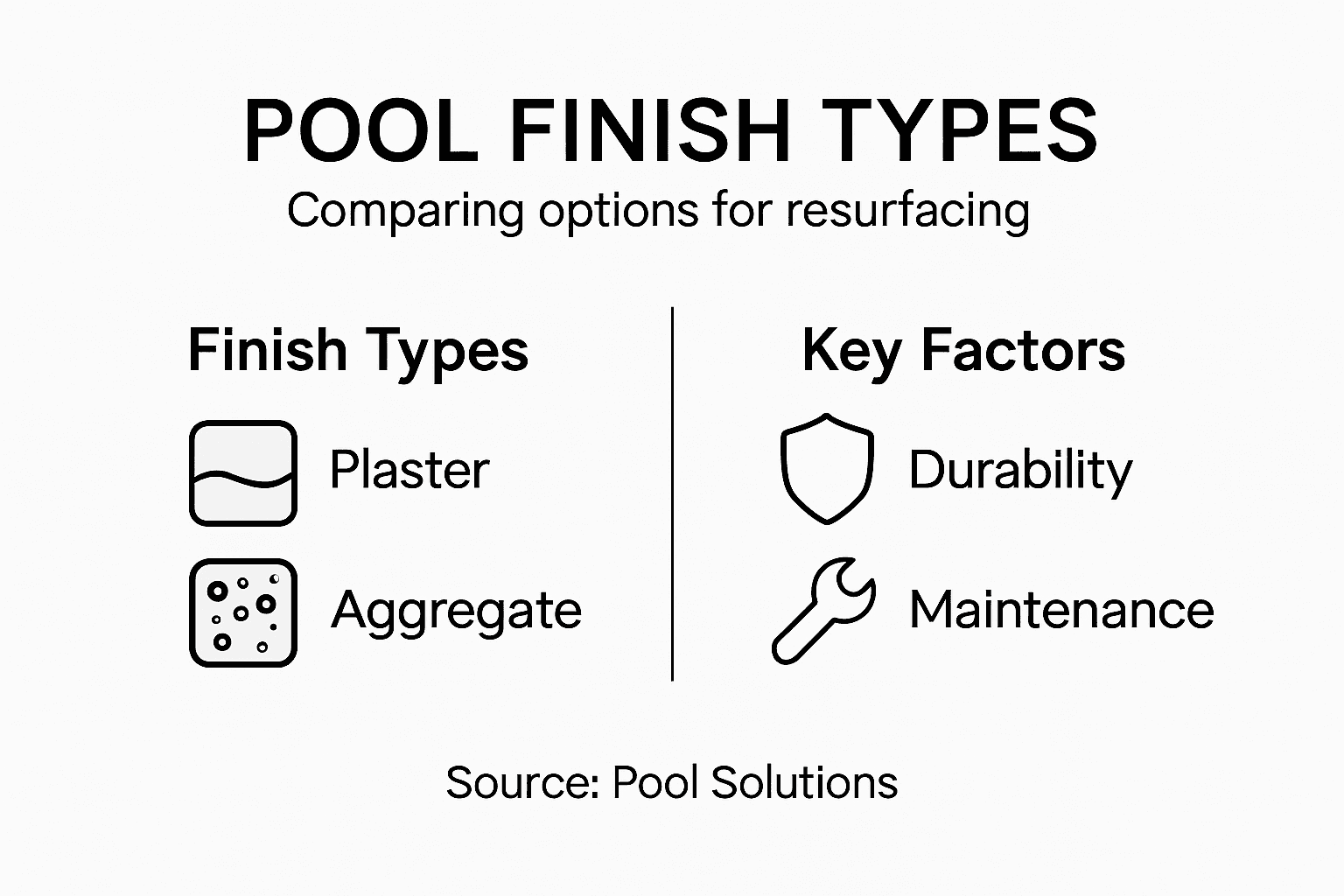
Here’s a quick comparison of popular pool resurfacing finishes and their unique advantages:
| Finish Type | Durability | Aesthetic Range | Maintenance Needs |
|---|---|---|---|
| Plaster | Moderate (7-10 years) | Limited color options | Requires regular care |
| Aggregate | High (10-20 years) | Wide textures/colors | Low to moderate |
| Tile | Very high (20+ years) | Fully customizable | Minimal |
| Fiberglass | High (15-20 years) | Smooth, modern looks | Very low |
Pro tip: Consult with professional pool contractors who understand local environmental conditions to select the most appropriate resurfacing finish for your specific needs.
How the Pool Resurfacing Process Works
The pool resurfacing process is a comprehensive renovation that transforms your swimming pool’s entire surface. Pool resurfacing techniques involve multiple precision steps designed to restore your pool’s structural integrity and aesthetic appeal.
The typical pool resurfacing process follows a structured sequence:
- Drain the pool completely
- Inspect and repair structural damage
- Identify and fix cracks
- Address potential underlying issues
- Remove existing surface material
- Prepare and smooth pool shell
- Apply new surface finish
- Allow proper curing time
- Refill and balance pool chemistry
Surface preparation is critical and represents the most technical phase of pool resurfacing. Professional technicians meticulously examine the pool shell, identifying and repairing any structural weaknesses before applying the new finish. This ensures the longevity and performance of the resurfacing investment.
Proper pool resurfacing can extend your pool’s functional life by 10-15 years when executed with professional expertise.
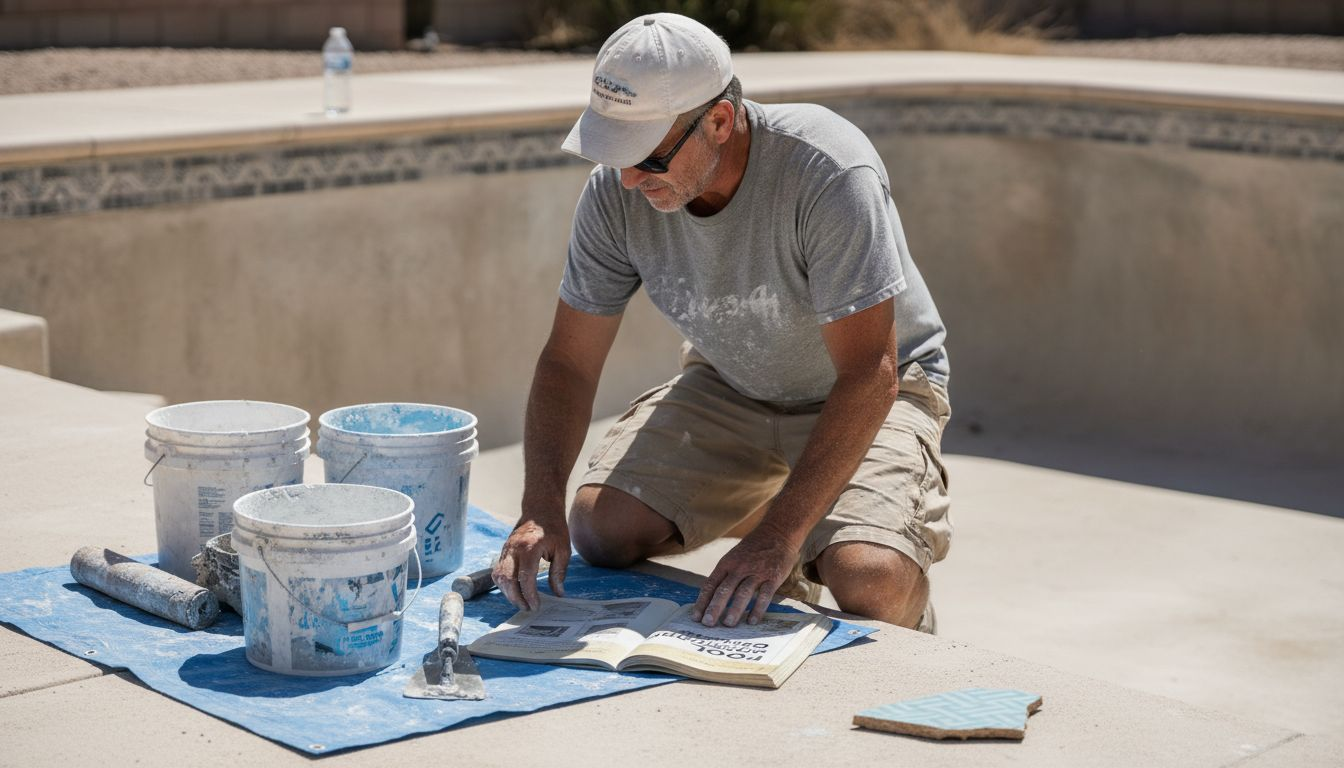
Each resurfacing project requires specialized tools and professional-grade materials. Homeowners should understand that DIY approaches often lead to suboptimal results, potentially causing more expensive damage in the long term. The intricate process demands precise technique, from surface removal to final chemical balancing.
Pro tip: Always request detailed documentation of the resurfacing process, including materials used and warranty information, to protect your pool investment.
Costs, Timelines, and Factors to Consider
Pool resurfacing is a significant investment that requires careful financial and logistical planning. Pool resurfacing costs vary widely depending on multiple critical factors that homeowners must understand before beginning the project.
Typical cost considerations include:
- Material selection
- Pool size and complexity
- Extent of existing damage
- Regional labor rates
- Additional repair requirements
- Finish complexity
Pricing structures typically range from $5 to $7 per square foot, translating to approximately $400 to $600 for smaller pools. Larger or more complex pools can easily exceed $2,500 to $5,000 for comprehensive resurfacing services. The total investment depends on several interconnected variables that impact both cost and timeline.
Professional pool resurfacing typically requires 5 to 14 days from start to finish, depending on the specific project requirements and chosen finish.
Beyond immediate costs, homeowners should consider long-term value. A professionally executed resurfacing project can extend pool life, improve aesthetic appeal, and prevent more expensive structural repairs down the line. Regional factors like Florida’s intense sunlight and humidity make professional assessment particularly crucial for determining the most cost-effective approach.
Pro tip: Request detailed written estimates from multiple contractors, comparing not just total cost but comprehensive service offerings and warranty provisions.
Comparing Resurfacing to Other Renovation Options
Homeowners have multiple strategies for pool maintenance and improvement, with pool renovation options ranging from minor repairs to comprehensive remodeling. Understanding the differences between these approaches helps make informed decisions about pool investment and care.
Key renovation strategies include:
- Resurfacing: Surface-level repair and renewal
- Lowest cost option
- Shortest project timeline
- Addresses surface wear and cosmetic issues
- Partial Renovation: Targeted upgrades
- Replaces specific pool components
- Moderate cost and complexity
- Examples: New tiles, deck modifications
- Full Remodeling: Complete pool transformation
- Highest cost and most extensive project
- Structural changes possible
- Includes shape alterations, comprehensive system upgrades
Surface restoration represents the most pragmatic approach for pools with structural integrity. It addresses aesthetic and functional concerns without requiring extensive reconstruction, making it an attractive option for budget-conscious homeowners.
Resurfacing typically costs 30-50% less than full pool remodeling and can be completed in a fraction of the time.
Each renovation strategy offers unique benefits, with resurfacing providing the most cost-effective solution for maintaining pool performance and appearance. Florida’s challenging environmental conditions make regular maintenance particularly crucial for preserving pool longevity and functionality.
Below is an at-a-glance guide to pool renovation options with cost and timeline expectations:
| Renovation Type | Typical Cost Range | Average Timeline | Main Benefits |
|---|---|---|---|
| Resurfacing | $400 – $5,000 | 5 – 14 days | Restores surface, most affordable |
| Partial Renovation | $1,500 – $10,000 | 2 – 4 weeks | Updates features, moderate budget |
| Full Remodeling | $10,000 – $50,000+ | 4 – 12+ weeks | Total makeover, increased value |
Pro tip: Consult with professional pool contractors to assess your specific pool condition and determine the most appropriate renovation strategy.
Renew Your Pool with Expert Resurfacing Solutions in Central Florida
Is your pool showing signs of wear such as cracks or rough textures that affect safety and beauty? Pool resurfacing is more than just a cosmetic fix it is a crucial step to extend your pool’s life and restore its elegance. At R & R Swimming Pools we understand how important it is to protect your investment while enhancing your outdoor living space with durable and attractive finishes designed for Florida’s climate.
Discover how professional resurfacing can transform your pool into a stunning retreat that lasts for years. Visit Pool School to learn more about maintenance tips and design trends or explore our wide range of custom pool solutions at R & R Swimming Pools. Take action now by scheduling your free quote and let us help you bring your pool back to life with expert craftsmanship you can trust.
Frequently Asked Questions
What is pool resurfacing and why is it important?
Pool resurfacing is a maintenance process that removes the old pool surface and applies a new finish. It’s important because it addresses structural damage, surface stains, and leaks, extending the pool’s functional lifespan and enhancing safety and aesthetics.
How often should I consider pool resurfacing?
It’s recommended to inspect your pool for resurfacing needs every 3-5 years, as this can help identify potential issues before they escalate into major damage.
What finishes are available for pool resurfacing?
Common pool resurfacing finishes include plaster, aggregate (exposed or polished), tile, and fiberglass. Each finish offers unique benefits, durability, and aesthetic options to suit different preferences and budgets.
What factors influence the cost of pool resurfacing?
The cost of pool resurfacing can vary based on material selection, pool size, extent of existing damage, and regional labor rates. Generally, prices range from $5 to $7 per square foot, depending on these factors.
Recommended
- Why Pool Renovation Matters for Florida Homes
- 7 Important Pool Remodeling Benefits for Homeowners
- Pool Remodeling Process: Achieve a Luxurious New Look
- Why Invest in Backyard Pools: Florida’s Lasting Value
- Why Post Renovation Cleaning Matters in Los Angeles
- Pool Builder Fruitland Park FL
- Pool Construction The Villages FL
