
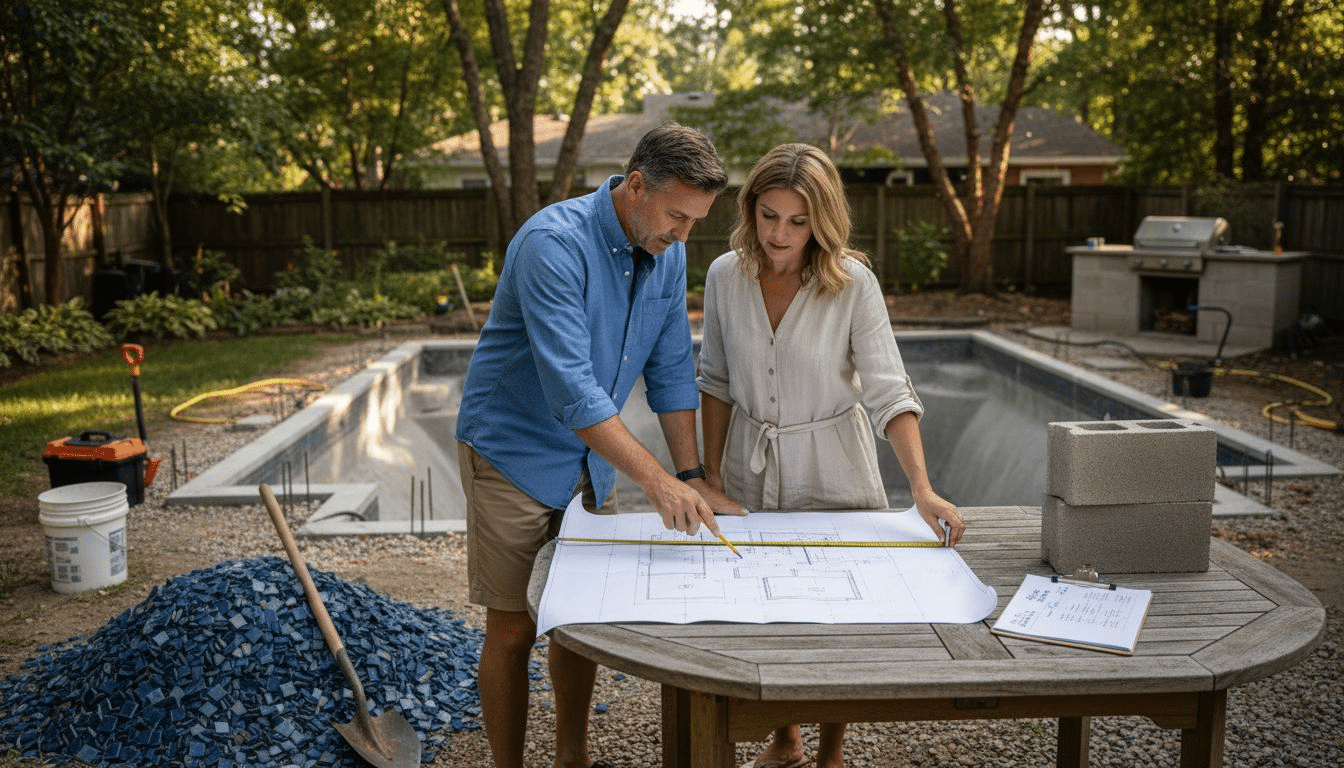
Nearly one third of American homeowners in Central Florida invest in custom pool designs to create spaces perfect for family fun and relaxation. In places like The Villages and Mount Dora, your backyard holds the potential for personalized luxury tailored to the way you live. Discover how a step-by-step approach to custom pool planning can help you transform your outdoor space into a stunning centerpiece that matches both your style and practical needs.
Table of Contents
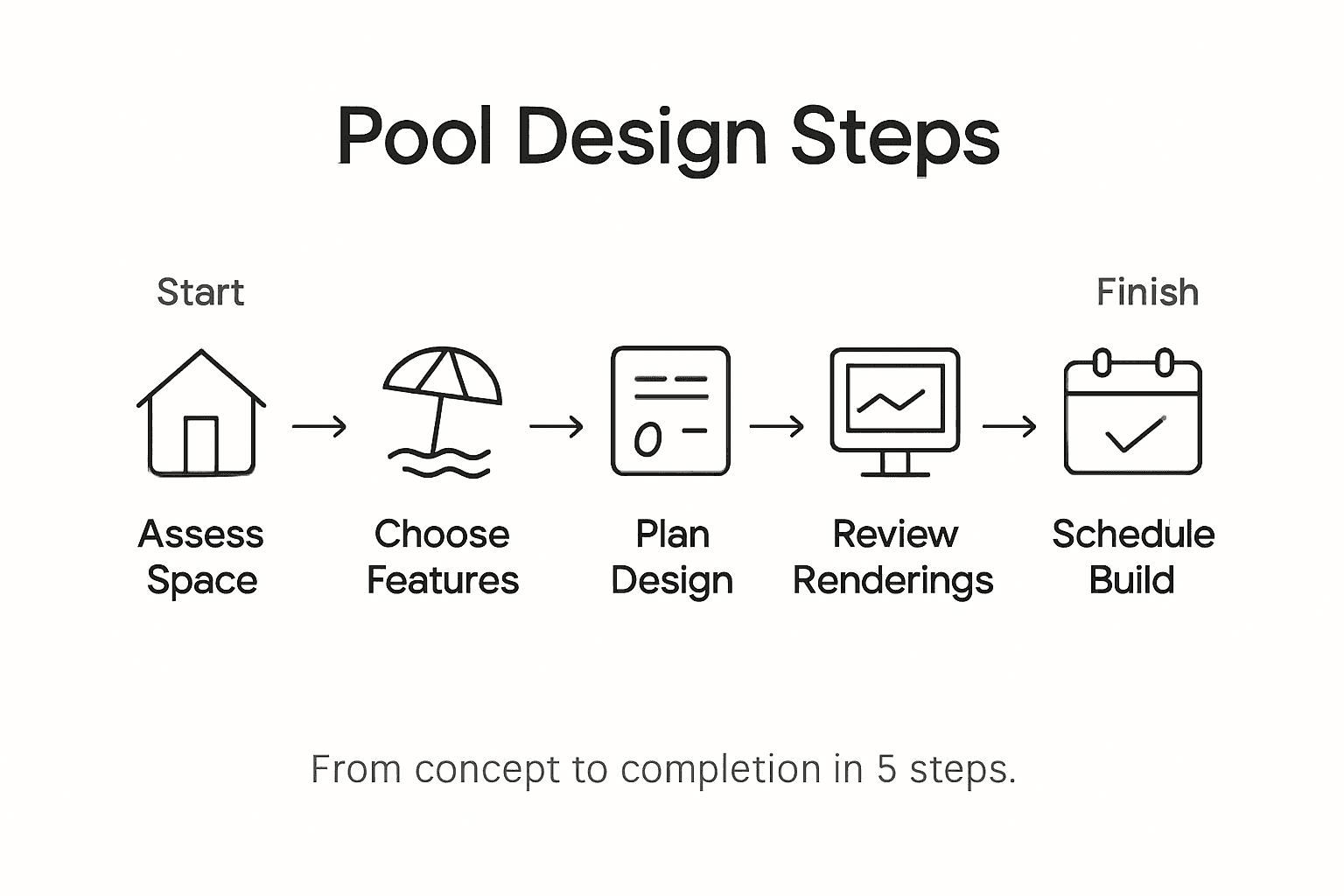
- Step 1: Assess Your Space and Needs
- Step 2: Define Pool Features and Materials
- Step 3: Collaborate on Custom Design Plans
- Step 4: Review Design Renderings and Adjust
- Step 5: Approve Final Plans and Schedule Build
Quick Summary
| Key Point | Explanation |
|---|---|
| 1. Assess Your Space Thoroughly | Measure your backyard and evaluate terrain, obstacles, and sunlight exposure to inform pool design. |
| 2. Choose Materials Wisely | Select construction materials based on durability, maintenance, and customizability for enduring functionality. |
| 3. Collaborate with Design Professionals | Engage actively with your design team to ensure your pool meets aesthetic and functional goals tailored to your needs. |
| 4. Review Renderings Carefully | Analyze detailed pool renderings to identify issues and confirm the design aligns with your vision and practical requirements. |
| 5. Approve Plans and Schedule Construction | Finalize design plans and establish a clear timeline for construction to minimize disruptions and ensure a smooth project flow. |
Step 1: Assess Your Space and Needs
Custom pool design begins with a thorough understanding of your outdoor space and personal requirements. This critical first step helps you transform your backyard into a personalized aquatic retreat that perfectly matches your lifestyle and property characteristics.
Start by measuring your available backyard area carefully. Look beyond just square footage and consider the terrain, existing landscaping, and potential obstacles like underground utilities or tree root systems. Swimming pool design regulations require careful spatial evaluation to ensure safety and compliance. Take precise measurements and create a rough sketch of your yard, noting sunlight exposure, slope, drainage patterns, and proximity to your home.
Next, reflect on how you intend to use your pool. Are you seeking a lap swimming environment, a family entertainment space, or a relaxation sanctuary? Different purposes demand distinct design approaches. For instance, competitive swimmers might prioritize length and depth, while families with young children might want shallow areas and built-in seating. Consider your typical usage pattern: frequent swimming, occasional entertaining, aesthetic enhancement, or a combination of these goals. Understanding these nuanced preferences will guide your design choices and help pool professionals create a truly customized solution.
Pro tip: Before finalizing measurements, mark potential pool locations with stakes and string to help you and your design team visualize the actual space and potential layout.
Step 2: Define Pool Features and Materials
Now that you have assessed your space, it is time to dive into the exciting world of pool design by selecting the perfect features and materials that will transform your backyard into a stunning aquatic oasis. Your choices will directly impact the pool’s functionality, durability, and visual appeal.
Materials play a crucial role in your pool’s performance and longevity. Swimming pool construction involves various material options including concrete, fiberglass, and composite materials. Concrete pools offer maximum customization and durability, allowing you to create unique shapes and incorporate intricate design elements. Fiberglass provides a smoother surface and faster installation, while composite materials balance aesthetics and performance. Consider factors like maintenance requirements, climate resilience, and long-term cost when making your selection.
Here is a comparison of popular pool construction materials and their key characteristics:
| Material Type | Durability | Maintenance Level | Customizability |
|---|---|---|---|
| Concrete | Very high | Moderate to high | Fully customizable |
| Fiberglass | High | Low | Limited shapes |
| Composite | Good | Low to moderate | Flexible in finishes |
Feature selection should align with your lifestyle and intended pool usage. Decide on elements like depth variations, built-in seating, underwater lighting, heating systems, and water features such as fountains or waterfalls. For families with children, consider safety features like gradual depth transitions and non slip surfaces. Competitive swimmers might prioritize lane markers and consistent depth, while entertainment enthusiasts could focus on spacious decking and integrated entertainment zones.
Below is a summary of essential design features and the primary user benefits they offer:
| Feature | Main Benefit | Ideal For |
|---|---|---|
| Underwater Lighting | Enhanced ambiance | Evening entertaining |
| Built-in Seating | Comfortable lounging | Relaxation and families |
| Gradual Depth Slopes | Safety for children | Homes with young swimmers |
| Consistent Depth | Uninterrupted laps | Competitive swimmers |
Pro tip: Request material samples and take home small swatches to see how different pool finishes look in your specific outdoor lighting and against your existing landscape.
Step 3: Collaborate on Custom Design Plans
With your initial space assessment and material selections complete, you are now ready to transform your pool vision into a detailed design through collaborative planning. This critical stage brings together your personal preferences and professional expertise to create a truly customized swimming environment.
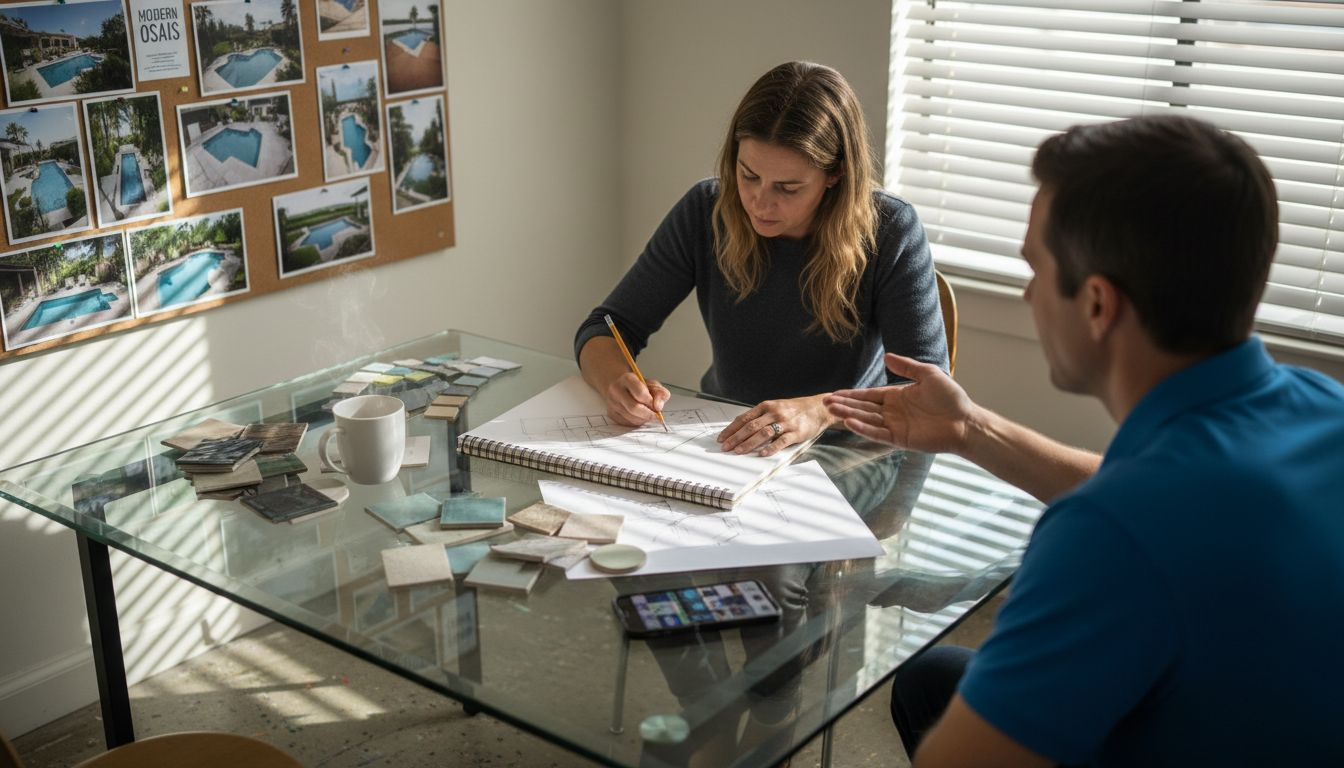
Participatory design approaches emphasize active collaboration between you and your pool design team. Schedule an initial consultation where you can share your lifestyle needs, aesthetic preferences, and functional requirements. Bring visual references like landscaping photos, color swatches, or inspiration images that capture your desired pool atmosphere. Professional designers will translate your ideas into technical drawings, considering factors like terrain constraints, local building codes, and optimal pool positioning. Expect multiple design iterations as you refine the concept together.
During collaborative sessions, discuss every design element thoroughly. This includes pool shape, depth variations, deck materials, surrounding landscape integration, and special features like underwater lighting or water features. Your design team will provide expert recommendations based on your specific backyard characteristics, helping you balance aesthetic desires with practical functionality. Open communication ensures that the final design reflects your unique vision while maintaining structural integrity and compliance with local regulations.
Pro tip: Create a digital or physical mood board before your design meeting to help visually communicate your pool style preferences and desired aesthetic elements.
Step 4: Review Design Renderings and Adjust
After collaborative design sessions, you will receive detailed pool renderings that transform conceptual discussions into visual representations of your dream backyard oasis. This critical review stage allows you to evaluate every aspect of the proposed design before moving forward with construction.
Rendering technologies provide incredibly realistic visual previews of your future pool, enabling you to critically examine design elements from multiple perspectives. Carefully analyze the technical drawings and digital images, paying close attention to spatial relationships, proposed materials, color schemes, and how the pool integrates with your existing landscape. Look for potential issues like awkward sight lines, insufficient deck space, or positioning that might disrupt natural yard flow. Do not hesitate to request modifications that will enhance both aesthetic appeal and functional use.
Consider the rendering from practical and emotional perspectives. Imagine yourself using the space during different times of day and seasons. Verify that the design meets your original objectives for entertainment, relaxation, or fitness. Check technical details such as depth markers, entry points, safety features, and potential sun exposure. Your design team expects and welcomes constructive feedback this helps ensure the final plan perfectly matches your vision while maintaining structural integrity and safety standards.
Pro tip: Ask your design team to provide renderings with different lighting conditions to help you fully visualize how the pool will look from sunrise to sunset.
Step 5: Approve Final Plans and Schedule Build
With design renderings refined and your vision crystallizing, you are now ready to transform your dream pool from concept to reality by approving final plans and initiating the construction schedule. This pivotal moment marks the transition from planning to actual implementation.
Swimming pool construction requirements involve several critical documentation and approval steps. Carefully review the final technical drawings, ensuring every detail matches your previous discussions and design iterations. Verify that all structural plans, safety features, electrical specifications, and site layout precisely reflect your approved design. Pay special attention to compliance with local building codes and zoning regulations. Your signature on these documents signifies not just aesthetic approval but also confirms the technical feasibility and safety of the proposed pool.
Scheduling the build requires collaborative coordination with your pool design team. Discuss projected timelines, including site preparation, material delivery, construction phases, and potential inspection windows. Understand the expected duration of each project stage and establish clear communication protocols for updates and potential modifications. Consider seasonal factors, your personal schedule, and any landscaping or outdoor living considerations that might impact the construction timeline. A well-planned schedule minimizes disruptions and sets clear expectations for both you and your pool construction team.
Pro tip: Create a dedicated project folder to organize all design documents, communications, and approvals to streamline the final approval and construction scheduling process.
Turn Your Custom Pool Design Dreams Into Reality with Expert Help
Designing a custom pool involves many important steps such as assessing your space, choosing the right materials, and collaborating closely on the design plan. Common challenges include ensuring the pool fits your lifestyle needs, meets safety regulations, and complements your outdoor space perfectly. If you want a smooth experience that balances creativity with technical expertise, professional guidance is essential.
At R&R Swimming Pools, we specialize in transforming your custom pool ideas into expertly crafted realities. With over 35 years of experience in Central Florida, our team understands how to blend features like underwater lighting, gradual depth transitions, and beautiful finishes into pools that match your vision. We take pride in our high-quality craftsmanship and personalized service to ensure you love your pool for years to come.
Explore our custom pool options and see true craftsmanship in action.
Start your journey toward the perfect backyard oasis today. Visit R&R Swimming Pools now to schedule a free quote and work with experts who make every detail count.
Frequently Asked Questions
How do I assess my outdoor space for a custom pool design?
Begin by carefully measuring your backyard area and considering terrain, landscaping, and potential obstacles. Create a rough sketch noting sunlight exposure and nearby structures to help visualize the design with your pool professional.
What factors should I consider when selecting pool materials?
Choose pool materials based on durability, maintenance level, and customization options. For instance, if you prefer a fully customizable design, concrete may be your best option, while fiberglass is quicker to install and requires less maintenance.
How can I collaborate effectively with my pool design team?
Schedule an initial consultation to share your lifestyle needs and aesthetic preferences. Bring visual references such as photos and color swatches to help your team create a design that reflects your unique vision.
What key elements should I review in pool design renderings?
Carefully analyze technical drawings and digital images for spatial relationships, materials, color schemes, and landscape integration. Make sure to check for any potential design issues that could affect usability and aesthetics before finalizing the plan.
What steps are involved in the final approval of pool design plans?
Review the final technical drawings to ensure every detail matches your design discussions. Pay close attention to safety features, compliance with local regulations, and the overall feasibility before signing off to start construction.
How do I schedule the construction of my new pool?
Collaborate with your pool design team to establish a clear timeline for each stage of construction. Discuss projected durations for site preparation, material delivery, and other phases to ensure minimal disruptions during the building process.
