
TL;DR: Most homes in The Villages do well with a screened lanai pool. The cage keeps out leaves and bugs, makes the pool part of your living space, and can help meet Florida’s pool safety rules. The downsides are added cost, some upkeep, ARC approval and a storm plan, so design the cage and the pool together.
Do you need a screened lanai pool in The Villages?
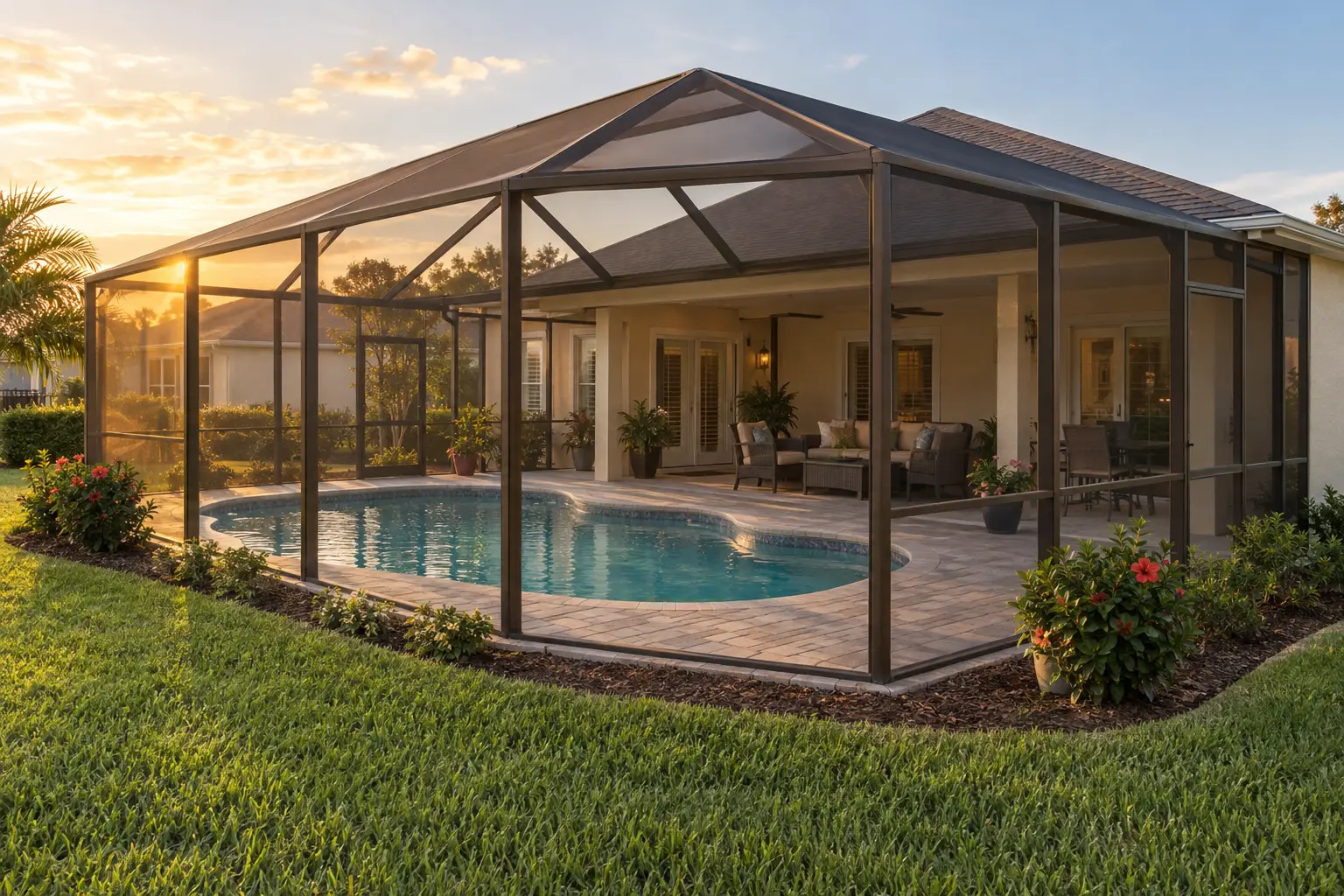
For most homes in The Villages, a screened lanai pool is the right choice. A screen enclosure keeps out leaves, bugs and most yard mess. It makes the pool feel like part of the house, and it can help you meet Florida’s pool safety rules. The trade-offs are added cost, some upkeep and a storm plan.
That’s why most pools here sit inside a screen enclosure. Many homes in The Villages are villas and designer homes on smaller lots that already have a lanai. The cage usually ties into the lanai roof and runs out over the pool and deck. It’s an aluminum frame covered in screen mesh and anchored to the deck and the house.
If you’re still planning the pool, design the cage at the same time. Don’t treat it as an add-on. The pool shape, deck size, spa location and door swing all affect where the frame posts go.
Which pool cage style fits your home?
The right style depends on your roofline, your view and what your district allows. These are the choices homeowners usually compare:
| Option | What it looks like | Good fit for | Things to weigh |
|---|---|---|---|
| Mansard cage | Sloped sides with a flat top | Smaller lanais and lower rooflines | Lower profile, less headroom near the edges |
| Dome cage | Curved, arched roof | Larger decks that need more headroom | Taller and easier to see from the golf course or lake |
| Gable cage | Peaked front, like a house gable | Homes where you want the cage to echo the roofline | Tall front face, so check the roof styles your district approves |
| No enclosure | Open pool with a code-compliant fence | Owners who want full sun and an open view | More leaves and bugs, and you still need a safety barrier plan |
On a villa lot, space is tight and every foot of deck counts. Our guide to fiberglass pool sizes for villa lots in The Villages covers what usually fits.
What are the pros and cons of a screened pool?
The biggest plus is a cleaner pool you can use more often. The biggest minus is that the cage is one more structure to maintain and protect in storms.
Pros
- Less debris. Oak leaves, pine needles and grass clippings mostly stay out, so you skim less.
- Fewer bugs, so you can sit out on summer evenings in comfort.
- An outdoor room. The lanai and pool become one space for morning coffee, cards or the grandkids’ swim time.
- Safety help. A cage built to barrier rules blocks access from the yard.
- Night use. Screen lighting turns the cage into a lit outdoor room after dark.
Cons
- Added cost. Size, height, roof style and lighting all affect the price. Our guide to pool costs in The Villages explains what drives the total.
- A little shade. Screen mesh blocks some sunlight, which can slow how fast the water warms.
- Upkeep. Screens can tear, and the frame needs a wash now and then.
- Storm prep. Some cages are designed with panels you must remove or cut in high winds.
- Paperwork. ARC approval and a building permit add a step to planning.
A screen won’t keep the water warm by itself. Winter nights here can drop into the 30s. That’s why many of our customers pair the cage with a heat pump and a solar cover so they can swim year-round.
Does a screen enclosure count as Florida’s pool safety barrier?
It can count, but usually not on its own. Under Florida’s Residential Swimming Pool Safety Act, a new pool needs at least one approved safety feature to pass final inspection. The options are:
- A barrier that cuts off access from the house
- An approved safety cover
- Exit alarms on doors and windows that open to the pool
- Self-closing, self-latching doors with the release at least 54 inches above the floor
- An in-pool alarm
A barrier must be at least 4 feet high on the outside, with no gaps that would let a child crawl under, squeeze through or climb over. It also has to sit far enough back from the water that a young child or a frail older adult who gets past it won’t fall straight in. A house wall can count as part of the barrier only if no door or window in it opens to the pool.
Most lanai cages have sliding doors that open right into them. So the house side usually needs one of the other options, such as door alarms. Your permit plans will show which one you’re using. If grandkids visit, plan this early. If anyone in the house has limited mobility, plan for that too. We’ve added extra steps and extended-length handrails for homeowners who wanted safer entry.
What approvals and storm rules apply in The Villages?
Plan on two approvals: one from the Architectural Review Committee (ARC) and a building permit. The Villages district government says pool additions and porch enclosures require a Modification/Alteration Form. Permits come from the city or county building department that covers your address. The Villages spans Sumter, Lake and Marion counties, so a home near Summerfield and a home in the Lake County part of The Villages may deal with different offices.
District ARC manuals also set rules for the cage itself:
- An approved roof style, such as mansard, dome or hip
- A black, bronze or white frame and screen
- No building into utility or use easements
That’s why we ask for a recent property survey before your free design consultation. It shows property lines, easements and setbacks, so the pool and the cage fit before anything is submitted.
Storms are the other planning point. The Florida Building Code allows some aluminum screen enclosures to be designed with panels that get removed, retracted or cut in a storm. When a cage is built that way, the contractor has to give the owner written notice to remove or cut those panels when winds are expected to top 75 mph. Ask at design time whether your cage uses this method. Keep that notice with your house papers. If you’re a snowbird, line up someone to handle it while you’re up north.
Summer weather affects the build too. Almost-daily afternoon thunderstorms can pause construction, so build some slack into your schedule.
Why plan your screened pool with R & R Swimming Pools?
- R & R Swimming Pools has built pools since 1985 and has completed more than 1,000 fiberglass and concrete pools.
- Screen enclosures are part of our regular work, including gable enclosures and screen lighting.
- A typical job for us in The Villages is a custom concrete pool with a raised spa inside a screen enclosure.
- Owner Devin Burch is on site through every phase and gives daily updates.
- Johnny, our designer, leads the first meeting and makes a virtual pool design so you can see the layout before the build.
- Our fiberglass and concrete pools carry a limited lifetime warranty.
- We hold a 4.9 Google rating from 35 reviews as of November 2026.
As Craig from The Villages put it: “Devin constantly kept in touch with us and updated us on a daily basis regarding the entire process for the build.” You can learn more about our pool building work in The Villages, Leesburg and nearby Lake County towns.
Thinking about a screened pool for your lanai? Call (352) 432-8843 or book your free design consultation, and have your property survey ready.
Frequently Asked Questions
Can a screen enclosure be added after the pool is built in The Villages?
The district ARC manuals allow screen cages that weren’t part of the original construction, as long as they get approval. It’s still easier to design the cage with the pool, so the deck, footers and door locations line up from the start.
What colors can a pool cage be in The Villages?
The District 4 ARC manual says the frame and screen must be black, bronze or white. Rules can differ by district, so check your district’s manual before you choose.
Will a screened lanai keep my pool warm in winter?
Not by much on its own, since winter nights here can drop into the 30s. Many owners add a heat pump and use a solar cover to swim year-round.
How long does it take to build a pool with a screen enclosure?
A fiberglass pool usually needs about 2-3 weeks of active construction, and the whole project takes 2-4 months from design to the final walkthrough. A concrete pool usually takes 4-6 months, depending on the design and permitting.
What should snowbirds know about pool cages and hurricane season?
Find out whether your cage was designed with panels that must be removed or cut when winds are expected to top 75 mph. If so, arrange for someone local to handle it while you’re away.
Recommended Reads
- Pool Builders & Contractors in The Villages, FL
- Fiberglass Pool Installation The Villages FL | R & R Pools
- Concrete Pool Building The Villages FL | R & R Pools
