
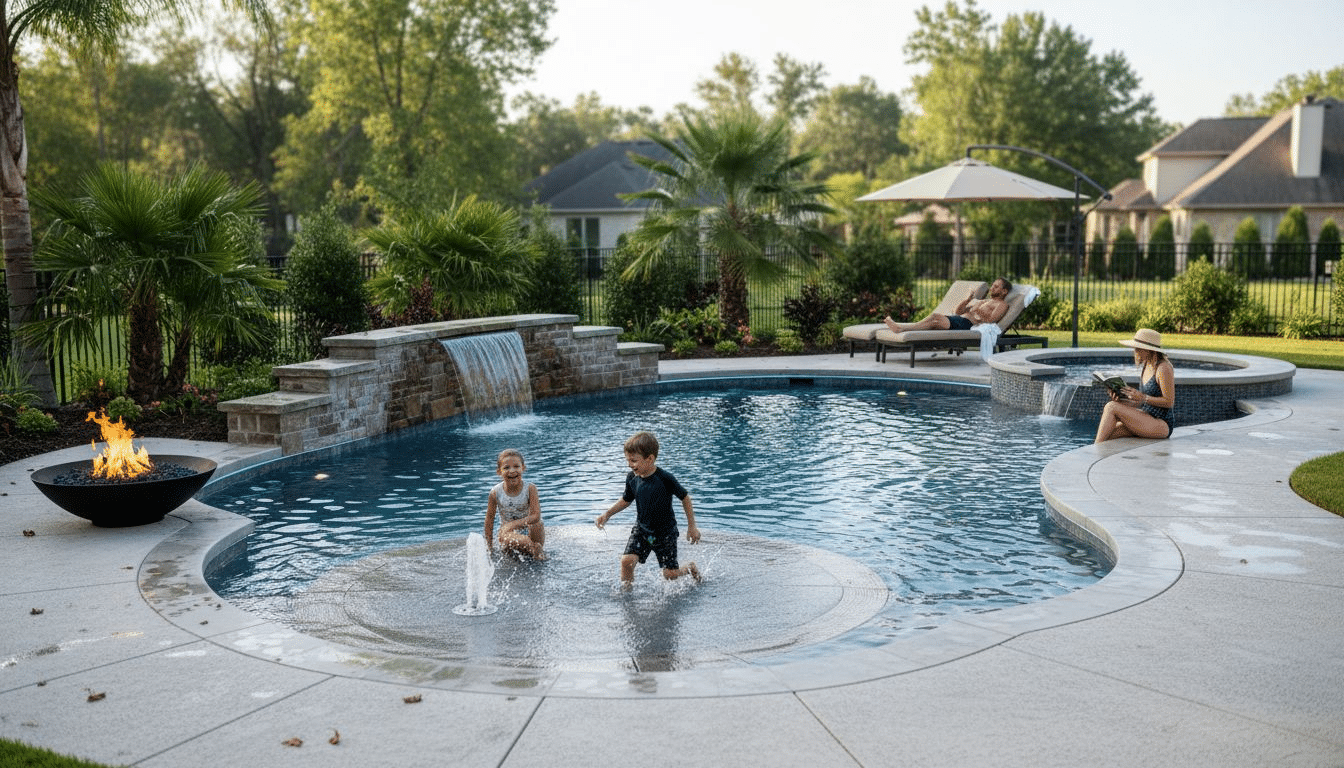
Nearly half of American families in Central Florida say a backyard pool is central to both home life and future resale value. For homeowners thinking about custom inground upgrades, turning basic pools into vibrant outdoor spaces means adding features that blend fun, safety, and relaxation. Whether you want soothing waterfalls, smarter lighting, or more family-friendly play areas, discover proven ideas designed to improve your everyday experience and strengthen your property’s appeal.
Table of Contents
- Adding Waterfalls For A Relaxing Ambiance
- Installing Energy-Efficient Lighting Systems
- Creating A Family-Friendly Shallow Play Area
- Enhancing Decking With Non-Slip Surfaces
- Upgrading To Automated Pool Controls
- Building An Integrated Spa Or Hot Tub
- Including Fire Features For Year-Round Use
Quick Summary
| Takeaway | Explanation |
|---|---|
| 1. Add Waterfalls for Ambiance | Waterfalls enhance the pool experience by providing soothing sounds and improving water circulation. |
| 2. Upgrade to LED Lighting | LED lights reduce energy costs significantly and can be controlled remotely for convenience. |
| 3. Design Safe Shallow Areas | Shallow play zones should be gradually sloped for safety, with interactive water features for children. |
| 4. Use Non-Slip Deck Surfaces | Non-slip materials improve safety around the pool and should be easy to maintain to ensure consistent traction. |
| 5. Install Automated Controls | Automated pool systems allow for real-time water monitoring and efficient energy management from your smartphone. |
1. Adding Waterfalls for a Relaxing Ambiance
Transforming your backyard pool from a simple swimming area to a serene oasis is possible with the strategic addition of waterfalls. These stunning water features do more than just look beautiful they enhance your pool’s entire sensory experience. According to pool design experts, waterfalls provide multiple benefits beyond aesthetic appeal.
Waterfalls create a multi sensory experience that engages sight, sound, and movement. The cascading water generates a soothing background noise that masks neighborhood sounds while creating a relaxing atmosphere. Imagine sitting poolside and hearing gentle water flowing over natural stone or sleek modern surfaces this transforms your backyard into a personal retreat.
From a functional perspective, pool waterfalls also improve water circulation and help maintain cleaner pool conditions. The constant water movement prevents stagnation and helps distribute pool chemicals more evenly. Homeowners can choose from multiple waterfall styles including natural rock formations, smooth sheer descent designs, and customized architectural water walls that complement their specific landscape.
When selecting a waterfall, consider your existing landscape design and pool shape. Some homeowners prefer integrated rock waterfalls that blend seamlessly with surrounding landscaping, while others opt for minimalist glass or stainless steel designs that provide a contemporary aesthetic. Your choice should reflect both your personal style and your outdoor living space’s overall design.
Installation requires professional expertise to ensure proper water flow, structural integrity, and seamless integration with your existing pool. Most installations range from $3,000 to $15,000 depending on complexity, materials, and design sophistication.
Pro tip: Consider installing LED lighting with your waterfall to create dramatic evening visual effects and extend your pool’s usability after sunset.
2. Installing Energy-Efficient Lighting Systems
Transforming your pool area into an energy-smart and visually stunning space begins with strategic lighting upgrades. Modern pool lighting goes far beyond simple illumination—it offers significant energy savings, enhanced safety, and dramatic aesthetic improvements. Comprehensive energy research reveals that smart lighting solutions can dramatically reduce your pool’s electricity consumption.
LED lighting represents the gold standard for pool illumination. These advanced lights consume up to 80% less electricity compared to traditional incandescent pool lights while providing superior brightness and color options. The U.S. Department of Energy recommends transitioning to LED technologies as a primary method of reducing energy expenses.
Beyond standard LEDs, homeowners can explore smart lighting systems that offer programmable color changing capabilities and automated controls. These systems allow you to adjust lighting remotely using smartphone apps, set timers for automatic on off cycles, and create dynamic lighting scenes for different occasions. Some advanced systems can even synchronize with music or integrate with broader home automation platforms.
When selecting pool lighting, consider factors like color temperature, brightness levels, and compatibility with your existing pool design. Cool white LEDs provide crisp clear illumination, while warmer tones create a more relaxed ambiance. Many modern systems offer millions of color combinations, allowing you to customize your pool’s appearance for various moods and events.
Initial installation costs for advanced LED lighting systems range from $500 to $2,000, but homeowners can expect significant long term energy savings. The reduced electricity consumption and extended bulb lifespan typically result in full system payback within 2 to 3 years.
Pro tip: Consider installing solar powered LED lights to further reduce electricity costs and create an environmentally friendly pool lighting solution.
3. Creating a Family-Friendly Shallow Play Area
Designing a pool that welcomes children while ensuring safety requires thoughtful planning and strategic design. A family-friendly shallow play area transforms your backyard pool from a simple swimming space into an interactive zone where children can explore and parents can relax. Innovative pool design research highlights the importance of creating age appropriate aquatic spaces.
The key to a successful shallow play area is understanding depth and terrain. Experts recommend gradually sloping zero entry zones that allow children to enter water comfortably while providing clear visibility for parents. These gently graded areas typically range from 6 inches to 18 inches deep creating a safe transition space for young swimmers and toddlers.
Incorporate interactive water features that engage children without compromising safety. Splash pads integrated into the pool perimeter water jets that activate at different intervals and small fountains can create exciting play zones. Consider adding textured non slip surfaces in these areas to prevent accidental slips and enhance traction for small feet.
Seating and shade are critical components of a family friendly pool area. Design the shallow zone with nearby lounge chairs positioned for clear sightlines allowing parents to supervise children easily. Strategically placed umbrellas or pergolas provide sun protection and create comfortable observation points.
Consider installing specialized safety features like handrails surrounding the shallow area underwater lighting and clear depth markers. These elements not only enhance safety but also provide visual guidance for children learning to navigate water spaces.
Pro tip: Install a dedicated pool alarm system that alerts parents when children approach the pool area unsupervised to add an extra layer of safety protection.
4. Enhancing Decking with Non-Slip Surfaces
Pool safety extends far beyond water boundaries with strategic decking choices that prevent dangerous slips and falls. Comprehensive surface research reveals that proper deck materials are crucial for creating a secure pool environment.
Non-slip surfaces leverage advanced texture technologies that dramatically improve traction even when wet. Homeowners can choose from multiple materials including textured concrete, specialized rubber coatings, unglazed ceramic tiles, and natural stone treatments. Each material offers unique benefits based on aesthetic preferences, budget constraints, and specific safety requirements.
The new NSF/ANSI/CAN Standard 50 provides rigorous certification guidelines for pool deck surfaces. This national standard evaluates materials based on critical factors like slip resistance, chemical durability, UV protection, and overall performance. When selecting deck surfaces, prioritize materials that meet or exceed these professional safety benchmarks.
Key considerations for non-slip surfaces include surface texture, water drainage capabilities, and resistance to pool chemicals. Textured concrete with fine aggregate provides excellent grip without creating uncomfortable walking surfaces. Specialized rubber coatings offer additional shock absorption and can be customized in multiple color options to complement your pool design.
Maintenance plays a critical role in preserving non-slip surface effectiveness. Regular cleaning prevents algae buildup and ensures consistent traction. Some advanced surfaces feature self cleaning properties that reduce maintenance requirements and extend the lifespan of your pool deck investment.
Pro tip: Consider installing light colored non-slip surfaces that remain cool under direct sunlight and provide better visibility during bright afternoons.
5. Upgrading to Automated Pool Controls
Pool maintenance is entering a new era of convenience and efficiency with advanced automated control systems that transform how homeowners manage their backyard aquatic spaces. Smart pool automation technologies are revolutionizing pool management by integrating intelligent sensors, predictive monitoring, and user friendly smartphone applications.
These sophisticated systems go far beyond simple on off switches. Modern automated pool controls can monitor water chemistry in real time, automatically adjusting chemical levels to maintain perfect balance. Intelligent sensors continuously track temperature, pH levels, chlorine concentration, and other critical water quality indicators providing homeowners with instant insights and proactive maintenance alerts.
Automation extends to energy management as well. Smart systems can optimize pump operations, regulate heating cycles, and control lighting based on custom schedules or environmental conditions. Imagine reducing energy consumption by programming your pool equipment to run during off peak hours or automatically adjusting temperature based on weather forecasts.
Mobile app integration allows complete pool management from anywhere. Homeowners can check water quality, adjust settings, and receive maintenance notifications directly on their smartphones. Advanced control systems utilize predictive algorithms that can even anticipate potential maintenance issues before they become serious problems.
Initial investment for comprehensive automated pool control systems typically ranges from $1,500 to $5,000 depending on complexity. However, potential energy savings and reduced maintenance costs can offset these expenses over time making smart automation an increasingly attractive option for modern pool owners.
Pro tip: Select an automated control system with robust cybersecurity features to protect your personal data and ensure safe remote management of your pool equipment.
6. Building an Integrated Spa or Hot Tub
Transforming your backyard pool into a luxurious wellness retreat begins with strategically integrating a spa or hot tub. Comprehensive pool design guides reveal that seamless spa integration can significantly enhance both recreational enjoyment and property value.
Modern integrated spa designs offer sophisticated options beyond traditional standalone units. Homeowners can choose from custom built solutions that flow naturally with the existing pool architecture creating a unified outdoor living space. These integrated systems allow for shared mechanical infrastructure reducing overall installation and maintenance costs.
The technical considerations for spa integration are complex. Professional construction frameworks recommend carefully evaluating placement thermal efficiency and equipment compatibility. Optimal designs typically feature elevated spa sections that provide clear sightlines create visual interest and enable easy transitions between cooler pool water and warmer therapeutic spa zones.
Ergonomic design plays a critical role in creating a functional integrated spa. Consider features like built in seating contoured to support proper body alignment strategically placed jets for muscle relaxation and edge designs that allow comfortable entry and exit. Advanced systems can include programmable temperature controls hydrotherapy jet configurations and mood lighting to enhance the overall wellness experience.
Budget considerations range widely with integrated spa additions typically costing between $15,000 and $45,000 depending on complexity materials and additional features. Factors like custom tile work specialized jet systems and advanced control mechanisms can influence the final investment required.
Pro tip: Select spa jet configurations that offer multiple pressure settings to accommodate different muscle groups and provide a truly personalized hydrotherapy experience.
7. Including Fire Features for Year-Round Use
Extending your pool area’s functionality beyond summer months requires strategic integration of fire features that create warmth ambiance and visual drama. Professional pool design guides reveal how thoughtfully placed fire elements can transform outdoor spaces into year round entertainment zones.
Fire features offer multiple design options ranging from sleek modern fire bowls to rustic stone fireplaces. Gas powered installations provide consistent reliable heat with minimal maintenance while offering precise temperature control. Homeowners can choose between built in features that seamlessly integrate with pool architecture or standalone elements that create distinct visual zones.
Comprehensive installation guidelines recommend considering local building codes fuel types and safety requirements before implementation. Propane and natural gas remain the most popular choices offering clean burning efficient heat sources that can be easily controlled through sophisticated valve systems and remote controls.
Strategic placement is critical when designing fire features. Consider creating conversation areas near pool edges where fire elements provide both warmth and atmospheric lighting. Positioning fire pits or bowls to maximize wind protection while maintaining clear sightlines helps create comfortable gathering spaces that extend outdoor living seasons.
Cost considerations vary widely with fire feature installations ranging from $2,500 for basic fire pit designs to $20,000 for custom built architectural fireplace systems. Factors like material selection fuel type and complexity of installation significantly impact overall project expenses.
Pro tip: Select fire feature designs with built in safety screens and automatic shut off mechanisms to ensure maximum protection during operation.
Below is a comprehensive table summarizing the main strategies and enhancements for optimizing your backyard pool area as detailed in the provided article.
| Strategy/Feature | Description | Key Considerations | Cost Range |
|---|---|---|---|
| Adding Waterfalls | Enhances ambiance with aesthetic appeal and improved water circulation. | Choose a design that complements your pool and landscape. | $3,000–$15,000 |
| Energy-Efficient Lighting | Utilizes LED and smart technologies for reduced energy consumption and dynamic ambiance. | Consider energy savings and compatibility with existing pool design. | $500–$2,000 |
| Shallow Play Areas | Creates family-friendly zones with safe, interactive features for children. | Ensure gradual entry slopes and include safety features like alarms and non-slip surfaces. | Variable based on size and complexity |
| Non-Slip Decking | Reduces slipping hazards with textured and durable deck materials. | Select materials meeting safety standards such as textured concrete or rubber coatings. | Variable based on material choice |
| Automated Pool Controls | Integrates smart systems for automated maintenance and energy management. | Evaluate system features like smartphone integration and cybersecurity settings. | $1,500–$5,000 |
| Integrated Spas and Hot Tubs | Adds relaxation and luxury; unifies spa and pool design for aesthetic harmony. | Focus on thermal efficiency, ergonomic design, and complementary aesthetics with your pool. | $15,000–$45,000 |
| Fire Features | Enhances year-round usability with designs ranging from fire pits to architectural fireplaces. | Plan for safety, materials, and optimal placement to maximize functionality and aesthetics. | $2,500–$20,000 |
This table outlines various improvements to elevate the functionality, safety, and visual appeal of backyard pools and their surrounding areas, providing diversified solutions tailored to individual preferences and budgets.
Elevate Your Backyard with Custom Pool Upgrades Tailored to You
Transforming your backyard pool into a stunning oasis that combines beauty, safety, and innovation starts with expert design and quality craftsmanship. If you are inspired by ideas like waterfalls that create soothing ambiance, energy-efficient lighting, or family-friendly shallow play areas discussed in the article, these upgrades address common challenges such as pool safety, aesthetic appeal, and convenient maintenance. At R&R Swimming Pools, we specialize in creating personalized pool designs that bring these features to life while matching your lifestyle and preferences.
Imagine enjoying a enchanting waterfall centerpiece, relaxing in an integrated spa, or having advanced automated controls managing your pool seamlessly. With over 35 years of experience serving Central Florida communities, our team excels in delivering durable concrete or fiberglass pools crafted with care and attention to detail. Let us help you achieve your goals for a backyard retreat that stands out for its elegance and functionality.
Ready to upgrade your pool with expert guidance and trusted service Visit R&R Swimming Pools to explore our portfolio, learn about custom options like waterfalls and spas, and schedule your free quote today. Don’t wait to create the backyard paradise you deserve with personalized solutions designed just for you.
Frequently Asked Questions
How can adding a waterfall enhance my backyard pool experience?
Adding a waterfall can create a relaxing ambiance by providing soothing sounds and beautiful visuals, making your pool feel like a personal retreat. Consider incorporating a waterfall design that complements your existing landscape to maximize its effect.
What are the benefits of installing energy-efficient lighting for a pool?
Energy-efficient lighting, particularly LED systems, reduces electricity consumption by up to 80% and improves overall safety around your pool. Upgrade your lighting system to LED to enjoy beautiful illumination while saving on energy bills.
What features should I include in a family-friendly shallow play area?
Incorporate gradual slopes, water jets, and splash pads into your shallow play area to create a safe and fun environment for children. Ensure to add seating nearby for easy parental supervision and consider using textured surfaces to prevent slips.
What materials are recommended for non-slip decking around the pool?
Textured concrete, specialized rubber coatings, and unglazed ceramic tiles are excellent materials for creating non-slip surfaces around your pool. Select materials that provide good traction, especially when wet, to enhance safety for all pool users.
How can automated pool controls simplify my pool maintenance?
Automated pool controls allow for real-time monitoring of water chemistry and can adjust chemical levels automatically, reducing the need for manual checks. Invest in an automated system to streamline your pool maintenance routine and optimize energy use by scheduling equipment operation according to your needs.
What factors should I consider when adding fire features near my pool?
When adding fire features, consider safety measures, local building codes, and the types of fuel to use. Strategically place fire elements to create cozy gathering spots while ensuring they meet necessary safety requirements for outdoor installations.
