
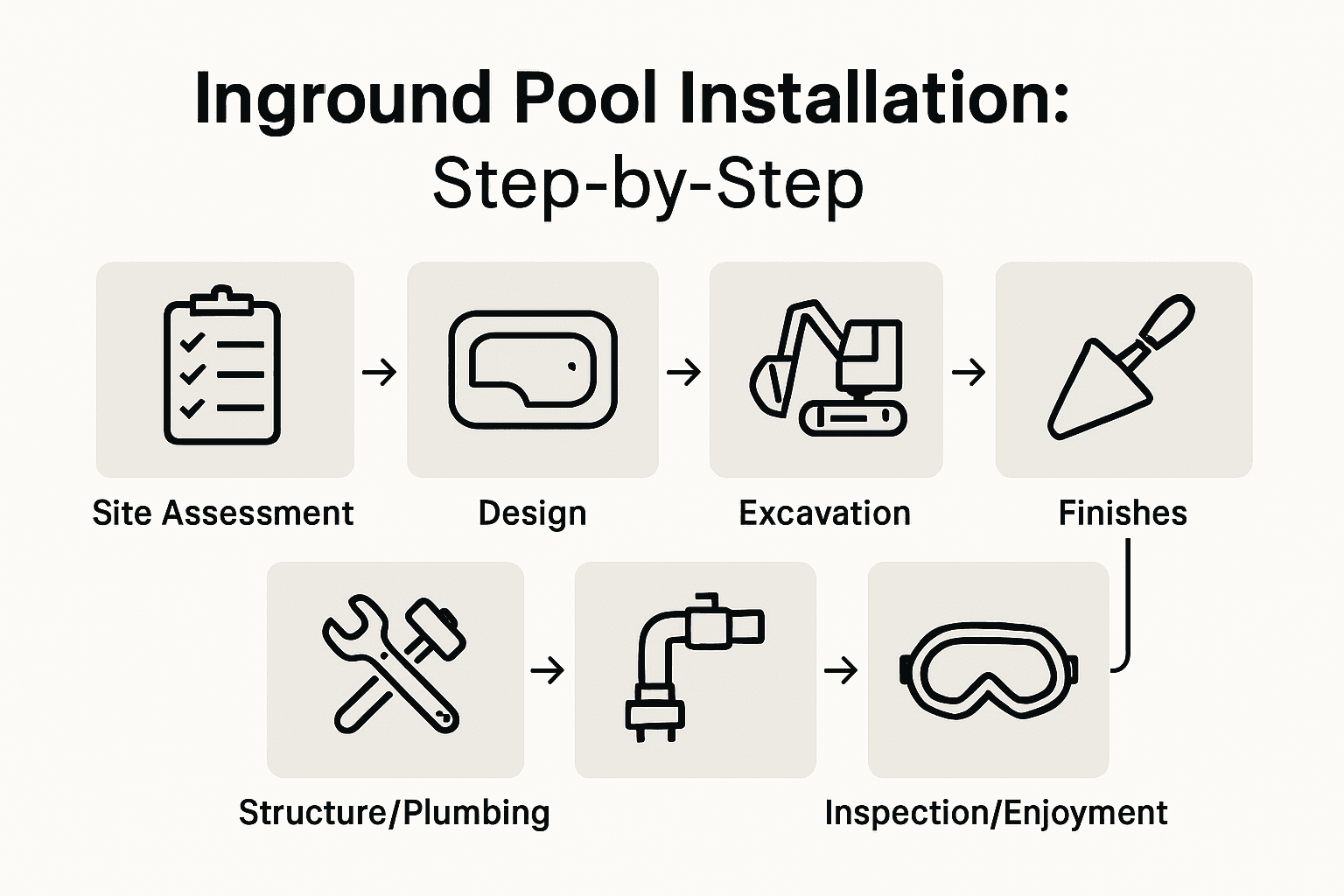
Building a dream backyard pool is one of the top goals for many American homeowners, but the process can create serious headaches without the right plan. From permitting hurdles to construction setbacks, each step demands strategy and attention to detail. Nearly 80 percent of mistakes in pool installation happen during the earliest phases, so knowing what to expect can help you avoid costly delays and transform your outdoor space with confidence.
Table of Contents
- Step 1: Assess Site And Secure Permits
- Step 2: Design Pool And Finalize Features
- Step 3: Excavate And Prepare Ground
- Step 4: Install Pool Structure And Plumbing
- Step 5: Apply Finishes And Fill Pool
- Step 6: Inspect System And Enjoy Your Pool
Quick Summary
| Key Insight | Explanation |
|---|---|
| 1. Conduct a thorough site assessment | Measure your space and identify obstacles to ensure the pool placement fits local regulations and avoids utility lines. |
| 2. Secure necessary permits early | Work closely with local building departments to comply with zoning and safety codes, including pre-application consultations to expedite approvals. |
| 3. Engage professionals for excavation | Hire experienced contractors to ensure proper grading, drainage, and integrity of the pool structure during excavation work. |
| 4. Customize design with functional features | Consider pool shape, entry points, and materials that complement your home, ensuring a cohesive look and practical use. |
| 5. Perform final system inspections | Test mechanical systems and check water chemistry to ensure everything is operational and safe before enjoying your new pool. |
Step 1: Assess Site and Secure Permits
Before breaking ground on your inground pool project, you need a strategic site assessment and proper permitting strategy. This critical first phase determines whether your backyard can accommodate your dream pool and ensures you navigate local regulatory requirements smoothly.
Start by conducting a comprehensive site survey of your property. Measure your available space carefully and identify potential obstacles like underground utility lines, septic systems, drainage areas, or existing landscaping that could impact pool placement. Contact your local utility companies to mark underground lines using their free service program. This step prevents costly damages and ensures safe excavation. You will want to map out precise dimensions and note any slope variations that might require additional grading or engineering considerations.
Securing permits involves multiple steps with your local municipal building department. Most Central Florida municipalities require detailed site plans, pool design blueprints, and specific documentation showing compliance with zoning regulations, setback requirements, and safety codes. Typical required documents include a property survey, pool design schematic, structural engineering drawings, and proof of property ownership. Some jurisdictions may also mandate additional environmental impact assessments or neighborhood association approvals. Work closely with your pool contractor who can help streamline this complex process and ensure all regulatory requirements are met.
Pro tip: Schedule a pre application consultation with your local building department. These free meetings can help you understand specific local requirements and potentially expedite your permit approval process by identifying potential issues early.
Step 2: Design Pool and Finalize Features
At this stage, you will transform your pool from a concept into a personalized backyard oasis that reflects your lifestyle and aesthetic preferences. This crucial design phase allows you to customize every aspect of your swimming pool to perfectly match your home and personal vision.
Begin by considering how you will use the pool and selecting features that enhance your outdoor experience. Pool design experts recommend choosing materials and features that complement your home’s exterior, ensuring a cohesive and attractive result. Think about elements like pool shape, depth, entry points, and additional features such as tanning ledges, swim jets, or integrated spa areas. Consider your family’s needs strategically some homeowners prefer shallow areas for children, while others want deeper zones for lap swimming or diving.
Work closely with your pool designer to create detailed schematics that incorporate both functional requirements and aesthetic desires. Customizing your pool area involves thoughtful consideration of landscaping, decking, and surrounding environment to ensure the pool integrates seamlessly with your existing outdoor space. Select materials like natural stone, concrete, or pavers that match your home’s architectural style and provide durability and safety. Consider practical elements like non slip surfaces, appropriate drainage, and shade options that will make your pool area both beautiful and functional.
Pro tip: Request 3D renderings of your pool design. These digital mock ups help you visualize the final product and make informed decisions before construction begins.
Step 3: Excavate and Prepare Ground
Excavation marks the transformative moment when your pool design transitions from blueprint to reality. This critical phase requires precision, specialized equipment, and careful planning to create the foundation for your backyard oasis.
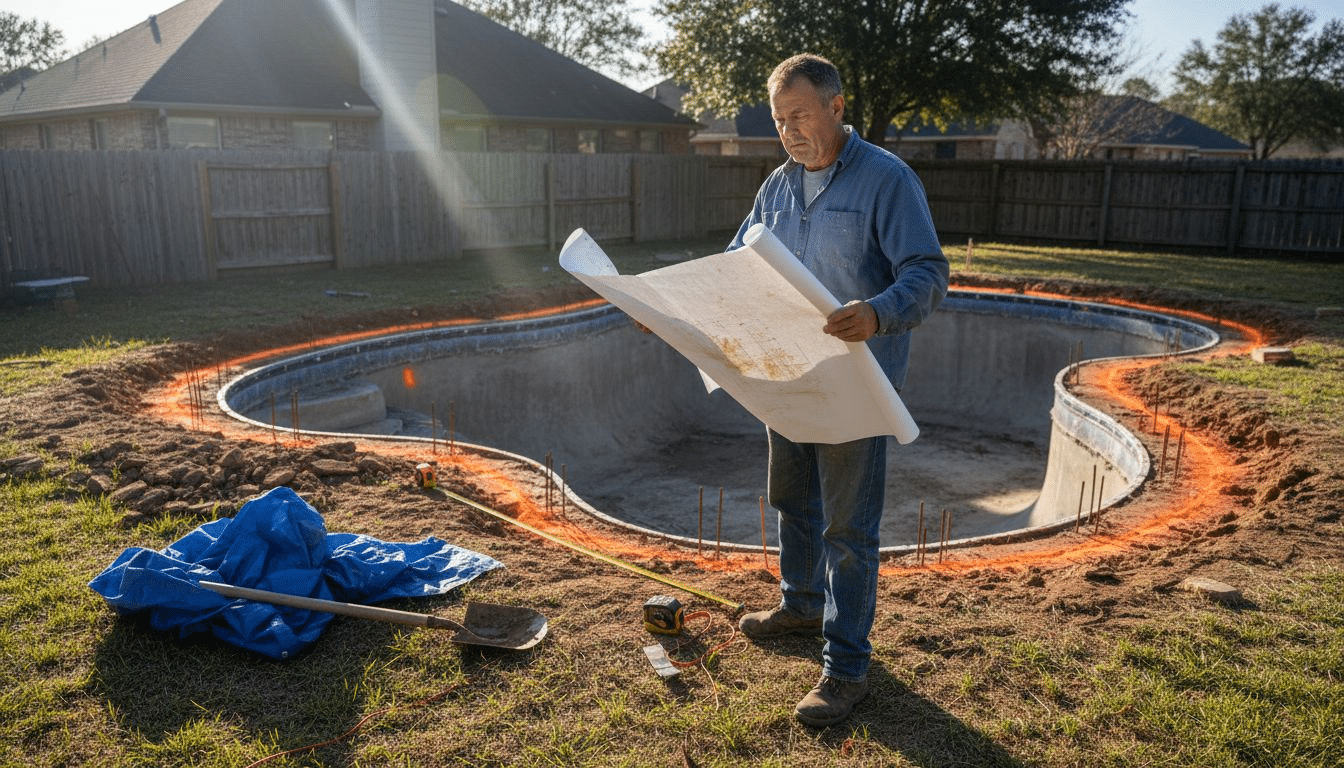
Professional excavation begins with marking the exact pool dimensions using spray paint or stakes, accounting for the precise measurements established in your design plan. Heavy machinery like backhoes and excavators will carefully remove soil, creating a precisely graded hole that matches your pool schematic. Experienced contractors understand the importance of maintaining proper slope and depth, ensuring structural integrity and preventing future drainage issues. They will remove soil in layers, checking measurements consistently and monitoring for any unexpected underground conditions like rock formations, high water tables, or hidden utility lines that might complicate the excavation process.
Once the initial excavation is complete, the ground preparation enters a detailed phase of refinement. Contractors will meticulously level the pool area, compact the soil to create a stable base, and add a layer of gravel or sand to provide proper drainage and support for the pool structure. This foundational work is crucial for preventing future settlement issues and ensuring your pool remains structurally sound for decades. They will also verify that the excavation meets all local building code requirements and matches the approved site plan, creating a perfect canvas for the next stages of pool construction.
Pro tip: Request soil testing before excavation. Understanding your soil composition can help anticipate potential challenges and prevent unexpected expenses during the pool building process.
Step 4: Install Pool Structure and Plumbing
With the ground expertly prepared, you are now ready to transform your excavated space into a sturdy pool structure that will serve as the foundation for your backyard oasis. This critical phase involves precision engineering and careful installation of structural components that will determine your pool’s durability and performance.
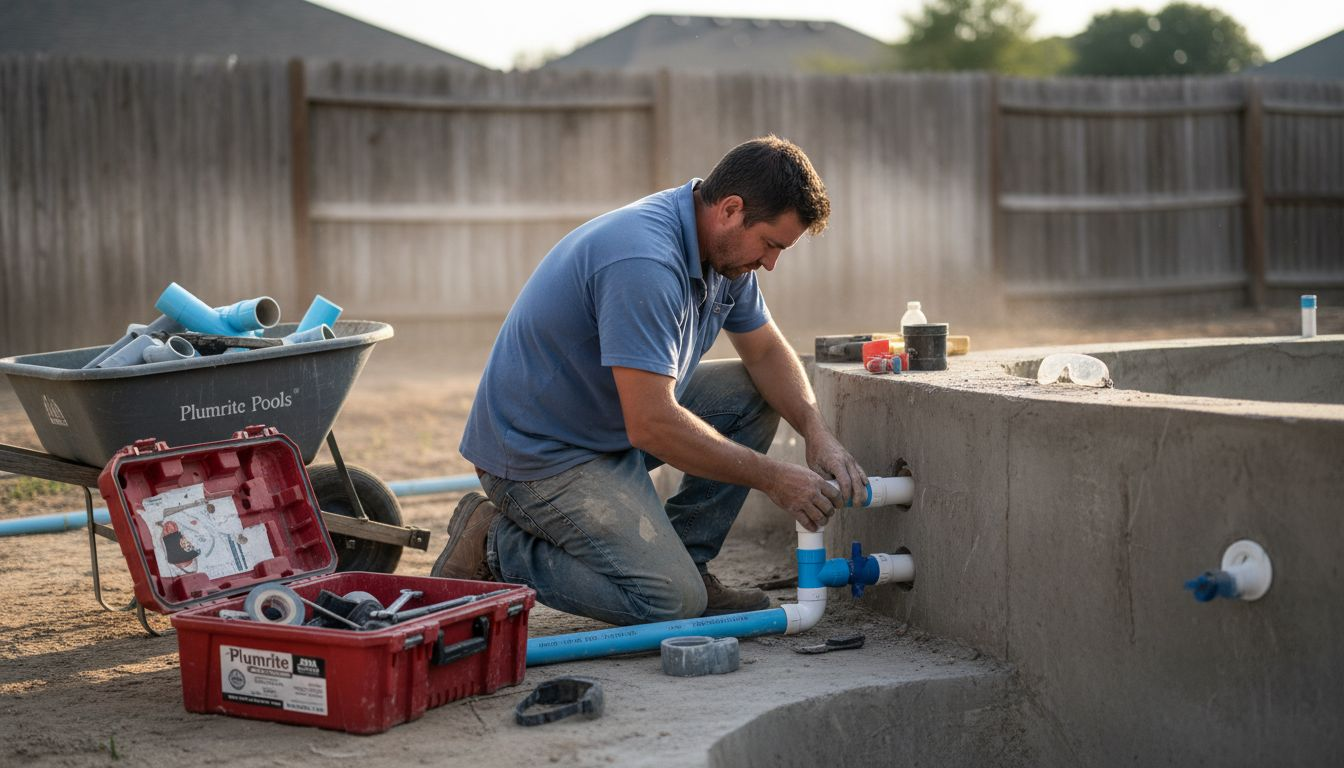
The first major task involves installing the pool shell, which differs depending on your chosen material concrete, fiberglass, or vinyl. For concrete pools, steel reinforcement bars are meticulously placed to create a strong skeletal framework, followed by careful concrete pouring and strategic shaping. Pool installation experts in the Villages understand the nuanced techniques required for creating a robust structural base that can withstand Florida’s unique environmental conditions. Plumbing installation runs concurrently with structural work, with contractors strategically positioning pipes for filtration, drainage, and water circulation. They will carefully connect main drains, skimmers, return lines, and any specialized features like water jets or spa connections ensuring precise alignment and leak proof connections.
After the primary structure is in place, contractors will focus on creating a smooth interior surface and installing critical mechanical systems. For concrete pools, this means applying a carefully blended layer of gunite or shotcrete, then smoothing and finishing the surface. Plumbing lines are pressure tested to verify integrity, and all connections are meticulously checked for potential weak points. Electrical conduits for lights and potential automation systems are also carefully routed during this phase, setting the stage for the final aesthetic and functional elements of your swimming pool.
Here’s how common pool construction materials compare:
| Pool Type | Durability | Customization Level | Maintenance Needs |
|---|---|---|---|
| Concrete | Extremely durable | Highly customizable | Requires regular upkeep |
| Fiberglass | Very durable | Limited shapes | Low maintenance |
| Vinyl Liner | Moderately durable | Flexible designs | Liner needs replacement |
Pro tip: Request a comprehensive pressure test of all plumbing lines before final installation. This proactive step can save thousands in potential future repairs by identifying any potential leaks or weak connections early in the construction process.
Step 5: Apply Finishes and Fill Pool
With the structural work complete, you are now entering the transformative phase where your pool will transition from a construction site to a stunning backyard centerpiece. This stage involves applying final surface treatments and carefully filling the pool to prepare for your first swim.
Fiberglass pool installations require a different finishing approach compared to concrete pools, but the core principles remain similar. For concrete pools, contractors will apply the final interior surface using specialized materials like plaster, aggregate, or tile. This layer not only provides a smooth aesthetic finish but also creates a watertight seal. The application process demands precision workers carefully spread the material using specialized trowels, ensuring an even consistent surface that is both visually appealing and functionally durable. Color selection becomes critical during this stage choosing a finish that complements your backyard design and reflects sunlight in an attractive manner.
Filling the pool is a methodical process that requires careful attention. Contractors will typically begin filling using a water truck or garden hose, monitoring water levels and ensuring proper circulation from the very first drop. They will simultaneously check for any potential leaks or surface imperfections during this process, making minor adjustments as needed. As the pool fills, they will also balance the initial water chemistry calibrating pH levels, alkalinity, and chlorine to ensure a safe and clean swimming environment. This stage marks the exciting transition from construction to your new backyard retreat a moment where careful planning and precise execution culminate in the realization of your swimming pool dream.
Pro tip: Request a color sample of your pool finish before final application. Seeing the actual color in sunlight can help you make a more informed decision about how the finish will look in your specific backyard environment.
Step 6: Inspect System and Enjoy Your Pool
Congratulations on reaching the final stage of your pool installation journey. This crucial moment involves a comprehensive system inspection and preparing to transform your backyard into a personal paradise. A meticulous final review ensures your investment will provide years of swimming enjoyment and trouble free operation.
Swimming pool contractors in Lake County recommend a systematic approach to final inspection. Start by carefully testing all mechanical systems including pumps, filters, heaters, and electrical connections. Run each component through a complete operational cycle checking for smooth performance and listening for any unusual sounds. Verify that all safety features like pool covers, ladders, and drain covers meet current safety standards. Water chemistry requires precise calibration test pH levels, chlorine balance, and overall water quality using professional grade testing kits. Pay special attention to filtration system performance ensuring water circulates cleanly and efficiently.
Beyond technical inspection, this is the moment to fully appreciate the transformation of your outdoor space. Walk around your new pool area and verify that drainage patterns work correctly landscape elements complement the pool design and all surrounding features function as intended. Take time to understand your pool maintenance schedule familiarize yourself with weekly and monthly care requirements that will keep your pool in pristine condition. Consider scheduling a final walkthrough with your installation team where they can demonstrate proper system operation and answer any remaining questions about pool care and maintenance.
Consider these key post-installation checks for your new pool:
| Inspection Area | What to Check For | Importance to Pool Longevity |
|---|---|---|
| Water Chemistry | Balanced pH and chlorine | Prevents damage, keeps water safe |
| Mechanical Systems | Smooth pump operation | Ensures efficient filtration |
| Safety Features | Secure covers, ladders | Meets safety codes and prevents injury |
| Drainage and Landscaping | Proper water flow | Avoids flooding, protects structure |
Pro tip: Create a dedicated pool maintenance log to track chemical levels, equipment performance, and service dates. This simple practice can help you catch potential issues early and extend the life of your pool system.
Make Your Inground Pool Dreams a Reality with Expert Guidance
Building your perfect inground pool involves careful planning from site assessment to final inspection. Challenges like navigating local permits, selecting the ideal pool design, and ensuring flawless structural installation can feel overwhelming. You deserve a trusted partner who understands every step of the process, from excavation to filling and finishing, while prioritizing safety and durability.
At R and R Swimming Pools, we combine over three decades of Central Florida expertise with personalized craftsmanship to deliver stunning concrete and fiberglass pools tailored to your lifestyle. Our team guides you through permit acquisition, custom design options, and precise installation techniques that meet your goals and local requirements. Ready to experience a seamless pool installation journey? See how our professional pool contractors in Lake County ensure superior quality and lasting satisfaction.
Take the first step toward your backyard oasis today. Explore our diverse pool design options and schedule your free quote to get started on building the pool you deserve.
Frequently Asked Questions
What is the first step in inground pool installation?
Before starting your inground pool installation, conduct a site assessment and secure the necessary permits. Measure your available space, identify obstacles, and contact local utilities to mark underground lines. This ensures a safe excavation process and compliance with local regulations.
How do I design my inground pool to fit my lifestyle?
Begin by considering the intended use of your pool and select features that enhance your outdoor experience, such as shape, depth, and additional amenities. Collaborate with a pool designer to create schematics that integrate both function and aesthetics, ensuring your pool complements your home’s exterior.
What should I expect during the excavation phase?
During excavation, contractors will precisely mark pool dimensions and use heavy machinery to create a graded hole according to your design. They will ensure the slope and depth are correct while removing soil in layers, checking for any unexpected conditions that may arise.
How is plumbing installed in the pool structure?
Plumbing installation occurs simultaneously with the pool structure installation. Contractors position pipes for filtration and drainage, connecting main drains, skimmers, and return lines while ensuring all connections are secure and leak-proof.
What steps are involved in finishing the pool and filling it?
Finishing your pool involves applying a final surfacing treatment, like plaster or tile, to create a watertight seal. Once the surface is complete, fill the pool while monitoring for leaks and adjust water chemistry for a safe swimming environment.
How can I ensure my pool operates efficiently after installation?
After installation, perform a comprehensive system inspection to test pumps, filters, and safety features. Familiarize yourself with the maintenance schedule and create a log to track chemical levels, ensuring efficient operation and extending the life of your pool.
Recommended
- Swimming Pool Contractor and Builder in Grand Island, FL
- Fiberglass Pool Installation by R & R Swimming Pools | Fast, Reliable & Beautiful Pools
- Pool Installation The Villages FL | R & R Swimming Pools
- Swimming Pool Contractor and Builder in Howey In The Hills
- How to Manage Home Construction for Best Results
- Pool Builder Mount Dora FL
