
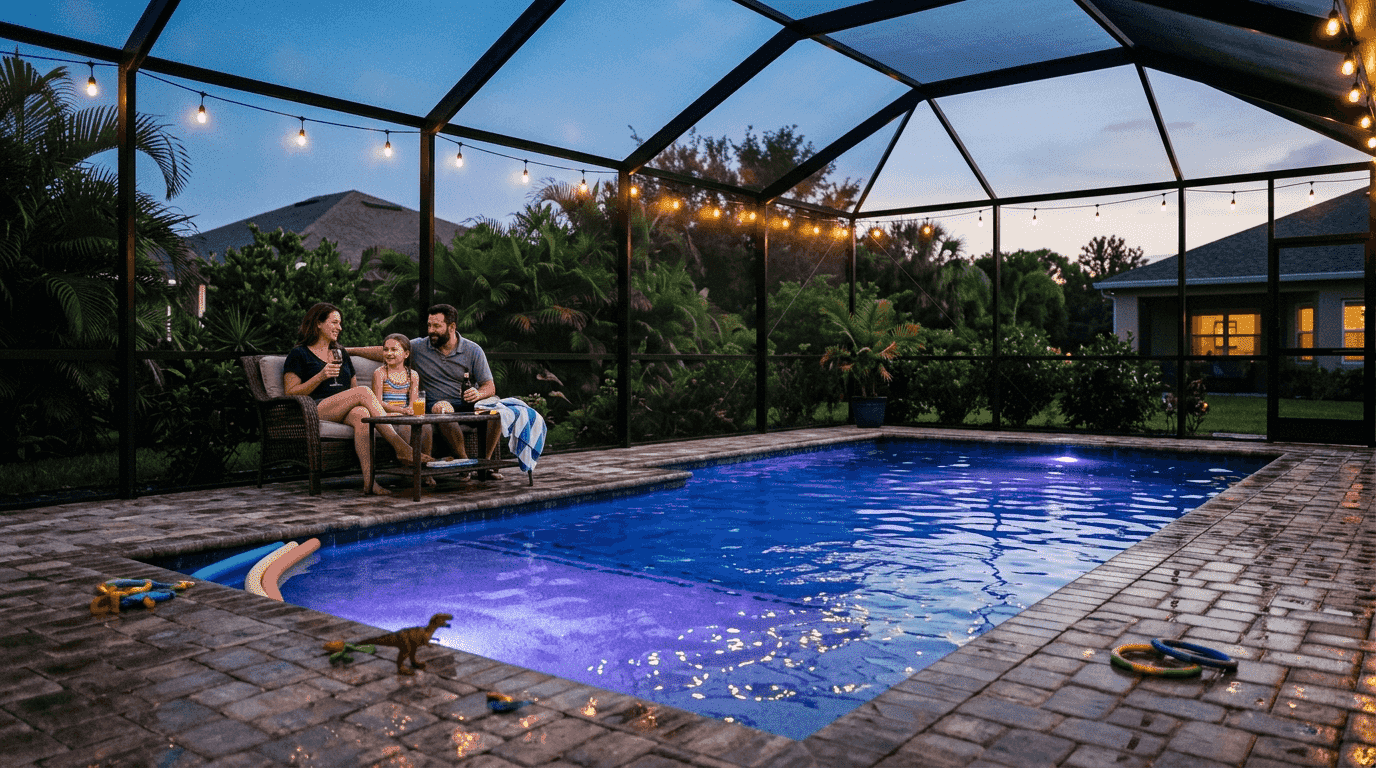
Choosing the right pool lighting transforms your Central Florida backyard from a daytime retreat into an enchanting evening oasis. With options ranging from energy-sipping LEDs to dramatic fiber optic displays, homeowners face a dizzying array of choices. This comprehensive list breaks down the most popular pool lighting types, detailing their costs, brightness levels, installation requirements, and practical benefits. Whether you’re building a new pool or renovating an existing one, understanding these options helps you make informed decisions that balance aesthetics, safety, and long-term value for your outdoor living space.
Table of Contents
- Criteria For Choosing Pool Lighting In Central Florida
- 1. Led Pool Lights: Energy-Efficient And Versatile
- 2. Fiber Optic Pool Lighting: Custom Starry Effects At A Premium
- 3. Led Strip And Pool Perimeter Lighting: Enhancing Outdoor Living Spaces
- 4. Comparing Pool Lighting Options: Cost, Safety, Brightness, And Maintenance
- 5. Making The Right Choice For Your Central Florida Pool
- Enhance Your Central Florida Pool With Expert Lighting Installation
Key takeaways
| Point | Details |
|---|---|
| LED lights dominate Central Florida pools | Energy-efficient LEDs consume 80-90% less electricity than traditional bulbs and last 20,000-50,000 hours. |
| Fiber optics offer unique visual effects | No electricity enters the water, creating safe starry displays but costing $900-$3,000+ to install. |
| Perimeter lighting extends outdoor enjoyment | Waterproof LED strips along pool cages provide app-controlled ambiance for evening gatherings. |
| Professional installation is mandatory | Florida Building Code requires licensed contractors and NEC 2023 compliance to avoid fines and hazards. |
| Layered lighting creates versatile environments | Combining underwater, perimeter, and accent lights delivers customizable moods for any occasion. |
Criteria for choosing pool lighting in Central Florida
Before diving into specific lighting types, you need to understand the factors that separate smart investments from costly mistakes. Energy efficiency matters enormously in Central Florida’s climate, where pools operate year-round and electric bills climb quickly. Installation requires licensed contractors per Florida Building Code adopting NEC 2023, which mandates low-voltage 12V systems, GFCI protection, and equipotential bonding within 5 feet of water. Permits typically cost $50 to $250, but skipping this step invites fines and liability.
Safety standards aren’t optional. Low-voltage LED systems reduce shock risk compared to older 120V fixtures, making them the preferred choice for families. Brightness and aesthetic goals also shape your decision. Do you want brilliant illumination for nighttime swimming, or soft ambient glow for entertaining? Budget considerations extend beyond initial purchase price. Factor in installation complexity, ongoing energy costs, and replacement frequency over the fixture’s lifespan.
Pro Tip: Work with selecting pool contractors who understand Florida-specific codes to ensure your lighting system passes inspection the first time. Licensed pool builders know local requirements and can recommend options that match your pool’s design and your family’s usage patterns.
Key evaluation criteria include:
- Energy consumption measured in watts per fixture
- Expected lifespan and warranty coverage
- Installation complexity and permit requirements
- Brightness output and color customization options
- Total cost of ownership over 10-15 years
1. LED pool lights: energy-efficient and versatile
LED pool lights are the most common and recommended option for Central Florida pools, available in wall-mounted, floor-mounted, step, and water feature configurations. They consume just 30 to 60 watts compared to 300 to 500 watts for traditional incandescent bulbs, delivering 80-90% energy savings. With lifespans ranging from 20,000 to 50,000 hours, you’ll replace them far less frequently than older technologies.
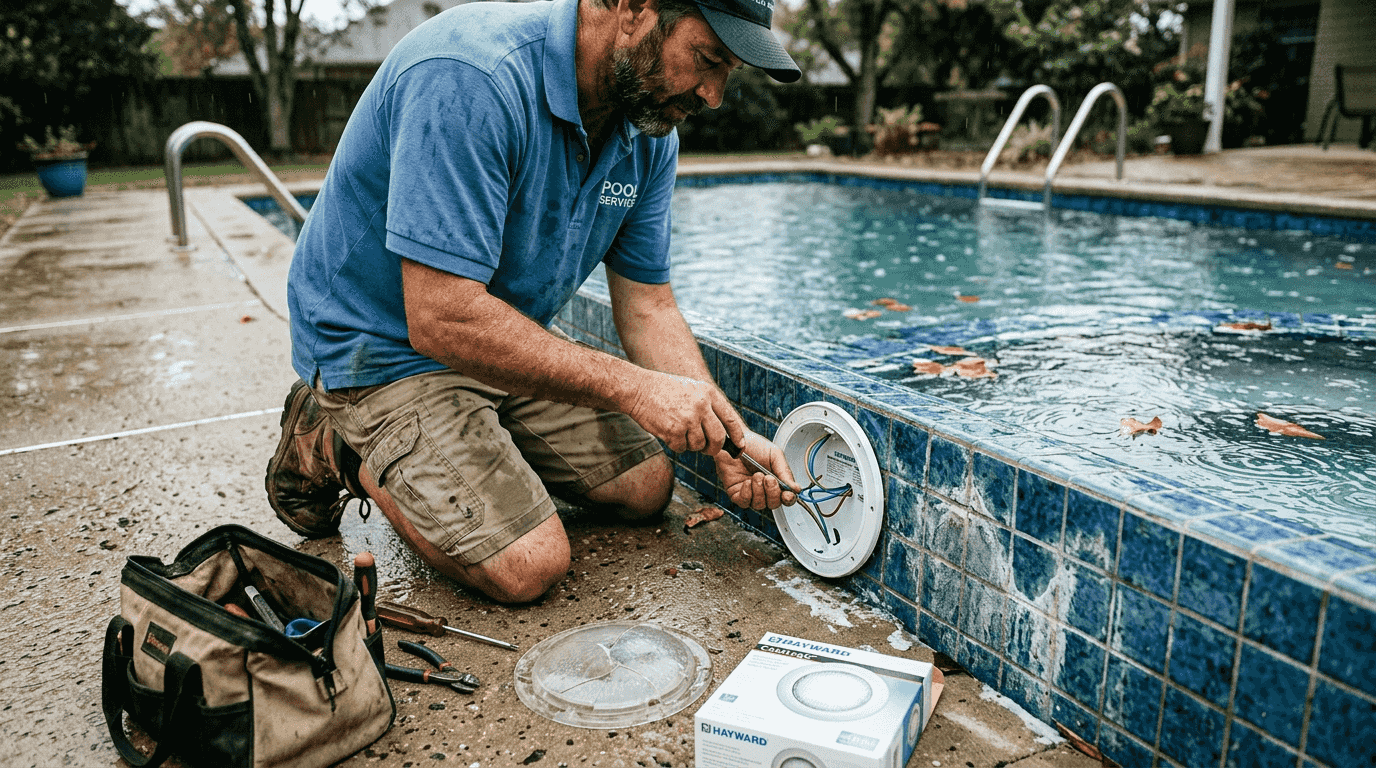
Multiple mounting types allow creative lighting effects and easy retrofits into existing pool structures. Wall-mounted fixtures provide general illumination, while floor-mounted lights create dramatic upward effects. Step lights enhance safety on pool entry points, and specialized fixtures highlight waterfalls or spa jets. Color-changing RGBW systems let you adjust ambiance through smartphone apps or remote controls, cycling through thousands of hues to match any mood or event.
The combination of low operating costs, minimal maintenance, and design flexibility explains why LEDs dominate new custom pool installations across Central Florida. Initial fixture costs range from $200 to $600 per light, with installation adding $200 to $300 in labor. That upfront investment pays back through reduced electricity bills and fewer replacements over the system’s lifetime.
Pro Tip: Choose UL-certified LED fixtures from established manufacturers to avoid cheap imports that fail prematurely or create electrical hazards. Quality fixtures include robust seals against Florida’s humidity and chemical exposure from pool treatments.
LED advantages include:
- Dramatic energy savings reduce monthly utility costs
- Long lifespans minimize replacement labor and downtime
- Color-changing capabilities create versatile ambiance
- Low heat output prevents discomfort for swimmers
- Compatible with smart home automation systems
2. Fiber optic pool lighting: custom starry effects at a premium
Fiber optic pool lighting uses a dry illuminator box positioned within 10 to 12 feet of your pool, transmitting light through flexible fiber cables to endpoints in the water. No electricity passes into the pool itself, eliminating shock risk and making fiber optics the safest underwater lighting technology. This design particularly suits pools with intricate tile work, delicate finishes, or homeowners prioritizing absolute electrical safety.
The visual effects fiber optics create are genuinely unique. Starry night displays, shimmering color transitions, and pinpoint accent lighting deliver artistic results impossible with traditional fixtures. You can customize cable placement to highlight specific architectural features or create patterns across your pool floor. Color wheels in the illuminator box allow smooth transitions between hues without the abrupt changes sometimes seen in LED systems.
However, fiber optic systems cost significantly more, ranging from $900 to $3,000 or higher for complete installations. Brightness levels lag behind LEDs, making fiber optics better suited for accent or artistic lighting rather than primary illumination. Cable length and bend radius limitations also constrain design flexibility compared to self-contained LED fixtures.
Fiber optic considerations include:
- Zero electricity in water provides maximum safety
- Unique starry and gradient color effects
- Higher initial costs than LED alternatives
- Lower brightness limits functional use
- Illuminator box requires accessible dry location
3. LED strip and pool perimeter lighting: enhancing outdoor living spaces
Waterproof LED strip lighting has become popular in Central Florida for transforming pool cages and surrounding outdoor areas into inviting evening spaces. These flexible strips mount along pool cage frames, patio overhangs, or landscaping borders, creating ambient illumination that extends usable outdoor time well after sunset. App or remote control lets you adjust colors and intensity to match different activities, from vibrant party settings to soft romantic dinners.
Layered lighting design combines ambient, task, and accent elements for truly versatile outdoor environments. Ambient strips provide general illumination across the pool deck. Task lighting focuses on specific areas like outdoor kitchens or seating zones. Accent lights highlight architectural features, plants, or water elements. This three-layer approach creates depth and visual interest while serving practical needs.
Central Florida homeowners particularly appreciate how perimeter lighting integrates with in-pool fixtures for cohesive nighttime aesthetics. Coordinating colors between underwater LEDs and cage strips creates a unified design that feels professionally planned. Smart controllers synchronize both systems, allowing one-touch scene changes for different occasions.
Pro Tip: Invest in marine-grade waterproof strips rated IP67 or higher to withstand Florida’s humidity, rain, and pool splash. Cheaper strips deteriorate quickly in outdoor conditions, requiring frequent replacement.
| Lighting Layer | Purpose | Typical Fixtures |
|---|---|---|
| Ambient | General illumination across pool area | LED strips along cage frames, overhead string lights |
| Task | Focused light for specific activities | Downlights over grills, reading lamps near seating |
| Accent | Highlight architectural or landscape features | Spotlights on palms, uplights on columns |
Perimeter lighting benefits include:
- Extends outdoor living hours after dark
- App control enables instant ambiance changes
- Complements underwater lighting for cohesive design
- Enhances safety by illuminating walkways and steps
- Increases home value and curb appeal
4. Comparing pool lighting options: cost, safety, brightness, and maintenance
LED retrofit prices with labor range from $400 to $900 per light in Florida, while fiber optic systems cost $900 to $3,000 or more for complete installations. This side-by-side comparison clarifies how different technologies stack up across critical factors.
| Feature | LED Pool Lights | Fiber Optic Lighting | LED Strip/Perimeter |
|---|---|---|---|
| Energy Use | 30-60 watts per fixture | 100-150 watts (illuminator box) | 10-30 watts per meter |
| Lifespan | 20,000-50,000 hours | 10,000-15,000 hours (bulb replacement) | 25,000-40,000 hours |
| Brightness | High, suitable for primary lighting | Moderate, best for accents | Low to moderate, ambient use |
| Safety | Low-voltage 12V, GFCI protected | No electricity in water | Waterproof rated IP67+ |
| Installation Cost | $400-$900 per light | $900-$3,000+ complete system | $15-$40 per meter plus labor |
| Maintenance | Minimal, sealed units | Moderate, cable care and bulb replacement | Low, occasional strip replacement |
LED lights deliver the best combination of brightness, energy efficiency, and lifespan for most Central Florida pools. Fiber optics excel in safety and artistic effects but demand higher budgets and accept lower brightness. Strip lighting enhances perimeter aesthetics affordably but requires proper waterproofing and power planning.
All options must meet Florida Building Code safety requirements. Licensed installation ensures GFCI protection, proper bonding, and code-compliant wiring. Cutting corners on installation creates serious shock hazards and voids manufacturer warranties.
Comparison insights:
- LEDs offer lowest total cost of ownership
- Fiber optics provide unique safety and visual benefits
- Perimeter strips enhance outdoor living affordably
- Professional installation is mandatory for all types
- Energy savings compound over years of operation
5. Making the right choice for your Central Florida pool
Your final decision should balance budget, aesthetic preferences, safety priorities, and long-term value. Cheap non-UL certified Chinese LEDs risk electrical exposure, while fiber optics face limitations from cable length and bend radius constraints. LEDs prove safer and more cost-effective in most residential applications.
Consider layering LED underwater lighting with perimeter strips for maximum versatility. This combination delivers brilliant pool illumination for swimming plus adjustable ambient lighting for entertaining. Smart controllers let you create custom scenes, saving your favorite color combinations and brightness levels for instant recall.
Fiber optics suit unique design needs where artistic effects justify higher costs and brightness limitations. If you’re building a resort-style pool with elaborate tile mosaics or want absolute electrical safety for a therapy pool, fiber optics deliver unmatched benefits. Just ensure your budget accommodates both installation and ongoing maintenance.
Pro Tip: Request detailed quotes from licensed Central Florida pool contractors that itemize fixture costs, labor, permits, and warranty coverage. Compare total project costs rather than just fixture prices to understand true value.
“The best pool lighting investment balances upfront cost with energy savings, maintenance requirements, and how well the system matches your family’s actual usage patterns over 10 to 15 years.”
Decision factors include:
- Avoid uncertified products that create electrical hazards
- Layer underwater and perimeter lighting for versatility
- Weigh initial investment against lifespan and energy costs
- Prioritize licensed installation for code compliance
- Choose systems compatible with future smart home upgrades
Enhance your Central Florida pool with expert lighting installation
Ready to transform your pool into a stunning nighttime retreat? R & R Swimming Pools brings over 35 years of experience designing and installing custom pools across Central Florida. Our comprehensive installation guide walks you through every step, from initial design to final lighting placement.
We understand that budget considerations matter. Explore our flexible financing options that make your dream pool and lighting upgrades achievable without compromising quality. Our team helps you select the right contractors who deliver safe, code-compliant installations backed by solid warranties. Let us show you how professional lighting design elevates your outdoor living experience while protecting your investment for decades to come.
FAQ
How much does it typically cost to install LED pool lighting in Central Florida?
LED retrofit prices with labor range from $400 to $900 per light in Florida. Costs vary based on fixture type, installation complexity, and whether you’re retrofitting existing fixtures or installing during new pool construction. Wall-mounted lights typically cost less than specialized step or floor-mounted options.
Are fiber optic pool lights safer than traditional underwater lighting?
Fiber optic lighting eliminates electricity in water, reducing shock risk compared to traditional fixtures. The illuminator box stays in a dry location, transmitting only light through fiber cables. Traditional lights require strict wiring, GFCI protection, and bonding to meet safety standards, though modern low-voltage LEDs significantly reduce hazards.
Can I install pool lighting myself or should I hire a professional?
DIY installation risks code violations, failed inspections, and serious electrical hazards. Florida Building Code requires licensed contractors and adherence to NEC 2023 Article 680 for pool electrical installations. Professional installation protects your family, ensures warranty coverage, and delivers systems that pass inspection. Work with experienced Central Florida contractors who understand local requirements.
What lighting options work best for pool cages and outdoor patios in Central Florida?
Waterproof LED strip and perimeter lights are popular in Central Florida pool cages for ambient and task lighting. They extend outdoor enjoyment after dark with app controls that adjust colors and intensity. Layering strips along cage frames with spotlights on landscaping creates depth and visual interest while serving practical illumination needs.