
Every parent faces daily decisions about protecting their loved ones, especially with the unique demands of Florida family life. Custom pool installations promise endless fun, but security rapidly rises to the top of the list when children or pets are involved. By focusing on pool enclosures as a physical barrier against unsupervised access, homeowners gain peace of mind, stay in line with regional safety codes, and unlock options that go far beyond simple backyard fencing.
Table of Contents
- Defining Pool Enclosures And Common Myths
- Types And Construction Of Pool Enclosures
- Key Benefits For Safety And Comfort
- Legal Requirements And Regional Codes
- Costs, Maintenance, And Common Pitfalls
Key Takeaways
| Point | Details |
|---|---|
| Importance of Pool Enclosures | Pool enclosures are essential safety features that protect children and pets from unauthorized pool access. They are often legally mandated in Central Florida. |
| Types of Enclosures | Different designs, such as domed and gabled roof enclosures, cater to specific homeowner needs and local environmental challenges. Each type offers unique benefits, including aesthetic appeal and efficient water runoff. |
| Legal Compliance | Homeowners must navigate various local regulations and obtain necessary permits when installing pool enclosures to avoid potential fines and liabilities. |
| Maintenance and Costs | Initial installation and ongoing maintenance can be costly; budgeting for these expenses is crucial for long-term sustainability. Regular upkeep is necessary to maintain structural integrity amid Florida’s challenging climate. |
Defining Pool Enclosures and Common Myths
Pool enclosures represent a critical safety feature for Central Florida homeowners, designed to protect families and meet local regulations. A pool enclosure structure fundamentally serves as a barrier preventing unauthorized or accidental pool access, particularly for children and pets.
These protective structures are more than simple barriers – they offer multiple advantages for residential swimming pools. Key characteristics of pool enclosures include:
- Physical barriers made from materials like aluminum, mesh, or glass
- Minimum height requirements to prevent climbing
- Self-closing and self-latching gate mechanisms
- Compliance with local municipal safety codes
- Ability to withstand strong winds and extreme weather conditions
Many homeowners harbor misconceptions about pool enclosures that can prevent them from making informed decisions. Common myths include believing enclosures are unattractive, expensive, or unnecessarily complicated. In reality, modern pool enclosures can be stylish, enhance property value, and provide substantial safety benefits.
Safety Considerations are paramount. Pool enclosures are not just recommended – they’re often legally mandated in many Central Florida communities. These structures dramatically reduce the risk of accidental drownings by creating a physical barrier between unsupervised individuals and the pool area.
Pro tip: Always consult local building codes and obtain proper permits before installing a pool enclosure to ensure full compliance and maximum safety protection.
Types and Construction of Pool Enclosures
Pool enclosures in Central Florida come in diverse configurations, each designed to meet specific homeowner needs and local environmental challenges. Pool enclosure designs range from low-profile covers to expansive high-ceiling structures, offering unique advantages for residential swimming areas.
The primary categories of pool enclosures include:
- Domed Enclosures: Curved designs providing maximum interior space
- Gabled Roof Enclosures: Traditional peaked designs offering excellent water runoff
- Mansard Enclosures: Featuring sloped sides for enhanced aesthetic appeal
- Flat Roof Enclosures: Minimalist structures with clean, modern lines
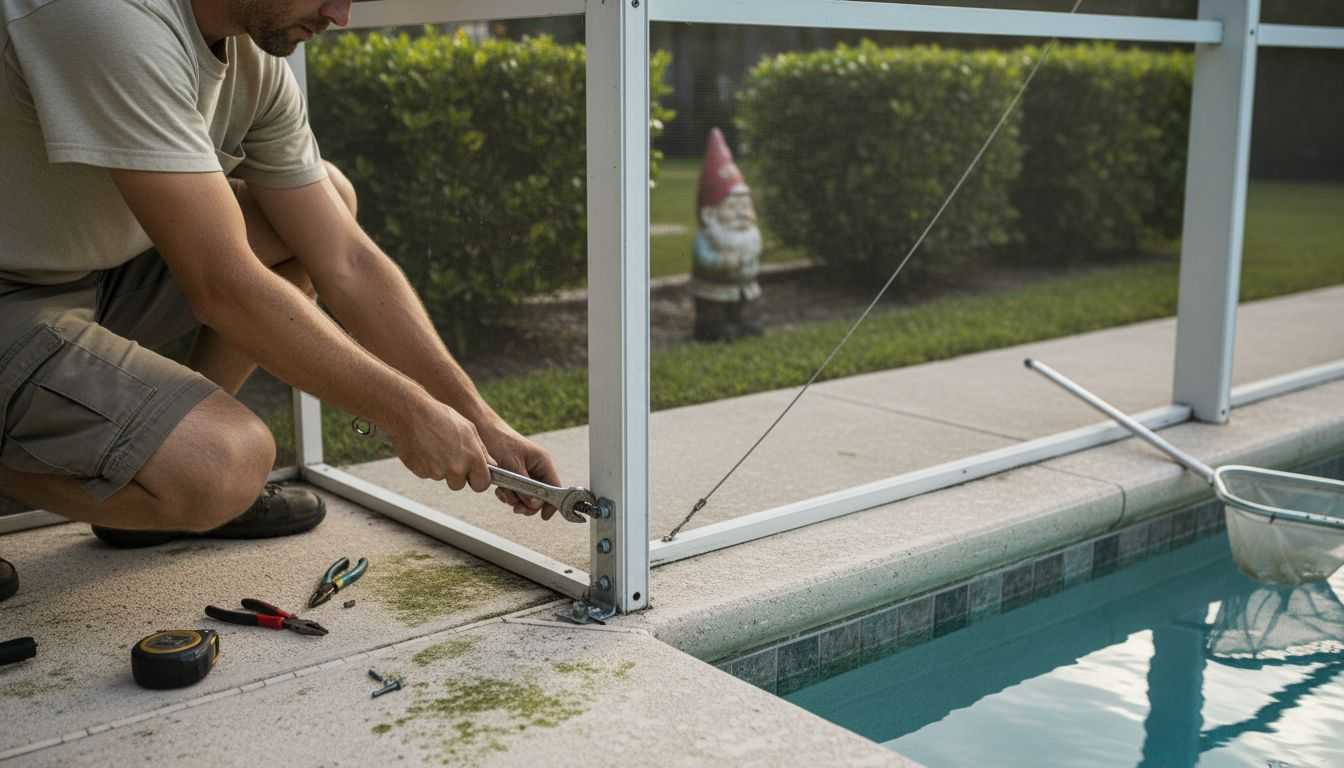
Construction materials play a critical role in determining an enclosure’s durability and performance. Aluminum frames with screen or glass panels are most common, specifically engineered to withstand Florida’s intense hurricane-prone climate. Pool enclosure construction typically involves three primary height categories:
Here’s a summary of major pool enclosure types and their ideal usage scenarios:
| Enclosure Type | Best For | Typical Benefits |
|---|---|---|
| Domed | Large pool areas | Maximizes interior space |
| Gabled Roof | Rainy climates | Efficient water runoff |
| Mansard | Stylish homes | Enhanced curb appeal |
| Flat Roof | Modern architecture | Clean, minimalist look |
- Low Enclosures: Minimal barrier, closer to pool cover design
- Mid-Height Enclosures: Balanced protection with open feel
- High Enclosures: Spacious structures providing maximum comfort and accessibility
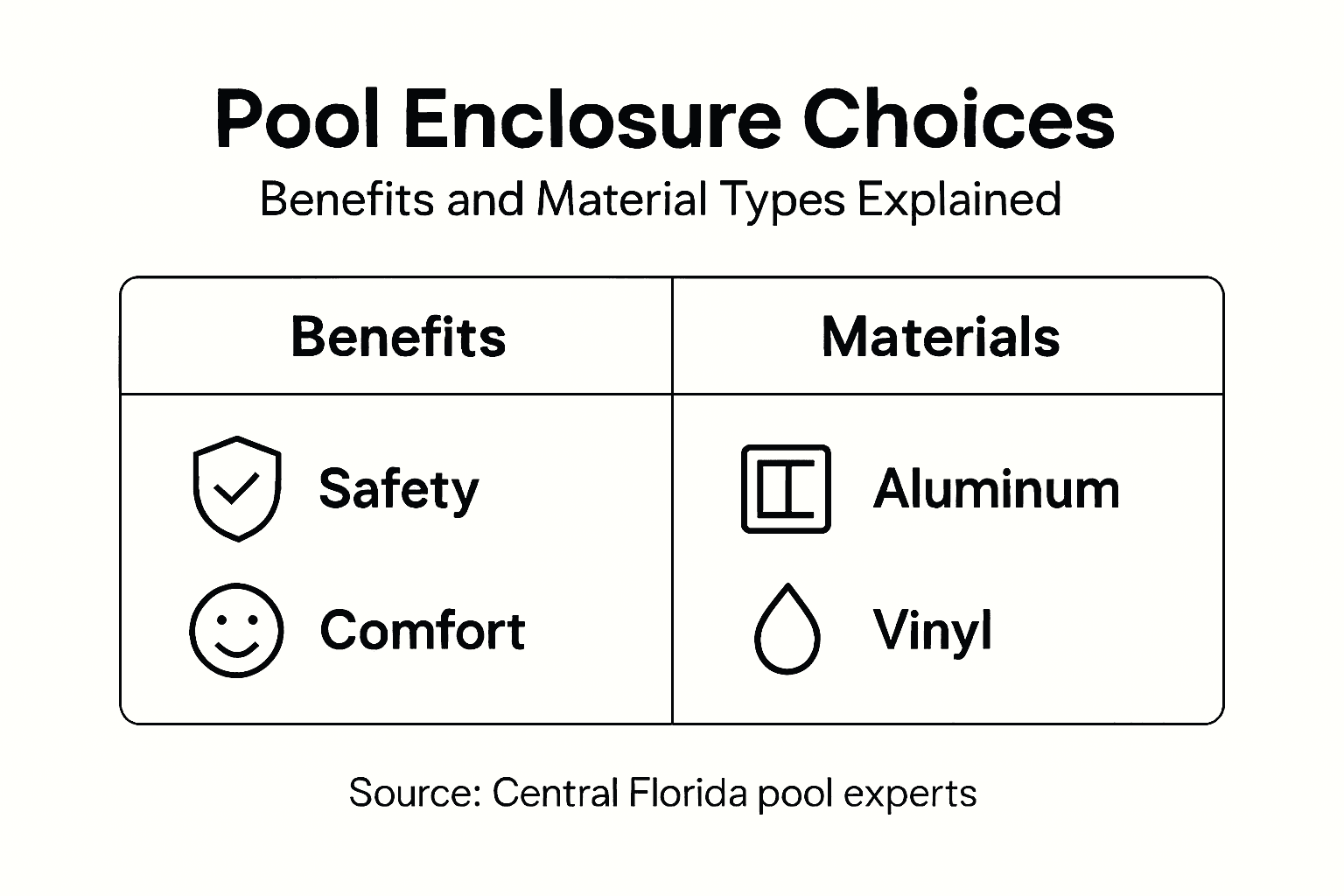
Material Considerations are paramount when selecting a pool enclosure. Homeowners must evaluate factors like UV resistance, insect protection, wind load capacity, and maintenance requirements. Modern enclosures are engineered to provide seamless integration with existing landscaping while delivering robust safety features.
Pro tip: Consult with local pool professionals to determine the most suitable enclosure design for your specific Central Florida property and climate conditions.
Key Benefits for Safety and Comfort
Pool enclosures offer Central Florida homeowners a comprehensive solution that extends far beyond simple pool protection. Pool enclosure benefits encompass multiple dimensions of safety, comfort, and lifestyle enhancement for families.
The primary safety advantages include:
- Preventing unauthorized access by children and pets
- Creating a physical barrier against accidental drownings
- Reducing risks of unsupervised pool interactions
- Blocking potential intruders or wildlife
Beyond safety, pool enclosures deliver remarkable comfort and environmental advantages. Screen enclosure protections dramatically transform outdoor living spaces by:
- Blocking harmful UV rays
- Minimizing insect and pest intrusions
- Controlling temperature and wind exposure
- Reducing pool maintenance and debris accumulation
Lifestyle Considerations are significant. These structures enable year-round pool enjoyment, protecting residents from Florida’s intense sunlight and unpredictable weather patterns. They create a controlled microenvironment that extends outdoor living possibilities without compromising the open-air feeling of traditional pool spaces.
Modern pool enclosures are engineered with sophisticated materials that balance transparency, durability, and aesthetic appeal. Homeowners can select designs that complement their existing architectural style while maintaining critical safety standards.
Pro tip: Prioritize professional installation to ensure maximum structural integrity and compliance with local building codes.
Legal Requirements and Regional Codes
Pool enclosure regulations in Central Florida represent a complex landscape of safety standards designed to protect residents and minimize potential liability risks. Pool enclosure legal requirements vary significantly across different municipalities, demanding careful navigation by homeowners and contractors.
Key regulatory considerations typically include:
- Mandatory building permit acquisition
- Specific enclosure height restrictions
- Precise gate mechanism requirements
- Structural integrity standards
- Minimum setback distances from property lines
Hurricane Resistance is particularly critical in Central Florida. Regional safety codes mandate that pool enclosures withstand extreme weather conditions, including high winds and potential storm impacts. These regulations ensure that protective structures remain functional during challenging environmental events.
Most local jurisdictions enforce strict safety protocols focused on preventing unauthorized access. Enclosures must typically feature:
- Self-closing mechanisms
- Automatic latching systems
- Minimum fence height of 48-60 inches
- No horizontal rails that could facilitate climbing
- Locks positioned out of children’s reach
Property owners should anticipate comprehensive inspections to verify compliance. Failure to meet these standards can result in significant fines, potential legal liabilities, and mandatory reconstruction of pool enclosure systems.
Pro tip: Consult with local building authorities and a professional pool enclosure contractor to ensure complete compliance with current municipal regulations.
Costs, Maintenance, and Common Pitfalls
Pool enclosure investments in Central Florida require careful financial planning and ongoing maintenance strategies. Pool enclosure maintenance costs can vary dramatically, typically ranging from several thousand to tens of thousands of dollars depending on specific design and material choices.
Typical cost components include:
- Initial installation expenses
- Material selection costs
- Structural reinforcement requirements
- Permit and inspection fees
- Long-term maintenance budgeting
Maintenance Challenges are significant in Central Florida’s demanding climate. Screen enclosure performance depends on regular upkeep to prevent deterioration from humidity, UV exposure, and potential storm damage. Homeowners should anticipate recurring maintenance tasks such as:
- Quarterly screen cleaning
- Annual frame inspection
- Rust and corrosion prevention
- Seal and joint maintenance
- Hardware and mechanism lubrication
Common pitfalls often emerge from underestimating both initial and ongoing expenses. Many homeowners fail to budget for potential repairs, replacement of screen materials, and structural adjustments required by changing building codes or weather conditions.
To help homeowners plan, here’s a reference table outlining typical cost and maintenance factors:
| Cost Element | Estimated Range | Maintenance Frequency |
|---|---|---|
| Installation | $7,000–$25,000 | One-time, up-front |
| Permits & Inspections | $500–$2,000 | Every major renovation |
| Repairs | $300–$2,500 per incident | As needed after storms |
| Routine Upkeep | $200–$600/year | Quarterly to annually |
Pro tip: Set aside an annual maintenance budget of 3-5% of your initial pool enclosure installation cost to ensure long-term structural integrity and performance.
Secure Your Central Florida Pool with Expert Enclosure Solutions
Reading about the critical role of pool enclosures in protecting families and enhancing outdoor comfort highlights how essential the right safety measures and design choices really are. If you want to eliminate worries about unauthorized access, meet regional safety codes, and enjoy your pool year-round without pest or weather concerns, professional expertise will make all the difference. Key challenges like selecting durable materials, complying with local building requirements, and balancing aesthetic appeal with functionality demand trusted guidance.
At R & R Swimming Pools, we specialize in custom pool installations designed to fit your lifestyle and safety needs here in Central Florida. Our experience since 1985 means we understand local codes and climate impacts on pool structures. Pool School | R & R Swimming Pools offers valuable insights to empower your decisions about pool enclosures and maintenance. Partnering with us means you gain advanced craftsmanship and lasting peace of mind.
Don’t let uncertainty about pool safety or enclosure compliance keep you from enjoying your backyard oasis. Visit R & R Swimming Pools today to explore custom pool designs with built-in safety features. Schedule your free quote now and take the first step toward a secure, beautiful pool environment that protects your loved ones and enhances your home’s value.
Frequently Asked Questions
What are the main benefits of installing a pool enclosure?
Pool enclosures provide safety by preventing unauthorized access to the pool, significantly reducing the risk of accidental drownings, and also enhance comfort by blocking harmful UV rays, minimizing insects, and controlling temperature.
What types of pool enclosures are available, and how do I choose one?
The primary types of pool enclosures include domed, gabled roof, mansard, and flat roof designs. Choosing the right one depends on your specific needs, such as space, aesthetics, and environmental challenges in your area.
Do pool enclosures require any special maintenance?
Yes, regular maintenance is essential to ensure the longevity and functionality of pool enclosures. This includes cleaning screens, inspecting the frame for damage, and preventing rust or corrosion.
Are there legal requirements for pool enclosures in my area?
Yes, pool enclosures often have specific regulations, including height restrictions and safety features like self-closing gates. It’s crucial to consult local building authorities and obtain the necessary permits before installation.
