

Every homeowner in Central Florida dreams of a backyard that feels both luxurious and welcoming, especially when family comfort and wellness are top priorities. Saltwater pools offer a modern approach to pool sanitation, using a unique process that generates chlorine onsite and creates a gentler swimming environment. With reduced skin and eye irritation compared to traditional chlorine pools, families enjoy easier maintenance and healthier outdoor living. Discover how the right saltwater system brings elegance and well-being to your home.
Table of Contents
- Saltwater Pools Defined And Common Myths
- How Saltwater Systems Work In Practice
- Types Of Saltwater Pool Installations
- Health Benefits For Central Florida Families
- Maintenance And Cost Compared To Chlorine
- Risks, Limitations, And Design Considerations
Key Takeaways
| Point | Details |
|---|---|
| Saltwater Pools Offer Health Advantages | Saltwater pools provide reduced skin and eye irritation, lower chemical exposure, and support for overall wellness, making them ideal for families, especially those with health concerns. |
| Maintenance Is Essential | Despite common myths, saltwater pools require ongoing monitoring of salt levels, pH balance, and generator maintenance for optimal performance and user comfort. |
| Cost-Effective in the Long Run | While initial installation costs may be higher for saltwater pools, they typically lead to lower chemical expenses and reduced maintenance over time. |
| Consider Environmental Factors | Homeowners should assess potential landscaping and environmental impacts due to salt exposure, ensuring installation materials and designs counteract corrosion risks. |
Saltwater Pools Defined and Common Myths
Saltwater pools represent a sophisticated swimming pool technology that transforms traditional pool maintenance, offering Central Florida homeowners a more comfortable and potentially healthier swimming experience. Unlike conventional chlorine pools, saltwater systems use a unique salt chlorination process that continuously generates chlorine through electrolysis, creating a gentler environment for swimmers.
At their core, saltwater pools function differently from standard chlorine pools. Instead of manually adding chlorine chemicals, these systems use dissolved salt that passes through a specialized generator, which breaks down salt molecules and produces natural chlorine. This process creates a more consistent and mild sanitization method that significantly reduces harsh chemical additives. The key differences include:
- Continuous chlorine generation
- Lower chemical concentration
- More stable water chemistry
- Reduced skin and eye irritation
- Softer water feel
Contrary to popular misconceptions, saltwater pools are not chlorine-free environments. They actually produce chlorine through a more controlled, automated mechanism. Chlorine production remains essential for maintaining proper pool sanitation and preventing bacterial growth.
Many homeowners mistakenly believe saltwater pools require no maintenance, but this is far from accurate. Regular monitoring of salt levels, pH balance, and overall water chemistry remains crucial. Proper pool maintenance ensures optimal performance, swimmer comfort, and long-term equipment preservation.
Pro tip: Schedule professional water testing quarterly to maintain ideal saltwater pool chemistry and prevent potential equipment damage.
Here’s a clear comparison of saltwater and traditional chlorine pools:
| Aspect | Saltwater Pools | Traditional Chlorine Pools |
|---|---|---|
| Chlorine Source | Generated on-site from salt | Manually added chemicals |
| Water Feel | Softer, less drying | Harsher, more drying |
| Chemical Handling | Minimal, mainly salt | Frequent chemical additions |
| Skin & Eye Comfort | Reduced irritation | Higher irritation risk |
| Maintenance Focus | Generator cell, salt levels | Chemical storage, pH balance |
| Average Chemical Costs | Lower annually | Higher annually |
How Saltwater Systems Work in Practice
Saltwater pool systems represent a sophisticated approach to water sanitation that leverages advanced electrochemical technology. Saltwater chlorination systems transform ordinary pool salt into a continuous chlorine generation process, providing Central Florida homeowners with a more consistent and controlled sanitization method.
The core of a saltwater system is its salt chlorine generator, which contains a specialized cell that performs electrolysis. When salt water passes through this cell, an electrical current breaks down sodium chloride molecules, producing chlorine through a precise chemical reaction. This automated process ensures several key advantages:
- Consistent chlorine production
- Reduced manual chemical handling
- More stable water chemistry
- Lower chlorine concentration
- Minimal chemical odors
Understanding the technical mechanics is crucial. The generator’s cell contains metal plates that conduct electricity, causing a chemical transformation when salt water flows through. Home pool water treatment depends on maintaining the correct salt concentration and ensuring the electrolysis cell functions optimally.
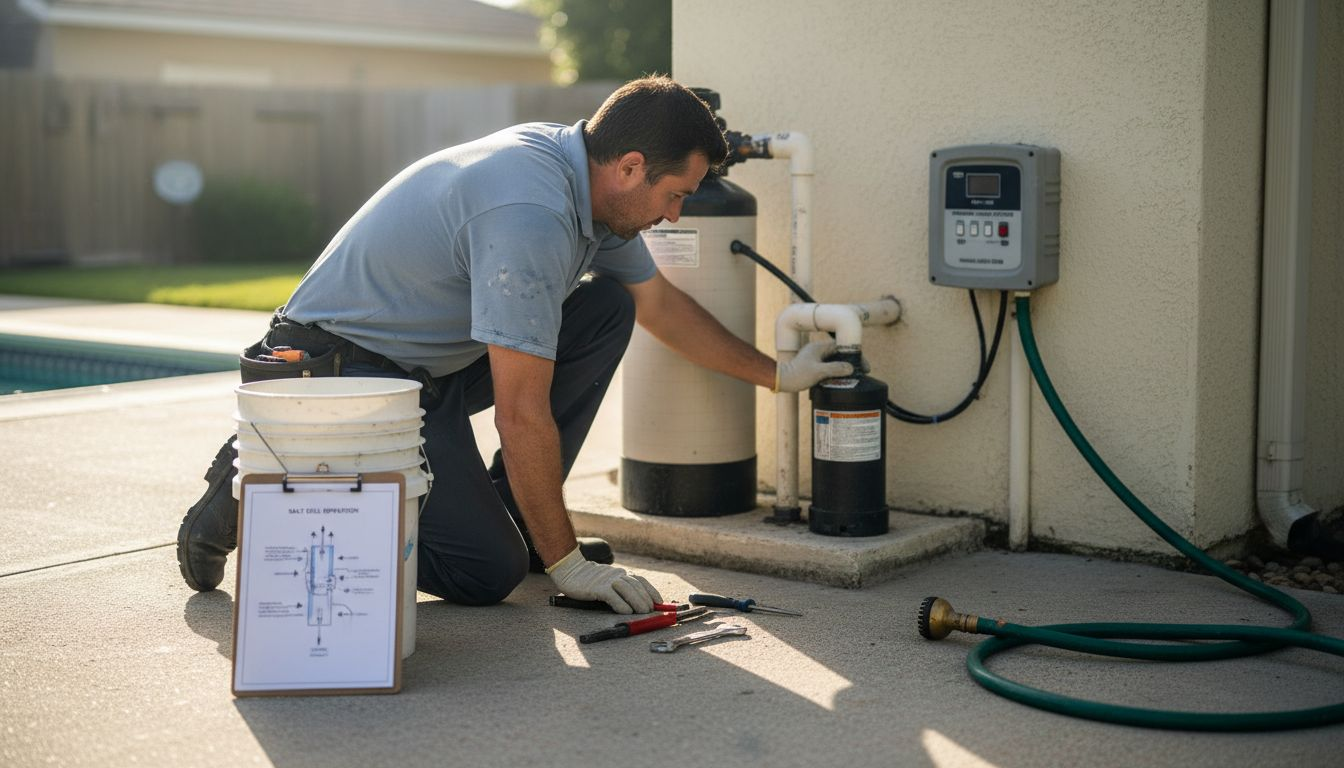
While the technology sounds complex, the practical implementation is straightforward for homeowners. The salt chlorine generator continuously monitors and produces chlorine, eliminating the need for frequent manual chemical additions. This automated process creates a more consistent and comfortable swimming environment, with reduced skin and eye irritation compared to traditional chlorine pools.
Pro tip: Maintain salt levels between 2700-3400 parts per million and clean the chlorine generator cell annually to ensure optimal performance and longevity.
Types of Saltwater Pool Installations
Central Florida homeowners have multiple options when considering saltwater pool installations, each offering unique advantages and design possibilities. The most common types include inground, above-ground, and semi-inground pools, each with specialized salt chlorination systems tailored to specific architectural and functional requirements.
Inground saltwater pools represent the most comprehensive installation option, featuring permanent salt chlorine generators seamlessly integrated into the pool’s recirculation system. These installations typically involve:
- Custom concrete or fiberglass construction
- Permanent salt cell technology
- Advanced water circulation systems
- Sophisticated filtration mechanisms
- Customizable design options
Above-ground saltwater pools provide a more flexible and cost-effective alternative, particularly for homeowners with space constraints or budget considerations. Saltwater systems for above-ground pools often include plug-and-play chlorinators designed for smaller water volumes and easier installation. These systems typically feature digital controls, self-cleaning electrodes, and app-based monitoring capabilities.
Semi-inground saltwater pools offer a hybrid solution, combining elements of both inground and above-ground designs. These installations provide greater design flexibility, allowing homeowners to create unique outdoor environments that blend seamlessly with existing landscaping while maintaining the benefits of saltwater pool technology.
Pro tip: Consult with a professional pool designer to determine the most suitable saltwater pool installation type based on your specific property layout, budget, and long-term maintenance preferences.
Below is a summary of saltwater pool installation types and their best-fit scenarios:
| Installation Type | Ideal For | Distinct Feature |
|---|---|---|
| Inground | Customization, durability | Permanent, advanced systems |
| Above-ground | Affordability, limited space | Easy setup, portable equipment |
| Semi-inground | Versatility, landscaping | Blended design, flexible location |
Health Benefits for Central Florida Families
Saltwater pools offer remarkable health advantages uniquely suited to Central Florida families, providing a gentler and more therapeutic swimming experience compared to traditional chlorine pools. Swimming offers significant health benefits that extend far beyond simple recreation, particularly in a climate that allows year-round aquatic activities.
The health advantages of saltwater pools are substantial and multifaceted, addressing both physical and mental wellness. These pools provide key benefits such as:
- Reduced skin and eye irritation
- Lower chemical exposure
- Enhanced respiratory comfort
- Improved joint mobility
- Stress reduction through water-based exercise
- Natural pain management for chronic conditions
For families with members experiencing health challenges like arthritis or respiratory sensitivities, saltwater pools represent an ideal solution. The reduced chloramine levels mean less chemical stress on the body, creating a more comfortable swimming environment. Proper saltwater pool management ensures a safer, more therapeutic aquatic experience that supports overall family wellness.
The mental health benefits are equally compelling. Swimming in a saltwater pool provides a low-impact exercise that promotes cardiovascular health, muscle strength, and emotional well-being. The warm Florida climate makes these pools an accessible, year-round resource for family fitness and relaxation.
Pro tip: Consult with a healthcare professional to understand how saltwater pool exercise can be tailored to individual family members’ specific health needs and physical conditions.
Maintenance and Cost Compared to Chlorine
Saltwater pool systems offer a sophisticated alternative to traditional chlorine pools, with unique maintenance considerations and long-term cost implications for Central Florida homeowners. Pool maintenance requires consistent monitoring of water chemistry, salt levels, and equipment performance to ensure optimal swimming conditions.
The financial landscape of saltwater pools differs significantly from conventional chlorine pools across several key dimensions:
- Higher initial installation costs
- Lower ongoing chemical expenses
- Reduced chemical handling requirements
- Less frequent chemical purchases
- Potential equipment replacement considerations
- More consistent water quality
While saltwater pools demand a more nuanced maintenance approach, they ultimately provide substantial long-term benefits. Pool system operations require routine testing to maintain proper chlorine residual and pH balance, similar to traditional pools but with reduced chemical interventions.
Central Florida homeowners should anticipate slightly different maintenance protocols compared to standard chlorine pools. The salt chlorine generator becomes the primary maintenance focus, requiring periodic cleaning, monitoring of salt cell functionality, and ensuring proper electrical connections. These systems typically need professional inspection every 1-2 years to maintain peak performance and prevent unexpected equipment failures.
Pro tip: Budget for an annual professional saltwater pool system evaluation to catch potential issues early and maintain optimal performance.
Risks, Limitations, and Design Considerations
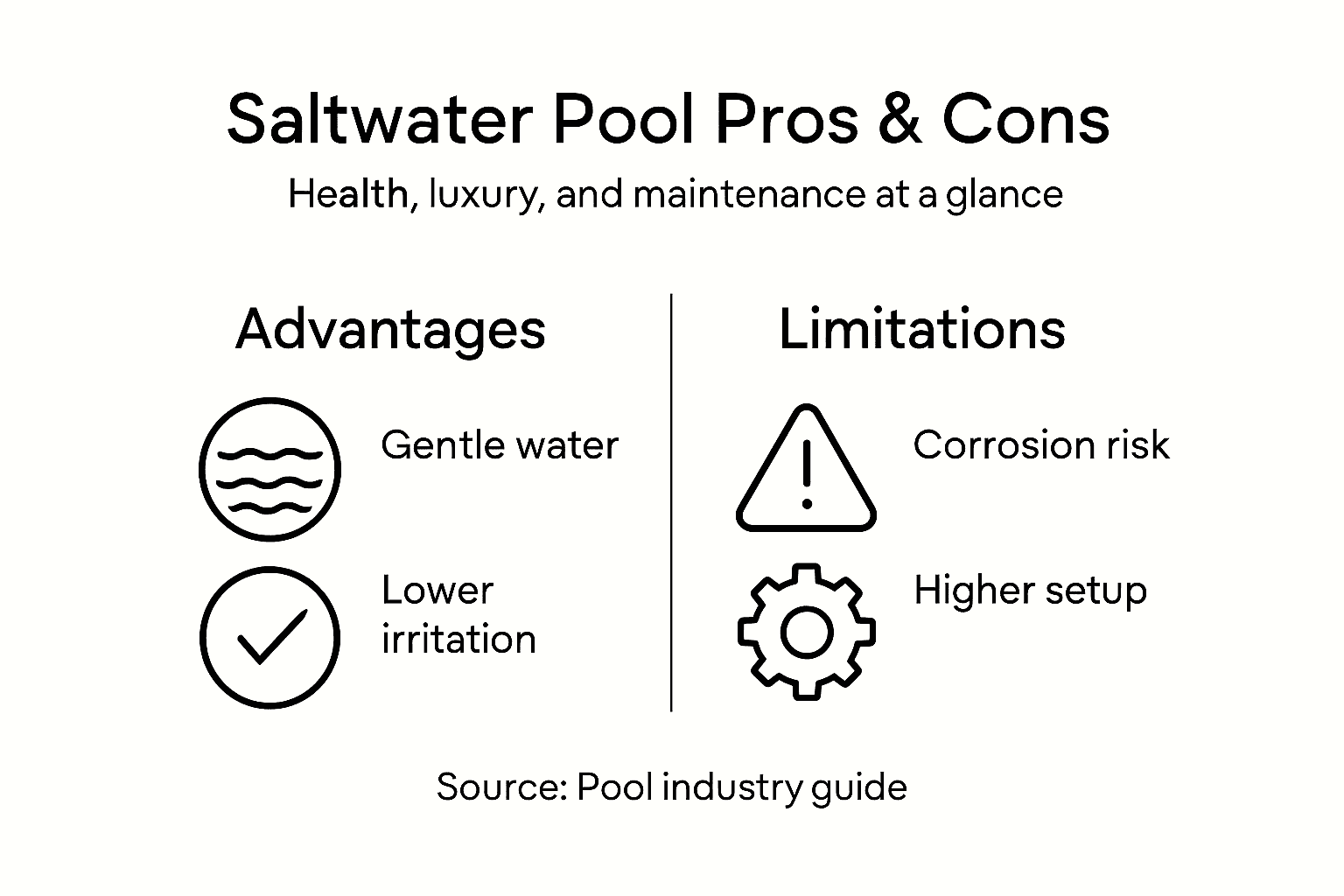
Saltwater pool systems, while innovative and beneficial, present unique challenges that Central Florida homeowners must carefully evaluate. Saltwater pool equipment requires specialized design considerations to mitigate potential risks associated with salt’s corrosive properties and complex environmental interactions.
Key risks and limitations for saltwater pool installations include:
- Potential equipment corrosion
- Higher initial installation costs
- Sensitivity to electrical system disruptions
- Complex maintenance requirements
- Environmental impact considerations
- Potential landscaping damage from salt exposure
The corrosive nature of saltwater systems demands strategic material selection and proactive maintenance. Components must be constructed from corrosion-resistant materials like titanium, fiberglass, or specialized marine-grade metals to prevent degradation. Environmental strategies for saltwater management become critical, particularly in regions with sensitive ecological systems like Central Florida’s unique landscape.
Design considerations extend beyond equipment selection to include comprehensive system integration. Homeowners must evaluate electrical infrastructure, salt concentration monitoring capabilities, and potential environmental runoff impacts. Professional consultation becomes essential to navigate these complex technical and ecological considerations.
Pro tip: Invest in a professional site assessment to identify potential salt system compatibility issues before installation.
Discover the Ultimate Saltwater Pool Experience with R & R Swimming Pools
Saltwater pools offer a luxurious and healthier alternative to traditional chlorine pools, promising gentler water that reduces skin and eye irritation while simplifying maintenance. Central Florida homeowners looking to enjoy these benefits face important challenges such as proper salt system integration, ongoing maintenance, and design choices that complement their property. With terms like “salt chlorine generator” and “salt concentration” playing a key role, it is essential to partner with experts who understand these unique requirements.
At R & R | R & R Swimming Pools, we specialize in designing and installing custom inground saltwater pools that perfectly balance health advantages and sophisticated craftsmanship. Our decades of experience mean we can guide you through selecting the ideal saltwater pool system, from architecture to equipment, ensuring reduced chemical exposure and easier upkeep for your family. Learn more about how to care for your pool and optimize its benefits by visiting our Pool School | R & R Swimming Pools.
Ready to transform your backyard into a personal oasis with a tailor-made saltwater pool designed for comfort and wellness? Visit R & R Swimming Pools today to schedule your free quote and start the journey toward a beautiful, healthier pool experience in Central Florida.
Frequently Asked Questions
What are the main benefits of saltwater pools?
Saltwater pools offer reduced skin and eye irritation, lower chemical exposure, improved water feel, and a gentler swimming experience compared to traditional chlorine pools. They also provide consistent chlorine generation, which enhances water quality and swimmer comfort.
How does a saltwater pool system work?
A saltwater pool system uses a salt chlorine generator that converts dissolved salt into chlorine through electrolysis. This automated process continuously generates chlorine, maintaining stable water quality without the need for frequent manual chemical additions.
What are the maintenance requirements for saltwater pools?
Saltwater pools require regular monitoring of salt levels and pH balance. Homeowners should also clean the chlorine generator cell annually and perform professional water testing quarterly to ensure optimal performance and prevent potential equipment damage.
Are saltwater pools completely chlorine-free?
No, saltwater pools are not chlorine-free. They generate chlorine on-site through a controlled process, which ensures effective sanitation while reducing the harshness associated with manually added chlorine chemicals.
