
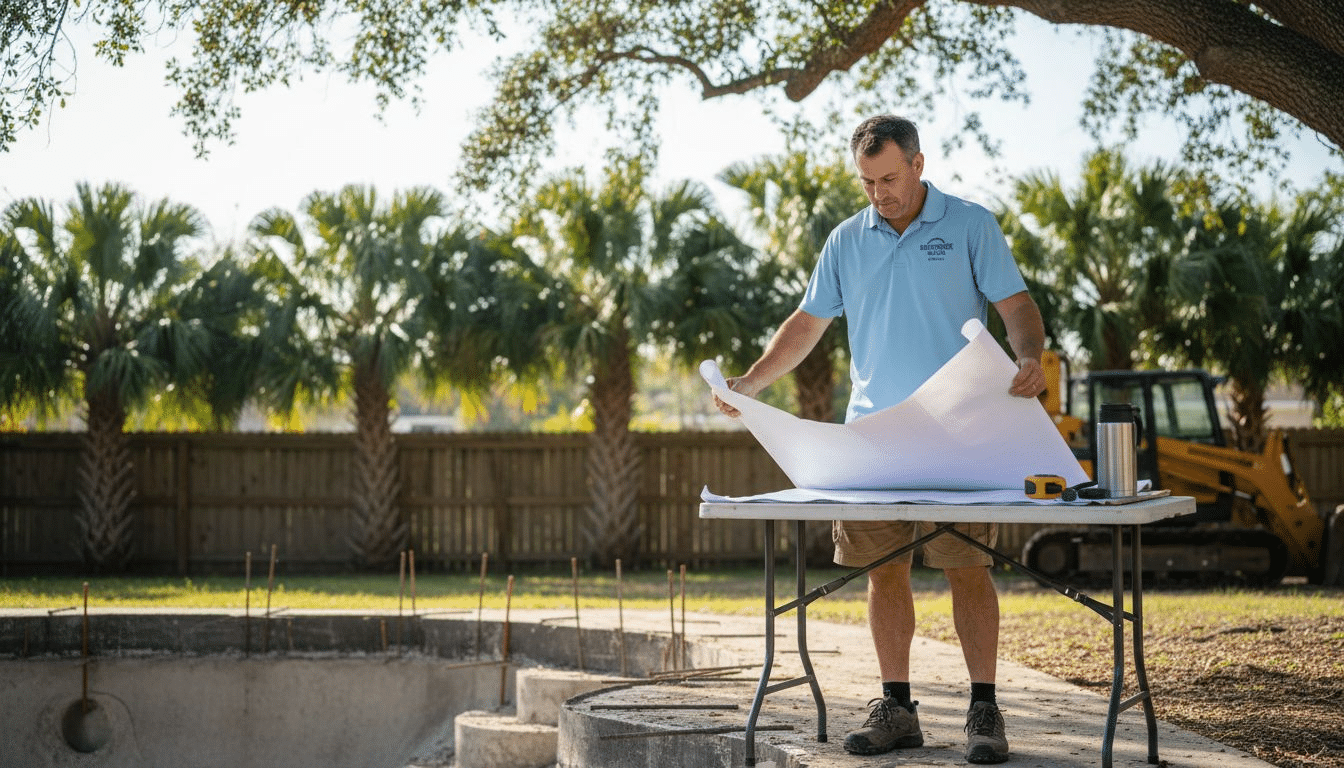
Choosing the right pool contractor can feel overwhelming when your dream backyard is on the line. For Central Florida homeowners, the difference between hiring a general contractor or a true licensed pool builder is more than paperwork. Florida law requires certified specialists for pool construction to protect your investment, safety, and property value. This article clears up the most common misconceptions and highlights why working with a licensed pool builder sets the foundation for stunning results and lasting peace of mind.
Table of Contents
- Licensed Pool Builders Defined and Misconceptions
- Types of Pool Builder Licenses in Florida
- Legal Standards and Local Permitting Requirements
- Risks of Working With Unlicensed Contractors
- Benefits: Safety, Quality, and Long-Term Value
Key Takeaways
| Point | Details |
|---|---|
| Licensed Pool Builders Are Specialized Professionals | In Florida, only licensed pool builders can legally construct swimming pools, ensuring compliance with safety and regulatory standards. |
| Understanding License Types Is Essential | Homeowners should be aware of the differences between the Residential Pool & Spa Contractor (RPBC) and Certified Pool and Spa Contractor (CPC) licenses. |
| Risks of Using Unlicensed Contractors Are Significant | Hiring unlicensed contractors can lead to legal issues, unsafe construction, and financial losses. |
| Licensed Builders Offer Long-Term Value and Safety | Utilizing licensed pool builders enhances safety, quality, and property value, providing a greater return on investment. |
Licensed Pool Builders Defined and Misconceptions
In Florida, a licensed pool builder is a specialized professional who holds a specific certification from the state’s Construction Industry Licensing Board. These professionals are not simply general contractors, but experts who have met rigorous standards to legally construct swimming pools. Specific pool contractor licenses like the Certified Pool Contractor (CPC) and Residential Pool & Spa Contractor (RPBC) are mandatory for legally building pools in the state.
Contrary to popular belief, not all contractors can construct swimming pools in Florida. The state has strict regulations requiring specialized licensing due to the complex safety, electrical, and plumbing requirements associated with pool construction. Many homeowners mistakenly assume that a general construction license is sufficient, but Florida law explicitly prohibits non-specialized contractors from building pools. This licensing requirement ensures that only professionals with specific training and knowledge can design and construct swimming pools.
The misconceptions surrounding pool builders extend beyond licensing requirements. Many homeowners believe that all pool contractors provide similar services and quality, which is far from the truth. Licensed pool builders are distinguished by their in-depth understanding of local building codes, advanced construction techniques, and commitment to safety standards. These professionals invest significant time in continuing education, staying updated on the latest materials, technologies, and regulatory changes that impact pool construction.
Pro tip: Always verify a pool builder’s current license status through the Florida Construction Industry Licensing Board before signing any contracts to ensure legal compliance and professional credibility.
Types of Pool Builder Licenses in Florida
Florida maintains a rigorous licensing system for pool construction professionals, with multiple specialized credentials designed to ensure safety and expertise. The primary license for pool construction is the Certified Pool and Spa Contractor (CPC) license, which represents the most comprehensive authorization for pool building in the state. Specialized pool contractor licenses cover complex aspects of pool construction, including layout, excavation, steelwork, and equipment installation.
The state recognizes two primary types of pool builder licenses that homeowners should understand. The first is the Residential Pool & Spa Contractor (RPBC) license, which focuses specifically on residential pool projects. This license ensures that contractors have specialized knowledge of residential pool design, safety requirements, and local building codes. The second is the more comprehensive Certified Pool Contractor (CPC) license, which allows professionals to work on both residential and commercial pool projects, demonstrating a higher level of expertise and regulatory compliance.
Unlike general construction licenses, these specialized pool builder credentials require extensive training and demonstrate a contractor’s commitment to professional standards. Contractors must pass rigorous examinations that test their knowledge of pool construction techniques, safety regulations, electrical and plumbing standards, and local building codes. Additionally, licensed pool builders must maintain their credentials through continuing education, ensuring they stay current with the latest technologies, safety protocols, and construction innovations in the pool building industry.
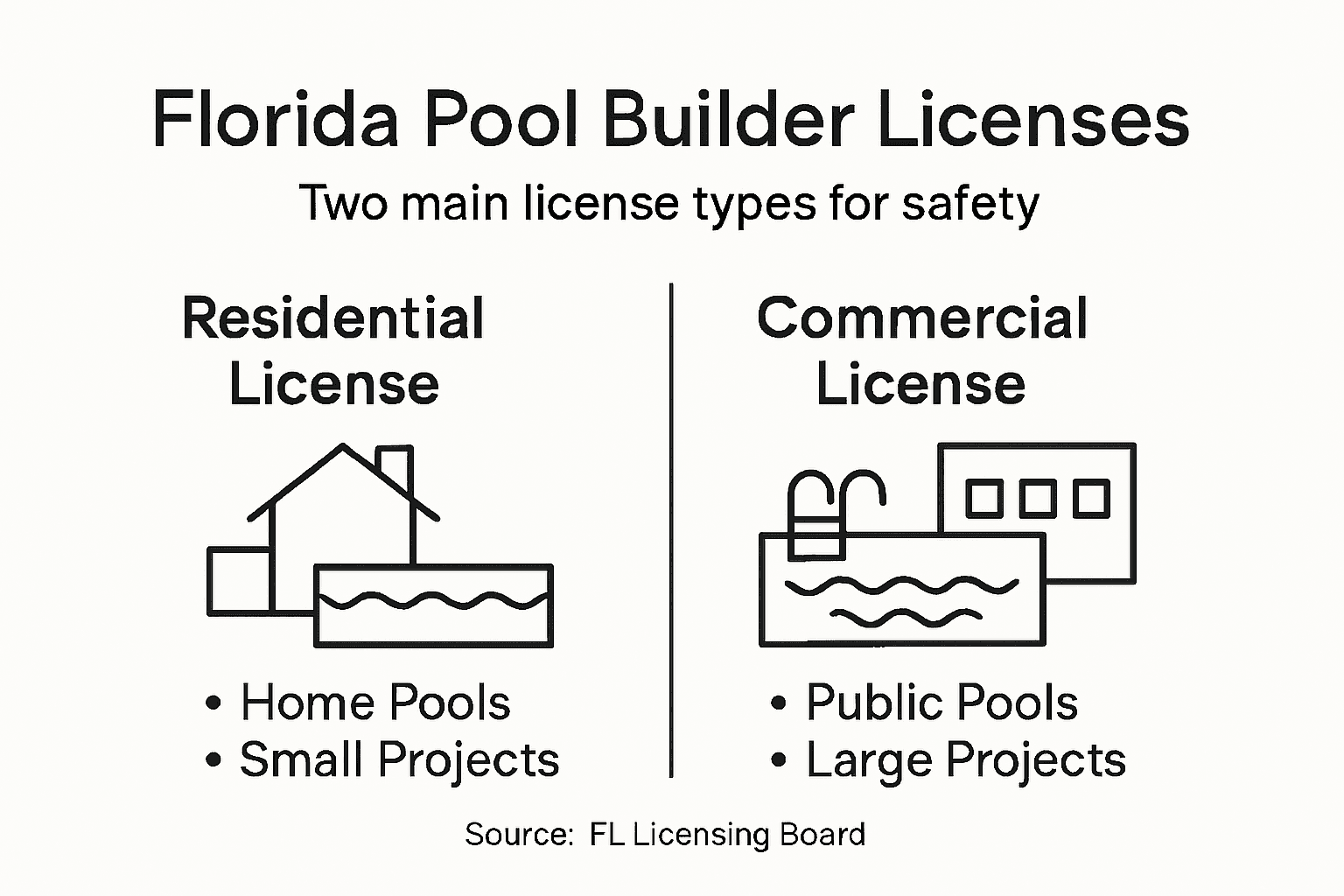
Here is a summary comparing the main types of pool builder licenses in Florida:
| License Type | Primary Scope | Eligible Projects | Required Knowledge |
|---|---|---|---|
| Residential Pool & Spa Contractor (RPBC) | Residential pools and spas | Single-family homes, residential properties | Residential codes, safety standards |
| Certified Pool and Spa Contractor (CPC) | Residential and commercial pools | Homes, hotels, public facilities | Advanced codes, complex installations |
Pro tip: Request to see a contractor’s current license number and verify its status directly with the Florida Construction Industry Licensing Board before starting any pool construction project.
Legal Standards and Local Permitting Requirements
Pool construction in Florida involves a complex legal landscape that demands meticulous attention to local and state regulations. Permitting processes for pool installations require homeowners and contractors to navigate a series of strict procedural requirements. Each municipality may have unique specifications, but all mandate comprehensive documentation, detailed site plans, and compliance with safety and environmental standards before construction can begin.
The permitting process typically involves multiple critical steps. Contractors must submit comprehensive construction plans to local authorities, demonstrating compliance with zoning regulations, setback requirements, and safety codes. These plans undergo thorough review to ensure they meet structural integrity standards, electrical and plumbing specifications, and environmental protection guidelines. Additionally, homeowners must obtain specific permits that may include separate approvals for excavation, structural work, electrical installations, and plumbing connections.
Safety regulations form a crucial component of Florida’s pool construction legal framework. State laws mandate specific safety features designed to prevent accidents, particularly those involving children. These requirements often include mandatory pool fencing with precise height and gate specifications, alarm systems, anti-entrapment drain covers, and specific depth markings. Failure to comply with these regulations can result in significant penalties, including potential fines, mandatory modifications, or even forced removal of the pool installation.
Pro tip: Request a comprehensive checklist of required permits and safety features from your licensed pool contractor to ensure full legal compliance before beginning your pool construction project.
Risks of Working With Unlicensed Contractors
Hiring unlicensed contractors for pool construction in Florida exposes homeowners to significant financial and legal vulnerabilities. Serious risks of unlicensed work can result in substantial monetary penalties, with potential fines reaching up to $5,000 per incident. These contractors often lack the necessary expertise to meet complex state building codes, leaving homeowners vulnerable to substandard work that can compromise both safety and property value.
Unlicensed pool contractors frequently cut corners in critical areas of construction, including structural integrity, electrical wiring, and plumbing installations. Without proper credentials, these individuals cannot legally obtain the necessary permits or pass mandatory inspections. This means homeowners risk having their entire pool project rejected by local authorities, potentially requiring complete reconstruction at their own expense. Moreover, insurance companies typically refuse to cover damages resulting from work performed by unlicensed contractors, leaving homeowners financially exposed to potential structural failures or safety hazards.
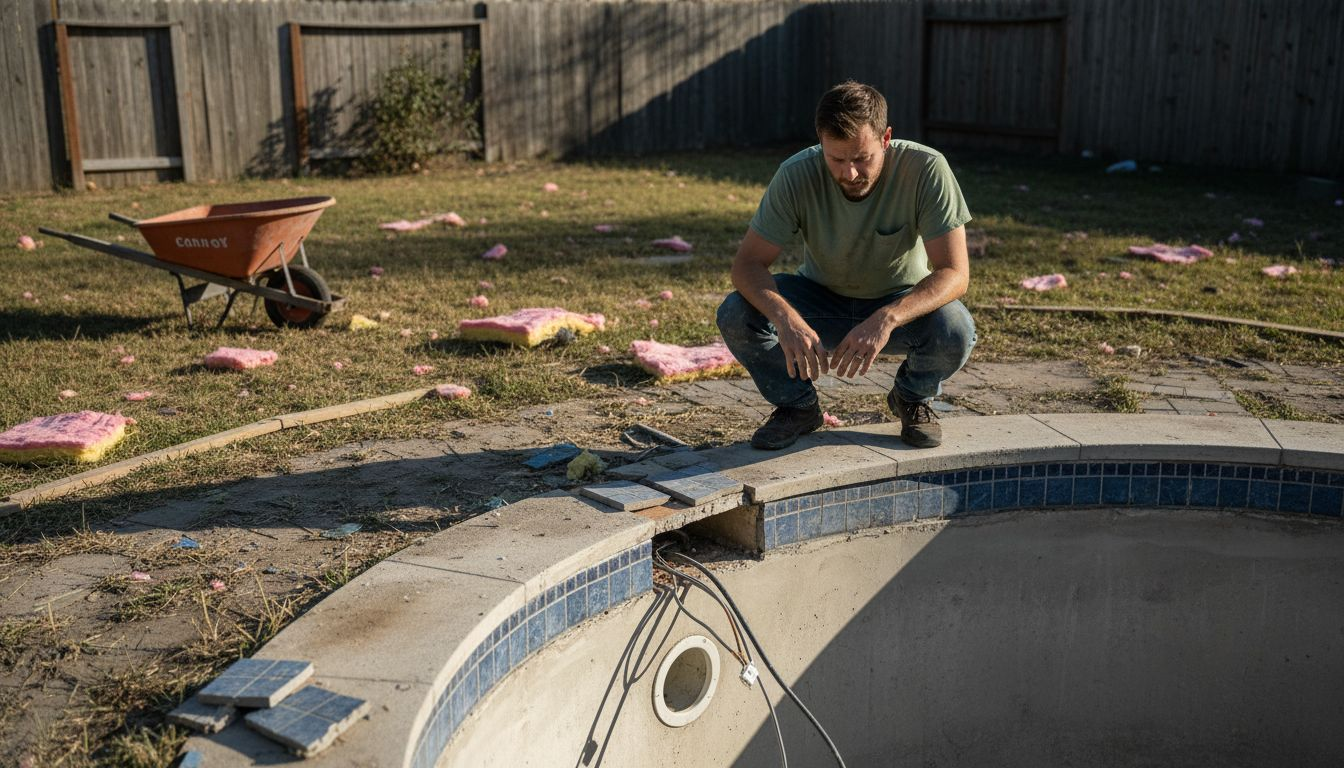
The long-term consequences of hiring unlicensed pool builders extend far beyond immediate construction challenges. Homeowners may face legal complications when attempting to sell their property, as unpermitted or improperly constructed pools can create significant obstacles during real estate transactions. Potential buyers and home inspectors will scrutinize pool installations, and any evidence of unlicensed work can dramatically reduce property value or even prevent a sale entirely. Additionally, homeowners could be held personally liable for accidents or injuries related to improperly constructed pool facilities, creating substantial personal and financial risk.
The table below highlights the key risks of hiring unlicensed contractors versus licensed professionals for pool construction:
| Criteria | Licensed Contractor | Unlicensed Contractor |
|---|---|---|
| Legal Compliance | Follows all state and local laws | Often bypasses regulations |
| Permit Access | Can obtain required permits | Cannot legally secure permits |
| Insurance Coverage | Work is typically insured | Insurance often denied |
| Long-Term Value | Increases property resale value | May reduce or hurt value |
Pro tip: Always verify a contractor’s license status through the Florida Construction Industry Licensing Board and request copies of their current credentials before signing any pool construction contracts.
Benefits: Safety, Quality, and Long-Term Value
Licensed pool builders provide Central Florida homeowners with comprehensive advantages that extend far beyond basic construction. Swimming pool safety standards ensure that every pool installation meets rigorous technical and regulatory requirements, protecting both the homeowner’s investment and the family’s well-being. These professionals bring specialized expertise that translates into superior design, precise engineering, and meticulous attention to detail throughout the entire pool construction process.
Quality and safety are paramount in licensed pool construction. Professional contractors understand the complex interplay between structural integrity, material selection, and long-term performance. They utilize high-grade materials specifically suited to Florida’s unique environmental conditions, ensuring pools that can withstand intense sunlight, humidity, and potential storm damage. Residential pool safety regulations dictate specific safety features like proper fencing, alarm systems, and protective covers, which licensed builders incorporate seamlessly into their design and installation processes.
The financial benefits of hiring licensed pool builders extend well into the future. Professionally constructed pools maintain and often increase property value, providing a significant return on investment. Insurance companies recognize the superior quality of licensed work, which can translate into more favorable coverage terms. Moreover, licensed builders provide comprehensive documentation and warranties that protect homeowners against potential defects, giving peace of mind that DIY or unlicensed approaches cannot match. Their deep understanding of local building codes and permit requirements ensures smooth project completion and eliminates potential legal complications.
Pro tip: Request a comprehensive portfolio of previous pool installations and verify references to fully understand a licensed pool builder’s quality and expertise before making your final selection.
Ensure Safety and Quality by Hiring Licensed Pool Builders
Building a swimming pool is a major investment that requires more than just craftsmanship. The article highlights key challenges including navigating strict Florida pool construction licensing, ensuring safety standards, and complying with local permitting rules. Homeowners want peace of mind knowing their pool is built by professionals who understand electrical, plumbing, and structural complexities while avoiding costly legal risks associated with unlicensed contractors. Choosing a licensed pool builder is essential to protect your home and family while enhancing property value.
At R & R Swimming Pools, we specialize in custom inground pool design and installation backed by decades of experience and full licensing compliance. Our team is committed to delivering quality workmanship using advanced techniques and materials suited for Central Florida’s environment. Learn more about pool safety and maintenance in our Pool School where we share expert insights that help you make informed decisions. Discover why trusting licensed professionals means superior durability, beautiful custom designs, and hassle-free permitting.
Ready to bring your dream pool to life with confidence and compliance? Visit R & R | R & R Swimming Pools today and schedule your free consultation. Don’t risk safety or value—partner with licensed experts who prioritize your satisfaction every step of the way at https://randrswimmingpools.com. Start building the safe, stunning backyard oasis you deserve now.
Frequently Asked Questions
Why is it important to hire a licensed pool builder?
Hiring a licensed pool builder is crucial because they have specialized knowledge of building codes, safety regulations, and the technical expertise required to construct a pool properly. This ensures compliance with state laws, enhances safety, and protects your investment in the long run.
What types of licenses should I look for in a pool builder?
In Florida, you should look for either a Certified Pool and Spa Contractor (CPC) license or a Residential Pool & Spa Contractor (RPBC) license. The CPC license covers both residential and commercial projects, while the RPBC focuses specifically on residential installations.
What are the risks of hiring unlicensed pool contractors?
Hiring unlicensed contractors can lead to severe risks, including potential fines, substandard construction, legal liabilities, and issues with property value. Unlicensed work may not pass inspections, causing delays and additional costs for the homeowner.
How do licensed pool builders ensure safety during construction?
Licensed pool builders ensure safety by adhering to strict safety regulations, implementing necessary safety features, and utilizing quality materials suited for pool construction. They follow comprehensive safety protocols, including proper fencing, alarm systems, and ensuring structural integrity throughout the project.
Recommended
