
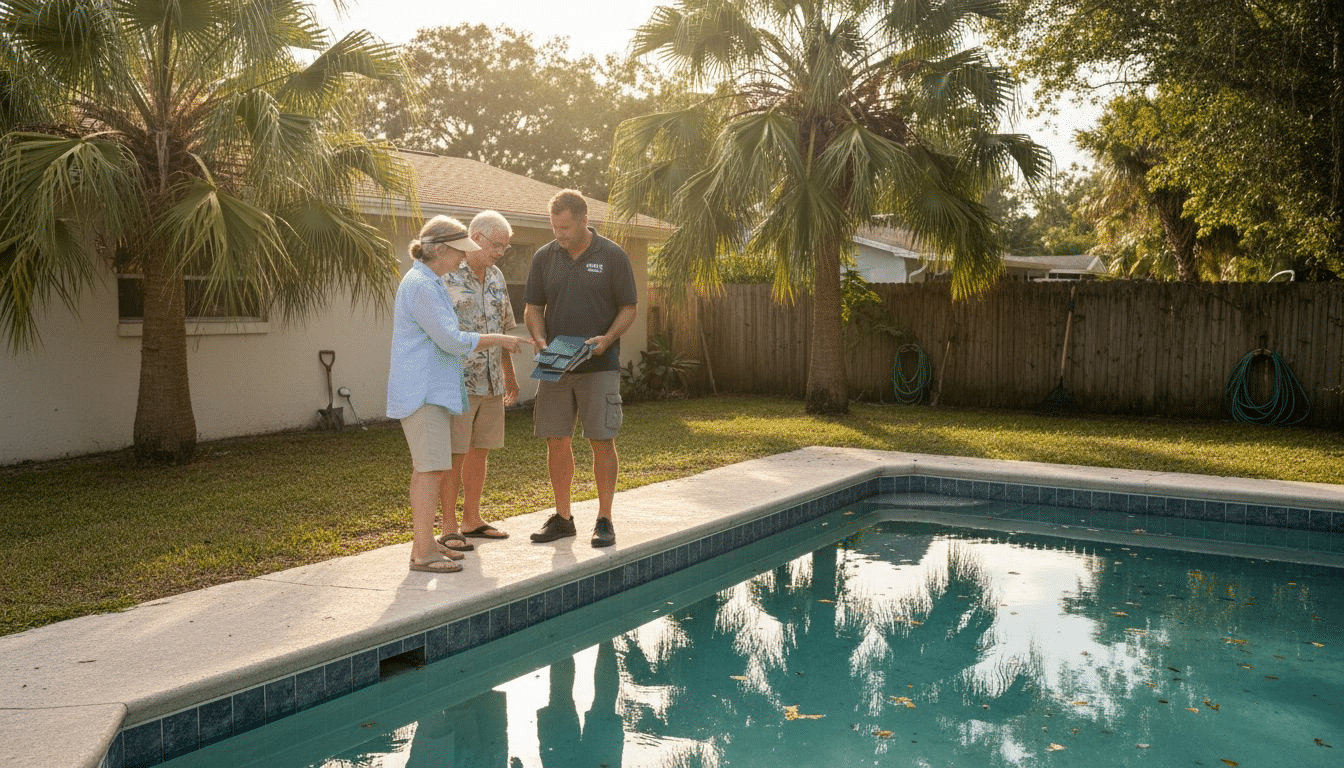
Every homeowner in The Villages or Mount Dora reaches a point when their backyard pool no longer matches their family’s needs or style. Pool renovation is not just about looks. It also brings your pool up to date with current codes set by the International Swimming Pool and Spa Code, making sure safety, efficiency, and reliability are built in. Choosing the right upgrades means you enjoy a stunning, modern pool crafted for the way your family lives now.
Table of Contents
- Pool Renovation Defined And Common Myths
- Top Reasons Homeowners Renovate Pools
- Popular Upgrades And Modernization Options
- Financial Impact And Property Value Considerations
- Cost, Risks, And Mistakes To Avoid
Key Takeaways
| Point | Details |
|---|---|
| Importance of Renovation | Pool renovation enhances safety, functionality, and aesthetics, ensuring compliance with current regulations. |
| Economic Benefits | Renovations can decrease operational costs and increase property value, often paying for themselves over time. |
| Common Upgrade Options | Popular upgrades include solar heaters, variable-speed pumps, and safety enhancements, catering to efficiency and modern standards. |
| Risk Management | Avoid common pitfalls by budgeting for unexpected costs, ensuring code compliance, and hiring qualified contractors. |
Pool Renovation Defined and Common Myths
Pool renovation is more than just cosmetic updates. It involves upgrading, repairing, or completely reimagining your existing pool structure, systems, and surroundings to meet current safety standards, improve functionality, and enhance your outdoor living experience. For Central Florida homeowners, particularly those in The Villages and Mount Dora where pools are lifestyle staples, renovation can mean updating aging concrete shells, installing modern filtration systems, adding water features like cascading waterfalls or integrated spas, or completely reconfiguring your pool layout to better match your family’s needs. The scope depends entirely on your goals and budget, but the end result should be a pool that looks stunning while functioning reliably for years to come.
When most homeowners think about pool renovation, they picture something that takes months and costs a fortune. That’s one myth right there. Another common misconception involves safety. Many people believe that if their pool hasn’t caused problems yet, it doesn’t need updates. This overlooks a critical reality: swimming pool safety regulations have evolved significantly, and older pools may not meet current requirements for proper barriers, fencing, or safety equipment. What was acceptable five or ten years ago might not comply with today’s standards. The International Swimming Pool and Spa Code establishes specific design and safety requirements for residential pools throughout the United States, meaning your renovation isn’t optional if you want to remain compliant and protect your family from liability.
Another widespread myth suggests that renovation only makes sense if something is broken. Reality tells a different story. Strategic renovation can actually prevent future problems by addressing structural wear, upgrading outdated plumbing and electrical systems, and improving water quality management. Homeowners often delay renovation, thinking they’ll save money by waiting. But failing equipment, cracked surfaces, and inefficient systems end up costing far more in emergency repairs than planned renovation would have. For families in The Villages or Mount Dora looking to sell their homes, renovation also increases property value significantly. A well-maintained, updated pool becomes a major selling point, not a liability. The key is understanding that renovation ranges from targeted repairs to complete reconstruction, so you can choose what fits your timeline and budget while ensuring your pool meets safety standards and performs optimally.
Pro tip: Schedule a professional assessment before deciding on renovation scope. Contractors can identify hidden issues like structural damage or code violations that affect both your safety and property value, helping you prioritize upgrades that matter most for your specific situation.
Top Reasons Homeowners Renovate Pools
Homeowners renovate their pools for surprisingly practical reasons that extend far beyond wanting a prettier backyard. The most compelling driver is simple economics. An older pool with outdated equipment consumes far more energy and water than a modern renovated one. Installing water-efficient systems, proper circulation equipment, and covers designed to reduce evaporation can slash your monthly operating costs significantly. For Central Florida homeowners in The Villages and Mount Dora, where pools run year-round and summer heat accelerates water loss, these savings add up fast. Beyond the immediate utility bill benefits, water-efficient pool upgrades also reduce chemical consumption, meaning less time maintaining water chemistry and lower product costs. When you calculate these savings over several years, renovation often pays for itself through operational efficiency alone.
Another major reason homeowners decide to renovate is property value. You might think a pool is just a pool, but the reality is quite different. A tired, outdated pool actually detracts from your home’s appeal, while a well-designed, modern pool can increase property value by up to 7%. For families considering selling or simply wanting to maximize their investment in their Mount Dora or Villages home, this alone justifies renovation. Beyond resale value, safety improvements represent a critical motivation. Older pools may lack modern anti-entrapment features, updated fencing requirements, or proper barrier systems. If you have young children or grandchildren visiting frequently, upgrading safety features provides genuine peace of mind. Modern renovations can incorporate better circulation systems that prevent accidents and comply with current codes, protecting your family and your liability exposure.
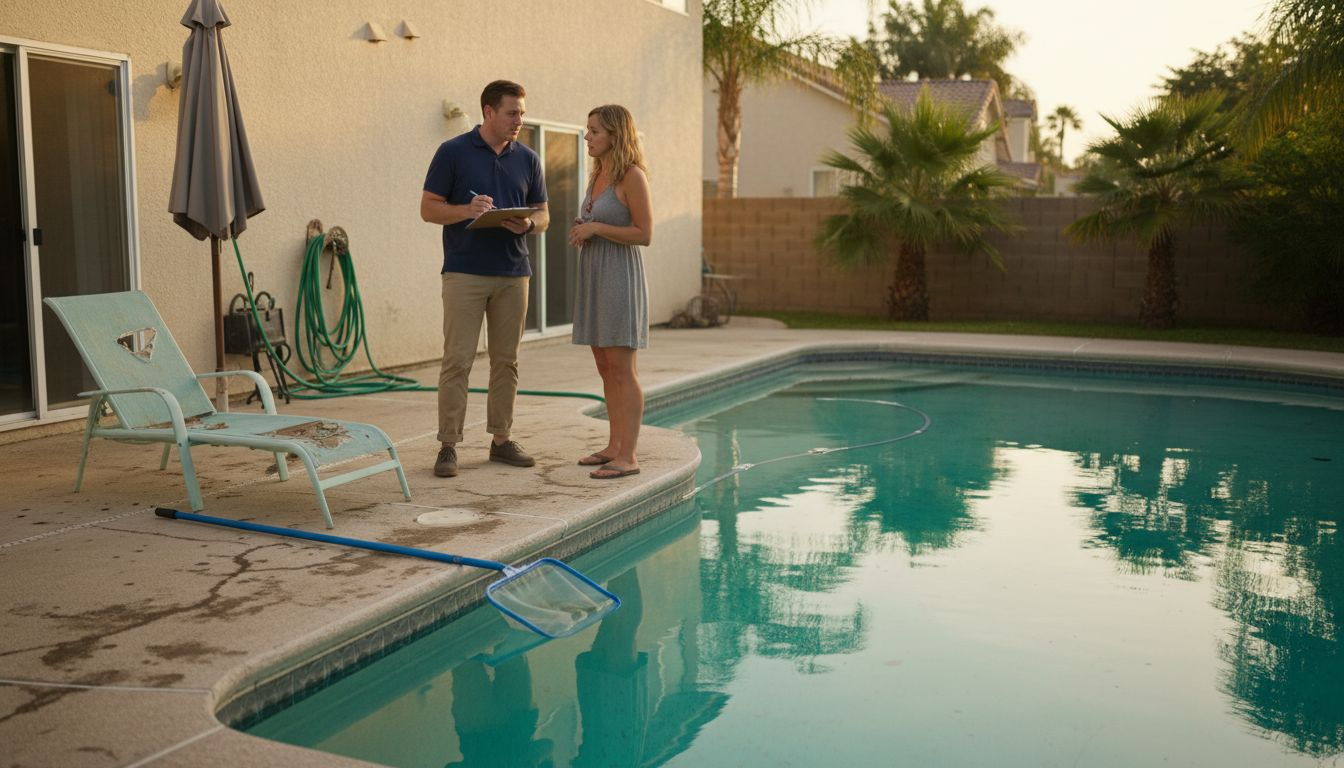
Functionality improvements round out the top reasons homeowners pursue renovation. Maybe your original pool design doesn’t match your lifestyle anymore. Perhaps you want to add a spa for therapeutic soaking, install a waterfall or water feature for visual appeal, upgrade to saltwater systems that are gentler on skin and equipment, or simply reconfigure the pool shape to better fit your yard. These enhancements transform your pool from an aging fixture into the centerpiece of your outdoor living space. For many Central Florida families, the pool is where memories happen, where you entertain guests, and where you spend countless summer evenings. A renovation that addresses maintenance problems, improves aesthetics, and adds desired features means your pool serves your actual lifestyle rather than the original homeowner’s vision from decades ago.
Pro tip: Prioritize renovations that address efficiency and safety first, as these deliver immediate cost savings and liability protection, then allocate remaining budget to aesthetic upgrades that enhance your outdoor living experience and property appeal.
Popular Upgrades and Modernization Options
When you decide to renovate your pool, you have countless upgrade options to choose from. The most popular upgrades fall into three categories: energy efficiency, water conservation, and safety enhancement. For Central Florida homeowners where energy bills run high year-round, focusing on efficiency upgrades makes immediate financial sense. Solar pool heaters top the list of smart upgrades. These systems use the sun’s energy to warm your pool water, dramatically reducing reliance on gas or electric heaters. In Florida’s climate, solar heating is exceptionally practical since you get consistent sunshine throughout the year. A solar pool heating system can reduce your heating costs by 70 percent or more, and once installed, the ongoing maintenance is minimal. Beyond solar heaters, variable-speed pool pumps are another game-changer. Traditional single-speed pumps run at full power constantly, consuming enormous amounts of electricity. Variable-speed models adjust their output based on actual pool needs, using significantly less energy while maintaining perfect water circulation. Many homeowners see their pump-related electricity costs drop by half after switching to a variable-speed model.
Water conservation upgrades deserve equal attention, especially in Florida where pools lose tremendous amounts of water to evaporation during hot months. Advanced pool covers are simple but highly effective. Modern covers prevent evaporation, reduce chemical consumption by limiting sunlight exposure, and minimize debris accumulation. Some homeowners invest in automated cover systems that deploy at the push of a button, making it convenient to use them regularly rather than leaving them stored away. Beyond covers, upgrading your filtration system to a high-efficiency model optimizes water flow while using less energy. These systems also improve water quality, meaning less chemical adjustment and clearer water year-round. For those considering major upgrades, saltwater systems represent a significant modernization. Rather than traditional chlorine maintenance, saltwater pools generate chlorine naturally through electrolysis. This approach is gentler on skin and eyes, reduces chemical handling, and often costs less to maintain long-term. You can retrofit most existing pools with saltwater conversion, making it accessible whether you’re renovating partially or completely.
Safety upgrades should never be overlooked during renovation. Modern anti-entrapment drain covers comply with current federal standards and prevent the dangerous entrapment incidents that plagued older pools. Upgrading fencing and barrier systems ensures your pool meets current code requirements, which is essential if you have young children or grandchildren visiting. Many renovation projects also address lighting upgrades, installing LED pool lights that are energy-efficient and create beautiful evening ambiance while improving visibility and safety. Some homeowners add automated monitoring systems that track water chemistry, temperature, and equipment status remotely, alerting you to problems before they become expensive repairs. For The Villages and Mount Dora families, adding a spa or hot tub integration during renovation transforms your pool area into a year-round resort-style retreat. Spas provide therapeutic benefits and serve as a focal point for entertaining, and renovating allows you to integrate plumbing and electrical systems seamlessly rather than adding them as afterthoughts.
Pro tip: Prioritize upgrades based on three criteria: immediate cost savings through energy reduction, required safety improvements for code compliance, and desired lifestyle enhancements that will actually get used regularly.
Here’s a summary of popular pool upgrade types and their distinct benefits:
| Upgrade Type | Key Benefit | Typical Cost Range |
|---|---|---|
| Solar Pool Heater | Cuts heating costs 70%+ | $3,000–$7,000 |
| Variable-Speed Pump | Slashes electricity bills | $800–$1,200 |
| Automated Pool Cover | Reduces evaporation losses | $2,000–$4,500 |
| Saltwater System | Gentler water maintenance | $1,500–$3,500 |
| LED Lighting | Efficient night ambiance | $400–$1,000 |
| Spa Integration | Resort-style relaxation | $7,000–$14,000 |
Financial Impact and Property Value Considerations
Let’s talk money. Pool renovation requires a meaningful investment, but understanding the financial impact helps you make decisions that actually make sense for your situation. Here’s the reality: a well-executed renovation increases your home’s value. Research shows that pool renovations can increase property value by up to 7 percent, which translates to real dollars when you sell. For a home in The Villages or Mount Dora valued at $400,000 to $600,000, that 7 percent jump represents $28,000 to $42,000 in added value. Even if you spend $50,000 on a comprehensive renovation, you’re still building equity rather than throwing money away. The catch is that not all renovations deliver equal returns. Cosmetic updates alone won’t justify the expense. The renovations that drive value are those addressing functionality, modernization, safety compliance, and energy efficiency. A pool that looks pretty but still costs a fortune to operate doesn’t appeal to buyers. A pool that’s been updated with modern systems, safety features, and energy-efficient equipment tells a different story.
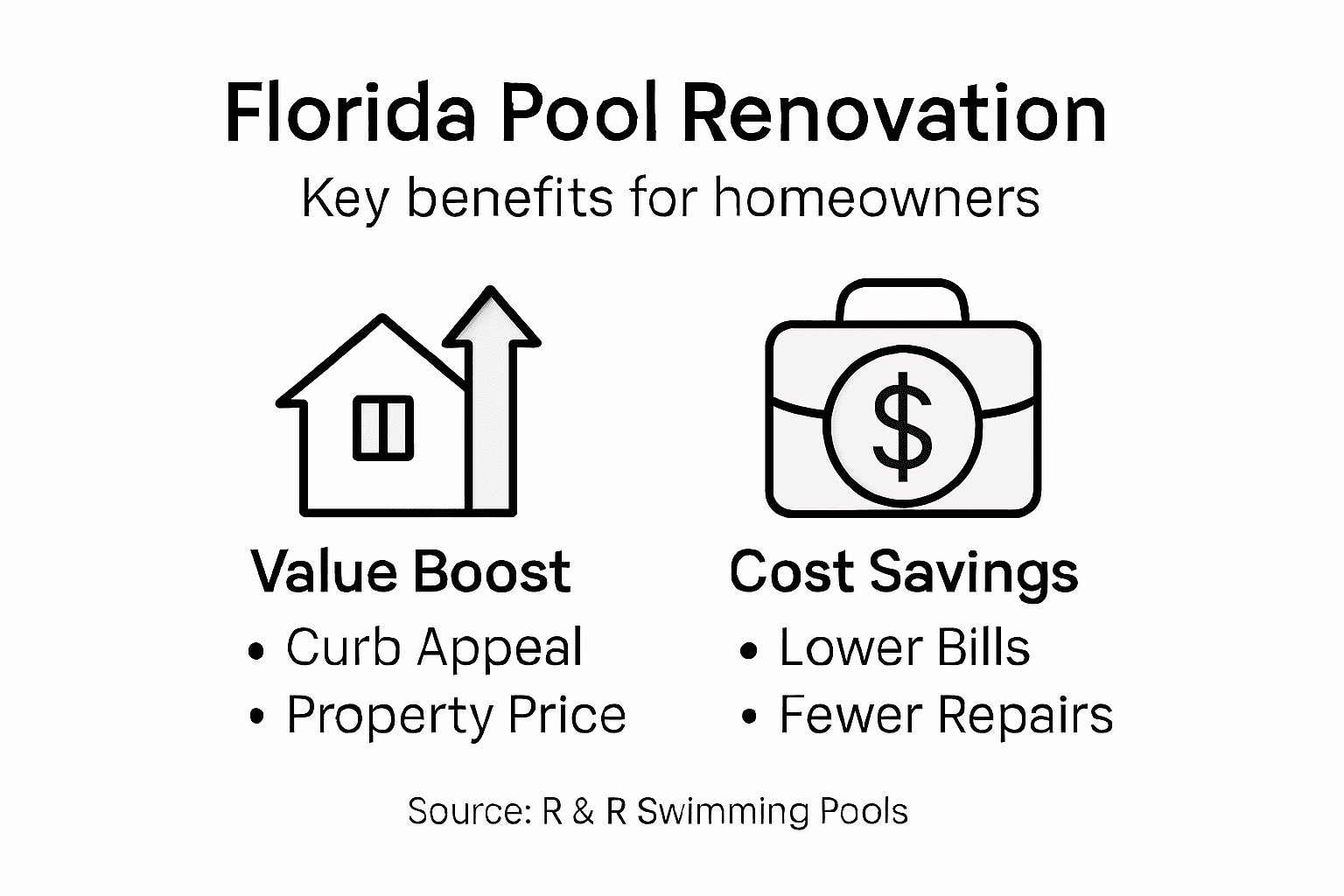
The long-term operational savings deserve serious consideration when calculating true financial impact. After renovation, your pool operating costs drop substantially. An outdated pool with an inefficient pump and no cover might cost $150 to $200 monthly to operate during summer months. After upgrading to variable-speed pumps, installing a high-efficiency filtration system, adding quality pool covers, and potentially installing solar heating, that same pool might cost $50 to $75 monthly. That savings of $75 to $125 per month translates to $900 to $1,500 annually in reduced utility costs. Over a 10-year period, you’re looking at $9,000 to $15,000 in operational savings. Add in reduced chemical consumption, fewer emergency repairs from aging equipment, and lower maintenance labor, and the financial picture becomes even more attractive. Energy-efficient upgrades substantially reduce water, chemical, and energy expenses, meaning renovation pays dividends throughout your ownership of the home.
Timing matters when considering renovation investment. If you’re planning to stay in your home for at least five years, renovation makes financial sense. The operational savings alone recover part of your investment, and you enjoy the benefits during your ownership. If you’re selling within two years, renovation becomes a calculation about specific upgrades that appeal to buyers in your market. For Central Florida homeowners, pools are valuable selling points because of the climate and lifestyle appeal. A seller without a pool in The Villages or Mount Dora actually loses value compared to properties with updated pools. Conversely, a home with a shabby, outdated pool detracts from overall appeal. The sweet spot is renovating to modern standards with focus on efficiency and safety. Beyond resale considerations, quality of life matters. You’re not just investing in property value. You’re investing in a space where your family gathers, where you entertain, and where you spend meaningful time. A functioning, beautiful, efficient pool dramatically improves your actual enjoyment of your home.
Here’s a practical framework for thinking about renovation costs. Break your budget into tiers based on priority:
- Essential repairs and safety compliance upgrades
- Efficiency improvements that reduce operating costs
- Desired lifestyle enhancements and aesthetic updates
Start with tier one, which ensures your pool is safe and code-compliant. Tier two upgrades pay for themselves through operational savings. Tier three represents discretionary spending on things like spas, water features, or lighting that enhance enjoyment but aren’t financially necessary. This approach ensures you capture the financial benefits while respecting your actual budget constraints.
Pro tip: Request itemized cost breakdowns from contractors showing which upgrades deliver immediate operational savings versus long-term property value increases, allowing you to prioritize spending based on your actual timeline and financial goals.
Compare how major renovation priorities impact your home’s value and operating costs:
| Renovation Focus | Effect on Value | Effect on Costs |
|---|---|---|
| Safety Compliance | Prevents liability | May reduce insurance |
| Efficiency Upgrades | Increases appeal | Lower monthly bills |
| Cosmetic Improvements | Boosts curb appeal | Minimal impact |
| Structural Repairs | Essential for resale | Reduces repairs |
Cost, Risks, and Mistakes to Avoid
Pool renovation can go sideways fast if you don’t understand common pitfalls. The biggest mistake homeowners make is drastically underestimating costs. You’ve probably heard stories about renovations that started at $30,000 and ended up costing $60,000. These overruns happen because homeowners focus only on visible upgrades while contractors discover hidden problems during the work. A cracked pool shell needs structural repair. Underground plumbing has corroded sections requiring replacement. Electrical systems don’t meet current code and need complete rewiring. Suddenly, scope creeps and costs balloon. To avoid this, invest in a thorough pre-renovation inspection before signing any contracts. Get detailed written estimates that itemize every component and labor cost. Build a 15 to 20 percent contingency buffer into your budget for unexpected issues. For Central Florida pools, watch especially for structural damage from decades of freeze-thaw cycles and ground settling, which can be expensive to address properly.
Another critical mistake involves ignoring local code requirements. Florida pool codes have evolved significantly, and older pools often violate multiple standards. Your renovation must address electrical safety and proper grounding for pools, which sounds technical but is literally life-or-death. Improper electrical installation in or around pools can cause electrocution, which happens in seconds with no warning. Beyond electrical safety, you need proper fencing, gate mechanisms, drain covers that prevent entrapment, and safety signage. Many homeowners think they can cut corners on these requirements or address them later. Don’t. Code violations create liability exposure that can destroy you financially if someone is injured. They also prevent you from selling your home or refinancing your mortgage. Contractors who downplay code compliance or suggest workarounds are not contractors you should trust. Find professionals who understand local regulations thoroughly and build compliance into their project timeline and budget from day one.
Structural failures and water leakage represent the most expensive mistakes. A poorly executed renovation can damage your pool shell, creating cracks that lead to constant leaks and algae blooms. Some homeowners try to save money by hiring unlicensed contractors or attempting DIY work on complex systems. Pool renovation involves concrete finishing, electrical work, plumbing, and chemical systems. These aren’t areas where learning on the job makes sense. Adherence to established safety codes and qualified professional engagement directly prevents catastrophic failures. Licensed contractors carry insurance, follow proper procedures, and guarantee their work. If something goes wrong, you have recourse. With unlicensed contractors, you’re on your own.
Common renovation mistakes break down into clear categories:
- Cost underestimation leads to project delays and budget overruns
- Ignoring code requirements creates safety hazards and legal liability
- Choosing unqualified contractors results in poor workmanship and structural problems
- Skipping permits and inspections violates regulations and prevents future home sales
- Neglecting safety upgrades puts your family and guests at risk
- Poor planning of electrical work can cause fire or electrocution hazards
- Inadequate water management during renovation can damage surrounding property
For families in The Villages and Mount Dora, hiring local contractors with years of experience in Central Florida pool renovation is worth the investment. These professionals understand regional challenges like high water tables, sandy soil composition, and Florida’s specific code requirements. They’ve seen problems before and know how to prevent them. Ask potential contractors for references, verify licenses with Florida’s Department of Business and Professional Regulation, confirm they carry liability insurance, and request proof of bonding. Get multiple quotes and compare not just price but scope and timeline. The cheapest bid often reflects cutting corners, not efficiency.
Pro tip: Before signing a contract, require your contractor to provide a detailed scope of work, itemized budget breakdown, timeline with milestone dates, and proof of all required permits and insurance, protecting yourself from cost surprises and liability issues.
Transform Your Florida Pool Into a Safe and Efficient Oasis
Experiencing challenges with safety compliance, rising operating costs, or outdated pool features is common for many Florida homeowners as highlighted in the article. Whether you want to prevent costly emergency repairs, upgrade to energy-efficient systems like solar heaters and variable-speed pumps, or enhance your pool’s safety with modern anti-entrapment covers and fencing, these goals are within reach. Understanding the importance of code compliance and structural integrity ensures your pool remains a joyful and secure gathering place for family and friends for years to come.
R & R | R & R Swimming Pools offers expert renovation solutions tailored to Central Florida conditions and regulations. With over three decades of experience designing and installing custom pools, they specialize in transforming aging pools into beautiful, efficient, and fully compliant backyard retreats. Dive deeper into pool care tips and renovation advice at Pool School | R & R Swimming Pools and explore inspiring designs and upgrade options.
Don’t wait until minor problems become costly disasters or safety risks. Visit https://randrswimmingpools.com today to schedule your free professional assessment. Take the first step toward a pool renovation that saves money, boosts property value, and ensures peace of mind. Your dream pool upgrade is just a click away.
Frequently Asked Questions
What is pool renovation and why is it important?
Pool renovation involves upgrading, repairing, or redesigning your existing pool to meet current safety standards, improve functionality, and enhance your outdoor experience. It ensures that your pool remains safe, efficient, and appealing, particularly as safety regulations evolve.
How can renovating my pool save me money?
Renovating your pool can lead to significant cost savings by installing energy-efficient systems, such as variable-speed pumps and solar heaters, which reduce monthly utility bills. Additionally, modern filtration systems and water covers lower chemical usage and maintenance costs, making your pool more economical to operate over time.
What safety upgrades should I consider during a pool renovation?
Important safety upgrades include installing anti-entrapment drain covers, updating fencing and barrier systems to meet current codes, and ensuring electrical safety with proper grounding. These upgrades protect your family and guests and help you avoid liability issues.
How does a renovated pool impact my home’s value?
A well-executed pool renovation can increase your home’s value by up to 7%. Renovations that address functionality, energy efficiency, and safety compliance are particularly appealing to buyers, turning your pool into a valuable selling point rather than a liability.
