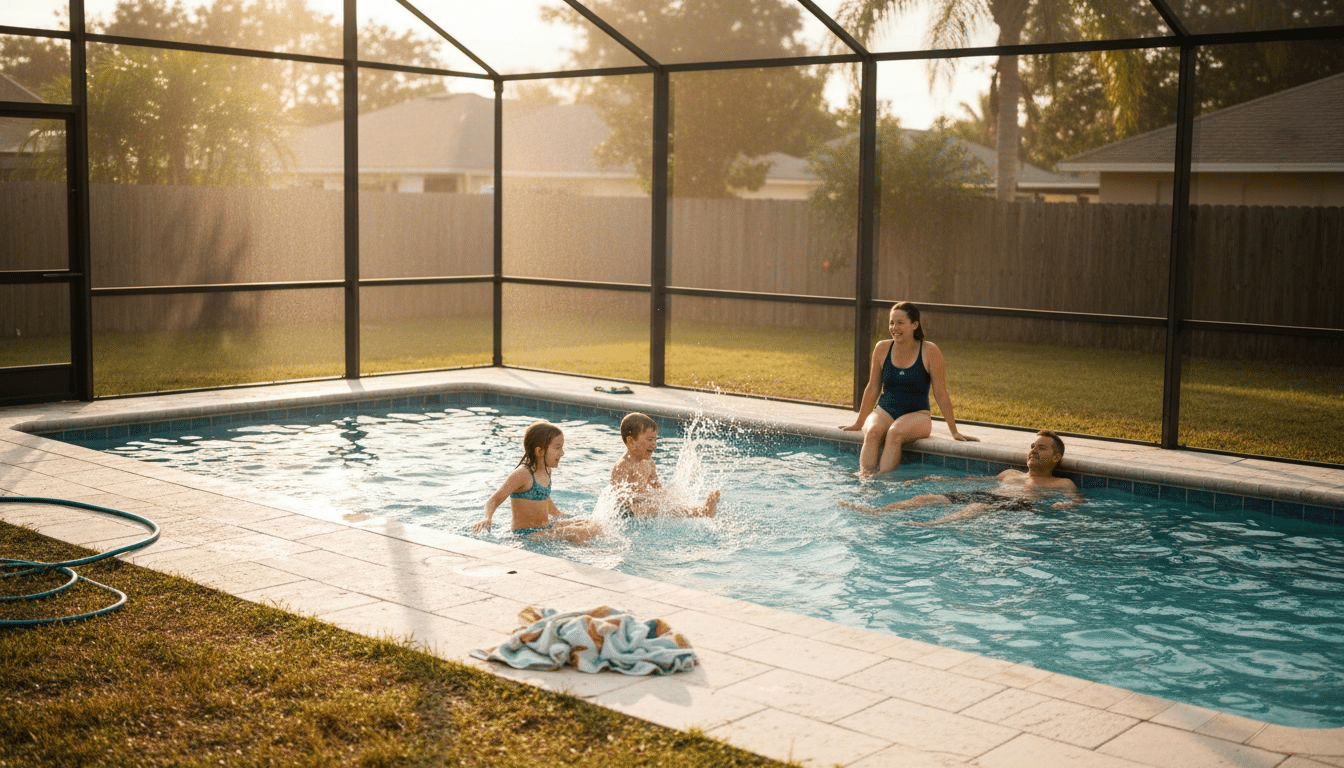
Choosing the perfect pool for your Central Florida home means balancing creativity with regulations that shape every aspect of design and construction. From the humid summers of The Villages to the lush settings of Mount Dora, Florida pool style is defined by strict building codes and specialized materials built to handle the region’s intense weather. Discover how thoughtful decisions about materials, safety features, and design can transform your backyard into a lasting luxury oasis while avoiding costly mistakes.
Table of Contents
- What Defines Pool Style In Florida
- Comparing Concrete, Fiberglass, And Vinyl Pools
- Shape, Design, And Feature Variations
- How Pool Design Impacts Value And Maintenance
- Key Costs, Risks, And Pitfalls When Choosing
- Common Mistakes In Pool Style Selection
Key Takeaways
| Point | Details |
|---|---|
| Importance of Local Regulations | Understanding Florida’s stringent building codes and environmental demands is crucial for pool design. |
| Material Selection Impact | Choosing between concrete, fiberglass, and vinyl affects long-term maintenance and property value. |
| Design and Functionality Balance | A well-designed pool should integrate aesthetic appeal and practical functionality while ensuring safety. |
| Professional Consultation | Engaging with local experts can help navigate complexities and avoid costly mistakes in pool installation. |
What Defines Pool Style in Florida
Pool style in Florida represents more than just an aesthetic choice—it’s a complex interplay of environmental demands, regulatory requirements, and design innovation. The Sunshine State’s unique climate and building regulations significantly shape how swimming pools are conceived, constructed, and integrated into residential landscapes.
The foundational elements defining Florida pool styles emerge from stringent building code standards. These comprehensive guidelines dictate critical aspects of pool design:
- Material Selection: Concrete, fiberglass, and vinyl pools each meet specific durability requirements
- Safety Barriers: Mandatory fencing and enclosure specifications to prevent accidents
- Structural Resilience: Design elements that withstand hurricane-force winds and extreme humidity
- Mechanical Integration: Precise electrical and plumbing system requirements
Environmental adaptability becomes paramount in Florida pool design. The state’s unique geographical characteristics demand pools that can seamlessly withstand intense sunlight, high humidity, occasional tropical storms, and variable soil conditions. This means selecting materials and construction techniques that resist corrosion, minimize heat absorption, and provide long-term structural integrity.
Regional aesthetic preferences also play a significant role. Central Florida homeowners typically favor pool designs that blend indoor-outdoor living concepts, incorporating features like expansive lanais, integrated spa areas, and landscaping that creates natural transition zones. Infinity edges, rock waterfalls, and naturalistic pool shapes that echo Florida’s lush environments have become increasingly popular.
Pro tip: When planning your Florida pool, prioritize professional consultation that understands local building codes and environmental challenges to ensure both stunning design and regulatory compliance.
Comparing Concrete, Fiberglass, and Vinyl Pools
Choosing the right pool material for your Florida home is a critical decision that impacts long-term enjoyment, maintenance, and property value. Each pool type—concrete, fiberglass, and vinyl—offers unique characteristics that cater to different homeowner preferences and budget considerations.
Concrete Pools: The gold standard of customization, concrete pools provide unparalleled design flexibility. Pool installation methods vary dramatically between different materials, with concrete offering the most complex construction process. Their key attributes include:
- Completely customizable shapes and sizes
- Extremely durable and long-lasting
- Ability to incorporate intricate design features
- Higher initial construction costs
- Require more frequent resurfacing and maintenance
Fiberglass Pools: Known for their streamlined installation and low-maintenance surfaces, fiberglass pools represent a modern solution for Florida homeowners. These pre-fabricated pools offer quick installation times and come with several advantages:
- Faster installation compared to concrete
- Smooth gel-coated surfaces that resist algae
- Lower long-term maintenance requirements
- Limited by factory-produced shapes and sizes
- More resistant to chemical fluctuations
Vinyl Pools: The most budget-friendly option, vinyl pools provide flexibility and affordability. They feature:
- Lowest upfront installation costs
- Customizable rectangular and freeform designs
- Soft, non-abrasive liner surface
- Require liner replacements every 5-9 years
- More susceptible to punctures and wear
Environmental considerations play a significant role in pool material selection for Florida homes. The state’s intense sunlight, high humidity, and occasional severe weather demand materials that can withstand extreme conditions while maintaining aesthetic appeal.
Here’s a concise comparison of pool types for Florida homeowners:
| Pool Type | Customization Level | Longevity | Typical Installation Time |
|---|---|---|---|
| Concrete | Extremely flexible | 25+ years | 3-6 months |
| Fiberglass | Limited to mold shapes | 20-30 years | 2-4 weeks |
| Vinyl | Moderate flexibility | 10-15 years | 4-8 weeks |
Pro tip: Consult with local pool professionals who understand Central Florida’s unique environmental challenges to select the most appropriate pool material for your specific landscape and lifestyle needs.
Shape, Design, and Feature Variations
Pool design in Florida transcends mere functionality, transforming backyard spaces into personalized outdoor sanctuaries. Swimming pool designs encompass remarkable diversity, reflecting homeowners’ unique aesthetic preferences and lifestyle requirements.
Classic Pool Shapes: Traditional pool designs continue to dominate Central Florida landscapes, offering timeless appeal:
- Rectangular pools for lap swimming and formal settings
- Geometric shapes with clean, modern lines
- Perfect for structured backyard layouts
- Ideal for homeowners seeking symmetrical designs
Freeform Pool Designs: Mimicking natural landscapes, these organic shapes create seamless transitions between pool and surrounding environment:
- Curved, naturalistic configurations
- Irregular edges that complement tropical landscaping
- Resembling lagoons or natural water features
- Softer visual appearance compared to geometric designs
Specialty Pool Features: Advanced design elements elevate pool functionality and aesthetic appeal:
- Infinity edges creating visual illusion of endless water
- Integrated spa areas for relaxation
- Swim-up bars and entertainment zones
- Water features like rock waterfalls
- LED lighting for dramatic nighttime ambiance
Central Florida’s unique climate and architectural styles significantly influence pool design choices. Homeowners increasingly seek pools that serve multiple purposes—exercise, entertainment, and aesthetic enhancement—driving innovation in pool shape and feature development.
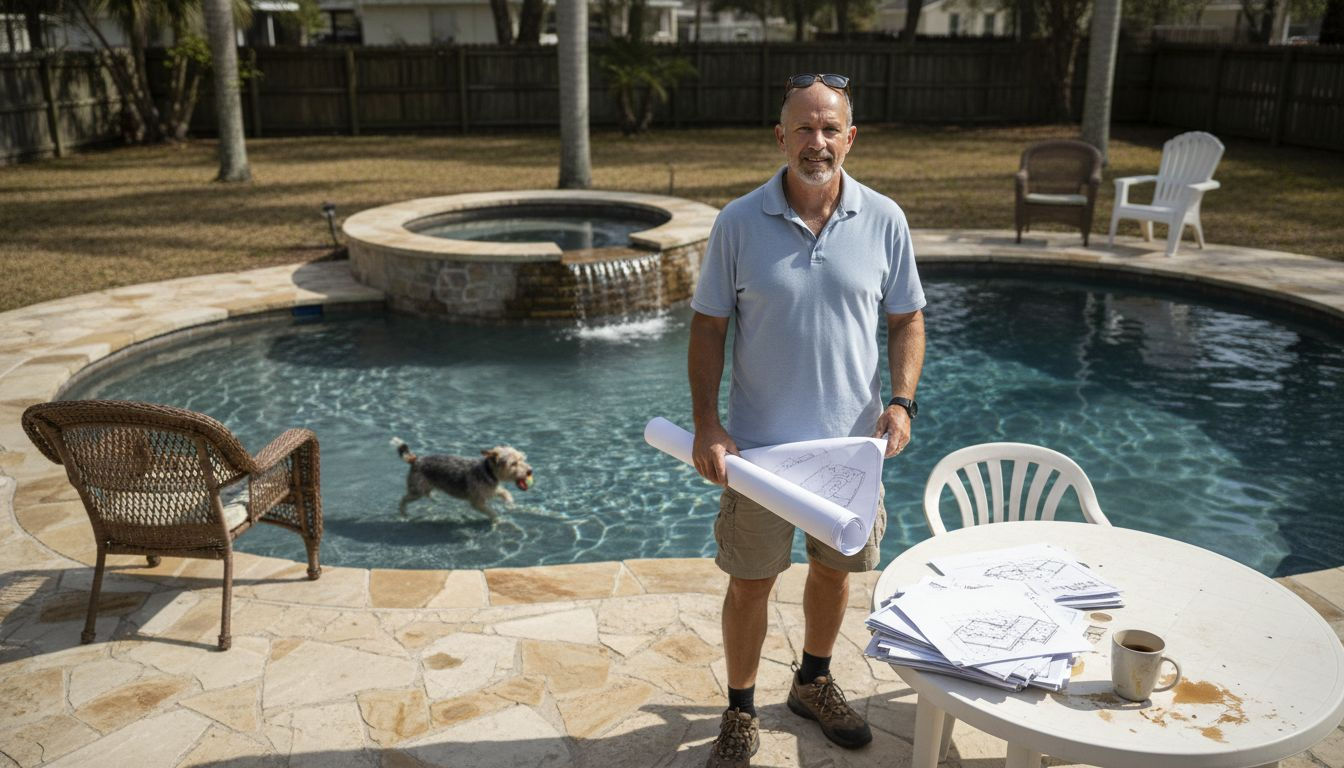
Pro tip: Consider consulting a professional designer who can help translate your backyard vision into a cohesive, functional pool design that complements your home’s existing architecture and landscape.
How Pool Design Impacts Value and Maintenance
Pool design is far more than aesthetic appeal—it’s a strategic investment that directly influences property value and long-term maintenance expenses. Pool design considerations significantly affect maintenance complexity and can dramatically impact a homeowner’s financial outlook.
Value Enhancement Factors:
- Professionally designed pools increase property resale value
- Integrated features like infinity edges attract potential buyers
- Modern, energy-efficient designs signal home quality
- Cohesive landscaping integration boosts overall aesthetic appeal
- Unique pool configurations can differentiate property in competitive markets
Maintenance Cost Considerations:
- Smooth surface materials reduce cleaning frequency
- Energy-efficient mechanical systems lower operational expenses
- Strategic design minimizes chemical treatment requirements
- Automated systems reduce long-term maintenance labor
- Durable construction materials decrease repair frequency
Performance and Efficiency Elements: Advanced pool designs incorporate sophisticated technologies that transform maintenance from a burden into a streamlined process. Homeowners can now leverage smart systems that monitor water quality, regulate temperature, and optimize chemical balance with minimal human intervention.
Central Florida’s unique environmental conditions demand pool designs that can withstand intense sunlight, high humidity, and occasional severe weather. Thoughtful design becomes a critical factor in creating a pool that remains beautiful, functional, and cost-effective throughout its lifecycle.
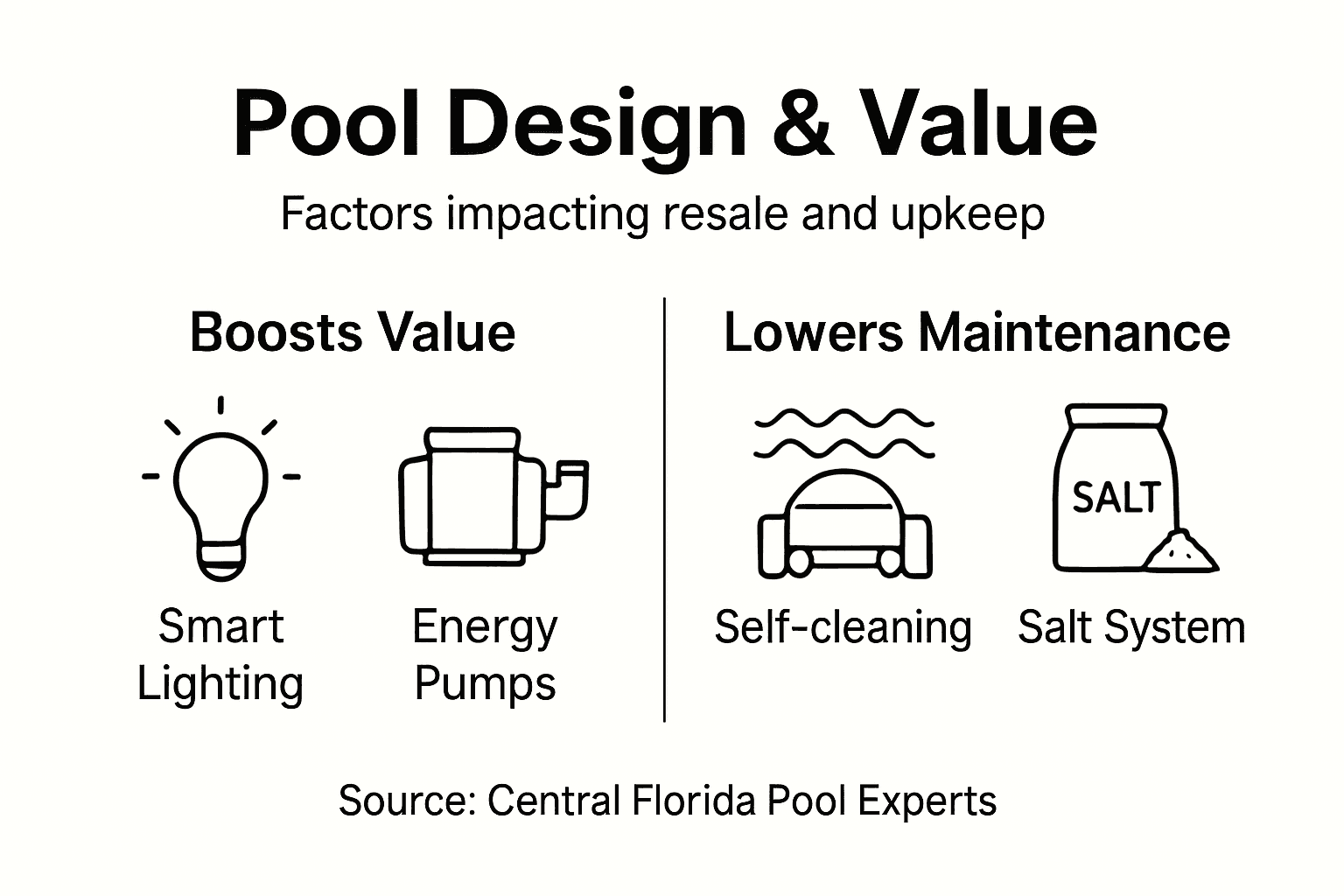
To help prioritize your decision, here’s how key pool features impact value and maintenance:
| Feature | Boosts Resale Value | Lowers Maintenance Burden |
|---|---|---|
| Modern automation | Highly appealing to buyers | Minimizes manual upkeep |
| Efficient filtration | Seen as premium upgrade | Reduces cleaning frequency |
| Integrated lighting | Improves property showcase | Simplifies night use |
| Durable materials | Adds lasting visual appeal | Reduces repair cycles |
Pro tip: Invest in professional design consultation to create a pool that balances aesthetic desires with practical maintenance considerations, ultimately protecting your financial investment.
Key Costs, Risks, and Pitfalls When Choosing
Navigating the complex landscape of pool installation requires careful consideration of potential financial and structural challenges. Pool development involves significant cost and risk considerations that can dramatically impact your long-term investment.
Financial Risks and Hidden Expenses:
- Initial construction costs beyond base estimates
- Unexpected site preparation expenses
- Higher insurance premiums for pool ownership
- Potential structural reinforcement requirements
- Annual maintenance and repair budgets
Structural and Safety Pitfalls:
- Inadequate soil stability causing foundation issues
- Non-compliance with local building codes
- Improper drainage leading to landscape damage
- Insufficient safety barrier implementations
- Risk of water leakage and potential structural compromise
Environmental and Regulatory Challenges: Central Florida’s unique environmental conditions introduce complex considerations. Homeowners must navigate stringent local regulations, manage water conservation requirements, and design pools that can withstand extreme weather conditions, including intense sunlight, high humidity, and occasional tropical storms.
Proper risk mitigation involves comprehensive planning, professional consultation, and a thorough understanding of site-specific challenges. Unexpected complications can transform a dream pool project into a financial burden if not carefully managed from the initial design phase.
Pro tip: Invest in a professional site evaluation and detailed geological assessment before finalizing your pool design to identify potential risks and avoid costly future modifications.
Common Mistakes in Pool Style Selection
Pool style selection is a nuanced process that demands careful consideration beyond mere aesthetic preferences. Pool selection involves critical safety and design considerations that can significantly impact long-term satisfaction and functionality.
Design Misconception Errors:
- Prioritizing looks over practical functionality
- Ignoring local climate and environmental constraints
- Underestimating maintenance complexity
- Overlooking future lifestyle changes
- Failing to consider family safety requirements
Regulatory and Safety Pitfalls:
- Inadequate safety barrier implementations
- Non-compliance with local building codes
- Neglecting required permit processes
- Overlooking accessibility design standards
- Insufficient water depth and zone planning
Financial and Structural Mistakes: Central Florida homeowners frequently underestimate the comprehensive financial implications of pool style selection. Poor choices can lead to unexpected expenses, including structural reinforcement, ongoing maintenance costs, and potential redesign requirements.
Successful pool style selection requires a holistic approach that balances aesthetic desires, practical functionality, safety requirements, and long-term financial considerations. Professional consultation can help navigate these complex decision-making processes and prevent costly mistakes.
Pro tip: Schedule comprehensive site evaluations with certified pool design professionals who can provide tailored recommendations specific to your property’s unique characteristics.
Discover Your Perfect Florida Pool Style with R & R Swimming Pools
Selecting the right pool material and design in Florida involves navigating complex challenges such as local building codes, environmental stressors, and personal lifestyle needs. If you want a pool that combines beauty, durability, and energy-efficient features while maximizing your property’s value, you need expert guidance. With decades of experience crafting custom pools tailored for Central Florida’s climate and regulations, R & R Swimming Pools understands how to bring your vision to life through personalized concrete or fiberglass options and innovative style choices.
Ready to transform your backyard with a pool designed to thrive in Florida’s unique environment? Visit R & R | R & R Swimming Pools to explore our custom solutions. Learn essential pool design insights at Pool School | R & R Swimming Pools and schedule your free quote today at https://randrswimmingpools.com. Don’t wait—experience lasting craftsmanship and professional service that ensures your dream pool becomes a reality.
Frequently Asked Questions
What are the key elements that define pool styles in Florida?
Pool styles in Florida are shaped by environmental demands, regulatory requirements, and design innovation. This includes material selection, safety barriers, structural resilience, and mechanical integration to suit the unique climate and building codes of the region.
How do pool material options—concrete, fiberglass, and vinyl—compare in terms of longevity and maintenance?
Concrete pools last over 25 years but require more upkeep. Fiberglass pools last 20-30 years with lower maintenance, while vinyl pools have a lifespan of 10-15 years but need liner replacements every 5-9 years, making them the most cost-effective initially.
What are some popular pool features that enhance design and functionality in Florida?
Popular pool features in Florida include infinity edges, integrated spa areas, swim-up bars, rock waterfalls, and LED lighting. These elements elevate both aesthetic appeal and utility, creating a luxurious outdoor space.
What considerations should homeowners keep in mind when planning a pool design?
Homeowners should prioritize functionality, safety codes, environmental factors, and future lifestyle changes when planning a pool design. Consulting with professionals can help avoid common pitfalls related to maintenance and compliance.
Recommended
- 7 Inspiring Pool Landscaping Examples for Florida Homes
- Custom Pool Features Explained: Elevate Florida Living
- Role of Pool Design – Transforming Outdoor Living in Florida
- Role of Design in Central Florida Pool Building
- Ultimate Luxury Outdoor Guide – Backyard Pyre
- Pool Builder Fruitland Park FL
- Pool Construction The Villages FL
