
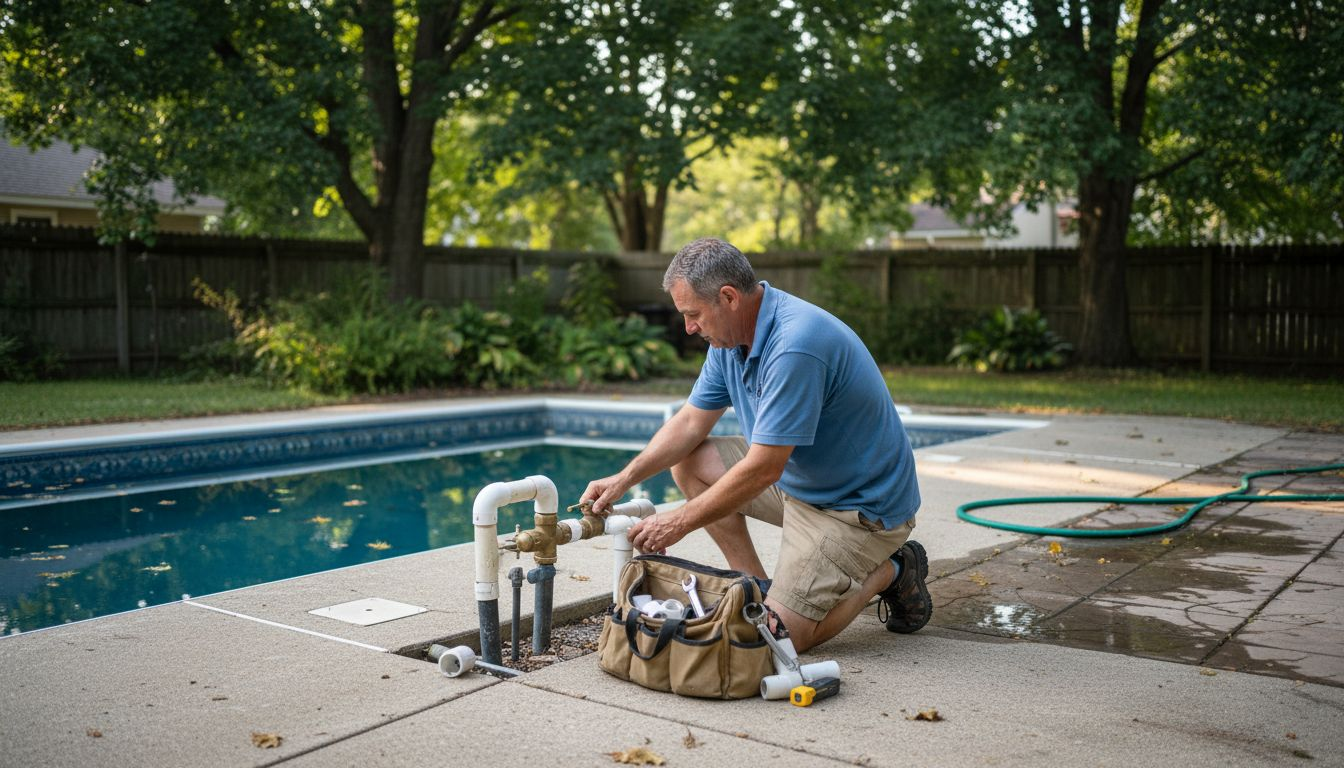
Building a luxury inground pool in growing communities like The Villages or Mount Dora brings excitement and a long wish list of features, yet few homeowners realize how much hinges on precise plumbing design and installation. Reliable pool plumbing is the backbone of water quality, safety, and comfort—not just a hidden network beneath the surface. By understanding the most common myths and key elements of pool plumbing, families like yours can make smarter choices that protect your investment, keep your loved ones safe, and deliver the shimmering pool experience you expect. For long-term satisfaction and peace of mind, focus on professional pool plumbing standards from the start.
Table of Contents
- Pool Plumbing Defined And Common Myths
- Key Components Of Pool Plumbing Systems
- Types Of Pool Plumbing Materials And Layouts
- How Proper Installation Affects Pool Function
- Maintenance, Costs, And Mistakes To Avoid
Key Takeaways
| Point | Details |
|---|---|
| Importance of Professional Installation | Homeowners should consult licensed pool professionals for plumbing installation to ensure safety and system efficiency. |
| Regular Maintenance is Essential | Consistent inspections and maintenance of pool plumbing can prevent costly repairs and enhance system performance. |
| Understanding Pool Plumbing Components | Familiarity with primary plumbing components helps maintain optimal water circulation and system integrity. |
| Myths About DIY Plumbing | Believing that DIY installations match professional standards can lead to safety hazards and inefficiencies in pool operation. |
Pool Plumbing Defined and Common Myths
Pool plumbing represents a complex network of pipes, valves, and filtration systems essential for maintaining safe and efficient swimming pool operations. While many homeowners assume pool plumbing is straightforward, the reality involves intricate design principles and critical safety considerations.
According to the National Standard Plumbing Code, pool plumbing systems must meet rigorous standards to protect health and ensure proper water circulation. These regulations go far beyond simple pipe connections, encompassing comprehensive guidelines for installation, materials, and system performance.
Common myths about pool plumbing can lead homeowners into dangerous misconceptions. Here are some critical myths to dispel:
- DIY installations are just as good as professional work
- Homeowner-led plumbing often lacks critical safety components
- Minimal pipe sizing doesn’t impact system performance
- Incorrect pipe dimensions can dramatically reduce water flow efficiency
- All pool pipes are created equal
- Different materials have unique durability and performance characteristics
The Pool Safety Foundation emphasizes that proper plumbing isn’t just about water movement—it’s a critical safety system that prevents potential accidents and ensures regulatory compliance. Improper plumbing can lead to significant risks, including inadequate water circulation, potential contamination, and structural damage.
Proper pool plumbing involves:
- Precise pipe sizing and layout
- Appropriate material selection
- Compliance with local building codes
- Professional-grade installation techniques
- Regular maintenance and inspection
Pro tip: Always consult a licensed pool professional to design and install your pool plumbing system, ensuring maximum safety and performance efficiency.
Key Components of Pool Plumbing Systems
Pool plumbing systems are intricate networks designed to ensure safe, efficient water circulation through multiple specialized components. Understanding these critical elements is essential for maintaining optimal pool performance and safety in residential swimming environments.
According to the 2021 International Swimming Pool and Spa Code, essential pool plumbing components must meet rigorous standards for water flow and system functionality. These components work together to create a comprehensive water management system that goes far beyond simple pipe connections.
Primary Pool Plumbing Components:
- Water Circulation Pipes: Primary conduits for water movement
- Suction Lines: Channels water from pool to filtration system
- Return Lines: Redirects filtered water back into pool
- Pump Systems: Drives water through entire plumbing network
- Filtration Units: Removes debris and maintains water clarity
- Valves: Controls water direction and flow rates
The International Swimming Pool and Spa Code course emphasizes the importance of hydraulic design and safety devices in pool plumbing. Each component plays a critical role in maintaining water quality, preventing potential hazards, and ensuring regulatory compliance.
Key Safety Considerations:
- Proper pipe sizing prevents over-pressurization
- Suction covers protect against entrapment risks
- Precise fitting installation maintains system integrity
- Regular maintenance prevents potential structural damage
- Compliance with local building codes is mandatory
Pro tip: Consult a professional pool plumber annually to perform comprehensive system inspections and ensure all components are functioning at peak efficiency.
Types of Pool Plumbing Materials and Layouts
Pool plumbing materials and configurations represent critical design elements that directly impact system performance, durability, and long-term maintenance requirements. Homeowners must carefully consider material selection and layout strategies to ensure optimal water circulation and system efficiency.
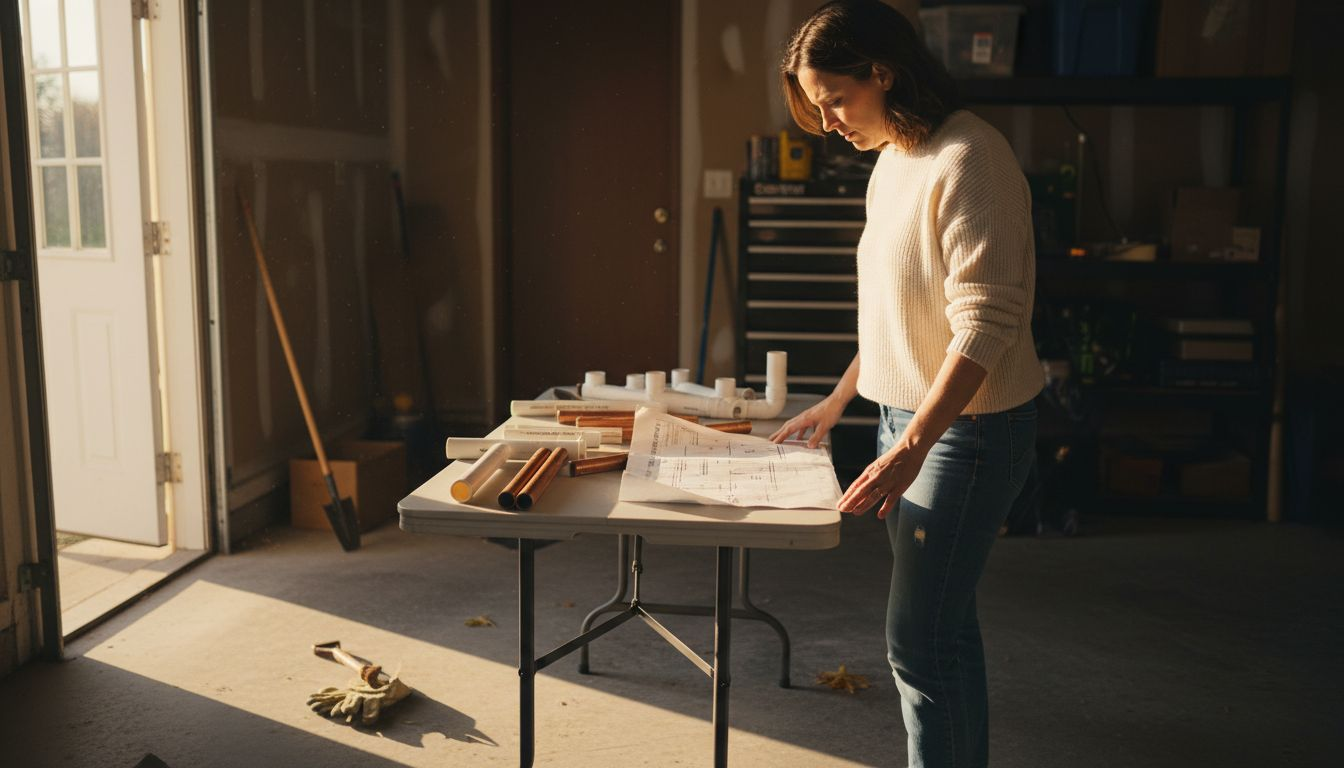
According to the 2021 International Swimming Pool and Spa Code, pool plumbing materials must meet stringent safety standards and performance criteria. The code mandates the use of NSF-listed materials that can withstand complex hydraulic demands while maintaining structural integrity.
Common Pool Plumbing Materials:
- PVC (Polyvinyl Chloride): Most popular material
- Lightweight
- Corrosion-resistant
- Cost-effective
- CPVC (Chlorinated Polyvinyl Chloride): Enhanced temperature tolerance
- Higher heat resistance
- Suitable for diverse environmental conditions
- Copper: Traditional metal piping option
- Excellent durability
- Higher installation costs
The Uniform Plumbing Code emphasizes two primary plumbing layout configurations that significantly influence system performance:
Piping Layout Configurations:
- Series Piping: Sequential water flow through components
- Compact design
- Potentially higher resistance
- Parallel Piping: Simultaneous water distribution
- More balanced flow
- Reduced system strain
- Enhanced energy efficiency
Key Considerations for Material and Layout Selection:
- Local climate conditions
- Pool size and design
- Budget constraints
- Long-term maintenance requirements
- Compatibility with existing infrastructure
Pro tip: Consult a professional pool contractor to assess your specific site conditions and recommend the most appropriate plumbing materials and layout for optimal performance and longevity.
Here’s how popular pool plumbing materials compare on key criteria:
| Material | Durability | Temperature Tolerance | Typical Cost |
|---|---|---|---|
| PVC | Resistant to corrosion | Moderate heat resistance | Low, most affordable |
| CPVC | Enhanced durability | High heat resistance | Medium, slightly higher |
| Copper | Extremely durable | Withstands all temperatures | High, costly to install |
Understanding layout options can help optimize your system’s efficiency:
| Layout Type | Water Flow Pattern | Impact on Efficiency |
|---|---|---|
| Series | Sequential through components | Higher resistance, less efficient |
| Parallel | Simultaneous distribution | Balanced flow, saves energy |
How Proper Installation Affects Pool Function
Pool plumbing installation represents a critical process that directly determines the overall performance, efficiency, and safety of your entire swimming pool system. Even minor errors during installation can lead to significant operational challenges that compromise water quality, energy consumption, and long-term equipment reliability.
According to the 2024 National Standard Plumbing Code, improper installation can create multiple systemic risks that extend far beyond simple operational inconveniences. These risks include potential water leakage, inefficient filtration, increased energy consumption, and heightened equipment failure probabilities.
Critical Installation Impact Areas:
- Hydraulic System Performance
- Determines water circulation efficiency
- Affects overall pool functionality
- Influences energy consumption rates
- Equipment Longevity
- Proper installation extends component lifespan
- Reduces premature equipment failure
- Minimizes maintenance requirements
- Safety Compliance
- Ensures adherence to regulatory standards
- Prevents potential health hazards
- Maintains system integrity
The ICC installation course emphasizes that proper installation involves precise technical considerations, including:
Key Technical Installation Factors:
- Correct pipe slope and alignment
- Secure and properly sealed fittings
- Appropriate pump sizing
- Precise water flow velocity maintenance
- Compliance with local building codes
Potential Consequences of Poor Installation:
- Reduced water circulation
- Higher operational costs
- Increased risk of system failures
- Potential health and safety violations
- Compromised pool performance
Pro tip: Always hire certified pool professionals who specialize in precise plumbing installation techniques and maintain current knowledge of national plumbing standards.
Maintenance, Costs, and Mistakes to Avoid
Pool plumbing maintenance represents a critical investment in your swimming pool’s long-term performance, safety, and operational efficiency. Proactive care can significantly reduce unexpected repair costs and prevent potentially catastrophic system failures that could compromise your entire pool infrastructure.
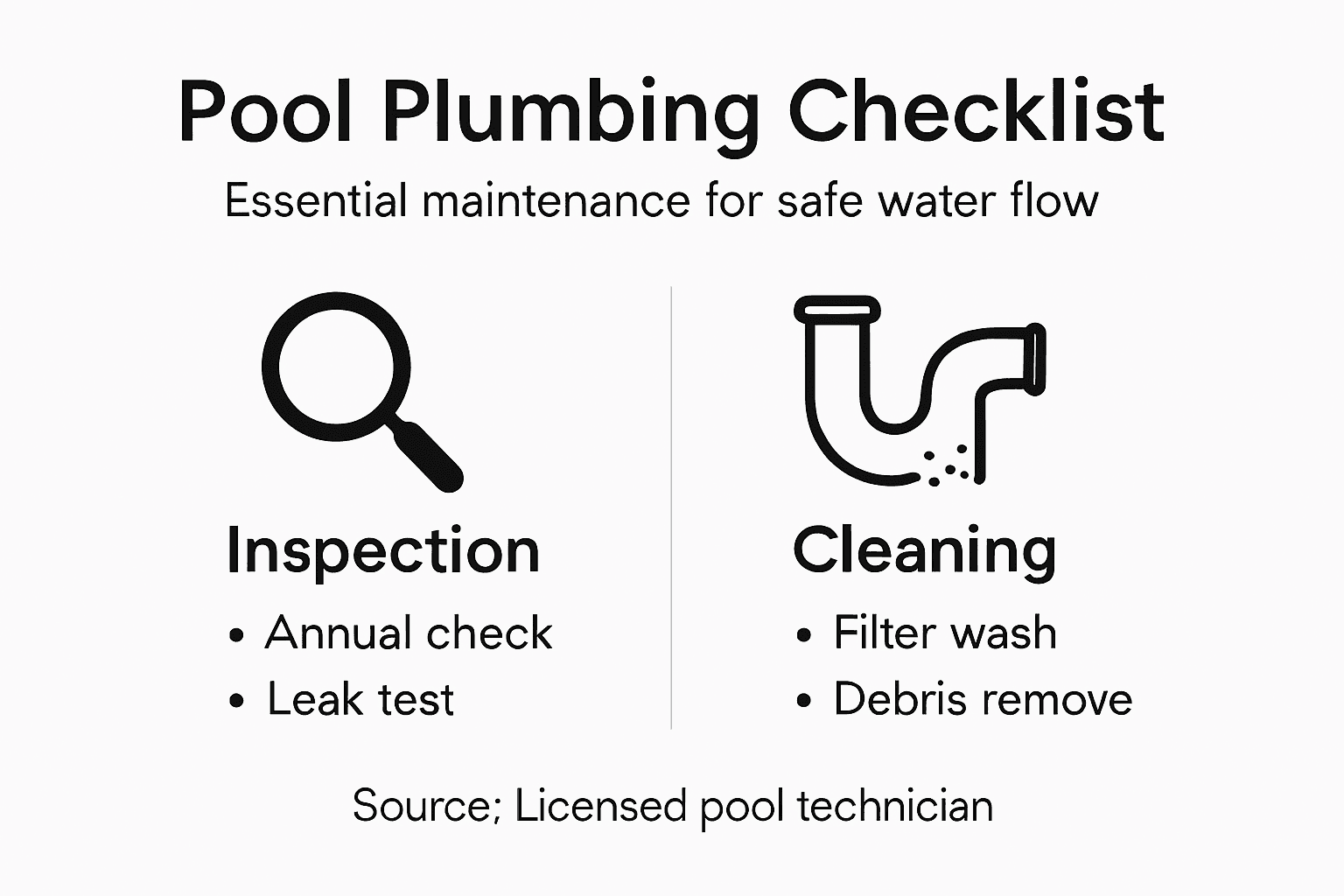
According to the Pool Safety Foundation, regular maintenance is not just recommended but essential for preventing costly repairs and potential legal liabilities. Neglecting routine inspections and maintenance can lead to significant financial and safety risks that far outweigh the minimal investment required for consistent upkeep.
Common Maintenance Mistakes to Avoid:
- Ignoring Small Leaks
- Can escalate into major structural damage
- Leads to increased water and repair costs
- Potentially compromises system integrity
- Skipping Regular Inspections
- Prevents early problem detection
- Reduces equipment lifespan
- Increases long-term repair expenses
- Improper Chemical Balance
- Causes pipe and equipment corrosion
- Reduces system efficiency
- Potentially violates health regulations
The International Swimming Pool and Spa Code emphasizes maintaining specific flow velocities to prevent pipe erosion and system damage. Proper maintenance involves more than just visual inspections—it requires comprehensive understanding of hydraulic performance and potential failure points.
Estimated Maintenance Cost Breakdown:
- Annual professional inspection: $150-$300
- Minor repairs and preventative maintenance: $200-$500
- Emergency repairs from neglect: $1,500-$5,000
Key Maintenance Practices:
- Quarterly professional system inspections
- Regular pipe and fitting pressure tests
- Consistent chemical balance monitoring
- Prompt repair of any identified issues
- Documentation of all maintenance activities
Pro tip: Create a dedicated maintenance log and schedule professional inspections twice annually to catch potential issues before they become expensive problems.
Ensure Safe and Efficient Pool Plumbing with Expert Help
Proper pool plumbing is essential to keep your water flowing safely and efficiently as highlighted in our detailed guide. From precise pipe sizing to professional installation methods critical to long-term system performance, the challenges of maintaining regulatory compliance and preventing costly repairs cannot be overstated. If you want to avoid common mistakes like poor material choices or DIY installation risks, expert guidance is your best asset.
Take control of your pool’s water system by working with seasoned professionals who understand hydraulic design, safety standards, and durable plumbing materials. Discover how a custom approach can enhance your pool’s safety and efficiency through well-planned layouts and quality craftsmanship showcased in our Pool School | R & R Swimming Pools.
Don’t wait for plumbing issues to arise. Visit R & R | R & R Swimming Pools to learn about our trusted pool plumbing solutions that comply with all codes and exceed expectations. Schedule your free quote today at https://randrswimmingpools.com and start enjoying your safe, efficient, and beautifully designed swimming pool with confidence.
Frequently Asked Questions
What is the importance of proper pool plumbing?
Proper pool plumbing is critical for maintaining safe and efficient water circulation, preventing contamination, and ensuring compliance with health regulations. It involves precise design and installation to avoid potential hazards and ensure optimal pool performance.
What materials are commonly used in pool plumbing?
Common materials for pool plumbing include PVC (Polyvinyl Chloride), which is lightweight and corrosion-resistant, CPVC (Chlorinated Polyvinyl Chloride), which offers higher temperature tolerance, and copper, known for its durability but typically more expensive.
How does improper pool plumbing installation affect my pool?
Improper installation can lead to issues like reduced water circulation, inefficient filtration, increased energy costs, and a higher risk of system failures, all of which can compromise pool safety and performance.
What regular maintenance practices should I follow for pool plumbing?
Key maintenance practices include quarterly professional system inspections, regular pressure testing of pipes and fittings, consistent monitoring of chemical balance, prompt repairs of identified issues, and keeping a detailed maintenance log.
