
Every Florida homeowner dreams of turning backyard space into the ultimate private destination, but transforming that vision into a luxury custom pool is a complex journey. Central Florida families in communities like The Villages and Mount Dora must navigate not only pool design but also detailed site evaluations and strict permitting requirements. This guide breaks down each critical step from planning and applications to inspections and finishing touches, helping you avoid costly missteps while achieving a beautiful, lasting pool oasis.
Table of Contents
- Step 1: Assess Site And Secure Permits
- Step 2: Design Your Custom Inground Pool
- Step 3: Prepare The Site For Construction
- Step 4: Install Pool Structure And Features
- Step 5: Complete Finishing And Quality Checks
Quick Summary
| Key Point | Explanation |
|---|---|
| 1. Conduct Thorough Site Assessment | Evaluate your property’s layout and potential pool location to ensure compliance with local regulations and safety measures. |
| 2. Design Around Your Needs | Tailor your pool design based on its intended use, incorporating essential features and materials that fit your lifestyle. |
| 3. Ensure Proper Site Preparation | Accurate preparation, including marking boundaries and utility verification, is crucial for successful pool construction. |
| 4. Focus on Accurate Installation | Precision during installation guarantees your pool’s durability and long-term functionality by correctly integrating all systems. |
| 5. Complete Comprehensive Quality Checks | Thorough inspections of all systems before completion prevent future maintenance issues and ensure safety and reliability. |
Step 1: Assess Site and Secure Permits
Installing a custom pool requires careful site evaluation and navigating the local permitting landscape. This critical first step ensures your pool project meets all legal requirements and can be safely constructed on your property.
Begin by thoroughly assessing your property’s layout and potential pool location. You’ll want to carefully measure available space, noting property lines, existing structures, utility lines, and potential obstacles. Florida health regulations mandate specific documentation for pool installations, so precision matters.
The permitting process involves multiple steps and agencies. You’ll need to compile a comprehensive application package that typically includes:
- Detailed site plan showing exact pool location
- Precise property line measurements
- Construction and layout drawings
- Electrical and plumbing schematics
- Proposed pool barrier and safety configurations
Contact your local building department and county health department early in the process. Gainesville residential pool guidelines recommend submitting multiple permit applications, which might include electrical, plumbing, mechanical, and fuel gas permits.
Professional pools require professional planning. Get every detail right before breaking ground.
Zoning restrictions can significantly impact your pool design, so verify local regulations regarding setbacks, pool size, and safety requirements. Some Central Florida communities have specific guidelines about pool placement relative to property lines and existing structures.
Pro tip: Request pre-application consultations with local permitting offices to streamline your approval process and identify potential design challenges early.
Step 2: Design Your Custom Inground Pool
Designing your custom pool is where your backyard dreams start taking shape. This critical step transforms your vision into a concrete blueprint that will guide the entire installation process.
Begin by considering your primary pool goals. Will this be a space for family fun, lap swimming, entertaining, or pure aesthetic appeal? Your intended use will dramatically influence design choices. Custom pool design process requires careful consideration of several key factors.
Your pool design should incorporate several essential elements:
- Overall pool shape and dimensions
- Depth variations for different activities
- Material selections (concrete, fiberglass, etc.)
- Decorative features like waterfalls or lighting
- Integration with existing landscape
Carefully measure your available backyard space and consider how the pool will interact with existing structures. Functional design means creating a pool that not only looks beautiful but also serves your specific lifestyle needs.
Here’s a side-by-side comparison of popular pool construction materials and their key characteristics:
| Material Type | Durability | Maintenance Needs | Cost Range |
|---|---|---|---|
| Concrete | Extremely long-lasting | Requires acid washing | High initial investment |
| Fiberglass | Resists algae buildup | Minimal upkeep required | Moderate upfront cost |
| Vinyl | Prone to tears punctures | Frequent liner replacement | Lowest starting cost |
A well-designed pool becomes the centerpiece of your outdoor living space.
Think about additional features that can enhance your pool experience. Integrated spa sections, swim-up bars, or underwater seating can transform a standard pool into a luxurious backyard retreat. Consider how sunlight, wind patterns, and privacy will impact your pool’s positioning.
Pro tip: Create a scaled drawing of your backyard and experiment with different pool layouts before making a final decision.
Step 3: Prepare the Site for Construction
Preparing your site for pool construction is a critical phase that sets the foundation for your entire project. This step transforms your carefully planned design into a physical reality by creating the optimal environment for pool installation.
Your first task involves thorough site preparation. Swimming pool site requirements mandate detailed planning and precise execution. You’ll need to mark the exact pool location, ensuring compliance with local building codes and property line restrictions.
Key site preparation steps include:
- Marking precise pool boundaries
- Removing vegetation and obstacles
- Establishing temporary site barriers
- Verifying underground utility locations
- Preparing for potential soil modifications
Excavation preparation requires careful planning. This involves not just digging, but understanding your specific soil composition and potential challenges. Central Florida’s sandy and sometimes limestone-rich terrain can present unique excavation considerations.
Proper site preparation is the unsung hero of successful pool construction.
Pay special attention to potential underground challenges. Utility line mapping is critical to prevent costly damages during excavation. You’ll want to contact local utility companies to mark all underground lines before any digging begins.
Pro tip: Request a professional soil assessment to understand potential ground stability and drainage challenges before excavation begins.
Step 4: Install Pool Structure and Features
Installing your pool structure transforms architectural blueprints into a tangible backyard centerpiece. This pivotal phase requires precision, expertise, and careful execution to create a durable and beautiful swimming environment.
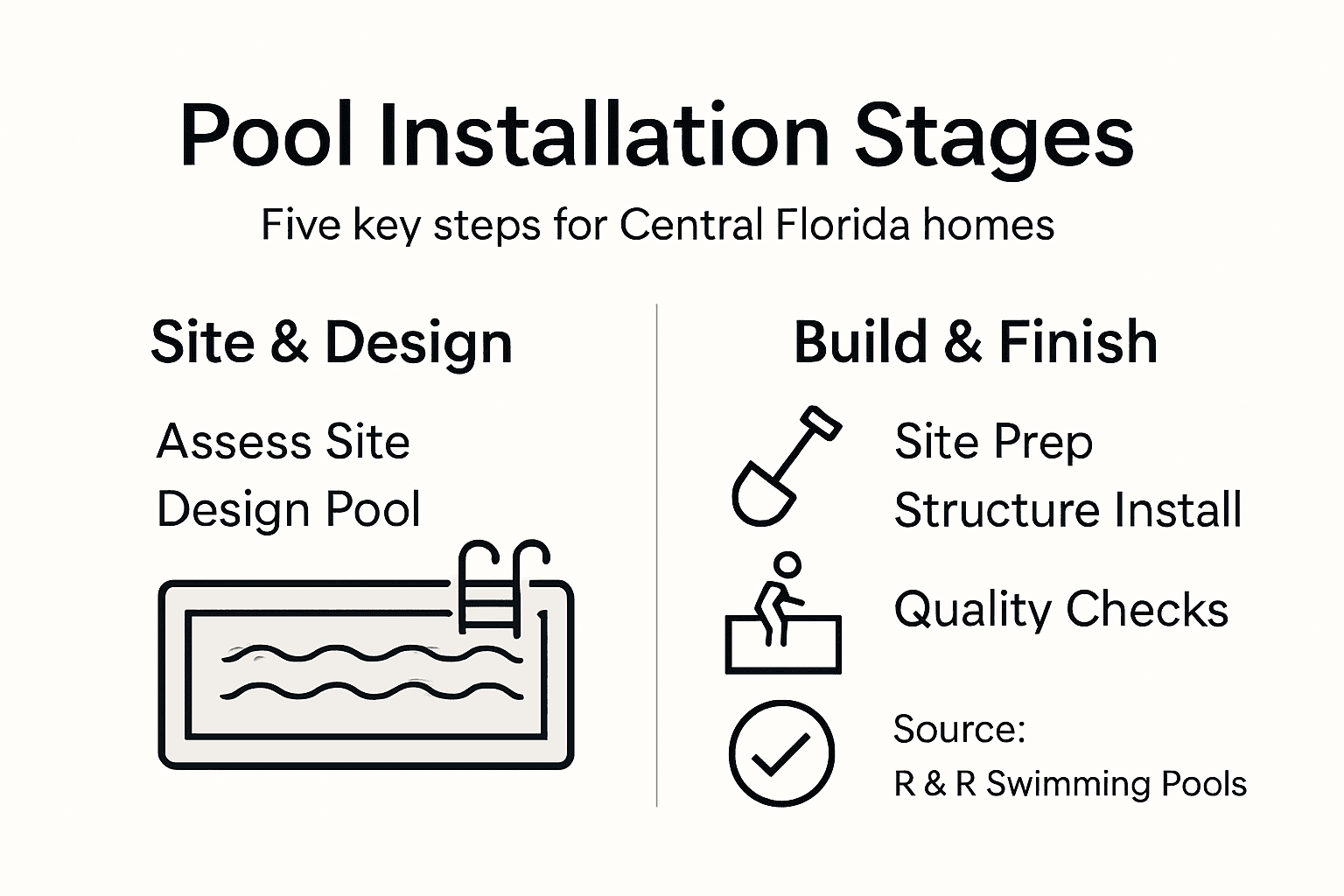
Swimming pool construction process involves multiple critical stages that demand professional skill. The initial step focuses on creating a robust steel reinforcement framework that provides structural integrity for your entire pool.
Key installation components include:
- Steel rebar framework placement
- Precise plumbing line installation
- Concrete shell application using gunite or shotcrete
- Equipment mounting for pumps and filtration systems
- Tile and coping finish work
Structural reinforcement is the foundation of a lasting pool. The steel framework must be meticulously positioned to withstand Florida’s unique ground conditions, including sandy soil and potential moisture variations.
Precision during installation determines your pool’s long-term performance and durability.
Careful attention to detail matters during equipment integration. Your pool’s mechanical systems including pumps, heaters, and circulation equipment must be perfectly aligned and sealed to ensure optimal functionality.
Pro tip: Have your installation team perform a comprehensive pressure test on all plumbing lines before completing the concrete shell to prevent future leaks.
Step 5: Complete Finishing and Quality Checks
With construction nearly complete, the final phase transforms your pool from a construction site to a backyard oasis. This critical stage ensures every detail meets professional standards and your personal expectations.
Central Florida Swimming Pool Inspections involve comprehensive evaluations that verify your pool’s safety, functionality, and aesthetic quality. Professional inspectors will meticulously examine multiple systems to guarantee peak performance.
Key finishing and quality check components include:
- Visual structural assessment
- Electrical system verification
- Plumbing and filtration system testing
- Safety barrier and equipment inspection
- Water quality and chemical balance check
Surface finishing represents the final aesthetic touchpoint. This involves precise application of tile work, coping, and decking to create a seamless transition between your pool and surrounding landscape.
This table summarizes core inspection areas addressed during final pool quality checks:
| Inspection Focus | Purpose | Impact on Owner Experience |
|---|---|---|
| Structural Integrity | Detects construction defects | Prevents future repairs |
| Electrical Safety | Ensures compliance and safety | Reduces accident risk |
| Water Quality | Verifies chemical balance | Promotes healthy swimming |
| Equipment Functionality | Confirms all systems operate | Guarantees reliability |
Attention to detail during final checks prevents future maintenance headaches.
Each system requires careful systematic testing. Pumps, heaters, lighting, and circulation equipment must operate flawlessly. Any minor misalignments or potential issues need immediate professional resolution before project completion.
Pro tip: Request a complete walkthrough demonstration of all pool systems and document each function to ensure comprehensive understanding of your new pool’s operations.
Bring Your Custom Pool Vision to Life with Expert Guidance and Craftsmanship
Navigating site assessments, permitting, design choices, and installation details can quickly become overwhelming when planning a custom pool for your Central Florida home. You want a pool crafted precisely to your lifestyle that complies with all regulations and stands the test of time. At R & R Swimming Pools, we understand these challenges and turn your backyard dreams into stunning realities backed by over three decades of trusted experience.
With personalized design options, including concrete and fiberglass pools enhanced by features like waterfalls and spas, we focus on quality craftsmanship and thorough project execution. Our Pool School | R & R Swimming Pools section offers valuable insights that complement planning and help you make confident decisions every step of the way.
Don’t let complex permits or technical construction details delay your dream pool. Visit R & R | R & R Swimming Pools now to schedule your free consultation. Take the first step toward creating a custom inground pool tailored perfectly for your Central Florida home today at https://randrswimmingpools.com.
Frequently Asked Questions
How do I start the custom pool installation process in Central Florida?
Begin by assessing your property and securing permits from local agencies. Measure your available space carefully and note property lines and existing structures to ensure compliance with guidelines.
What should I include in my pool design?
Your pool design should incorporate key elements such as shape, depth variations, materials, and decorative features. Consider how the pool will fit into your lifestyle, like family fun or entertaining, to create a functional space.
What are the steps for site preparation before pool construction?
To prepare your site for construction, mark the exact pool boundaries, remove any vegetation or obstacles, and verify underground utility locations. Completing these tasks helps prevent costly issues during the installation phase.
What should I expect during the pool installation phase?
During installation, you’ll see the creation of a steel reinforcement framework, plumbing installation, and concrete shell application. Ensure that each step is executed precisely to guarantee the pool’s durability and functionality.
How can I ensure my pool passes final inspections?
To pass final inspections, conduct comprehensive checks on structural integrity, electrical systems, and water quality. Make sure all equipment functions correctly, meeting safety standards to avoid future maintenance issues.
What are the benefits of having a professional oversee pool construction?
Hiring a professional ensures that every phase of construction adheres to compatibility with local regulations and building codes. This reduces the likelihood of errors and enhances the quality and longevity of your custom pool.
