
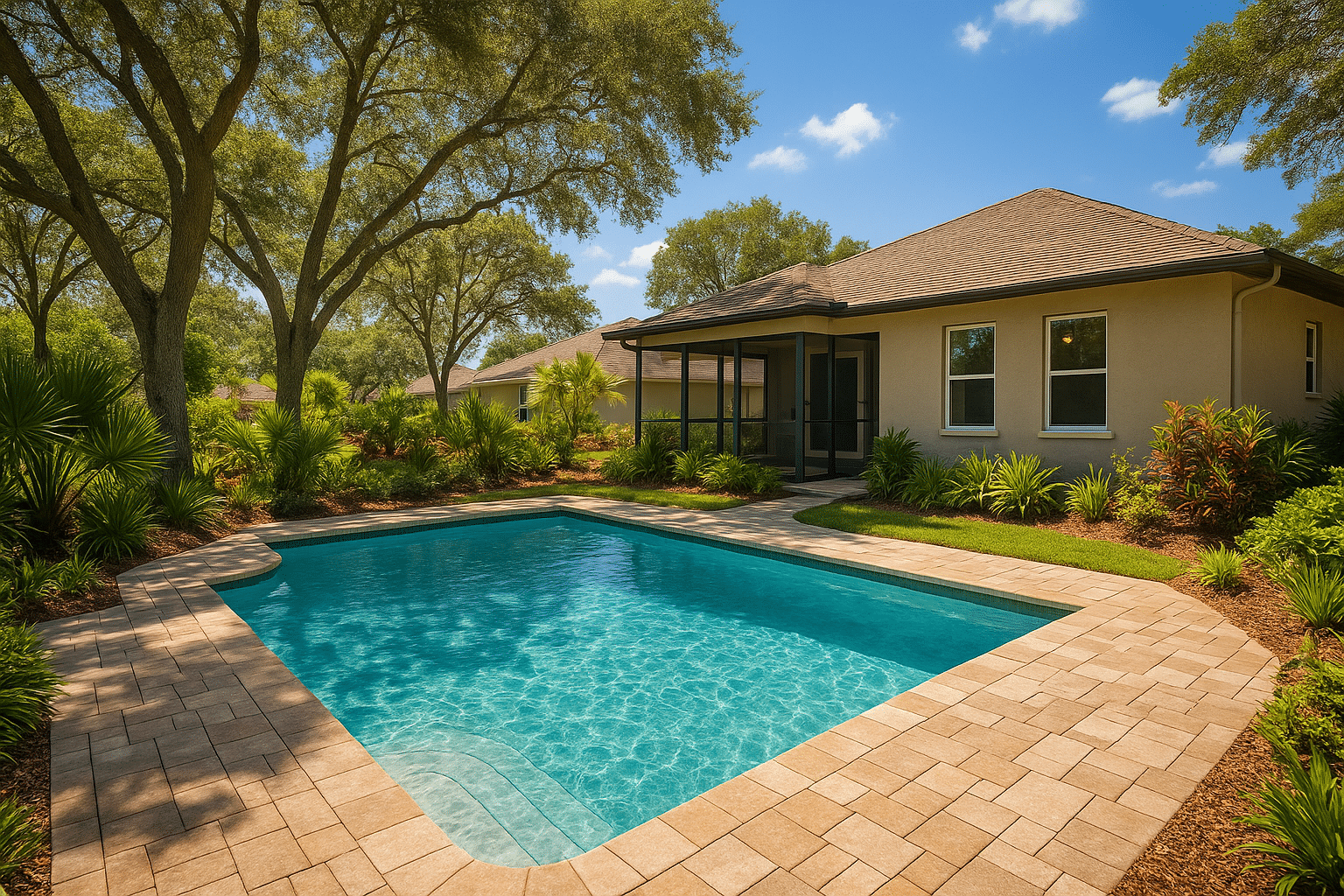
TL;DR: Florida homeowners can finance an inground pool through dedicated pool lenders (Lyon Financial, Viking Capital), home equity products, or personal loans. Each option has different rate, term, and collateral trade-offs. Understanding the differences before you sign a contract helps you choose the loan that fits your budget and timeline.
Building a backyard pool is one of the biggest home improvement investments you can make — and in Central Florida, it is also one of the most practical. Most homeowners do not write a six-figure check. They finance.
But pool financing is not one-size-fits-all. The right loan depends on how much equity you have, your credit profile, how large the project is, and how comfortable you are using your home as collateral. This guide walks through every major option so you can walk into a contractor conversation prepared.
Why Financing Makes Sense for a Florida Pool
The upfront cost of an inground pool can range from the mid-$50,000s to well above $100,000, depending on pool type, size, and features. Check out our 2025 pricing guide for inground pools in Central Florida for a detailed breakdown by project type.
In Sun Belt states like Florida, the value premium a pool adds to a home can reach 10–15% or higher — but that return is tied to buying a permitted, professionally built inground pool, not an above-ground unit. Only permanently installed, professionally built, and permitted inground pools reliably add appraised value.
Pool financing allows you to enjoy your pool now while paying off the balance in manageable monthly installments, with loan terms available to match your budget and needs. Spreading a $70,000–$90,000 project over 15 to 20 years often makes the monthly payment comparable to a car loan.
The 3 Main Pool Financing Options
1. Dedicated Pool Loans (Unsecured or Secured)
Pool-specialist lenders — like Lyon Financial and Viking Capital, both financing partners at R & R Swimming Pools — offer loans designed specifically for pool construction. These differ from generic personal loans in important ways.
Their loan programs are tailored specifically for swimming pools and backyard improvement projects — not one-size-fits-all home improvement loans — and take your individual qualifications and needs into account.
Lyon Financial offers pool loans up to $200,000, terms up to 30 years, and builder-direct staged payments that the borrower approves during construction — a model that can appeal to homeowners who want funding to track the project schedule instead of receiving one lump sum upfront.
Lyon also emphasizes unsecured options, which means no home equity requirement for many borrowers. Loan terms including APR may vary based on loan purpose, amount, term length, and credit profile, and the lowest advertised rates are available to the most creditworthy applicants.
Viking Capital has been specializing in pool loans since 1999, offering 100% pool financing with low monthly payments and high approval rates. They offer loans from $20,000 to $400,000 for terms up to 30 years. Viking Capital can make decisions as fast as 24 hours and fund as quickly as 2 days.
Viking Capital has been a leader in the swimming pool finance industry since 1999, offering stated income programs, long repayment terms for smaller payments, no prepayment penalties, and programs for less-than-perfect credit.
Best for: Homeowners who want a streamlined process, staged builder payments, and do not want to tie their home equity to the loan.
2. Home Equity Loan
A home equity loan allows homeowners to tap into the equity they have built up in their home to access a lump sum of cash — the equity representing the difference between the home’s current market value and the amount still owed on any mortgages or liens.
Home equity loans typically offer lower interest rates than unsecured loans due to the collateral of the home, and those who prefer the stability of fixed monthly payments and a set repayment schedule may find them a better fit.
At most, you can only borrow up to 85% of the property’s total equity. The interest rates on home equity loans are lower and fixed, but they come with some degree of risk.
Interest on home equity loans may be deductible if the borrowed funds are used to buy, build, or substantially improve the home that secures the loan — though a tax professional can confirm whether you qualify.
Watch out for: If you miss loan repayments, your home could be subject to foreclosure. Home equity loans also require an appraisal, title work, and more paperwork than an unsecured pool loan, which can add weeks to the process.
Best for: Homeowners with substantial equity, strong credit, and who want the lowest possible interest rate and can handle a longer application process.
3. HELOC (Home Equity Line of Credit)
A home equity line of credit (HELOC) provides a pre-approved line of credit based on your equity that you can tap into as needed. Think of it like a credit card secured by your house.
HELOCs offer lower interest rates than other credit lines like personal loans and credit cards, plus flexibility in how you use the funds — but they are secured loans that require your home as collateral and carry variable interest rates, so your monthly payment can change.
HELOCs have variable rates, meaning your rate can go up or down based on economic conditions and the Fed’s monetary policy — and even if you take out a HELOC at a lower rate, you could face much higher interest rates when it comes time to repay.
Best for: Homeowners who have significant equity, are comfortable with rate variability, and may be pairing the pool with other home improvements they want to fund incrementally.
Dedicated Pool Lenders vs. Bank Products: A Quick Comparison
- Dedicated pool loan (unsecured): No collateral required, faster approval, staged builder payments available, fixed rate, terms up to 30 years — but rates may be slightly higher than equity-backed products.
- Home equity loan: Lower fixed rate, potential tax benefit, lump-sum disbursement — but requires equity, uses your home as collateral, and involves a longer approval process.
- HELOC: Flexible draw period, lower rate than unsecured loans — but variable rate introduces payment uncertainty, and your home is at risk if payments lapse.
Interest rates for pool financing typically range from 5.99% to 14.99% APR depending on creditworthiness, loan amount, and term length. Your credit score is the single biggest lever on what rate you will qualify for.
What Credit Score Do You Need?
Most homeowners with steady income and good-to-excellent credit can qualify for a dedicated pool loan. Viking Capital lists a 650 minimum credit score for its programs.
Borrowers with excellent credit scores generally qualify for the lowest rates and most favorable terms, while those with good or fair credit can still access competitive financing through a diverse lender network.
If your score is below 680, it is worth asking your builder’s lending partners about programs designed for non-standard credit profiles before ruling out financing entirely.
How the Application Process Works
With pool-specialist lenders, the process is straightforward:
- Get your pool quote first. Lenders want a project scope and price from your builder before they can structure your loan amount.
- Pre-qualify with a soft credit pull. Most lenders provide instant pre-qualification decisions with no impact to your credit score, allowing you to compare multiple offers before selecting the best option.
- Gather your documents. Required documentation typically includes proof of income (recent pay stubs or tax returns), government-issued identification, proof of homeownership or residence, and basic financial information.
- Review loan terms and sign. Your loan consultant walks you through rate, term, and monthly payment scenarios before you commit.
- Funds release in stages. With builder-direct programs like Lyon Financial, funds are disbursed directly to the pool builder in stages as the project progresses — so you only borrow what has been earned.
Viking Capital can make decisions as fast as 24 hours and fund as quickly as 2 days once paperwork is complete.
How Pool Type Affects Your Loan Amount
The type of pool you choose affects how much you need to borrow. Fiberglass pools and custom gunite concrete pools sit at different price points and have different build timelines — both of which matter to lenders structuring staged payments.
At R & R Swimming Pools, fiberglass projects typically run 2 to 4 months, while custom gunite concrete projects run 4 to 6 months. A longer build timeline means your financing needs to stay in place longer before the pool is complete and final draws are made. See our fiberglass vs. concrete pool cost comparison to understand the price difference between the two types before you apply for a loan amount.
Financing Through R & R Swimming Pools
R & R Swimming Pools works directly with Lyon Financial and Viking Capital — two of the most established pool-specific lenders in the country. Lyon Financial has been the trusted name in pool financing options nationwide since 1979. Viking Capital has been a leader in the swimming pool finance industry since 1999.
Because both lenders specialize exclusively in pool and outdoor living loans — not generic home improvement products — they understand construction draw schedules, builder-direct payment structures, and the specific documentation that pool projects require. That means fewer surprises mid-project.
When you request a quote from R & R, our team can connect you directly with a loan consultant at either lender so you can compare offers side by side before signing anything.
Key Questions to Ask Before You Sign
- Is this loan secured (requires collateral) or unsecured?
- Is the rate fixed or variable?
- Are there prepayment penalties if I pay it off early?
- Are payments made directly to the builder in stages, or is the full amount disbursed to me upfront?
- What happens if the project scope changes and I need to borrow more?
- Are there origination fees or closing costs?
Your financing choice often comes down to three things: how large the full project is, whether you want to borrow against home equity, and what payment range feels comfortable month to month. Getting clear on those three points before you apply will save you time and help you avoid choosing the wrong product for your situation.
Ready to get a price on your project? Contact R & R Swimming Pools to schedule a design consultation, and we will connect you with a financing partner at no obligation.
Recommended Reads
- Fiberglass vs. Concrete Pool Cost in Florida: A Side-by-Side Breakdown
- How Much Does an Inground Pool Cost in Central Florida? (2025 Pricing Guide)
