
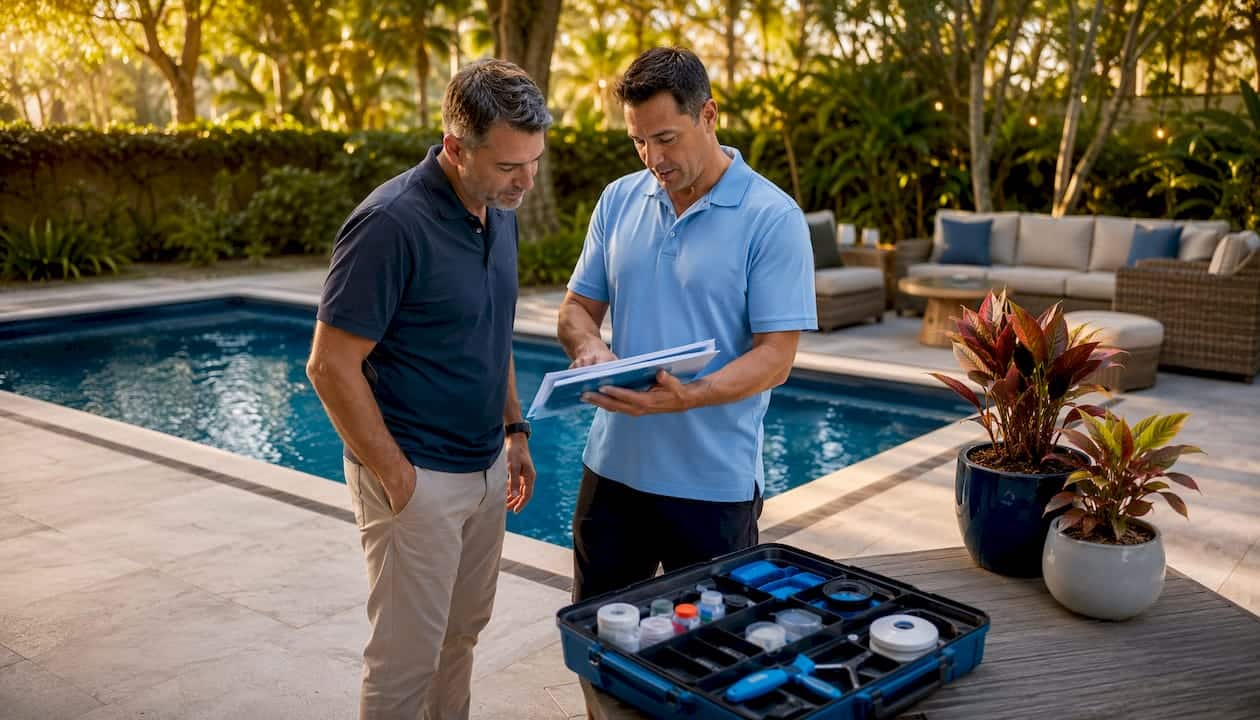
Ongoing pool builder support is the structured set of services, documentation, and follow-up care a professional builder provides after construction ends — and it is the single most reliable way to protect a pool as a long-term asset. A pool is one of the largest investments a homeowner makes. Without a clear post-build support plan, that investment is exposed to preventable equipment failures, voided warranties, and costly repairs that a trained builder would have caught early.
The core components of builder support break down into three pillars: mechanical operation training, documented warranties, and professional maintenance plans. In practice, these pillars encompass initial equipment startup and commissioning, owner training through pool school, warranty and documentation transfer, scheduled maintenance and proactive care, and repair or emergency response with defined support timelines.
The single most actionable step you can take: before signing a construction contract, ask for a written first-year support plan and confirm that a documented startup walkthrough is included. Builders who cannot produce both in writing are telling you something important about how they operate after the check clears.
Table of Contents
- What ongoing pool builder support actually includes
- What should transfer at handover: warranties, permits, and paperwork
- What a good “pool school” session covers
- Routine cleaning versus proactive care: what actually prevents big bills
- Repairs and emergency response: what to expect and who pays
- Service plans and pricing: what builders commonly offer
- How to choose a builder who will support your pool for years
- Why long-term builder relationships reduce lifecycle risk
- Quick next steps to protect your pool investment now
- Key Takeaways
- Randrswimmingpools supports you long after the build ends
- Useful sources and further reading
What ongoing pool builder support actually includes
The phrase “ongoing support” covers a wider range of services than most homeowners expect. Post-installation support rests on three pillars: mechanical operation training, documented warranties, and professional maintenance plans. What that looks like in practice:
Startup and commissioning (one-time, at build completion)
- Equipment startup: pump priming, filter backwash, heater ignition, automation pairing
- Initial water balancing and startup chemical treatment
- Automation and app configuration
Routine maintenance (weekly or biweekly)
- Water testing and pH/disinfectant adjustments
- Skimming, brushing, and vacuuming
- Basket and skimmer cleaning
- Visual equipment check
Scheduled preventive visits (monthly or quarterly)
- Filter inspection and media condition check
- Pump efficiency and flow-rate review
- Heater and automation diagnostics
- Salt cell inspection (for saltwater systems)
Seasonal services
- Opening and closing procedures (relevant in markets with cold winters; in Central Florida, this is more about seasonal-use adjustments and storm prep)
- Pre-season equipment inspection
Optional add-ons (not always included in base plans)
- Filter media replacement
- Major equipment repairs or part replacements
- Resurfacing or tile work
- Leak detection
Knowing which bucket a service falls into before you sign matters. A plan that sounds comprehensive may exclude parts, leaving you with a labor-covered visit and a separate bill for the component.
What should transfer at handover: warranties, permits, and paperwork
The handover package is where many builders cut corners, and where homeowners pay for it years later. A complete construction handover should include a final on-site inspection, equipment walkthrough, and transfer of all manufacturer manuals and warranties. Final permit sign-off and a documented equipment demo reduce homeowner liability and protect warranty rights.
Documents to confirm before releasing final payment:
- Signed structural warranty (confirm the term, which is commonly for a period covering multiple years for concrete shells)
- Equipment warranties with serial numbers for each unit (pump, filter, heater, automation, lights)
- All manufacturer owner’s manuals
- Contact information for each equipment manufacturer’s warranty service line
- Final signed invoice and any approved change orders
- Permit closeout documentation and certificate of completion from the local authority
- Pool barrier/fence compliance sign-off
- Startup chemical log (initial water chemistry readings)
The permit closeout step is one homeowners frequently overlook. An open permit can complicate a home sale and, in some jurisdictions, void coverage if a claim arises from unpermitted work.
Service records also matter for warranty purposes. Maintenance contracts that document onboarding inspections and service logs simplify warranty disputes because manufacturers often request proof of professional maintenance before honoring a claim.
Pro Tip: Withhold a portion of final payment — even a small percentage — until the documented startup session and pool school are complete. Builders who remain accountable through the initial operational period are far less likely to disappear after the last check clears. This is a practical homeowner safeguard that costs you nothing if the builder delivers.
What a good “pool school” session covers
A formal owner handover with pool school reduces owner anxiety about automation and chemistry and prevents future disputes. Builders who provide clear, hands-on startup training report fewer service calls tied to misuse or misconfiguration. Here is what the session should walk through:
- Control panel and app login — set your credentials, confirm remote access works, and understand alert notifications
- Valve routing — which valves control which zones, how to isolate equipment for service, and the correct positions for normal operation
- Pump functions and schedules — variable-speed settings, turnover rate targets, and how to adjust run times seasonally
- Heater operation — temperature set points, heat-up time expectations, and how to shut down safely
- Automation schedules — programming lights, water features, and sanitizer dosing if applicable
- Basic water testing — how to use a test kit or strips, what the target ranges are for pH, alkalinity, calcium hardness, and sanitizer
- Langelier Saturation Index (LSI) basics — why balanced water protects the finish and equipment, and what out-of-balance water looks like
- Safe chemical storage — segregation of oxidizers and acids, ventilation requirements, and what not to mix
- Emergency shutoff — where the main breaker is, how to cut power to the equipment pad quickly
Who should attend: the primary homeowner, any property manager or caretaker, and ideally one backup contact. If you rent the property seasonally, your property manager needs this session as much as you do.
Pro Tip: Ask the builder to provide a written startup log with the initial chemistry readings and equipment settings, and request a documented six-month check date in writing. Some builders include a six-month follow-up as part of their post-build commitment. If yours does not offer it, ask for it as a contract term.
Routine cleaning versus proactive care: what actually prevents big bills
Skimming and vacuuming keep the pool looking clean. They do not keep it healthy. The difference between basic cleaning and professional proactive maintenance is the difference between cosmetic upkeep and system health management.
Proactive care focuses on metrics that predict failure before it happens:
- LSI management — the Langelier Saturation Index measures water balance to prevent corrosion or scaling, with adjustments made to calcium hardness, total alkalinity, and pH by a trained technician.
- Pump efficiency monitoring — a variable-speed pump drawing more current than its baseline is telling you something: a clogged impeller, a failing seal, or a developing restriction in the plumbing. Catching it early means a $200 repair instead of a $1,200 motor replacement.
- Flow-rate tracking — slower return flow from jets usually means a dirty filter or a developing blockage. Left alone, it strains the pump and shortens its life.
- Corrosion and scaling prevention — salt systems, in particular, require regular cell inspection and flow-switch testing to avoid accelerating corrosion on metal components.
Warning signs that need builder attention, not just a cleaning visit:
- Unusual grinding, rattling, or high-pitched noise from the pump
- Noticeably weaker return jets with no recent filter cleaning
- pH that drifts more than 0.3 units between weekly visits
- Staining or etching on the plaster surface
- Automation errors or equipment failing to respond to scheduled commands
- Visible rust streaks near fittings or light niches
Monitoring subtle mechanical indicators — flow changes, motor current draw, and small chemistry shifts — lets trained technicians fix issues before they escalate to major, costly repairs. That is the practical case for proactive maintenance over reactive cleaning.
Repairs and emergency response: what to expect and who pays
Not every problem is an emergency, and not every repair is covered by your service plan. Setting those expectations before you need them is what separates a smooth builder relationship from a frustrating one.
Typical response timeframes:
- Standard service issues (cloudy water, minor equipment error codes, filter pressure spikes): addressed at the next scheduled visit or within 48–72 hours for non-urgent calls
- Urgent issues (significant water loss, heater lockout, automation failure affecting safety features): most reputable builders target same-day or next-business-day response
- True emergencies (electrical fault at the equipment pad, major structural leak, unsafe water chemistry after a chemical event): should trigger a same-day response commitment; confirm this in writing before signing
What service plans typically do and do not cover:
- Covered: scheduled labor for maintenance visits, water testing, chemical adjustments within defined limits, routine equipment checks
- Usually excluded: replacement parts, filter media, major repairs beyond a defined labor cap, damage from acts of nature or owner misuse
- Escalation process: most plans require written or app-based authorization before a repair above a set dollar threshold proceeds
What to do while waiting for service:
- Turn off the equipment if you hear grinding or see sparking
- Do not add chemicals until the technician assesses the situation if chemistry is severely off
- Photograph the issue and note the time it started
- Check your service contract for the emergency contact number — it is often different from the scheduling line
Service plans and pricing: what builders commonly offer
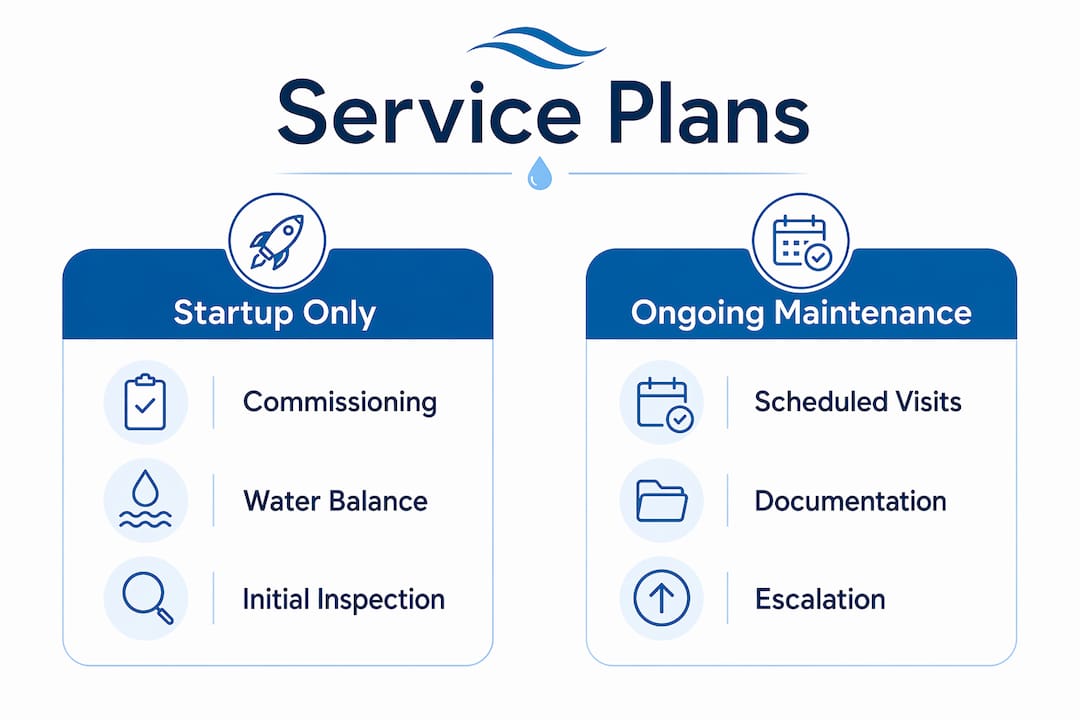
Service contracts are distinct from installation warranties — they define scheduled visits, documentation, and escalation procedures. Contracts often run 12 months and can include incident labor caps and defined escalation paths for repairs. Common plan structures:
| Plan Type | Typical Coverage | Frequency |
|---|---|---|
| Startup only | Equipment commissioning, initial water balance, owner walkthrough | One-time at build completion |
| Basic cleaning/water balance | Skimming, vacuuming, chemical testing and adjustment | Weekly or biweekly |
| Full-service maintenance | All basic tasks plus equipment inspections, filter service, and preventive checks | Weekly/biweekly visits + monthly inspection |
| Seasonal open/close | Pre-season startup and end-of-season shutdown procedures | Twice yearly |
| Hybrid/inspection credit plan | Scheduled inspections with per-incident repair credits applied against labor | Quarterly inspections + on-call repairs |
Pricing varies by region, pool size, and plan scope. Central Florida’s year-round swim season means most homeowners benefit from a full-service or hybrid plan rather than a seasonal-only option. Ask builders to quote per-visit rates alongside annual contract rates so you can compare apples to apples.
Contract terms to confirm before signing:
- Length: 12 months is standard; confirm auto-renewal terms
- Onboarding inspection: a baseline condition assessment at plan start protects both parties
- Service logs: confirm the builder provides written or digital records of each visit
- Cancellation terms: notice period and any early-termination fees
- Transfer clause: if you sell the home, can the plan transfer to the new owner?
How to choose a builder who will support your pool for years
The best time to evaluate a builder’s post-build commitment is during the bid process, not after the pool is finished. Here are the questions that separate builders with genuine support programs from those who disappear at final payment.
Questions to ask every builder you interview:
- What does your written post-build support plan include, and can I see a sample?
- Do you provide a documented startup session and pool school? Who conducts it?
- What is your standard response time for service calls, and what qualifies as an emergency?
- Who performs ongoing maintenance — your own licensed technicians or a subcontractor?
- What are the exact terms of your structural warranty and equipment warranty?
- Do you offer a six-month follow-up inspection, and is it included or billed separately?
- Can you provide references specifically from homeowners you have serviced post-build?
- Are you licensed and insured for both construction and ongoing service work in Florida?
Red flags that should give you pause:
- Warranty language that is vague about what triggers a claim or who adjudicates disputes
- No documented startup or training session offered (or offered only verbally)
- Unwillingness to provide post-build service references
- Service performed by an unlicensed subcontractor with no direct accountability to the builder
- No written escalation process for repairs above a cost threshold
- Pressure to release final payment before startup and training are complete
What to include in the contract itself:
- A startup checklist as an exhibit, signed off by both parties at completion
- A written pool school session as a deliverable before final payment releases
- A six-month check date confirmed in writing
- Response-time commitments for standard and emergency service calls
- Clear definition of what is and is not covered under the first-year support plan
Comparing written service commitments across bids is more reliable than comparing verbal promises. A builder who resists putting support terms in writing is showing you their actual post-build posture.
Why long-term builder relationships reduce lifecycle risk
Choosing a builder who offers continuous support protects the investment because the original builder understands site-specific factors that affect long-term maintenance. Concrete pools can last decades, so initial construction choices and local knowledge matter for future repairs and care.
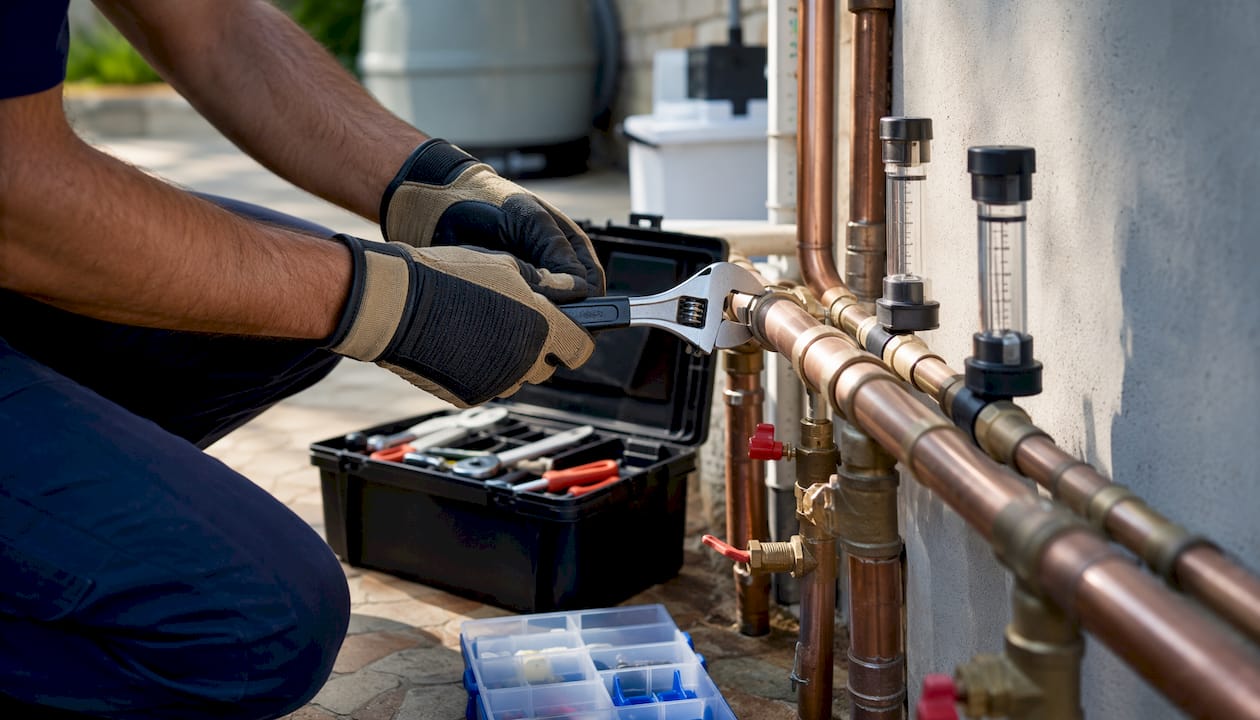
That is not a marketing claim — it is a practical reality. The builder who chose your shell thickness, plumbing layout, and equipment pad placement knows things about your pool that no independent service technician can learn from a first visit. When a leak develops near a fitting five years from now, the builder who installed that fitting can diagnose it faster and more accurately than anyone else.
In Central Florida specifically, soil composition, groundwater levels, and the near-year-round swim season create conditions that make builder continuity genuinely valuable. Sandy soils shift. Saltwater systems accelerate corrosion on components that a builder familiar with local conditions will have specified and installed with that in mind. Seasonal storm prep in Florida is different from closing a pool in Ohio.
R and R Swimming Pools has been building pools in Central Florida since 1985. That regional experience with local soil, water chemistry, and seasonal patterns is exactly the kind of institutional knowledge that makes long-term builder relationships worth protecting.
Quick next steps to protect your pool investment now
Whether you are mid-build, at handover, or evaluating a builder for the first time, these steps move you from passive to protected:
- Request a written post-build support plan before signing any construction contract; if the builder cannot produce one, treat it as a red flag
- Schedule the startup and pool school as a contract deliverable, not an afterthought
- Confirm warranty documents and permit closeout are in your hands before releasing final payment
- Enroll in a service plan for the first year — the first 12 months are when most equipment issues surface and when proactive maintenance pays back the most
- Set a calendar reminder for your six-month check so it does not slip through the cracks
For homeowners in Central Florida, Randrswimmingpools offers startup sessions, pool school, and scheduled maintenance coordination. Reach out to schedule your pool school session or discuss a post-build support plan.
Key Takeaways
A pool builder who provides documented startup training, clear warranty transfer, and a written first-year service plan is the single most reliable protection against preventable equipment failures and costly repairs.
| Point | Details |
|---|---|
| Documented handover is non-negotiable | Confirm permit closeout, serial numbers, warranties, and a signed startup log before releasing final payment. |
| Pool school prevents most early disputes | Hands-on training on automation, chemistry, and emergency shutoff reduces misuse calls and protects warranty rights. |
| Proactive maintenance beats reactive cleaning | LSI management and pump-efficiency monitoring catch mechanical drift before it becomes a major repair bill. |
| Service contracts and warranties are separate | A 12-month service contract with documented logs supports warranty claims; without service records, manufacturers can deny coverage. |
| Randrswimmingpools offers post-build support | Central Florida homeowners can schedule startup, pool school, and ongoing maintenance through Randrswimmingpools. |
The follow-up visit that changes everything
Most pool problems that turn into expensive repairs share one thing in common: they were detectable weeks or months earlier. A pump running slightly louder than normal, a pH that keeps drifting low, a filter pressure that climbs a little faster between cleanings — none of these look like emergencies. But a builder who knows your system recognizes the pattern.
The post-build follow-up visit is where that recognition happens. It is not just a courtesy call. It is the moment a trained technician compares current readings to the startup baseline and spots the deviation before it compounds. Builders who skip this step are not saving you money; they are transferring risk to you.
Ask any builder you are considering for references from homeowners they have serviced after construction, not just homeowners who are happy with the finished pool. And when your pool school is scheduled, bring every person who will ever touch that equipment. The session is worth more than any single maintenance visit.
Randrswimmingpools supports you long after the build ends
Forty years of building pools in Central Florida means Randrswimmingpools has seen what happens when post-build support is an afterthought. Equipment fails faster. Warranties get disputed. Homeowners end up paying twice for problems a single follow-up visit would have caught.
Randrswimmingpools offers a full post-install support path: documented startup and commissioning, hands-on pool school for homeowners and caretakers, warranty coordination, and scheduled maintenance planning. For homeowners ready to build, the inground pool installation guide walks through what to expect from design through handover. Every build comes with the expectation that the relationship does not end at final payment. Contact Randrswimmingpools to schedule your startup session or discuss a first-year support plan for your pool.
Useful sources and further reading
- The Ultimate Guide to Choosing the Right Pool Builder — covers the three pillars of post-installation support and what to look for in a builder’s service commitment
- Pool Contractor Handover Checklist — detailed breakdown of what a complete construction handover should include, from permit closeout to equipment demo
- Transferring Pool Ownership After Construction — Pool Magazine’s guide to the formal ownership transition, including pool school and startup log best practices
- How a Pool Contractor Supports Both Installation and Ongoing Care — explains LSI management, pump-efficiency monitoring, and the difference between reactive cleaning and proactive system care
- Pool Service Contracts Explained — primer on contract structure, 12-month norms, incident labor caps, and the relationship between service logs and warranty validity
- Weekly Pool Maintenance: Recurring Responsibilities — practical breakdown of what a weekly maintenance visit should cover
- After-Install Support Questions: Pool Builders — guidance on confirming response-time commitments and written after-install support policies before signing
- How to Choose a Pool Builder Who Will Actually Deliver — explains why original builder continuity matters for long-term maintenance and asset protection
