
If a hurricane is bearing down on your Central Florida home, the single most important thing you can do for your pool right now is leave the water in it. Do not drain it. Do not partially drain it “just in case.” The water is structural ballast, and removing it before saturated soil and rising groundwater arrive is one of the most expensive mistakes Florida pool owners make. UF/IFAS and the Florida Swimming Pool Association (FSPA) both lead with this rule, and every licensed contractor in the state backs it.
Here is your immediate action list:
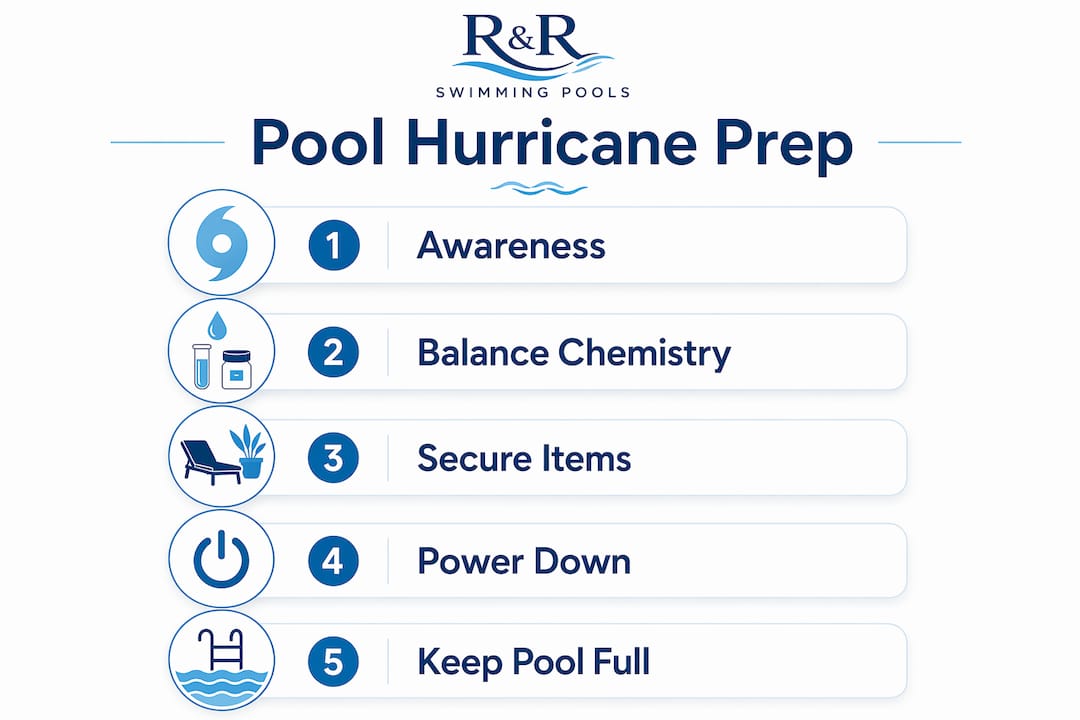
- Turn off all pool equipment at the main breaker (not just the equipment switches).
- Remove or secure every loose item around the pool: furniture, umbrellas, toys, grills.
- Lower the water level 1–2 feet below the skimmer only if you have a concrete or gunite pool and need overflow capacity for heavy rain. Vinyl and fiberglass: do not lower the water at all.
- Super-chlorinate if you have 24–48 hours before the storm arrives.
- Photograph everything now: equipment, waterline, decking, screen enclosure.
- Stay out of the water after the storm until it has been tested and cleared. Post-storm water can carry sewage runoff and pathogens.
Atlantic hurricane season runs June 1 through November 30. That is six months every year when every Florida pool owner needs a plan.
Table of Contents
- What should you do with your pool 48–72 hours before a hurricane?
- What should you do while the storm is actually happening?
- What are the first safety checks after the storm passes?
- How do you safely clean up and reopen the pool after a storm?
- How do hurricanes affect your pool equipment?
- Why is draining your pool in Florida so dangerous?
- How do you document pool damage for a hurricane insurance claim?
- When should you call a licensed pool contractor or electrician?
- Key Takeaways
- What most homeowners get wrong about hurricane prep
- Randrswimmingpools is ready to help after the storm
- Useful sources and further reading
What should you do with your pool 48–72 hours before a hurricane?
The window between a named storm and landfall is when preparation actually matters. Panic-draining the pool the night before is not preparation — it can lead to costly structural repairs. Use the time you have to work through this sequence.
Keep the pool full and understand why
A full pool holds significant water weight, which helps keep the shell stable against saturated soil and rising groundwater. An empty shell, by contrast, acts like a boat hull buried in mud: the hydrostatic pressure underneath it can literally push it out of the ground. This is called “popping,” and it is not a metaphor. For storm preparation details specific to Central Florida, the guidance is consistent: keep the water in.
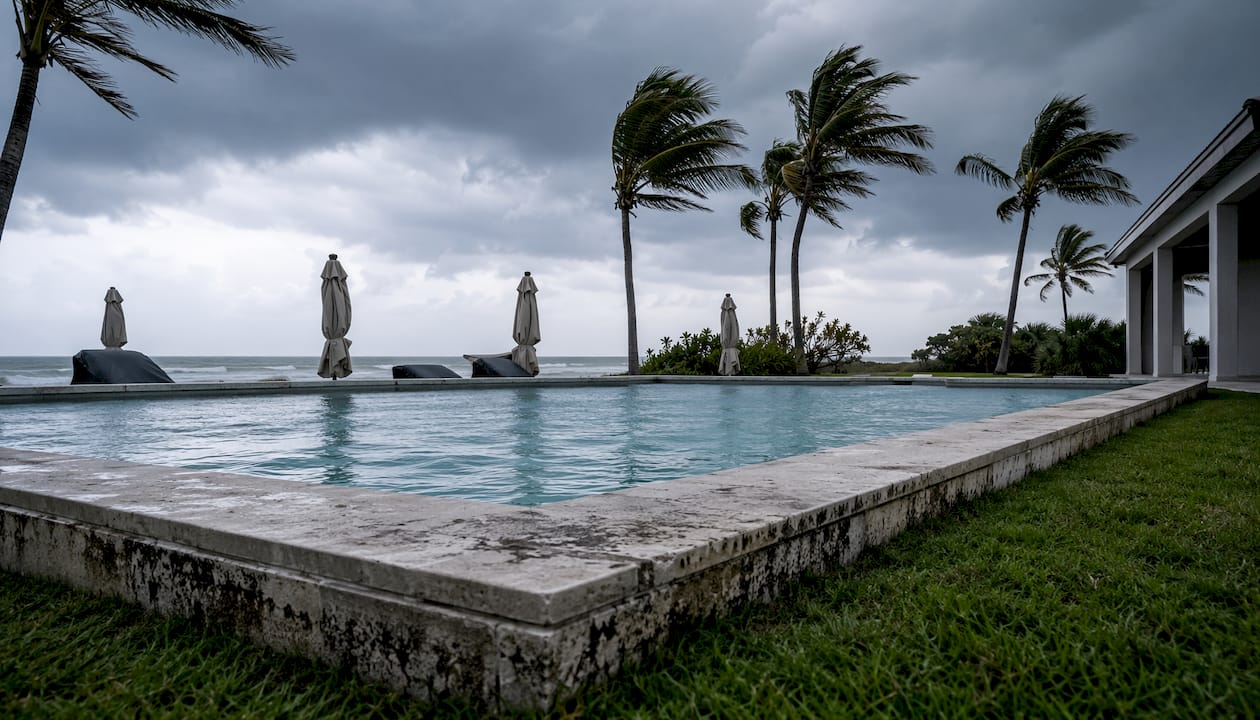
The one exception is overflow capacity. If you have a concrete or gunite pool and heavy rain is forecast, lowering the water slightly below the skimmer gives the pool room to absorb rainfall without flooding the deck. That is the only reason to lower the level, and it applies only to concrete and gunite. Vinyl liners and fiberglass shells should stay at normal operating level.
Power down and protect equipment
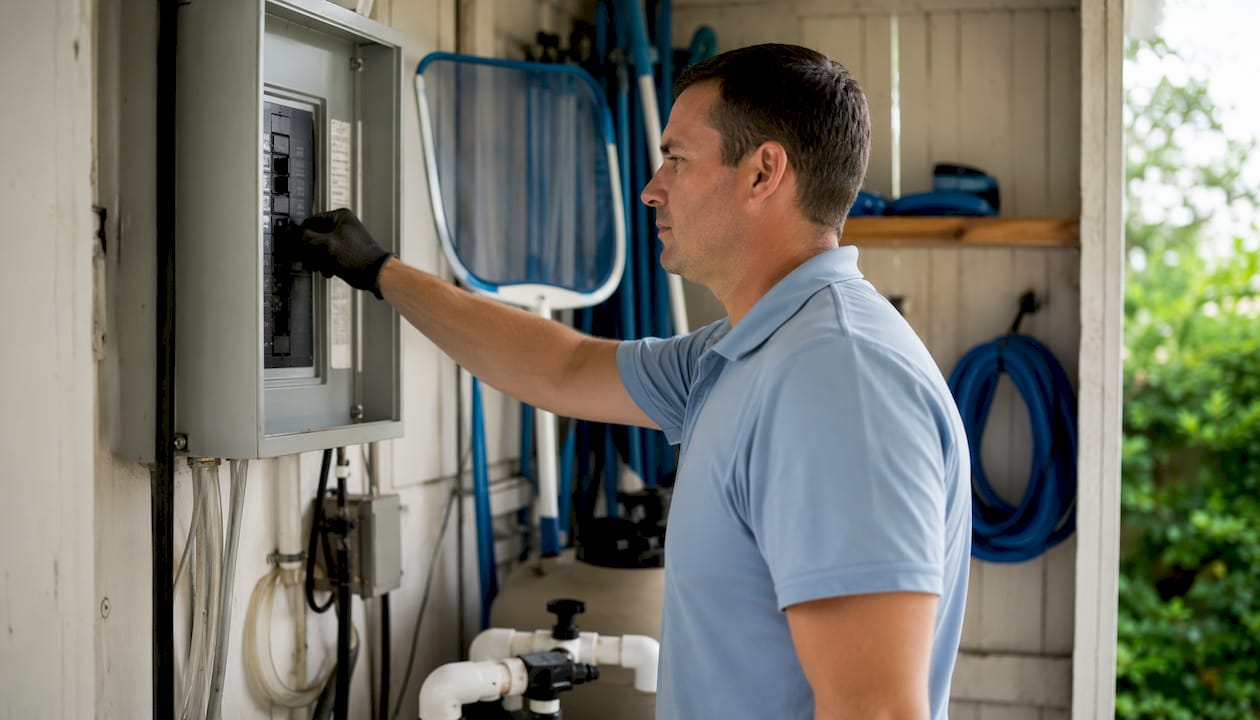
Disconnect pool equipment at the main breaker panel, not just the timer or equipment switch. A power surge during a storm can fry a pump motor, salt cell, or automation controller in seconds. If your property is in a flood-prone area and you have the time and tools, unbolting and storing the pump motor indoors is the most effective single action you can take to prevent an expensive loss.
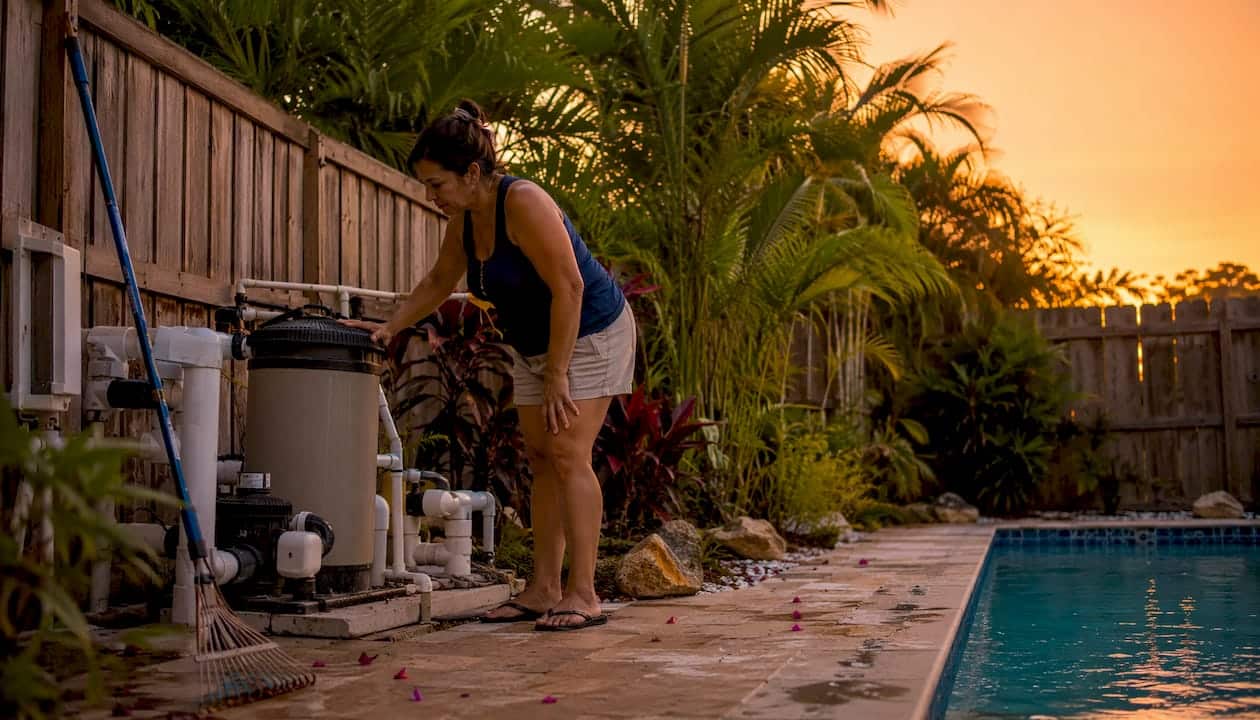
Pro Tip: Before you disconnect anything, photograph the wiring connections and serial numbers on every piece of equipment. That takes two minutes and saves hours of frustration when a technician or insurance adjuster needs the information later.
Secure everything around the pool
Patio furniture, umbrellas, grills, potted plants, and pool toys become projectiles in 100+ mph winds. Move them indoors or into the garage. If storage space is genuinely limited, light, non-damaging items like foam noodles or inflatable toys can go into the pool itself. Heavy or sharp objects should never go in the water.
Pre-storm chemical prep
Balance your pH and total alkalinity before the storm arrives. Then super-chlorinate the water to 10+ ppm if you have 24–48 hours. The incoming organic load from leaves, debris, and runoff will consume chlorine fast, and starting with a high free-chlorine level gives you a head start on recovery.
Store all pool chemicals in a cool, dry, elevated location. Never leave chemical containers where floodwater can reach them.
| Prep item | Recommended timing | Target / guidance | Why it matters |
|---|---|---|---|
| Hurricane season awareness | Year-round | June 1–November 30 | Six months of active risk in Florida |
| Begin prep checklist | 48–72 hours before landfall | Full checklist complete before storm | Rushed prep leads to missed steps |
| Shock / super-chlorinate | 24–48 hours before | 10+ ppm free chlorine | Prepares water for incoming organic load |
| Water level adjustment | 24–48 hours before (concrete/gunite only) | 1–2 ft below skimmer | Creates overflow capacity for heavy rain |
| Equipment power-down | Before storm arrives | Main breaker off | Prevents surge damage to motors and electronics |
What should you do while the storm is actually happening?
Short answer: nothing. Stay inside and away from the pool.
- Do not go outside to check on the pool, adjust equipment, or retrieve items while wind and rain are active.
- Leave the breakers off. Do not attempt to restart the pump during the storm, even if the power stays on.
- Do not cover the pool with a standard pool cover. In high winds, a cover becomes a sail that can damage the pool, the deck, and anything nearby.
- Do not try to pump out water while flooding is active. You cannot outrun a hurricane with a submersible pump, and operating electrical equipment near floodwater is dangerous.
- Do not place heavy, sharp, or stain-causing items in the pool as a last-minute storage solution.
A Category 3 hurricane is characterized by very strong sustained winds that can cause major damage and dangerous projectiles like patio furniture. At those speeds, a patio chair becomes a weapon. The pool can wait. Your safety cannot.
The pool is designed to handle rain and debris. It is not designed to handle you trying to manage it in the middle of a storm. Wait for conditions to fully clear before you go outside.
What are the first safety checks after the storm passes?
Before you touch anything near the pool, do a full safety sweep of the property. This is not optional.
Check for immediate hazards first
- Downed power lines. If any are near the pool or equipment pad, do not approach. Call your utility company and stay back until they clear the area.
- Gas leaks. If you smell gas near the equipment pad or anywhere on the property, leave and call your gas provider.
- Structural hazards. Look for damaged screen enclosures, cracked decking, or collapsed fencing before walking the pool perimeter.
- Wildlife in the pool. Snakes, frogs, and other animals seek higher ground during floods. Check the water and the skimmer baskets before reaching in.
Inspect equipment before touching the breaker
Walk the equipment pad and look at every component before you restore power. Submerged or visibly damaged equipment must not be re-energized. Look for:
- Water inside junction boxes or conduit
- Visible impact damage to the pump, filter, or heater
- Debris packed around or inside equipment
- A burnt smell from the motor housing
If anything looks wrong, leave the breaker off and call a licensed electrician or pool technician.
Document everything for insurance
Take photos and video before you move a single piece of debris. Adjusters need to see the damage as it was, not after you cleaned up.
- Wide shots of the full pool and equipment area
- Close-ups of every damaged component
- Serial number plates on the pump, heater, and automation panel
- Waterline evidence showing submersion height
- Date and time stamps on every photo (your phone does this automatically)
- Screen enclosure, decking, and coping damage
Signs that require a professional immediately:
- The pump motor was submerged
- A vinyl liner is missing, torn, or floating
- Visible structural cracks in the shell or bond beam
- The water level drops overnight with no rain (possible plumbing or liner failure)
How do you safely clean up and reopen the pool after a storm?
Recovery has a specific sequence. Skipping steps or doing them out of order causes equipment damage and extends the time before the pool is safe to use.
- Remove large debris manually. Use a leaf net to pull out branches, leaves, and anything else visible before you turn on the pump. Pulling large debris through the skimmer risks destroying the impeller and clogging the filter throat. Do this by hand.
- Inspect all equipment and wiring. Walk the pad again with the checklist from the previous section. If any component was submerged, stop here and call a pro. If everything looks dry and intact, proceed.
- Restore power one circuit at a time. Turn on the pump first and listen. No grinding, no burning smell, no tripped breaker? Good. Move to the next component.
- Balance alkalinity and pH before shocking. Post-storm water is typically acidic, low in free chlorine, and loaded with organic contaminants. Adjust total alkalinity to 80–120 ppm and pH to 7.4–7.6 before adding shock. Shocking out-of-range water wastes product and can damage the finish.
- Perform a breakpoint shock. Once chemistry is balanced, add a large dose of calcium hypochlorite or liquid chlorine to push free chlorine well above the breakpoint. If the organic load is high (green or brown water), treat phosphates as well.
- Run the filter 24/7. Do not turn the pump off until the water is clear. Expect 48–72 hours for minor storms and 3–7 days or more after a major event. Backwash or clean the filter frequently — after a bad storm, you may need to clean it multiple times per day.
- Test the water daily until chemistry stabilizes. Do not swim until free chlorine is between 1–3 ppm, pH is in range, and the water is visually clear.
Pro Tip: Keep a written log of every chemical dose, filter cleaning, and test result during recovery. That record is useful if you need to explain the timeline to an insurance adjuster or hand off to a service technician.
For ongoing maintenance guidance after the pool is back in service, pool maintenance tips from Randrswimmingpools cover the full Central Florida seasonal picture.
How do hurricanes affect your pool equipment?
Storm damage to pool equipment follows predictable patterns. Knowing what to look for speeds up the repair process and helps you prioritize what gets fixed first.
Common failures after a major storm:
- Pump and motor: Water intrusion is the leading cause of motor failure. A motor that ran while partially submerged, or that sat in standing water, will likely need rebuilding or replacement.
- Salt cell: Electronics inside salt chlorine generators are vulnerable to surge damage and water intrusion. A cell that throws error codes after a storm may need cleaning, or it may be a total loss.
- Heat pump: Fan blades and coils take direct hits from wind-driven debris. Check for bent blades, crushed coils, and refrigerant leaks.
- Automation panel: Surge damage is common even when the main breaker was off, if the breaker was tripped after a surge rather than before. Look for error codes, unresponsive controls, and burnt components.
What to inspect on the equipment pad
Walk the pad and check each component for: visible impact damage, water inside the housing, a burnt or electrical smell, debris packed around intake or exhaust vents, and any tripped breakers or error codes on the controller display.
Electrical surge and flood damage are the most expensive avoidable losses. Disconnecting at the breaker before the storm and, when possible, storing the pump motor indoors are the highest-value protective steps a homeowner can take.
Repair vs. replace
A pump motor that was not submerged but shows surge damage can sometimes be rebuilt. One that sat in floodwater for hours almost always needs full replacement. Salt cells can often be cleaned and restored if the damage is mineral buildup rather than electronics failure; a cell with a cracked housing or dead circuit board needs replacement. Heat pump coils can sometimes be straightened; a refrigerant leak requires a licensed HVAC or pool heating technician.
Call a licensed electrician immediately if you see: smoke, sparks, a motor that seizes on startup, or a breaker that trips every time you reset it.
To reduce risk before the next storm: elevate heat pumps on stands if they are in a flood-prone area, tarp equipment if you cannot store it, and remove any portable units entirely.
Why is draining your pool in Florida so dangerous?
Florida’s geology makes pool draining a genuinely risky decision, not just a precaution. The water table in much of Central Florida sits just a few feet below the surface. After heavy rain, it rises further. An empty pool shell sitting in saturated soil faces enormous upward pressure from groundwater pushing against the outside of the shell.
The result is hydrostatic uplift, or a “popped” pool. The shell lifts out of the ground, cracking the bond beam, snapping plumbing connections, and sometimes tilting the entire structure. Repair costs for a popped pool run $25,000–$60,000 depending on pool type and extent of damage. In severe cases, the pool is a total loss.
For a deeper look at how drainage decisions affect pool structure in this region, pool drainage guidance from Randrswimmingpools covers the hydrostatic specifics in detail.
The safe rules on water level:
- Concrete and gunite pools: You may lower the water 1–2 feet below the skimmer to create overflow capacity. No more.
- Vinyl liner pools: Do not lower the water before a storm. The liner needs water pressure to stay seated against the walls.
- Fiberglass pools: Do not lower the water before a storm. The shell relies on water weight for structural stability.
- Never fully drain any pool before or immediately after a hurricane.
- Local discharge ordinances may restrict where you can pump pool water. Check with your municipality before pumping anything to the street or storm drain.
Pro Tip: If you believe your pool has a structural issue that requires draining, contact a licensed pool contractor before doing anything. Get their recommendation in writing. That documentation protects you with your insurance company and establishes that you followed professional guidance.
How do you document pool damage for a hurricane insurance claim?
Good documentation is the difference between a smooth claim and a months-long dispute. Start collecting evidence before you touch anything.
Your documentation checklist:
- Wide-angle photos and video of the full pool, equipment pad, deck, and screen enclosure
- Close-up photos of every damaged component, including visible water intrusion and impact damage
- Serial number plates on the pump, heater, filter, and automation panel
- Pre-storm condition photos if you took them (this is why the before-the-storm photo step matters)
- Date and time stamps on all photos
- A written log of the storm timeline: when you powered down, when the storm hit, when you first inspected, and every action taken since
- Receipts for any emergency repairs or chemical purchases
What your policy likely covers (and what it may not)
Wind damage to pool structures, screen enclosures, and equipment is typically covered under a standard homeowner’s policy. Flood damage, meaning water that entered from outside the property, usually requires a separate flood insurance policy. The distinction matters because a hurricane delivers both, and adjusters will look carefully at the cause of each loss. Review your specific policy language before the storm season, not after.
Line items adjusters commonly inspect: screen enclosure framing and screening, pool decking and coping, the equipment pad and all mounted components, pump and motor condition, and whether the primary cause was wind or flood.
Pro Tip: Organize all receipts, contractor contacts, and written professional assessments in a single folder, physical or digital. Submit everything to your adjuster promptly and follow up in writing. Delayed submissions and missing documentation are the two most common reasons claims take longer than they should.
For Florida pool weather considerations that affect both preparation and insurance planning, Randrswimmingpools covers the full seasonal picture for homeowners.
When should you call a licensed pool contractor or electrician?
Some post-storm problems are DIY-manageable. Others are not, and trying to handle them yourself can make the damage worse, void a warranty, or create a safety hazard.
Call a licensed electrician when:
- Any electrical component was submerged, even briefly
- You see sparks, smoke, or smell burning from the equipment pad
- A breaker trips every time you reset it
- Junction boxes or conduit show water intrusion
Call a licensed pool contractor when:
- You see structural cracks in the shell, bond beam, or coping
- The pool has popped or shifted visibly
- A vinyl liner is torn, missing, or floating free
- The water level drops overnight without rain (plumbing or liner failure)
- The pool water stays opaque or green after 48–72 hours of continuous filtration and proper chemical treatment
Call a pool service company when:
- Water is severely contaminated and you are not confident in the chemical recovery sequence
- You need professional water testing and treatment after major flooding
- Equipment diagnostics require specialized tools (pressure testing, salt cell diagnostics, automation bench tests)
A professional inspection after a major storm typically includes: equipment testing under load, plumbing pressure checks, pump and motor bench tests, salt cell diagnostics, and a written estimate for all repairs. That written estimate is exactly what your insurance adjuster needs.
Randrswimmingpools has been serving Central Florida pool owners since 1985. If your pool took damage this season, the Pool School resource page is a good starting point for understanding what a professional inspection covers and what questions to ask a contractor.
Key Takeaways
Florida pool owners who keep the water in, power down at the breaker, and follow a time-ordered cleanup sequence avoid the most expensive hurricane losses and recover faster.
| Point | Details |
|---|---|
| Never drain before a storm | A full pool is structural ballast; draining risks hydrostatic uplift and a $25,000–$60,000 repair bill. |
| Power down at the main breaker | Turn off all pool equipment at the breaker panel before the storm arrives to prevent surge damage. |
| Manual debris removal first | Remove large debris by hand with a net before running the pump to avoid damaging the equipment. |
| Chemical sequence matters | Balance alkalinity and pH before shocking; run filtration 24/7 for 48–72 hours to 3–7 days post-storm. |
| Document before you clean | Photograph all damage with date stamps before moving anything — adjusters need pre-cleanup evidence. |
| Randrswimmingpools | Central Florida’s contractor since 1985 offers post-storm inspections and emergency repair services. |
What most homeowners get wrong about hurricane prep
The conventional wisdom on hurricane pool prep tends to focus on what to add: more chemicals, more covers, more protection. What it underemphasizes is what not to do, and that gap is where the real money gets lost.
Draining the pool is the obvious example. Every experienced contractor in Florida has seen it happen. A homeowner reads something online, decides the pool will overflow, and empties it the day before landfall. Three days later, the shell is sitting six inches above grade and the plumbing is in pieces. The storm itself caused zero structural damage to the pool. The homeowner did.
The second mistake is less dramatic but just as costly: re-energizing submerged equipment without an inspection. A pump motor that ran dry or sat in floodwater looks fine from the outside. It is not fine. Running it without a bench test often turns a repairable motor into a replacement.
The third mistake is documentation timing. Homeowners who clean up first and photograph second lose claim leverage. Adjusters cannot assess damage they cannot see, and “I had to clean it up” is not a substitute for evidence.
The practical lesson from decades of post-storm work in Central Florida is this: the pool is more resilient than most owners think, and the biggest threats to it are usually the owner’s own decisions under pressure. A clear checklist, made before the storm season starts, removes most of that risk.
Randrswimmingpools is ready to help after the storm
Central Florida pool owners who need a professional eye on their pool after a hurricane do not have to figure it out alone. R and R Swimming Pools has been building and servicing custom inground pools across Central Florida since 1985, and post-storm inspections are part of what the team does every season.

Whether the issue is a cracked shell, submerged equipment, water that will not clear, or a pool that needs a full post-storm renovation, Randrswimmingpools brings the local knowledge and licensed expertise to assess the damage accurately and give you a written estimate your insurance adjuster can use. The team covers multiple Central Florida communities and has the depth of experience to tell you honestly what needs immediate attention and what can wait.
If you are not sure where to start, the Pool School page walks through what a professional inspection covers and how to prepare for the conversation. Ready for a direct assessment? Contact Randrswimmingpools to schedule your post-storm inspection.
Useful sources and further reading
The guidance in this article draws on the following authoritative sources. Save these links for reference during hurricane season.
- UF/IFAS Extension — Pools and Hurricanes: University of Florida’s Institute of Food and Agricultural Sciences; covers hydrostatic pressure, the do-not-drain rule, and water-level guidance for different pool types.
- Florida Swimming Pool Association (FSPA) — Hurricane Preparedness: The state industry association’s official checklist covering power-down procedures, chemical prep, and post-storm debris removal.
- Florida’s Best Pool Service — Post-Storm Pool Recovery: Detailed chemical recovery sequence, filtration timelines, and biological contamination guidance.
- Florida’s Best Pool Service — Hurricane Pool Preparation: Equipment safety guidance, submerged-equipment protocols, and electrical hazard warnings.
- Modern Pool Tools — Florida Hurricane Season Pool Prep Guide: Season dates, hydrostatic repair cost ranges, and prioritized timeline guidance.
- WrightWay — Pool Preparation Before a Hurricane: Super-chlorination timing and dosing guidance for pre-storm chemical prep.
- The Pool Sharks — Pool Care and Water Treatment: Supplemental guidance on balancing pool chemistry and professional cleanup services after storms.
- Randrswimmingpools — Storm Preparation for Pools: Central Florida-specific prep guidance from a licensed local contractor.
- Randrswimmingpools — Pool Drainage for Central Florida Homeowners: In-depth resource on hydrostatic risk and safe drainage decisions for Florida pools.
Save this page and photograph your equipment now — serial numbers, wiring, and current condition — so you have a pre-storm baseline ready before the next named storm forms.
