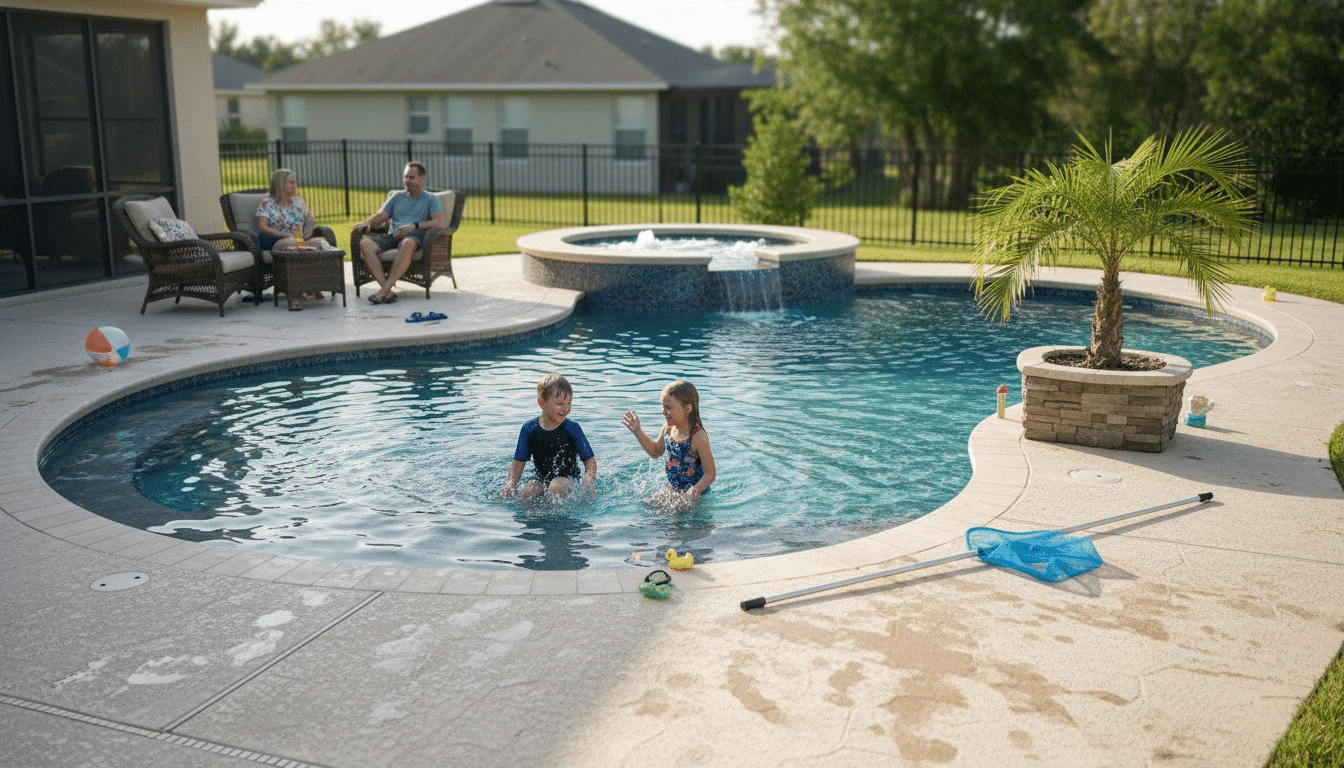
Most American homeowners in Central Florida are surprised to learn that nearly 45 percent of bespoke inground pools incorporate cutting-edge technology for both style and safety. Selecting a custom pool means more than just adding water to your property—it transforms how you entertain, relax, and enjoy your personal oasis. If you desire an outdoor space in The Villages or Mount Dora that truly reflects a refined lifestyle, understanding what makes a pool uniquely tailored can help you create a statement of luxury while maximizing comfort and value.
Table of Contents
- Defining A Custom Pool And Common Myths
- Types Of Custom Pools And Design Options
- How The Custom Pool Building Process Works
- Costs, Timelines, And Maintenance Considerations
- Choosing The Right Pool For Central Florida Homes
Key Takeaways
| Point | Details |
|---|---|
| Custom Pools Reflect Individual Style | Custom pools are personalized aquatic environments that can be tailored to homeowners’ aesthetic preferences and lifestyle needs. |
| Cost Concerns Addressed | Custom pools are not just for the wealthy; various budget-friendly options are available without compromising on quality. |
| Compliance and Safety Regulations | Adherence to safety and construction codes ensures custom pools are safe and structurally sound, dispelling myths about their complexity. |
| Importance of Professional Consultation | Engaging with professional designers is essential for navigating design possibilities, local regulations, and maintenance expectations effectively. |
Defining a Custom Pool and Common Myths
A custom pool represents far more than a standard swimming area – it’s a personalized aquatic environment designed specifically to match a homeowner’s unique lifestyle and aesthetic preferences. Unlike mass-produced pool designs, these tailored aquatic spaces integrate seamlessly with your property’s architectural style and landscape, reflecting individual taste and functional requirements.
Contrary to popular misconceptions, custom pools are not exclusively reserved for wealthy homeowners with unlimited budgets. Modern pool design offers flexible options that can accommodate various financial constraints while still delivering exceptional safety barrier guidelines and design integrity. Many homeowners discover that a thoughtfully planned custom pool can be surprisingly affordable when compared to generic alternatives.
The 2021 International Swimming Pool and Spa Code establishes comprehensive standards ensuring that custom pools meet rigorous safety, electrical, and mechanical requirements. These regulations dispel myths about custom pool complexity by providing clear compliance frameworks. Key considerations include precise engineering, appropriate material selection, and adherence to local building codes – factors that guarantee both aesthetic appeal and structural reliability.
Pro tip: Before beginning your custom pool project, consult with multiple professional designers to understand the full range of possibilities and potential cost structures for your specific property.
Types of Custom Pools and Design Options
Custom pools offer homeowners an incredible range of design possibilities, with three primary construction types forming the foundation of personalized aquatic environments. In-ground concrete pools provide the most versatile option, allowing for virtually unlimited shape and design customization. Fiberglass pools offer pre-manufactured shells with faster installation, while vinyl-lined pools present a more budget-friendly alternative with smooth surface options.
Here’s a quick comparison of custom pool construction types:
| Pool Type | Customization Potential | Installation Speed | Typical Cost Range |
|---|---|---|---|
| Concrete | Unlimited shapes, features | Slowest (12-16 weeks) | $70,000 – $250,000+ |
| Fiberglass | Limited shapes, some options | Fastest (4-6 weeks) | $60,000 – $120,000 |
| Vinyl-Lined | Some shapes, smooth surface | Moderate (6-10 weeks) | $50,000 – $95,000 |
When exploring design choices, homeowners can select from an extensive array of swimming pool design features that transform ordinary swimming areas into extraordinary outdoor living spaces. These options include intricate design elements like underwater seating, raised deck areas, integrated spa zones, dramatic water features such as cascading waterfalls, and sophisticated lighting systems that create mesmerizing evening environments.
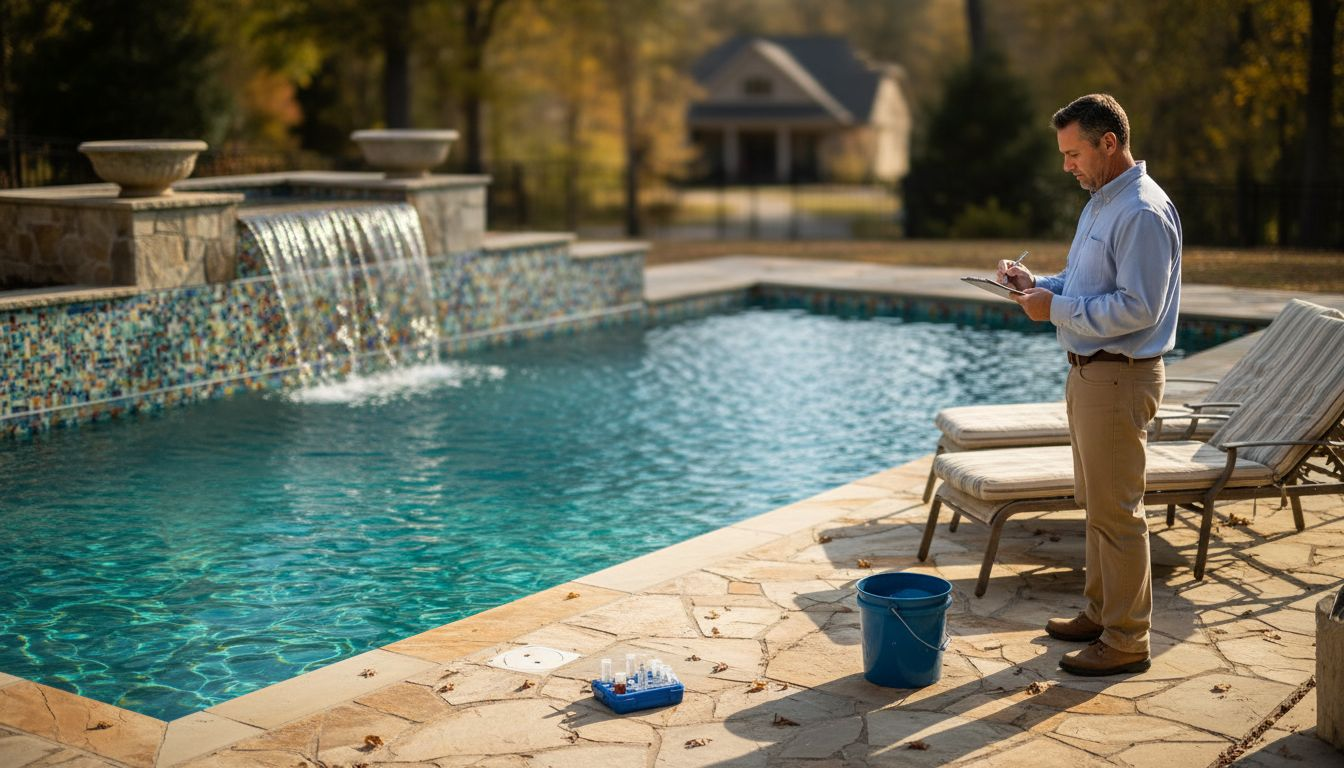
Beyond aesthetic considerations, modern custom pool designs incorporate critical functional elements. Accessibility features, energy-efficient systems, and safety considerations play crucial roles in contemporary pool engineering. Advanced designs might include therapeutic swim jets for exercise, temperature-controlled zones, automated cleaning systems, and intelligent water management technologies that reduce maintenance requirements and environmental impact.
Pro tip: Consult with a professional pool designer who can help you balance aesthetic preferences with practical functionality, ensuring your custom pool meets both your lifestyle needs and local building regulations.
How the Custom Pool Building Process Works
The custom pool construction journey begins with a comprehensive design consultation, where homeowners work closely with professional designers to transform their backyard vision into a detailed architectural plan. This initial phase involves precise measurements, landscape assessment, and swimming pool design standards that ensure the proposed pool will integrate seamlessly with existing outdoor spaces while meeting all technical requirements.
Once the design is finalized, the construction process unfolds through several critical stages. Excavation marks the first physical transformation, with specialized equipment carefully removing earth to create the pool’s foundational shape. Plumbing and electrical infrastructure are then meticulously installed, including complex systems for water circulation, filtration, and potential features like underwater lighting or heating elements. The pool shell is constructed using the chosen material – whether concrete, fiberglass, or vinyl – with each method requiring unique installation techniques and precision craftsmanship.
The final stages of pool construction involve intricate finishing work that elevates the project from a functional structure to a stunning outdoor living feature. Tiling, decking, landscaping, and additional amenities like waterfalls or integrated spa areas are carefully implemented. Multiple inspection points throughout the process ensure compliance with local building codes and safety regulations, guaranteeing that the custom pool not only looks spectacular but meets all technical and structural standards.
Pro tip: Request a detailed project timeline and milestone checklist from your pool contractor to maintain transparency and understand each stage of the construction process.
Costs, Timelines, and Maintenance Considerations
The financial investment in a custom pool varies dramatically, with project costs ranging from $50,000 to over $250,000 depending on complexity, materials, and unique design features. Construction timelines typically span 8 to 16 weeks, influenced by factors like site preparation, design intricacy, and local permitting processes. Swimming pool design costs encompass multiple elements including site excavation, material selection, mechanical systems, and finishing touches.
Annual maintenance represents a critical long-term consideration for custom pool owners. Homeowners should budget approximately 3-5% of the initial pool construction cost for yearly upkeep, which includes essential expenses like water treatment chemicals, electricity for pumps and heating systems, regular cleaning, equipment repairs, and potential seasonal maintenance. Advanced features such as automated cleaning systems, energy-efficient pumps, and smart water management technologies can help mitigate ongoing operational expenses while enhancing overall pool performance and longevity.
Seasonal and preventative maintenance plays a pivotal role in protecting your pool investment. Routine tasks include monitoring water chemistry, cleaning filters, inspecting mechanical systems, and addressing potential wear and tear before it becomes a significant problem. Professional pool service contracts can provide comprehensive maintenance packages that handle these technical aspects, ensuring your custom pool remains in optimal condition throughout the year and preserving its aesthetic and functional value.
Below is a summary of key pool maintenance areas and their main benefits:
| Maintenance Area | Why It Matters | Typical Frequency |
|---|---|---|
| Water Chemistry | Prevents algae, health risks | Weekly |
| Filter & Equipment | Ensures proper water flow | Monthly |
| Cleaning & Debris | Preserves appearance, hygiene | Weekly to bi-weekly |
| Professional Checkups | Detects issues early | Twice per year |
Pro tip: Request a detailed maintenance cost projection and comprehensive service agreement during initial pool design consultations to understand the full financial commitment of your custom pool project.
Choosing the Right Pool for Central Florida Homes
Central Florida’s unique climate and landscape demand specialized considerations when selecting a custom pool. Durability and heat resistance become paramount, with materials and designs needing to withstand intense sunlight, high humidity, and occasional tropical weather conditions. Swimming pool requirements emphasize the importance of selecting construction methods that can endure local environmental challenges while maintaining aesthetic appeal and structural integrity.
Three primary pool types emerge as ideal for Central Florida homeowners: concrete, fiberglass, and vinyl-lined pools. Concrete pools offer unparalleled customization and can be engineered to withstand shifting sandy soils common in the region. Fiberglass pools provide rapid installation and excellent durability with minimal maintenance, while vinyl-lined pools represent a more budget-friendly option with smooth surfaces that resist algae growth in humid environments. Each type presents unique advantages, making the selection process dependent on individual property characteristics, budget constraints, and specific aesthetic preferences.
Beyond material selection, local building codes and permitting requirements significantly influence pool design choices. Homeowners must navigate electrical load calculations, safety equipment specifications, and energy efficiency standards specific to Central Florida municipalities. Factors like setback requirements, fencing regulations, and drainage considerations play crucial roles in determining the feasible pool design for a specific property. Professional pool designers familiar with local regulations can help homeowners navigate these complex requirements and create a pool that maximizes both functionality and compliance.
Pro tip: Consult with a local pool designer who understands Central Florida’s specific environmental and regulatory landscape to ensure your custom pool meets both your personal vision and municipal requirements.
Discover the True Value of Custom Pools with Expert Guidance
Understanding the challenges of designing a custom pool means recognizing the importance of creating a space tailored to your lifestyle, budget, and the unique demands of Central Florida’s environment. The article highlights key concerns like choosing the right materials, balancing aesthetic appeal with functionality, complying with safety codes, and managing ongoing maintenance costs. These complexities require experienced professionals who can transform your vision into a beautifully crafted, durable pool while helping you navigate local regulations and design options.
At R & R Swimming Pools, we specialize in delivering personalized custom pool solutions that reflect your individual preferences and adhere to the highest safety and quality standards. With over 35 years of expertise in both concrete and fiberglass pool construction, we offer a wide range of design features including waterfalls, spas, and energy-efficient systems that enhance your outdoor living experience. Explore our Pool School | R & R Swimming Pools to learn more about pool maintenance and design principles that help protect your investment.
Ready to take the next step toward your dream pool? Visit R & R Swimming Pools to see our portfolio and customer testimonials. Schedule your free quote today by heading to randrswimmingpools.com and start building a custom pool that brings lasting value and enjoyment to your home.
Frequently Asked Questions
What is a custom pool?
A custom pool is a personalized swimming environment designed to reflect the homeowner’s unique lifestyle and aesthetic preferences, integrating seamlessly with the property’s architecture and landscape.
How much does a custom pool cost?
The cost of a custom pool can vary significantly, typically ranging from $50,000 to over $250,000, depending on design complexity, materials used, and specific features included in the pool.
How long does it take to build a custom pool?
Construction timelines for custom pools generally span from 8 to 16 weeks, influenced by factors such as design intricacy, site preparation, and local permitting processes.
What maintenance is required for a custom pool?
Annual maintenance typically costs about 3-5% of the initial construction cost and includes monitoring water chemistry, cleaning filters, inspecting mechanical systems, and ongoing upkeep to ensure optimal pool performance.
Recommended
- Why Custom Pool Design Elevates Florida Living
- How to Design a Pool: Step-by-Step Custom Backyard Guide
- Role of Pool Design – Transforming Outdoor Living in Florida
- Inground vs Above Ground Pools: Impact on Home Value
- What Pool Chemicals Do You Need for a Swimming Pool – Here’s the top 5 things? – ClearSpa™
- Pool Builder Clermont FL
- Pool Builder Mount Dora FL
