
TL;DR:
- Pool trends for 2025 go beyond aesthetics, emphasizing automation, sustainability, and functionality that impact daily life. Choosing the right design, technology, and eco-friendly features based on your lifestyle can reduce long-term costs, maintenance, and enhance property value. Embracing smart systems and sustainable construction options ensures a more efficient, customizable, and environmentally responsible pool experience.
Pool trends used to mean picking a color for your tile. Not anymore. The role of top pool trends 2025 has expanded far beyond aesthetics to reshape how pools are built, maintained, and experienced every single day. Whether you’re planning a new installation or thinking about 2025 pool renovation ideas, what you choose today will affect your water bills, your weekend schedule, and your home’s resale value for years to come. This article breaks down the design styles, technologies, and sustainability shifts that matter most so you can make smart decisions for your property.
Table of Contents
- Key takeaways
- Top pool design styles shaping 2025 spaces
- Pool technology innovations changing maintenance in 2025
- Sustainable pool trends reshaping construction
- How to choose a pool style that fits your life
- My honest take on the 2025 pool trend conversation
- Ready to bring these trends to your backyard?
- FAQ
Key takeaways
| Point | Details |
|---|---|
| Trends go beyond looks | The biggest 2025 pool shifts involve automation, sustainability, and function, not just style. |
| Design style affects long-term cost | Your pool shape directly influences maintenance time, expenses, and property value. |
| Smart tech cuts maintenance dramatically | AI-powered systems can reduce hands-on maintenance to roughly once a month. |
| Eco-friendly options save real money | New construction methods like liner-based pools can cut build costs by up to 50%. |
| Match trends to your lifestyle | Chasing popular features without evaluating your property and habits leads to regret. |
Top pool design styles shaping 2025 spaces
When most homeowners think about popular pool styles 2025, they picture infinity edges and dramatic water features. Those are real trends, but understanding why each style exists helps you pick one that actually fits your backyard and your life.
Rectangular pools remain the most popular choice across the country, and there’s a practical reason for that: they’re easier to clean, simpler to cover, and play well with almost any architectural style. They cost between $35,000 and $65,000 for a basic installation, making them the most accessible entry point for most homeowners. If you want low-maintenance ownership and a clean visual line to match a modern home, a rectangle is hard to beat. You can also explore pool shape options that balance maintenance savings with curb appeal.
Free-form pools take a completely different philosophy. They mimic natural lagoons with curved edges, rock features, and organic flow. They work best on larger, landscaped properties where the goal is to create a resort-style feel. Starting costs begin around $60,000 and can climb well past $150,000 when you add waterfalls, grottos, or beach entries.
Infinity edge pools are the most visually dramatic option. They create the illusion of water extending to the horizon, which makes them spectacular on sloped lots or properties with a view. The catch is that they require a catch basin, more complex plumbing, and higher ongoing pump energy costs.
Geometric pools with added features like tanning ledges, attached spas, or sun shelves represent a strong middle ground in emerging pool design trends 2025. You get a structured look, defined swim lanes, and the added functionality of a shallow lounge area that kids and adults both love.
| Pool style | Best use case | Starting cost | Maintenance level |
|---|---|---|---|
| Rectangular | Lap swimming, family use, small yards | $35,000 | Low |
| Free-form | Resort feel, large landscaped properties | $60,000 | Moderate |
| Infinity edge | Sloped lots, scenic views, luxury builds | $75,000+ | High |
| Geometric with features | Family entertaining, modern homes | $50,000 | Low to moderate |
Pool technology innovations changing maintenance in 2025
Pool technology innovations 2025 have made one thing very clear: the era of spending every weekend skimming, testing, and adjusting your water chemistry is over for most homeowners who invest in the right systems.
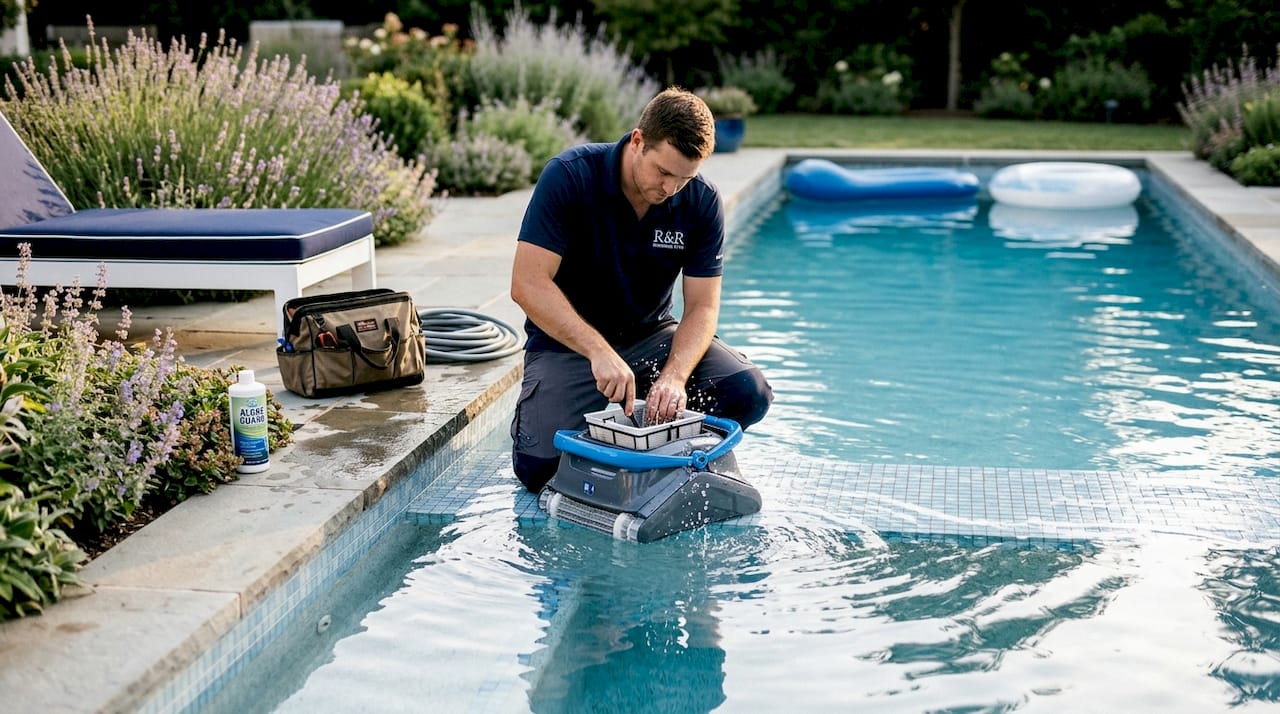
The most significant shift is in robotic cleaning. AI-powered robotic cleaners have advanced to the point where manual maintenance drops to roughly once per month. These units map your pool floor, identify debris patterns, and adjust their cleaning paths automatically. That’s a genuine lifestyle upgrade, not a marketing claim.
Smart pool automation now goes well beyond just cleaning. Modern smart pools integrate AI-driven scheduling, voice control, solar energy systems, and remote monitoring through your phone. You can adjust temperature, turn on lights, run filtration cycles, and get alerts for chemical imbalances while you’re at the grocery store.
Here’s what the top pool features 2025 look like in a complete smart setup:
- Automated chemical dosing systems that test water and dispense precise amounts of sanitizer without you touching a thing
- Variable-speed pumps that adjust flow rates based on actual usage and conditions, cutting energy consumption by 30 to 70 percent compared to single-speed models
- Solar-integrated heating that reduces gas or electric costs significantly throughout the swim season
- Remote monitoring apps with leak detection sensors, freeze protection alerts, and usage analytics
- Voice-controlled lighting and water features compatible with smart home systems like Amazon Alexa or Google Home
One technical detail most homeowners overlook: accurate pool volume measurement is critical when setting up any automated chemical system. If your system is calibrated to the wrong volume, it either overdoses or underdoses, wasting chemicals and money either way. Get that number right before you commission any smart system.
Pro Tip: When shopping for smart pool technology, prioritize systems with a single app interface. Products that require three separate apps for lights, chemistry, and filtration create more frustration than convenience. Choose a platform-based solution that controls everything from one place.
Sustainable pool trends reshaping construction
Sustainability has moved from a selling point to a deciding factor in future trends in pool construction. Homeowners are paying attention to lifetime operating costs, not just the sticker price.
The most talked-about development in this space is TecPools, a liner-based pool technology that reduces construction costs by up to 50% compared to traditional concrete builds. Instead of full structural concrete forms, TecPools use a technical liner system over a lighter support structure. The result is faster installation, lower initial cost, and simpler repairs if something goes wrong with the liner years down the road.
Water conservation is the other major story. Pool designs now routinely incorporate rainwater collection systems that channel roof and landscape runoff into a holding tank that feeds the pool. Paired with a good cover, a well-designed modern pool can lose a fraction of the water that older designs would evaporate through an open surface.
Solar heating has also gone mainstream. A properly sized solar heating panel array, installed on your roof or a nearby ground mount, can extend your swim season by two to three months in a Central Florida climate without adding meaningfully to your utility bill.
| Feature | Traditional pool | Eco-forward pool |
|---|---|---|
| Construction material | Concrete or gunite | Liner-based or eco-concrete |
| Energy source | Gas/electric heater | Solar heating integration |
| Water management | Evaporation and top-off | Rainwater collection and covers |
| Construction cost | Full concrete price | Up to 50% lower with liner tech |
| Maintenance complexity | High (resurface every 10-15 years) | Lower (liner replacement as needed) |
The US swimming pool industry exceeds $15 billion annually, and over half of that spend goes to maintenance products. That statistic tells you something important: the real cost of pool ownership is ongoing, not upfront. Eco-friendly designs that reduce chemical use and energy consumption have a direct impact on what you spend every month, every year.
How to choose a pool style that fits your life
Understanding how to choose a pool style comes down to one principle: match features to long-term lifestyle needs, not to what’s trending on Instagram this month. Designers consistently find that homeowners who prioritize lifestyle fit over popular aesthetics end up significantly more satisfied years after installation.
Start with your property. A lot under 50 feet wide rules out certain free-form designs that need room to breathe. A sloped yard might actually make an infinity edge not just beautiful but structurally logical. Your pool design choices should work with your land, not fight against it.
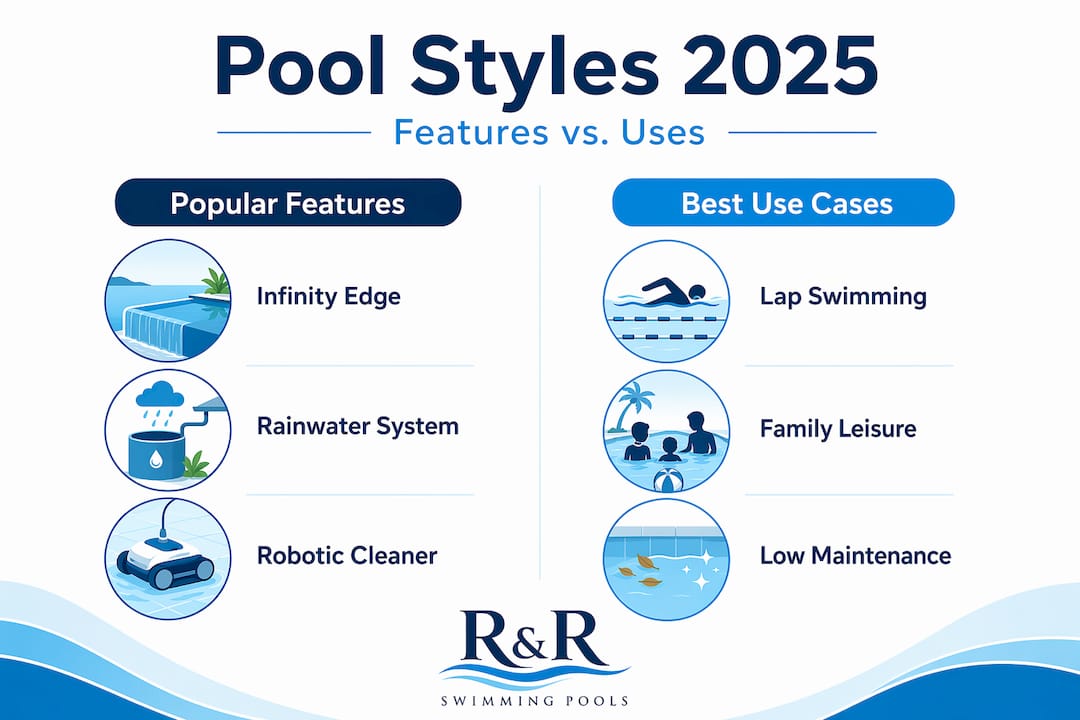
Think about who uses the pool and how. A retired couple who wants gentle exercise and low maintenance has entirely different needs than a family with three kids under ten. The first should probably look at a simple rectangle with good automation. The second might prioritize a tanning ledge, shallow entry, and a non-slip finish over a waterfall feature.
Financial reality also matters. Inground pool installation has a significant cost range, and the features that drive up price (infinity edges, elaborate water features, custom tile work) are often the ones that also drive up maintenance costs. Build for what you’ll actually use.
Common pitfalls to avoid when selecting pool features:
- Adding a spa you won’t use regularly. Spas cost $8,000 to $15,000 extra and add ongoing heating and chemical demands. They’re wonderful if you use them. They’re expensive decorations if you don’t.
- Choosing a dark finish for visual drama without thinking about heat. Dark plaster absorbs more solar energy and can make the water uncomfortably warm in Florida summers.
- Over-automating a simple pool. Not every pool needs a full smart system. A basic 14×28 rectangle with good filtration might need nothing more than a robotic cleaner and a timer-controlled pump.
- Ignoring local climate requirements. Pool feature choices in Central Florida should account for intense sun, heavy rain seasons, and the opportunity for year-round use.
Pro Tip: Before finalizing any pool design, spend a few hours in your backyard at the time of day you’d most often swim. Note where the shade falls, where you’d want shade you don’t have, and where the sightlines from inside your home point. Great pool placement is invisible when it’s done right and obvious when it isn’t.
My honest take on the 2025 pool trend conversation
I’ve watched homeowners chase trends for a long time, and here’s what I’ve actually observed: the people who end up happiest with their pools are almost never the ones who built what was fashionable. They’re the ones who built what was right for their yard, their family, and their budget.
That said, I think the smart automation wave in 2025 is genuinely worth embracing. Not because it’s trendy. Because it solves a real problem. Most people don’t swim as much as they planned because the maintenance burden becomes a chore. A robotic cleaner and automated chemistry system removes that friction completely.
What I’d push back on is the idea that sustainability is just a nice-to-have. Choosing energy-efficient equipment and water-conserving design isn’t idealism. It’s financial planning. You’re buying a backyard appliance that runs every day for decades. Efficiency compounds.
My honest advice: let the trends inform your thinking, not dictate your build. Use them as a catalog of what’s possible. Then filter by what your specific life actually needs.
— Randrswimmingpools
Ready to bring these trends to your backyard?
Understanding emerging pool design trends 2025 is one thing. Translating them into a real pool that works for your Central Florida property is where experience becomes everything. R and R Swimming Pools has been designing and building custom inground pools since 1985, and that history means fewer surprises during your build and better recommendations for your specific lot, climate, and lifestyle goals.
If you’re ready to move from research to real planning, start with Randrswimmingpools’ inground pool installation guide for Central Florida homeowners. It covers the full process from site evaluation through completion. For those still weighing options, the expert inground pool advice page is a strong next resource. And if budget is part of your decision, Randrswimmingpools also offers flexible pool financing options designed to make a quality custom pool accessible without compromising on what matters most. You can also explore how backyard wellness design fits alongside your pool plans to get the full picture of outdoor living possibilities.
FAQ
What is the most popular pool style in 2025?
Rectangular pools remain the most popular style due to their low maintenance, versatility, and strong resale value. They fit nearly every home style and offer the most straightforward path to smart automation.
How much does a smart pool system cost to add?
Basic smart automation packages start around $1,500 to $3,000 for controls, remote monitoring, and automated chemical dosing. Full AI-integrated systems with solar and voice control can reach $10,000 or more depending on pool size and equipment.
What are the biggest sustainable pool trends for 2025?
Solar heating, rainwater collection systems, variable-speed pumps, and liner-based construction like TecPools are the leading sustainable trends. These reduce both environmental impact and monthly operating costs significantly.
How do I know which pool features are worth the investment?
Experts consistently advise selecting features based on long-term lifestyle fit rather than trending popularity. Features you’ll use weekly add value. Features you’ll use seasonally or rarely typically don’t justify their added cost and maintenance demands.
Can existing pools be upgraded with 2025 pool technology?
Yes. Most existing inground pools can be retrofitted with smart automation, robotic cleaners, automated chemical systems, and variable-speed pumps without requiring major structural changes. A qualified pool contractor can assess compatibility during a site visit.
