
TL;DR:
- Pool water in Central Florida drops into the low 60s during winter, making pool heating necessary for year-round use. Heat pumps are the most efficient option, especially when combined with pool covers and solar systems, to maintain comfortable temperatures cost-effectively. Proper sizing, insulation, and maintenance are essential for maximizing efficiency and ensuring reliable backyard swimming enjoyment.
Even in Central Florida, your pool sits unused for weeks or months every year. That surprises most homeowners. The region’s warm reputation masks a reality: water temperatures drop into the low 60s during winter months, cold enough to kill any desire to swim. Understanding why opt for pool heating in this specific climate changes how you think about your backyard investment. A heated pool isn’t a luxury reserved for northern states. Here, it’s the difference between a pool you use year-round and one that collects leaves from November through March.
Table of Contents
- Key takeaways
- Why opt for pool heating in Central Florida
- Comparing your pool heater options
- How Central Florida’s climate affects heater performance
- Choosing, sizing, and maintaining your heater
- My take on pool heating in Central Florida
- Ready to heat your pool the right way?
- FAQ
Key takeaways
| Point | Details |
|---|---|
| Warm climate doesn’t mean warm water | Central Florida pool water can drop into the low 60s in winter, making heating a practical necessity. |
| Heat pumps are the top choice | They’re 3–8 times more efficient than electric resistance heaters and work well in Florida’s mild winters. |
| Pool covers cut costs significantly | Skipping a cover can increase your heating costs by over 50% due to overnight evaporation. |
| Proper sizing matters most | An undersized heater costs more to run and never fully warms your pool to a comfortable level. |
| Hybrid systems offer the best value | Combining solar panels with a heat pump delivers year-round warmth at a lower monthly cost. |
Why opt for pool heating in Central Florida
Florida’s winters are mild by most standards, but they’re not warm enough to keep pool water comfortable. Ambient air temperatures regularly dip into the 40s overnight from December through February, pulling pool water temperatures down with them. For most swimmers, comfortable water temperature sits between 78°F and 82°F. Without a heater, your pool can fall 15 to 20 degrees short of that range for months at a time.
The pool heating advantages go beyond just the winter months. Think about early morning swims in October or late evening swims in April. Unheated water at dawn can feel painfully cold even when daytime highs are pleasant. A heater lets you use the pool on your schedule, not the weather’s.
There are real health and lifestyle benefits too. Warmer water supports better muscle relaxation, makes hydrotherapy more effective, and encourages more frequent use. Families with children use their pools significantly more when the water stays consistently warm. From a property value perspective, heated pools are increasingly listed as a selling point in Central Florida real estate, adding tangible resale appeal to your home.
- Extended swim season from roughly 6 months to 10 or 12 months per year
- More consistent use by all family members, including young children and older adults
- Relaxation and therapeutic benefits from warmer, more inviting water
- Increased home value and buyer appeal in the Central Florida market
Pro Tip: Keep your pool at 80°F rather than 84°F. You’ll barely notice the difference while swimming, but your monthly energy bill will.
Comparing your pool heater options
Not all heaters work the same way, and each type carries different trade-offs in cost, speed, and efficiency. Choosing wisely upfront saves you money for years.
Heat pumps
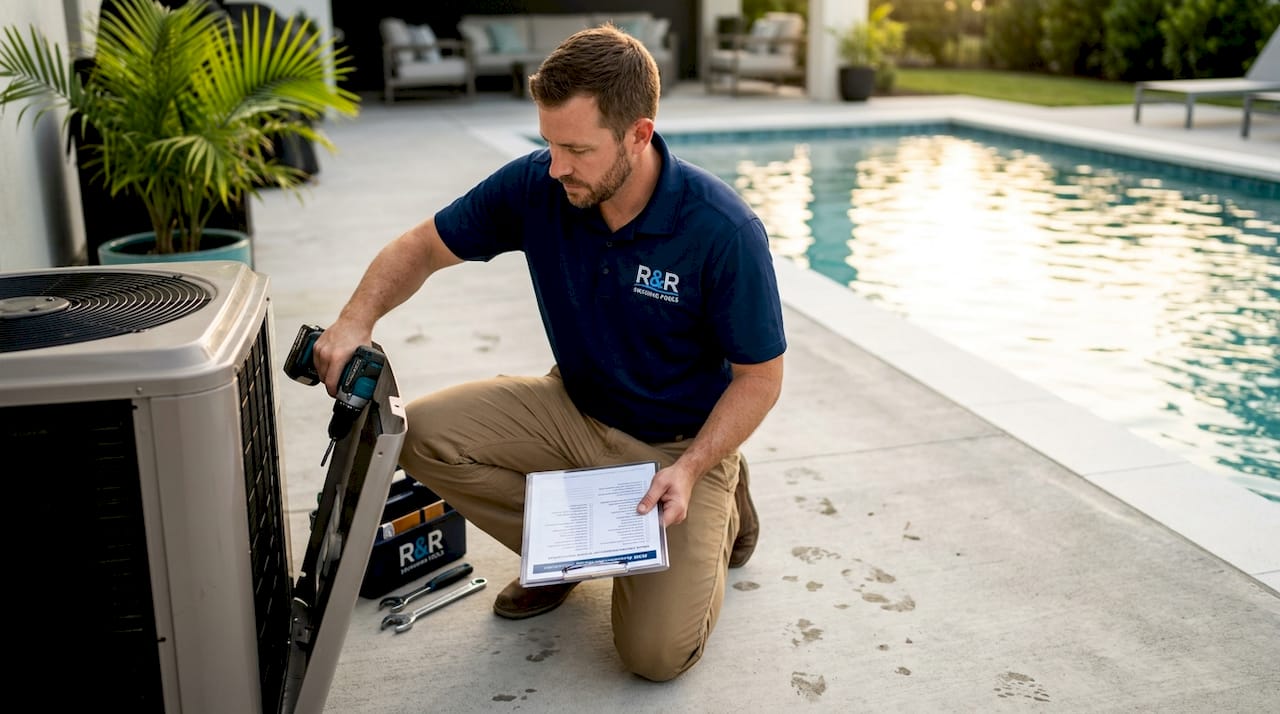
Heat pumps are the most popular choice for Central Florida homeowners and for good reason. Rather than generating heat by burning fuel, they extract warmth from the surrounding air and transfer it into your pool water. Under ideal Florida conditions, a heat pump’s Coefficient of Performance (COP) ranges from 5 to 6, meaning it produces 5 to 6 units of heat for every single unit of electricity consumed. That’s extraordinary efficiency. The trade-off is speed. Heat pumps warm water gradually, so they’re designed for continuous operation rather than rapid temperature changes.
Gas heaters
Gas heaters heat water fast. If you want your pool warm in two hours for an impromptu gathering, a gas heater delivers. But that speed comes at a price. Gas heating costs between $5 and $7 per hour to operate, which adds up quickly. For homeowners who only use the pool occasionally or need to heat it rapidly for sporadic events, gas makes practical sense. As a primary, always-on heating solution, the monthly bills can be steep.
Solar heating
Solar pool heating has almost no operating cost once installed. On a sunny Florida day, a properly sized solar system can add 5 to 10 degrees to your pool temperature. The downside is that solar depends entirely on sunlight. During overcast stretches or on cold winter nights, it contributes little. Installation costs typically run between $5,000 and $10,000, but the long-term savings in a sunny state like Florida make it a strong supplemental investment.
| Heater type | Efficiency | Operating cost | Best use case |
|---|---|---|---|
| Heat pump | Very high (COP 5–6) | Low to moderate | Year-round primary heating |
| Gas heater | Low | High ($5–$7/hr) | Occasional or rapid heat-up |
| Solar heater | Free energy source | Near zero | Supplement to primary system |
| Electric resistance | Low | Very high | Not recommended for Florida |
Pro Tip: If your budget allows, pair a solar system with a heat pump. You’ll use the solar panels on sunny days and let the heat pump handle cloudy periods or cold snaps, minimizing your overall energy cost.
How Central Florida’s climate affects heater performance
Central Florida’s climate is genuinely favorable for pool heating, but it has specific quirks you need to plan around. Heat pumps are the standout winner here, but efficiency drops below 50–55°F air temperature. Orlando and surrounding areas do see occasional overnight lows in that range from December through February. During those cold snaps, your heat pump works harder and costs more to run.
The bigger efficiency killer, however, is heat loss from evaporation. Without a pool cover, most heat loss occurs overnight, and it can increase your heating costs by more than 50%. Think about it this way: you’re paying to heat water that then evaporates into the night air. A quality solar cover or automatic pool cover eliminates most of that waste.
Using a quality pool cover is not optional if you want efficient pool heating in Central Florida. It’s the single most cost-effective addition to any heating system.
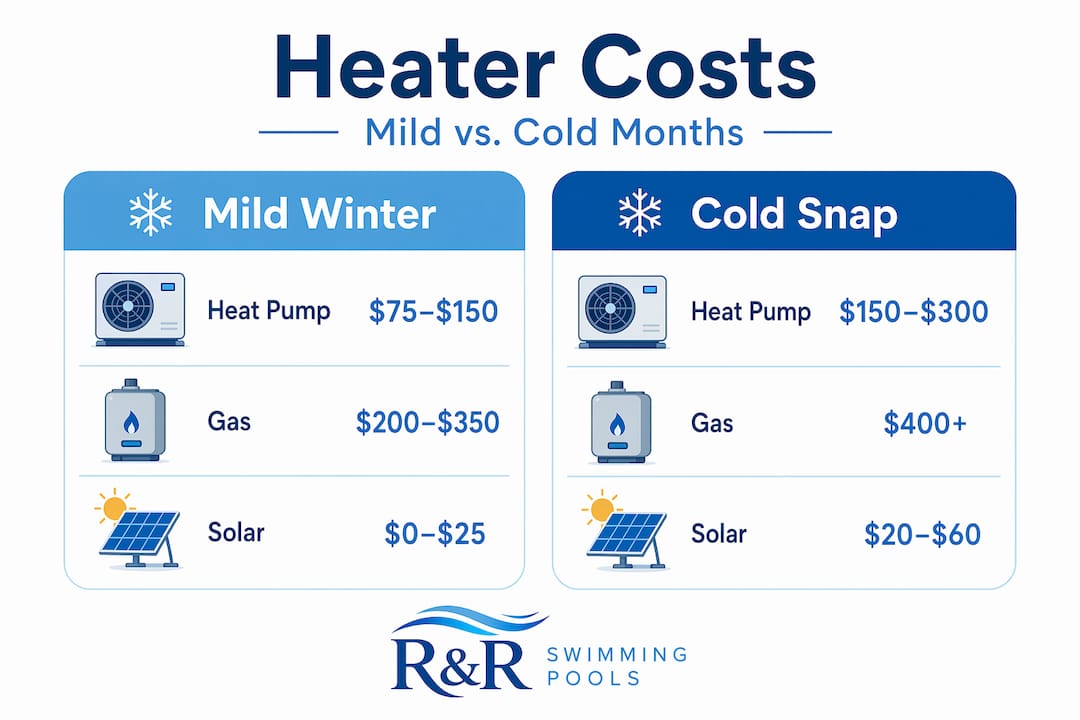
Here’s a realistic monthly cost breakdown for an average 15,000-gallon Central Florida pool:
| Heater type | Monthly cost (mild winter) | Monthly cost (cold snap) |
|---|---|---|
| Heat pump | $75–$150 | $150–$300 |
| Gas heater (occasional) | $100–$200 | $200–$400 |
| Solar only | $0–$20 | Insufficient heat |
| Solar + heat pump combo | $40–$100 | $100–$200 |
Pro Tip: Run your pool heater on a timer set to maintain temperature during cooler overnight hours rather than cycling it off entirely. Reheating cold water from scratch always costs more than maintaining a set temperature.
Choosing, sizing, and maintaining your heater
Getting the heater selection right comes down to three factors: your pool’s volume, the temperature difference you need to create, and how often you want to swim. Proper sizing is the most common error homeowners make, and an undersized unit runs constantly without ever reaching your target temperature.
Follow these steps to approach the decision with confidence:
- Calculate your pool’s volume. A 15,000-gallon pool requires a substantially larger heater output than a 10,000-gallon pool. Your pool contractor can provide exact figures.
- Define your target temperature. Most Central Florida families target 80°F to 82°F. A larger temperature rise demands more BTU output from your heater.
- Decide on your usage pattern. Daily swimmers benefit most from a heat pump running continuously. Weekend-only users might find a gas heater with a cover more economical.
- Consider a hybrid system. Combining solar with a heat pump delivers the best long-term value for Florida homeowners who want reliable warmth without high monthly costs.
- Schedule annual maintenance. Dirty coils on a heat pump reduce its COP significantly. An annual service visit keeps efficiency at its peak.
Lowering your pool’s target temperature by just 2°F saves meaningful energy without making swimming uncomfortable. Most people swimming regularly can’t feel the difference between 80°F and 82°F once they’re in the water.
Pro Tip: Ask your pool professional to evaluate pool heating options before installation, not after. The pool’s shape, surface area, and sun exposure all affect which heater size and type makes sense.
My take on pool heating in Central Florida
I’ve seen hundreds of homeowners install pool heaters in Central Florida, and the same mistake comes up again and again. They spend thousands on a quality heat pump and then skip the pool cover. Within a season, they’re calling to ask why their energy bills are so high. The answer is almost always the same: overnight evaporation is undoing everything the heater accomplishes.
My honest take on the pool heating pros and cons debate is that the cons mostly disappear with the right setup. Yes, there are operating costs. But when I see a family swimming comfortably on a 55-degree January morning, I’ve never once heard them say it wasn’t worth it. The comfort gain is immediate and real.
If I had to give one piece of advice to anyone weighing whether is pool heating worth it: start with a heat pump sized correctly for your pool, pair it with a good solar cover, and consider adding solar panels later. That combination hits the sweet spot of low operating cost, year-round reliability, and manageable upfront investment. Choosing the right heater for your lifestyle and usage frequency matters far more than chasing the cheapest option upfront.
— Randrswimmingpools
Ready to heat your pool the right way?
At R and R Swimming Pools, we’ve been helping Central Florida homeowners build and heat custom pools since 1985. We know the local climate, the most common sizing mistakes, and which heating systems deliver the best performance across the region’s varied winter conditions.
Whether you’re planning a new installation or adding heating to an existing pool, our team walks you through every option. Start with our detailed inground pool installation guide for step-by-step guidance built specifically for Central Florida. Or explore our pool types overview to find the right combination of pool design and heating system for your home. We offer free consultations and quotes, and we’re ready to help you get more from your backyard.
FAQ
Why opt for pool heating if Florida is already warm?
Florida’s air may be warm, but pool water temperatures regularly drop into the low 60s during winter months. A heater keeps water in the comfortable 78°F to 82°F range so you can swim year-round rather than just six months out of the year.
What is the most efficient pool heater for Central Florida?
Heat pumps are the best choice for most Central Florida homeowners. They operate with a COP of 5 to 6 under optimal conditions, meaning they produce far more heat energy than the electricity they consume, making them ideal for mild Florida winters.
How much does pool heating cost per month in Florida?
Monthly costs depend on your heater type and usage. A heat pump typically adds $75 to $150 per month during mild winter weather, while gas heaters can run $100 to $400 depending on how often you heat. Adding a solar cover can cut those figures by more than half.
Is pool heating worth it for occasional swimmers?
For occasional use, a gas heater combined with a quality pool cover offers the best flexibility. You heat quickly when you need it and spend nothing when you don’t. For frequent swimmers, the steady efficiency of a heat pump pays off over a full season.
Do pool covers really make that big a difference?
Yes. Skipping a pool cover can raise your heating costs by more than 50% because evaporation overnight strips heat away faster than most heaters can replace it. A cover is the single highest-return addition to any pool heating setup.
