
TL;DR:
- Pool tile options in Central Florida must balance durability with aesthetic appeal due to intense UV exposure and high chemical usage. Glass and porcelain tiles are the most reliable, with glass offering vivid visuals and porcelain providing low maintenance and excellent performance. Proper installation, including movement joints and quality adhesives, is essential to ensure long-term success and prevent early tile failure.
Pool tile options are the materials and designs applied to pool surfaces to protect the structure, prevent chemical staining, and define the visual character of your pool. For Central Florida homeowners, the choice goes beyond color preference. Florida’s intense UV exposure, high pool usage, and humid climate make material performance just as important as aesthetics. The main categories include waterline tile, full pool liner tile, coping tile, and accent tile. Leading materials are glass, porcelain, ceramic, and natural stone, each with distinct tradeoffs in durability, maintenance, and cost.
What are the main pool tile materials and their characteristics?
The explanation of pool tile options starts with understanding what each material does well and where it falls short. Glass, porcelain, ceramic, and natural stone each occupy a different position on the spectrum of cost, durability, and visual impact.
Glass tile
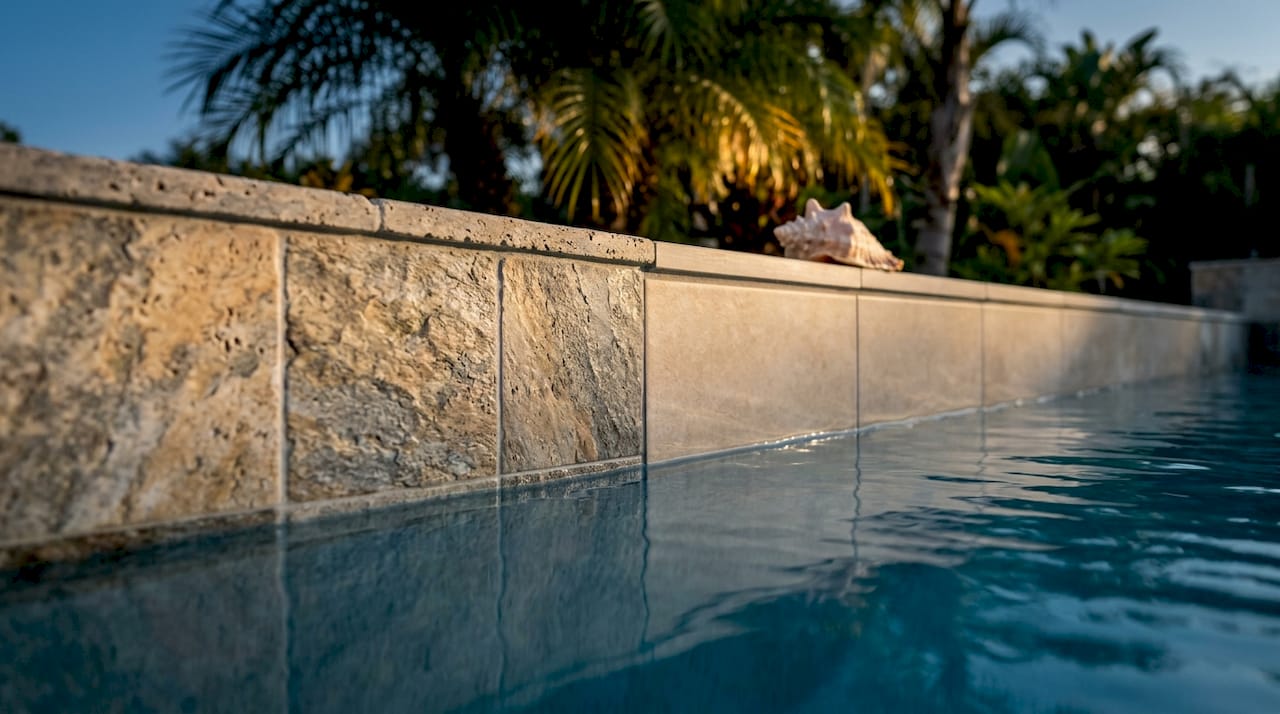
Glass tile is the most popular choice for waterline applications. Its non-porous surface resists chemical absorption, prevents staining from minerals and sunscreen oils, and produces a shimmering, light-reflective finish that makes pool water appear more vivid. Glass tile holds color exceptionally well under Florida’s sun because the pigment is fired into the glass body rather than applied as a surface glaze. The tradeoff is cost and installation complexity. Glass tiles require specialized adhesives and movement joints per ANSI standards A108.14, A108.15, and A108.16, and any installer who skips those steps risks bond failure within a few seasons.
Porcelain tile
Porcelain is the workhorse of pool tile materials. The ANSI A137.1 standard classifies porcelain as impervious, meaning water absorption at or below 0.5%. That rating matters enormously in a pool environment where tiles cycle between wet and dry conditions daily. Porcelain resists chlorine, salt, and the freeze-thaw cycles that affect pools in cooler climates, though in Central Florida the bigger concern is chemical resistance and UV stability. Porcelain is also available in large format sizes, wood-look planks, and stone-look finishes, giving homeowners strong design flexibility at a lower price point than glass.
Ceramic tile
Ceramic tile is generally not recommended for submerged pool areas. Ceramic exceeds the 0.5% absorption threshold that defines safe pool use, meaning water penetrates the tile body over time and causes cracking, spalling, and bond failure. Some ceramic tiles work for above-water coping or deck areas where they stay drier, but for waterline or liner applications, porcelain or glass is the correct choice.
Natural stone
Natural stone, including travertine, slate, and limestone, delivers an organic, resort-style aesthetic that no manufactured tile fully replicates. The downside is maintenance. Natural stone is porous and requires sealing before installation and periodic resealing throughout its life. In Central Florida’s humid, chemically active pool environment, stone needs consistent upkeep to prevent staining and surface degradation. Travertine is the most common choice for pool decking and coping because its naturally tumbled surface provides slip resistance, but it is rarely used for waterline or submerged areas.
| Material | Water Absorption | Best Use | Maintenance Level |
|---|---|---|---|
| Glass | Non-porous | Waterline, accents | Low (grout cleaning) |
| Porcelain | ≤ 0.5% | Waterline, liner, coping | Low |
| Ceramic | > 0.5% | Above-water areas only | Medium |
| Natural stone | Variable, porous | Coping, decking | High (sealing required) |
Pro Tip: When comparing tile samples, ask your supplier for the water absorption rating in writing. Any tile without a documented rating below 0.5% should not be used at or below the waterline.
How do tile formats and designs affect pool tile selection?
Tile format refers to the physical size and sheet configuration of the tile, and it directly affects how the tile installs, how the finished pool looks, and how much time you spend cleaning grout lines.
6×6 inch tiles suit straight pool edges well. They produce minimal grout lines, create a clean architectural look, and install efficiently along flat runs. For a rectangular pool with sharp geometry, 6×6 porcelain in a stone or solid color finish gives a polished, low-maintenance result.
Small mosaics in 1×1 or 2×2 inch sizes, mounted on mesh backing sheets, flex around curves and irregular shapes. This makes them the standard choice for kidney-shaped pools, freeform designs, and any pool with a radius. The mesh backing allows the sheet to conform to the curve without cutting individual tiles. The tradeoff is grout. More tiles per square foot means more grout lines, and mosaic tiles require more frequent cleaning to prevent algae and mineral buildup in those joints.
Brick-format mosaics, typically 1×2 or 2×4 inches, offer a middle ground. The running bond pattern they create reads as modern and architectural, suits both straight and gently curved pools, and provides more design interest than a single solid color. Many Central Florida homeowners pair a brick-format glass mosaic at the waterline with large-format porcelain on the deck for a cohesive, contemporary look.
Larger format tiles, such as 12×12 or 6×12 inch porcelain, work well for full pool liner applications in geometric pools. Fewer grout joints mean a cleaner visual surface and less maintenance. For curved or custom pool shapes, larger tiles require more cuts and may not conform as cleanly, making mosaics the practical choice.
Pro Tip: If your pool has a freeform or kidney shape, request a mesh-mounted mosaic sample and ask your installer to mock up a small section before committing. The flex of the sheet on your specific curve tells you more than any catalog photo.
What performance factors should Central Florida homeowners consider?
Choosing pool tiles based on looks alone is the most common mistake homeowners make. Performance factors determine whether your tile still looks good in ten years or starts failing in three.
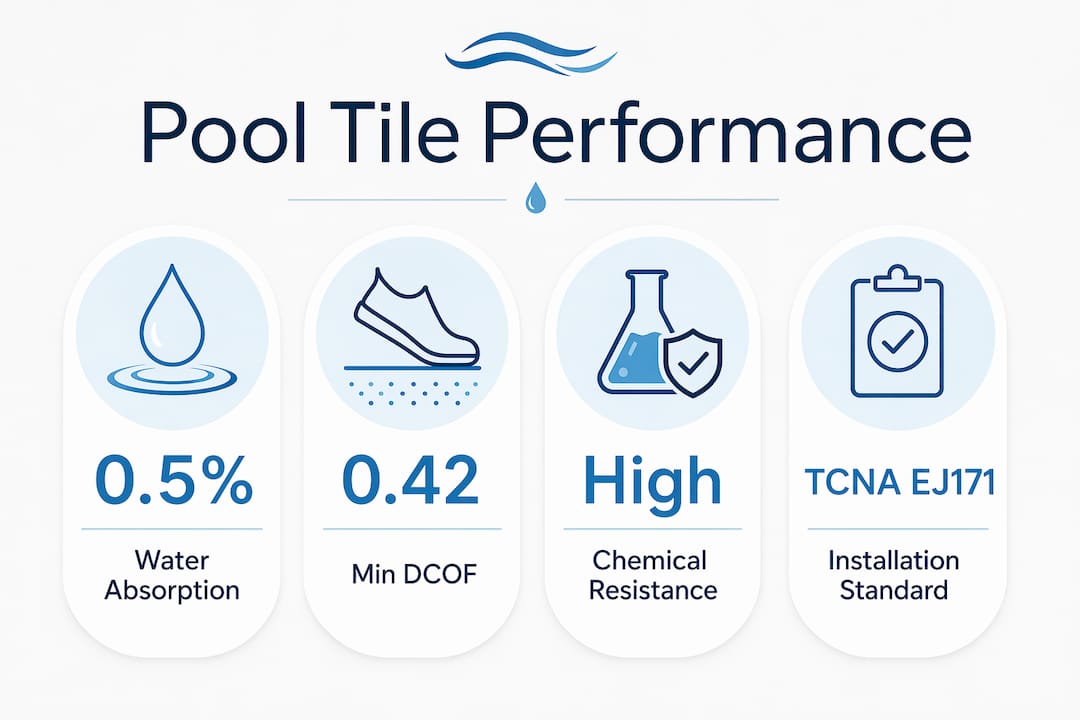
Water absorption is the first filter. Porcelain and glass both achieve water absorption at or below 0.5%, which is the threshold required for reliable performance in submerged or constantly wet conditions. Tiles above this rating absorb water, expand and contract with temperature changes, and eventually crack or delaminate from the substrate.
Slip resistance is measured by the Dynamic Coefficient of Friction, or DCOF. The minimum DCOF for wet residential surfaces is 0.42, but pool surfaces with higher foot traffic or steeper slopes benefit from ratings of 0.60 or above. Smooth, polished glass tiles are not appropriate for pool decking or steps. They work at the waterline, where they stay submerged, but any tile used on a walking surface needs a textured or matte finish with a verified DCOF rating.
Chemical and UV resistance matter more in Florida than in most other states. Central Florida pools run higher chlorine concentrations to combat heat and heavy use, and the sun intensity accelerates color fading in tiles with surface-applied glazes. Porcelain and through-body glass tiles hold color better than surface-glazed ceramics because the color runs through the full tile body.
Installation standards are the performance factor most homeowners never think to ask about. Glass tile installation requires movement joints per TCNA EJ171 guidelines to accommodate thermal expansion. Florida’s temperature swings between winter nights and summer afternoons create enough movement to crack tile bonds if those joints are omitted. Proper installation also requires waterproof membranes and pool-grade epoxy adhesives. Cutting corners on any of these steps is the leading cause of premature tile failure.
| Performance Factor | Minimum Standard | Why It Matters in Florida |
|---|---|---|
| Water absorption | ≤ 0.5% (ANSI A137.1) | Prevents cracking in wet conditions |
| Slip resistance (DCOF) | ≥ 0.42 for wet surfaces | Safety on pool decks and steps |
| Chemical resistance | Chlorine and salt rated | High pool usage demands durability |
| Movement joints | TCNA EJ171 compliant | Thermal expansion in Florida climate |
Pro Tip: Ask any tile contractor to confirm they follow TCNA EJ171 movement joint specifications before signing a contract. Installers who cannot answer that question confidently are not the right fit for a pool tile job.
How do you select the right pool tile for your project?
Choosing the right tile comes down to matching material performance to location, design goals to maintenance tolerance, and budget to long-term value.
- Identify the tile zone first. Waterline tile, liner tile, coping tile, and accent tile each face different conditions. Waterline tile sits at the chemical-heavy surface zone and needs non-porous material. Liner tile covers the full submerged surface and benefits from large-format porcelain or glass mosaics. Coping and decking tile must prioritize slip resistance.
- Match color and finish to your pool’s surroundings. Lighter tiles in white, pale blue, or aqua make pool water appear turquoise and bright, which suits the Florida aesthetic. Darker tiles in charcoal or navy create a dramatic, resort-style look but absorb more heat. Consider how the tile reads against your home’s exterior and landscaping before committing.
- Be honest about your maintenance tolerance. Glass mosaics at the waterline look stunning but require regular grout cleaning to stay that way. If you want low maintenance, porcelain tile in a larger format with fewer grout joints is the practical choice. Natural stone is beautiful but demands sealing and careful chemical management.
- Account for your pool’s shape. A rectangular pool gives you the most format flexibility. A freeform or kidney-shaped pool narrows your practical options toward small mosaics on mesh backing. Knowing your pool shape before selecting tile saves you from ordering material that cannot install cleanly on your specific geometry.
- Work with installers who know local conditions. Central Florida’s climate, water chemistry, and building standards create specific demands. An installer experienced in this region knows which adhesives hold up to Florida heat, which grouts resist local mineral content, and how to detail movement joints correctly for the temperature range.
Key takeaways
The best pool tile choices for Central Florida homeowners combine non-porous materials, verified slip resistance ratings, and installation that meets ANSI and TCNA standards for long-term durability.
| Point | Details |
|---|---|
| Material absorption matters most | Choose porcelain or glass with water absorption at or below 0.5% for any submerged area. |
| Tile format follows pool shape | Use large-format tiles for straight pools and mesh-mounted mosaics for curves. |
| Slip resistance is non-negotiable | Verify a DCOF rating of 0.42 or higher for any tile used on walking surfaces. |
| Installation standards prevent failure | Require TCNA EJ171 movement joints and pool-grade adhesives from your contractor. |
| Maintenance tolerance drives the final choice | Glass mosaics need more grout cleaning; porcelain offers the best balance of beauty and low upkeep. |
What I’ve learned after decades of pool tile installations in Central Florida
Most homeowners walk into a tile showroom and pick the color they like. That is the right starting point, but it is not the whole decision. After working on pools across Central Florida since 1985, the pattern I see most often is this: the tiles that fail early were installed by contractors who skipped movement joints or used the wrong adhesive. The tile itself was fine. The installation was not.
Glass mosaics are genuinely beautiful, and I understand why homeowners choose them. But they require more from the installer than porcelain does. If you want glass, hire someone who can cite ANSI A108.14 from memory, not someone who will look it up after the job goes wrong. For most homeowners who want a great-looking pool without the maintenance headaches, porcelain in a 6×6 or larger format is the choice I recommend most often. It performs reliably, holds color well under Florida sun, and forgives minor installation imperfections better than glass.
Natural stone is the one I caution people about most. It photographs beautifully and feels luxurious underfoot, but Florida’s pool chemistry is hard on porous materials. If you love the look, use it on the deck and coping where it stays drier, and pair it with porcelain or glass at the waterline. That combination gives you the aesthetic without the maintenance burden of stone in a chemically active zone.
The single most valuable thing you can do before choosing tile is to talk to an installer who has worked in your specific area for years. Local experience with water chemistry, climate, and building standards is worth more than any online guide, including this one.
— Randrswimmingpools
Ready to choose the right pool tile with expert guidance?
R and R Swimming Pools has been designing and installing custom inground pools across Central Florida since 1985, and tile selection is one of the most impactful decisions in any new build or renovation. The team at Randrswimmingpools brings hands-on knowledge of local climate conditions, water chemistry, and installation standards to every project, so your tile performs as well as it looks.
Whether you are starting a new pool or refreshing an existing one, explore the inground pool installation guide for a step-by-step look at how tile fits into the full build process. If you are renovating, the pool remodeling process guide walks through tile replacement and upgrade options in detail. Contact Randrswimmingpools for a free quote and get expert advice tailored to your home and budget.
FAQ
What is the best pool tile material for Central Florida?
Porcelain is the most reliable all-around choice for Central Florida pools because its water absorption at or below 0.5% resists the chemical and thermal demands of the Florida climate. Glass tile is the top choice for waterline aesthetics, provided it is installed with proper movement joints and pool-grade adhesives.
Why is ceramic tile not recommended for pools?
Ceramic tile exceeds the 0.5% water absorption threshold that defines safe pool use, meaning it absorbs water over time and risks cracking or delaminating from the pool surface. Porcelain or glass should replace ceramic in any submerged or waterline application.
What DCOF rating do pool tiles need?
Pool tiles used on walking surfaces require a minimum DCOF of 0.42 for wet residential areas, with higher values recommended for pool decks and steps with heavier foot traffic. Smooth or polished tiles that fall below this threshold are only appropriate for submerged waterline use.
How do I choose between mosaic and large-format pool tiles?
Mosaic tiles on mesh backing suit curved or freeform pools because the sheets flex to conform to the shape, while large-format tiles work best on straight-edged rectangular pools with minimal cuts. The practical tradeoff is maintenance: mosaics have more grout lines that require regular cleaning.
How often does natural stone pool tile need to be sealed?
Natural stone pool tile typically requires sealing before installation and resealing every one to two years depending on pool chemical exposure and usage. In Central Florida’s humid, high-use pool environment, consistent sealing is the only way to prevent staining and surface degradation over time.
