
TL;DR:
- Pool lighting enhances safety, visibility, and property value by illuminating pool features and boundaries.
- LED lights are the preferred choice due to energy efficiency, longevity, customizable colors, and safety features.
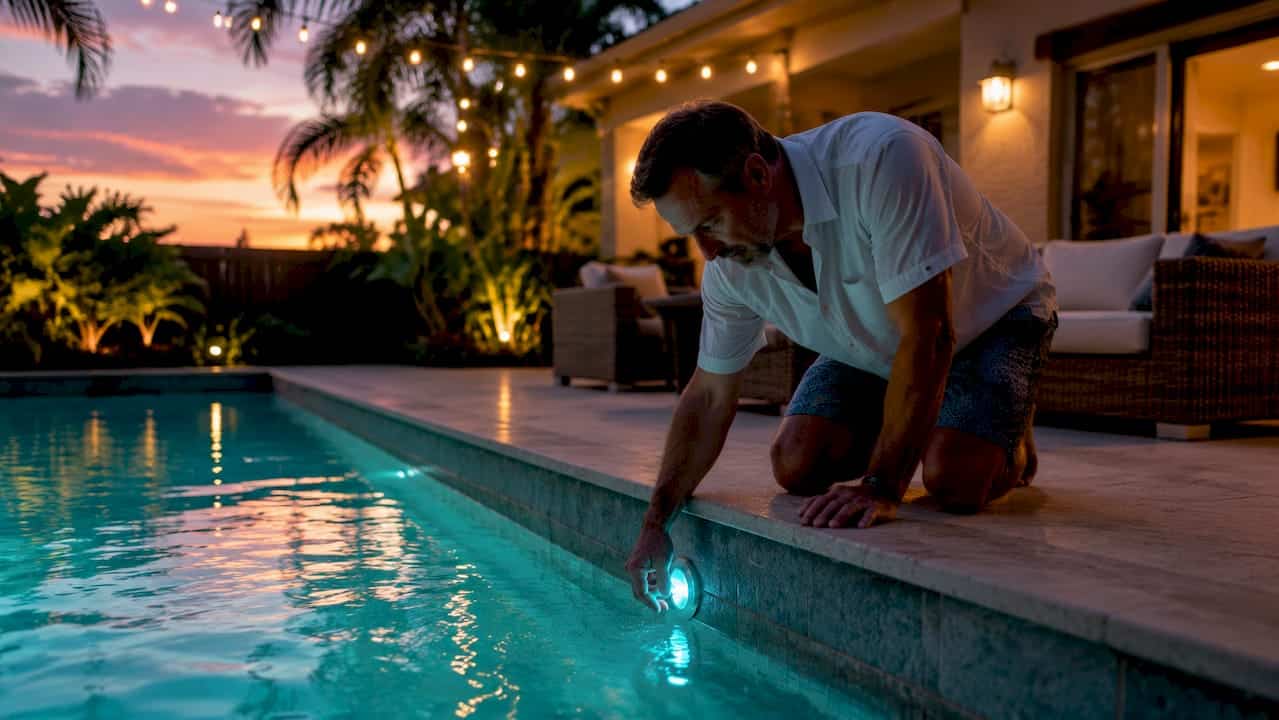
Pool lighting is specialized underwater and perimeter illumination designed to extend safe swimming hours, improve visibility, and transform a backyard pool into a nighttime focal point. For Central Florida homeowners, where pools get year-round use, the right lighting system does far more than look attractive. It prevents accidents, supports maintenance, and adds measurable value to your property. Modern LED technology has made pool lighting more energy-efficient, customizable, and durable than ever before. Understanding why choose pool lighting means recognizing it as a functional upgrade, not just a cosmetic one.
Why choose pool lighting for safety in Central Florida?
Pool lighting is one of the most direct safety investments a homeowner can make. Illuminated pool edges, steps, and depth transitions reduce slip and fall risks dramatically. Without light, a swimmer cannot judge where the shallow end ends or where a step begins. That uncertainty causes accidents.
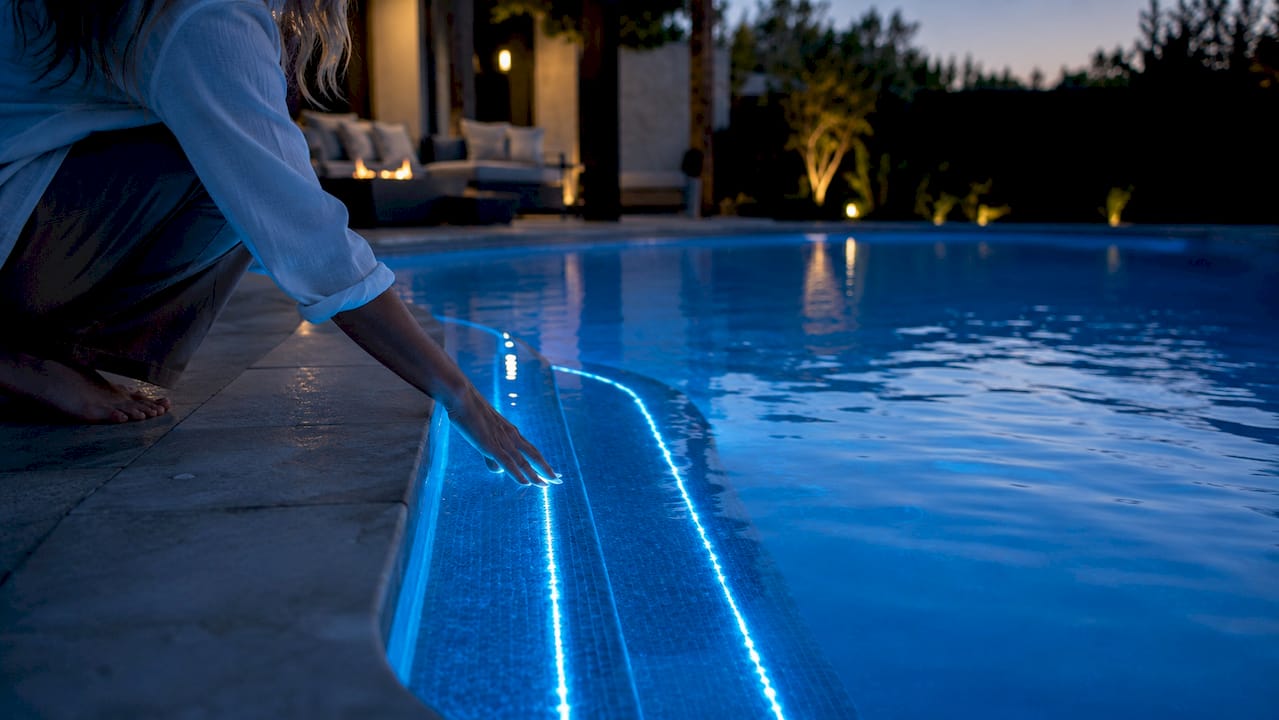
Central Florida families use their pools well into the evening, especially during the long, warm months from March through October. That extended use makes nighttime visibility a real concern, not a theoretical one.
The safety benefits of proper pool lighting include:
- Illuminated entry and exit points: Lit steps and ledges give swimmers clear visual cues when entering or leaving the water.
- Depth visibility: Lighting reveals the pool floor, helping swimmers and parents gauge depth at a glance.
- Debris and algae detection: LED lighting improves early detection of debris and algae, which is critical for nighttime maintenance and water safety.
- Perimeter awareness: Deck and landscape lights define the pool boundary, reducing the risk of accidental falls for guests walking nearby.
- Electrical safety: 12V low-voltage systems with GFCI protection significantly reduce electrical hazard risks compared to higher-voltage alternatives.
Pro Tip: Always verify that your pool lighting fixtures carry a UL or ETL listing. These certifications confirm the product has been tested for shock resistance, chemical durability, and underwater insulation, which cheap unlisted products skip entirely.
Pool lighting also supports your liability position as a homeowner. A well-lit pool signals responsible ownership. It reduces the chance of an after-dark accident that could result in a legal claim. Pairing your lighting plan with a broader pool safety strategy gives you a complete picture of what responsible pool ownership looks like in Florida.
Why use LED pool lighting instead of traditional options?
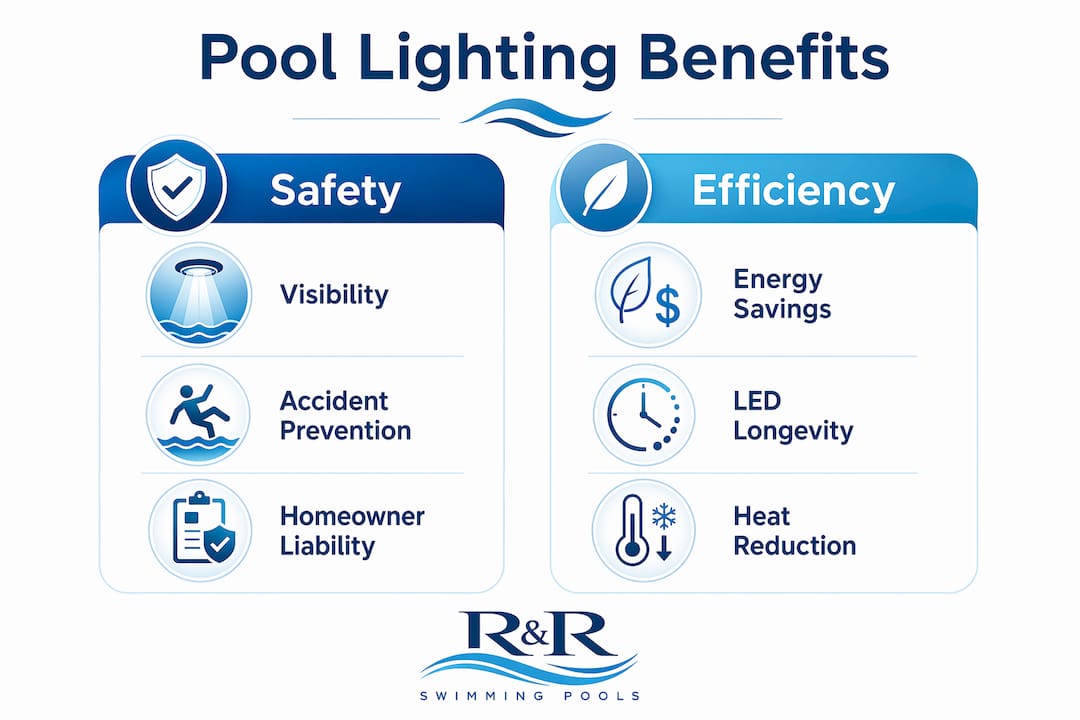
LED pool lighting is the clear choice over incandescent and halogen alternatives. The performance gap is not marginal. LEDs use up to 87% less energy than traditional bulbs and last 10–30 times longer. That combination of efficiency and lifespan changes the financial math entirely.
Here is how LED pool lights compare directly to traditional incandescent fixtures:
| Feature | LED Pool Lights | Incandescent/Halogen |
|---|---|---|
| Energy use | Up to 87% less | High |
| Lifespan | 10–30x longer | Short |
| Heat output | Low | High |
| Color options | Full RGB + white | Limited |
| Smart home integration | Yes | Rarely |
| Voltage | 12V low-voltage | 120V standard |
LEDs also run cooler than incandescent bulbs. Lower heat output reduces the risk of thermal stress on the fixture housing and keeps pool water temperature more stable. Low-voltage, waterproof LED designs limit overheating and shock risks, improving comfort and safety during nighttime swimming.
Color customization is another real advantage. RGB LED systems let you shift from warm white for a relaxed evening swim to vivid blue or green for a party. Smart home integration through platforms like Amazon Alexa or Google Home means you can change the mood from your phone without walking to a switch.
One pitfall to watch: thermal degradation is the primary cause of premature LED pool light failure. The LEDs themselves rarely fail first. The driver and housing fail when heat cannot dissipate properly. Quality fixtures channel heat into the surrounding pool water, which acts as a natural heat sink. Budget fixtures skip this design feature and fail within a few seasons.
Pro Tip: When comparing LED fixtures, ask the manufacturer how the fixture manages heat. A quality product will describe a heat-dissipation path into the water. If the spec sheet does not mention thermal management, move on.
How to design pool lighting for ambiance and function
Strategic placement matters more than raw brightness. Layered lighting approaches create balanced, glare-free illumination that resembles a resort setting rather than a floodlit parking lot.
A complete lighting plan for a Central Florida backyard pool typically includes four layers:
- Underwater fixtures: Mounted in the pool wall, these provide the primary source of illumination for the water itself. Position them to avoid direct sightlines that cause glare for swimmers.
- Deck lighting: Low-profile step lights and recessed deck fixtures define the pool perimeter and guide foot traffic safely after dark.
- Landscape uplighting: Aimed at palms, ornamental grasses, or garden beds, uplights create depth and frame the pool within the larger backyard.
- Feature lighting: Waterfalls, spillways, and spa jets look dramatically better when lit from below or behind. A pool waterfall with a dedicated LED fixture becomes a visual anchor for the entire space.
Brightness calibration is where many homeowners go wrong. Exceeding 1,000–2,000 lumens per fixture in an average family pool creates glare and deep shadows that actually reduce visibility. More light is not always better. The goal is even, consistent illumination across the entire pool floor and walls.
Warm white LEDs in the 2700K–3000K color temperature range produce an inviting, natural glow well-suited to relaxed evening use. RGB fixtures give you the flexibility to shift to festive colors for gatherings. Many Central Florida homeowners install both: warm white for everyday use and color-capable fixtures for entertaining.
The local climate also shapes your design choices. Central Florida’s intense afternoon sun means your backyard lighting will always compete with ambient light from neighboring properties and streetlights. Fixtures rated for higher lumen output handle that competition better without requiring you to push brightness to uncomfortable levels.
What should homeowners know before installing pool lights?
Installation and product selection decisions made before the first fixture goes in the ground determine how well your system performs for the next decade.
- Hire a licensed professional. Pool lighting installation involves electrical work near water. A licensed electrician familiar with Florida building codes handles the GFCI wiring, conduit runs, and transformer placement correctly. DIY installation risks code violations and voided warranties.
- Choose UL or ETL-listed fixtures only. Listed products are tested for shock resistance, insulation integrity, and chemical durability. Unlisted products from discount suppliers skip those tests.
- Understand your fixture options. Full LED niche replacements offer the best performance. Retrofit LED bulbs fit existing incandescent housings at lower upfront cost. Strip lights work well for perimeter and step accents. Fiber optic systems keep all electrical components remote from the water, offering maximum electrical safety with lower lumen output suited to accent lighting.
- Factor in long-term costs. LED systems cost more upfront than incandescent but the energy savings offset that gap within a few seasons. Reduced bulb replacement frequency lowers maintenance costs further.
- Check local permit requirements. Orange, Lake, and Osceola counties each have specific permit requirements for pool electrical work. Pulling the correct permits protects you during home sales and insurance claims.
The pool lighting options available for Central Florida homes in 2026 range from basic single-color LED niche lights to fully programmable RGB systems with app control. Matching the system to your actual usage patterns and budget prevents overspending on features you will not use.
Key takeaways
Pool lighting delivers safety, energy efficiency, and property value gains that make it one of the highest-return upgrades a Central Florida homeowner can add to an existing or new pool.
| Point | Details |
|---|---|
| Safety is the primary benefit | Lit steps, edges, and pool floors prevent accidents during evening and nighttime swimming. |
| LED outperforms traditional lighting | LEDs use up to 87% less energy and last 10–30 times longer than incandescent alternatives. |
| Layered design beats raw brightness | Combining underwater, deck, and landscape lights creates better visibility than adding more lumens. |
| Fixture quality determines lifespan | UL or ETL-listed fixtures with proper thermal management last significantly longer than budget alternatives. |
| Professional installation is non-negotiable | Licensed electricians protect you from code violations, safety hazards, and voided warranties. |
Pool lighting is not decoration. It’s infrastructure.
I have seen homeowners spend months choosing tile colors and waterfall shapes, then treat lighting as an afterthought. They pick whatever the pool builder includes in the base package and call it done. That decision costs them every single evening they use the pool.
The most common misconception I encounter is that pool lighting is purely cosmetic. Homeowners think of it the way they think of throw pillows. Nice to have, easy to swap out. The reality is that pool lighting functions as a safety system with aesthetic benefits, not the other way around. When you frame it that way, the decisions about fixture quality, placement, and electrical standards stop feeling like upsells and start feeling like what they are: necessary.
The second mistake I see regularly is chasing brightness. A homeowner reads that LED lights are powerful and assumes more lumens equals a better result. Then they end up with a pool that looks like a surgery theater. Balanced lumen output matched to pool size produces a far more enjoyable and functional result than maximum brightness ever will.
My honest recommendation for Central Florida pools: start with a layered plan that includes at least two underwater fixtures, step lighting, and one or two landscape uplights. Add RGB capability if you entertain regularly. Then invest in quality fixtures with documented thermal management. You will spend more upfront and spend almost nothing on maintenance for the next decade.
Lighting also changes how you use your pool socially. A well-lit pool becomes the reason people stay outside after dinner. It extends the functional hours of your backyard by three or four hours every evening. For a space you have already invested tens of thousands of dollars building, that return is hard to argue with.
— Randrswimmingpools
How Randrswimmingpools helps Central Florida homeowners get pool lighting right
R and R Swimming Pools has been designing and building custom inground pools across Central Florida since 1985. The team brings that same depth of experience to every lighting consultation, whether you are planning a new pool build or upgrading an existing system. Randrswimmingpools works with homeowners in Orlando, Apopka, Lake County, The Villages, and surrounding communities to specify the right fixture types, placement strategies, and electrical systems for each unique backyard. Flexible financing options make it easier to include a complete lighting plan from day one rather than retrofitting later. Start with the inground pool installation guide to see how lighting integrates into the full build process, or contact Randrswimmingpools directly for a free quote.
FAQ
What are the main benefits of pool lighting?
Pool lighting improves nighttime safety by illuminating steps, edges, and depth changes, and it extends usable swimming hours after dark. It also supports early detection of debris and algae, which protects water quality and reduces maintenance time.
Why use LED pool lighting over incandescent bulbs?
LEDs use up to 87% less energy than incandescent bulbs and last 10–30 times longer, making them the more cost-effective and lower-maintenance choice. They also offer color customization and smart home integration that incandescent fixtures cannot match.
How many pool lights does a typical backyard pool need?
Most average-sized family pools perform best with two to four underwater fixtures, supplemented by deck step lights and landscape uplights. The exact count depends on pool size, shape, and whether you include feature lighting for waterfalls or spas.
Do pool lights require a permit in Central Florida?
Yes. Orange, Lake, and Osceola counties require permits for pool electrical work, including lighting installation. A licensed electrician handles the permit process and confirms the installation meets Florida building codes.
What is the safest type of pool lighting?
12V low-voltage LED systems paired with GFCI protection are the safest option for residential pools. Fiber optic systems offer an alternative where all electrical components remain remote from the water, eliminating in-water voltage entirely.
