
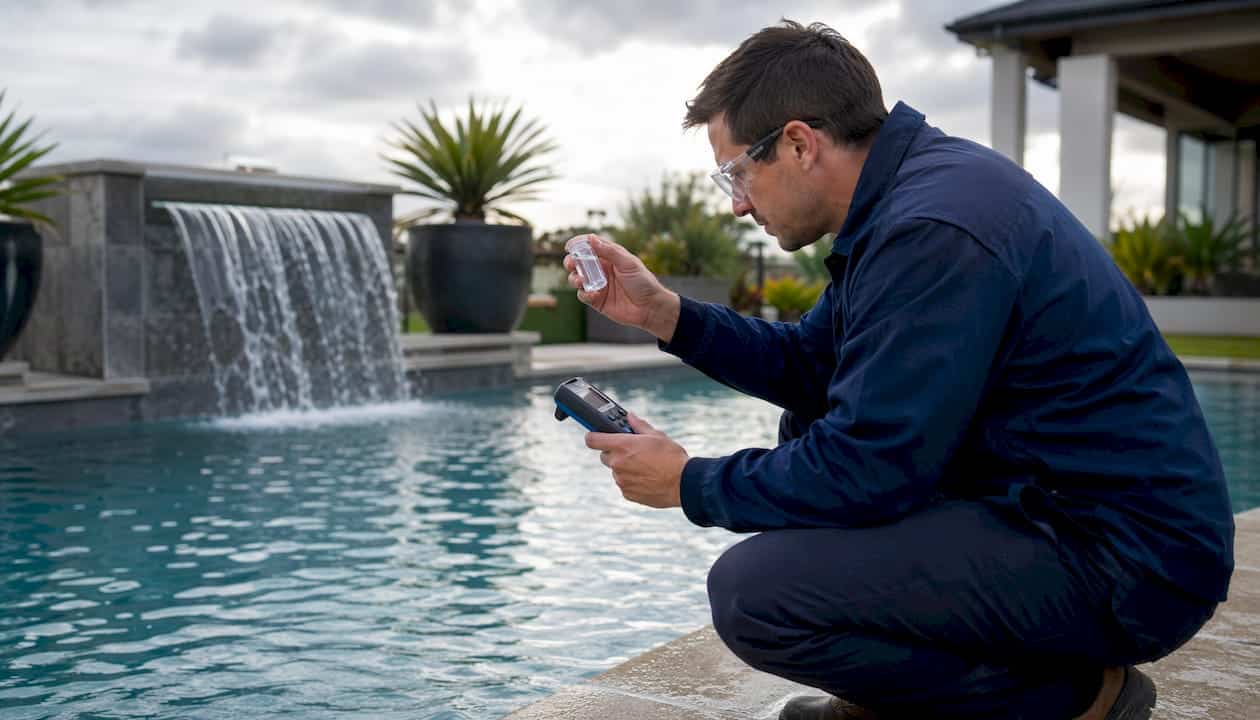
The most effective approach to pool water purification combines mechanical filtration, chemical disinfection, and supplemental technologies like UV or ozone. No single method does everything. Here is a quick overview of the main approaches every pool owner should know:
- Filtration (sand, cartridge, diatomaceous earth): removes particulates, debris, and some microorganisms physically
- Chemical disinfection (chlorine, bromine): kills pathogens and provides ongoing residual protection throughout the water
- Saltwater chlorination: automates chlorine generation from dissolved salt, reducing manual dosing
- UV disinfection: destroys chlorine-resistant pathogens like Cryptosporidium using ultraviolet light, but leaves no residual
- Ozone treatment: oxidizes contaminants at roughly 1.5 times the power of chlorine but also leaves no residual protection
Both the CDC and the WHO recommend layered treatment: filtration plus a residual disinfectant, with supplemental technologies added to improve water quality and reduce chemical byproducts. That layered model is the standard for 2026 residential pools in the United States.
How pool water filtration systems work and which one fits your pool
Filtration is the foundation of any pool sanitation program. Before disinfectants can do their job, the water needs to be physically cleared of suspended particles, oils, and debris. Poor filtration compromises everything downstream, including the effectiveness of chlorine itself, because particles can shield microorganisms from chemical contact.
Sand filters
Sand filters are the most common pool water filtration system in the United States. Water passes through a bed of silica sand, which traps particles down to 10–20 microns. They are durable, inexpensive to maintain, and backwash easily. The trade-off is that they let finer particles pass through, so they work best paired with a coagulant or a secondary treatment step.
Cartridge filters
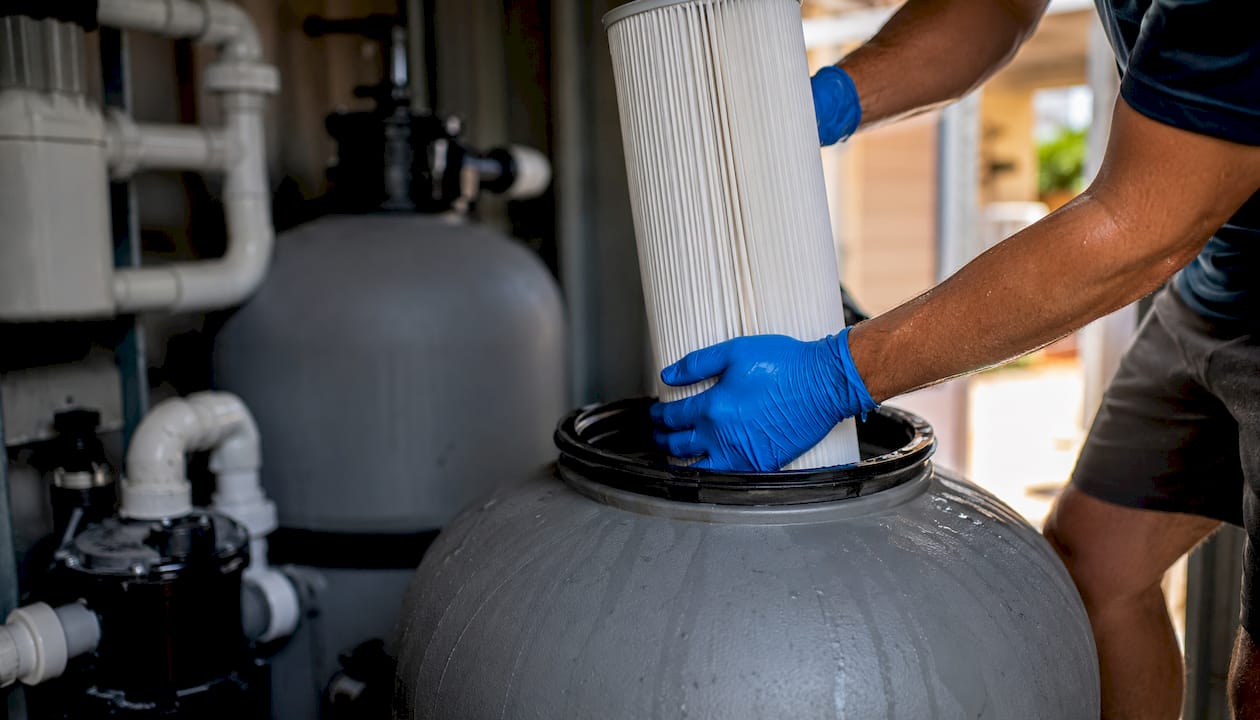
Cartridge filters use a pleated polyester element to capture finer particles than sand. They do not require backwashing, which saves water, and they run at lower pressure, reducing pump energy draw. The cartridge itself needs periodic cleaning and eventual replacement, typically every one to three years depending on bather load.
Diatomaceous earth (DE) filters
DE filters offer the finest filtration of the three types. The filter media is made from fossilized diatom shells, which create a microscopic lattice that traps particles even smaller than cartridge filters can catch. They require more hands-on maintenance, including periodic recharging with fresh DE powder, and the spent media must be disposed of carefully. For pools with heavy use or water quality challenges, DE filtration is hard to beat on pure performance.
| Filter type | Particle removal | Maintenance frequency | Relative cost |
|---|---|---|---|
| Sand | 10–20 microns | Backwash regularly | Low |
| Cartridge | Finer than sand | Clean every 1–3 months | Moderate |
| Diatomaceous earth | Finest available | Recharge after each backwash | Higher |
The CDC’s Model Aquatic Health Code requires that filtration and recirculation systems be maintained according to manufacturer recommendations. For Central Florida pools, where high bather loads and warm temperatures accelerate contamination, staying on top of pool filtration maintenance is especially important.
Chemical purification: how chlorine and bromine keep your pool safe
Chlorine is the baseline disinfectant for residential pools in the United States, and for good reason. It kills most bacteria, including E. coli O157:H7, in under a minute at recommended levels, and it leaves a measurable residual in the water that continues working between treatments. The CDC recommends maintaining free chlorine at 1–4 ppm with a pH of 7.0–7.8 for residential pools.
Key parameters for safe pool water (CDC):
Free chlorine: 1–4 ppm | Bromine: 3–8 ppm | pH: 7.0–7.8 | Test at least twice daily, or hourly during heavy use
pH control is not optional. As pH climbs above 8.0, chlorine’s ability to kill pathogens drops sharply. Below 7.0, chlorine becomes more aggressive but starts corroding pipes and irritating swimmers’ eyes and skin. That narrow 7.0–7.8 window is where sanitation and comfort overlap.
Saltwater chlorination is a popular chlorine alternative for pools that automates the process. A salt cell electrolyzes dissolved sodium chloride to generate chlorine continuously, keeping levels more consistent than manual dosing. The water still contains chlorine; it just comes from a different source. Saltwater pools typically feel softer on skin and eyes because the chloramine buildup that causes irritation is lower.
Bromine works similarly to chlorine but performs better at higher temperatures and higher pH, which is why it dominates hot tub applications. For outdoor residential pools, bromine is less common because it breaks down faster in sunlight and costs more per treatment. The CDC recommends maintaining bromine levels within a range that is effective for disinfection while ensuring swimmer comfort, particularly in hot tub applications.
A few things worth knowing about chemical byproducts:
- Chloramines form when chlorine reacts with nitrogen compounds from sweat, urine, and body oils. They cause the familiar “pool smell” and eye irritation, and they signal that free chlorine is being consumed.
- Trihalomethanes (THMs) are a class of disinfection byproducts that form when chlorine reacts with organic matter. Proper water balance and regular water replacement reduce their concentration.
- Pre-swim showering removes much of the organic load before it ever reaches the pool, cutting byproduct formation at the source.
For accurate testing, use a DPD test kit rather than basic test strips. Test strips are less accurate, and at chlorine levels above 10 ppm, they can produce a false-low or zero reading, which is exactly the wrong time to trust them.
UV and ozone systems: supplemental technologies that reduce chemical load
UV and ozone are not replacements for chlorine. They are powerful additions that handle what chlorine struggles with, particularly chlorine-resistant pathogens and chloramine destruction. Understanding what each one actually does prevents expensive misapplication.
UV disinfection
A UV system exposes recirculating pool water to ultraviolet light at a dose of 40 mJ/cm², which disrupts pathogen DNA and renders them unable to reproduce. It is highly effective against Cryptosporidium, a protozoan that can survive in properly chlorinated water for more than seven days. The catch: once treated water returns to the pool, UV provides zero residual protection. Any contamination introduced after treatment is unaddressed until the water cycles back through the UV chamber.
Ozone treatment
Ozone is generated on-site, either by corona discharge or UV-based ozone generators, and injected into the recirculating water stream. Its oxidation potential is roughly 1.5 times greater than chlorine, and it destroys a broad range of organic contaminants and pathogens quickly. But ozone’s half-life in pool water is measured in minutes. It must be fully degassed before treated water re-enters the pool, and OSHA limits airborne ozone exposure to 0.1 ppm, so proper system design and ventilation are non-negotiable.
| Feature | UV system | Ozone system |
|---|---|---|
| Pathogen destruction | Excellent, including Cryptosporidium | Excellent, broad spectrum |
| Residual protection | None | None |
| Chloramine reduction | Moderate | High |
| Installation cost | Moderate | Higher |
| Ongoing maintenance | Lamp replacement (annual) | Generator maintenance |
| Pairs with chlorine? | Yes, required | Yes, required |
Chlorine and saltwater chlorination provide continuous residual protection that UV and ozone cannot replicate. Both supplemental systems must be paired with a residual chemical disinfectant to maintain sanitation between treatment cycles.
Pro Tip: If your pool has persistent chloramine odor or swimmer eye irritation, adding a UV system is often more effective than simply raising chlorine levels. UV breaks down chloramines directly, improving swimmer comfort without increasing chemical load.
How to choose and maintain the right purification approach for your pool
Selecting a purification system is not a one-size-fits-all decision. Pool volume, bather load, budget, and local water conditions all push toward different combinations. A small residential pool with light weekend use has very different needs than a large pool used daily by a family with young children.
Key factors to weigh:
- Pool volume: larger pools need higher-capacity filtration and more consistent chemical dosing
- Bather load: more swimmers mean more organic contamination, faster chlorine consumption, and more frequent testing
- Budget: sand filtration plus manual chlorination is the lowest-cost entry point; UV or ozone systems add upfront cost but reduce long-term chemical spending
- Automation preference: saltwater chlorinators and automated chemical dosing controllers reduce daily hands-on time significantly
- Regional water chemistry: Central Florida’s hard water can affect pH stability and scale formation, requiring more frequent adjustment
Maintenance is where most pool owners fall short. The [CDC recommends](https://www.cdc.gov/healthy-swimming/toolkit/operating-public-pools-hot-tubs-and-splash Pads.html) testing pH and disinfectant levels at least twice daily, and hourly during heavy use. For residential pools, testing before each swim session is a practical minimum. Clear water does not mean safe water. A pool can look pristine while pH sits outside the 7.0–7.8 range, rendering chlorine largely ineffective against pathogens.
Routine maintenance tasks that protect water quality:
- Backwash or clean filters on schedule, not just when pressure rises
- Scrub pool surfaces regularly to prevent biofilm buildup, which chemical sanitizers cannot penetrate once established
- Replace feed pump tubing, injectors, and sensor probes before they fail, not after
- Drain and replace a portion of pool water weekly to monthly, depending on usage, to dilute accumulated byproducts and dissolved solids
Pro Tip: Pair a DPD test kit for accurate chlorine and pH readings with an automated chemical controller for dosing. Manual testing catches what automation misses; automation handles the routine adjustments between tests. Together, they keep water quality consistent without constant attention.
For a broader look at the tools that support this kind of routine, Randrswimmingpools has a practical pool maintenance tools guide worth bookmarking.
Why combining purification methods produces the safest, cleanest water
The research on combined pool treatment systems is clear: layering technologies reduces disinfection byproducts more effectively than any single method alone. Studies on O3/UV and O3/UV/chlorine combinations show significant reductions in trihalomethanes (THMs) and haloacetonitriles (HANs) compared to chlorination alone. These are the byproducts most associated with long-term health concerns in pool water.
Research finding: Combined O3/UV and O3/UV/chlorine systems significantly reduce THMs and HANs compared to chlorine-only treatment, though they require professional management to avoid increasing other specific byproducts.
The WHO’s guidelines on safe recreational water environments reinforce this layered approach, emphasizing that effective pool management integrates treatment, hydraulics, dilution, cleaning, and user education together. No single technology handles all of these simultaneously.
That said, combined systems introduce complexity. Improperly managed advanced oxidation systems can paradoxically increase certain byproducts if ozone dosing, contact time, or chlorine residual levels are not carefully calibrated. This is not a reason to avoid them. It is a reason to have them professionally installed and monitored.
Practical precautions for integrated systems:
- Always maintain a chlorine or bromine residual even when running UV or ozone, since supplemental systems treat only the water passing through them at any given moment
- Have ozone systems inspected annually to verify degassing performance and airborne ozone levels
- Log all water test results and maintenance activities; patterns in the data reveal problems before they become visible
- Follow CDC biofilm prevention guidance by scrubbing surfaces and maintaining equipment on a fixed schedule, since biofilm harbors pathogens that chemical dosing alone cannot reach
- Consult a qualified pool professional before adding ozone or UV to an existing system, particularly to verify that your current pump and plumbing can support the additional equipment
The pool chlorination guide from Randrswimmingpools covers how chlorine and saltwater systems fit into this broader treatment picture for residential pools in Central Florida.
Key Takeaways
Effective pool sanitation in 2026 requires combining mechanical filtration, a residual chemical disinfectant, and supplemental UV or ozone technology to minimize pathogens and disinfection byproducts simultaneously.
| Point | Details |
|---|---|
| Filtration comes first | Sand, cartridge, and DE filters remove particulates that shield pathogens from disinfectants. |
| Chlorine remains the baseline | CDC recommends 1–4 ppm free chlorine and pH 7.0–7.8 for safe residential pools. |
| UV and ozone are supplemental only | Both destroy pathogens effectively but provide zero residual protection and must pair with chlorine or bromine. |
| Combined systems reduce byproducts | O3/UV and O3/UV/chlorine combinations significantly reduce THMs and HANs versus chlorine alone. |
| Testing accuracy matters | DPD test kits outperform test strips; chlorine above 10 ppm can cause false-low readings on standard kits. |
If you are planning a new pool or upgrading an existing one in Central Florida, the purification system you choose at the design stage shapes your maintenance costs and water quality for years. Randrswimmingpools has been building custom inground pools across Central Florida since 1985, and the team can help you spec the right filtration and sanitation setup from the ground up.
Get started with R and R Swimming Pools’ inground pool installation guide to see how purification planning fits into the full build process, or reach out directly for a free consultation on your project.
