
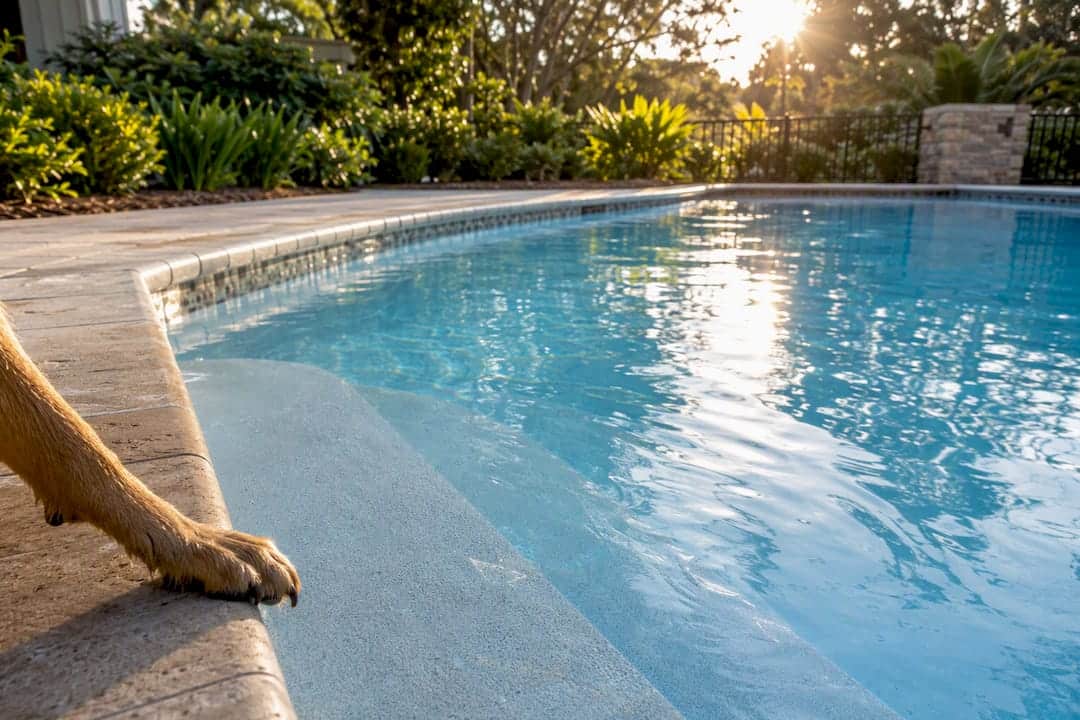
A dog-friendly pool gives your dog predictable shallow access, a visible non-slip exit, claw-resistant finishes, and a physical barrier that controls access when no one is watching. Every other feature is optional. Those four are not.
If your budget is tight, prioritize in this order:
- A wide, sloped entry or ramp your dog can find and use on their own
- A self-closing, self-latching fence around the pool perimeter
- A textured, low-abrasion surface that won’t tear paw pads or scratch under nails
- A rinse station or hose within a few steps of the exit
- Fresh water bowls kept poolside so your dog isn’t tempted to drink from the pool
Here’s the rule of thumb that changes the most outcomes: dogs don’t automatically know how to get out of a pool from wherever they happen to be swimming. Training an exit at one spot doesn’t transfer to the other three corners of the pool. Design and training both have to account for that.
Key Takeaways
A safe dog-friendly pool combines a visible sloped exit, a self-latching fence, a claw-resistant finish, and a consistent aftercare routine.
| Point | Details |
|---|---|
| Exit visibility beats everything | Train your dog to use the same ramp or steps from multiple pool positions, not just one entry spot. |
| Fencing is non-negotiable | A 4 to 5 foot self-closing, self-latching fence is the primary safeguard, not alarms or covers. |
| Fiberglass balances paw safety and upkeep | Smooth gelcoat resists claw damage and skips the liner-puncture risk vinyl carries. |
| Water chemistry rarely causes harm in small amounts | Both chlorine and salt systems are safe when balanced; large water intake is the real risk. |
| Randrswimmingpools builds for pet households | Central Florida experience since 1985 covers filtration sizing, exit placement, and finish choices for dog owners. |
Table of Contents
- Best Dog Friendly Pool Design: Fiberglass, Concrete, or Vinyl
- Ramps, Wide Steps, and Other Ways Dogs Can Exit the Pool
- Choosing Non-Slip, Claw-Resistant Pool Finishes
- Fences, Gates, and Alarms: What Actually Prevents Accidents
- Chlorine vs. Salt: What’s Actually Safe for Dogs to Swim In
- Training Your Dog to Swim Safely, With or Without a Vest
- Layout Ideas: Play Shelves, Shade, and Rinse Stations
- What a Dog-Friendly Pool Costs and How Long It Takes
- Why an Experienced Builder Gets Dog-Friendly Details Right
- Ready to Build a Pool Your Dog Can Actually Use?
- Frequently Asked Questions
- Sources
Best Dog Friendly Pool Design: Fiberglass, Concrete, or Vinyl
Fiberglass is the pool type most builders reach for when a dog is part of the household, and the reasoning holds up under scrutiny. The gelcoat surface is smooth enough that it won’t chew up paw pads the way rougher aggregate finishes can, yet it holds enough texture for grip. There’s no liner to puncture, which matters because dogs occasionally scramble against pool walls when they’re tired or startled. Fiberglass manufacturers point out that many models come with wide steps and tanning ledges already built into the shell, so you’re not retrofitting entry points later.
Concrete (gunite) pools offer the most design flexibility, including custom-graded beach entries, but the surface is more abrasive and needs periodic resurfacing that fiberglass doesn’t. Vinyl liners are budget-friendly upfront, but nails, especially on excited puppies, can nick or tear the liner over time.
Pro Tip: If you’re renovating an existing vinyl pool rather than starting over, a fiberglass step insert or a separate wide-tread ramp can solve the paw-safety problem without a full rebuild.
Ramps, Wide Steps, and Other Ways Dogs Can Exit the Pool
Broad, sloped entries aren’t a nice-to-have, they’re the difference between a dog exiting calmly and a dog panicking mid-swim. Every dog-friendly layout needs at least one exit a dog can find without help.
Your realistic options:
- Beach entries or tanning ledges that slope gradually into the water, ideal for small dogs and older dogs with joint issues
- Wide, graduated steps with deep treads, easier for dogs to grip than narrow standard pool steps
- Permanent sloped ramps built into the pool structure during construction
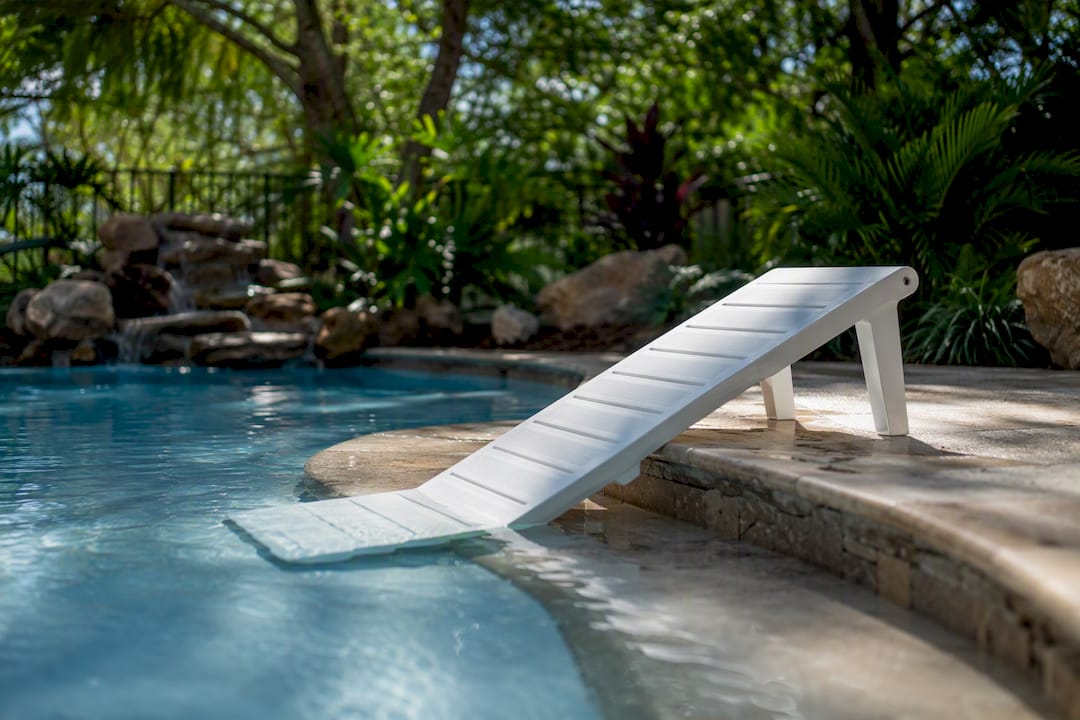
- Removable aftermarket ramps that clip onto the pool edge, a solid retrofit option if you’re not ready for a full remodel
Visibility matters as much as the ramp itself: keep the exit in the same location while training, then once your dog knows it exists, practice getting out from two or three other spots in the pool.
Pro Tip: Bright ramp colors or a contrasting tile border around the exit step make it easier for dogs to spot from across the pool, especially useful for dogs with declining eyesight.
Choosing Non-Slip, Claw-Resistant Pool Finishes
The finish you pick has to split the difference between traction and abrasion. Too smooth, and a wet dog slides on the steps. Too rough, and nails and paw pads take a beating every swim.
Fiberglass gelcoat sits closest to that sweet spot; it’s smoother than pebble or aggregate finishes but still grips when wet. Pebble and aggregate plaster finishes look great and resist algae, but they’re noticeably harder on paw pads over repeated use. Vinyl liners are gentle on paws but vulnerable to punctures from nails.
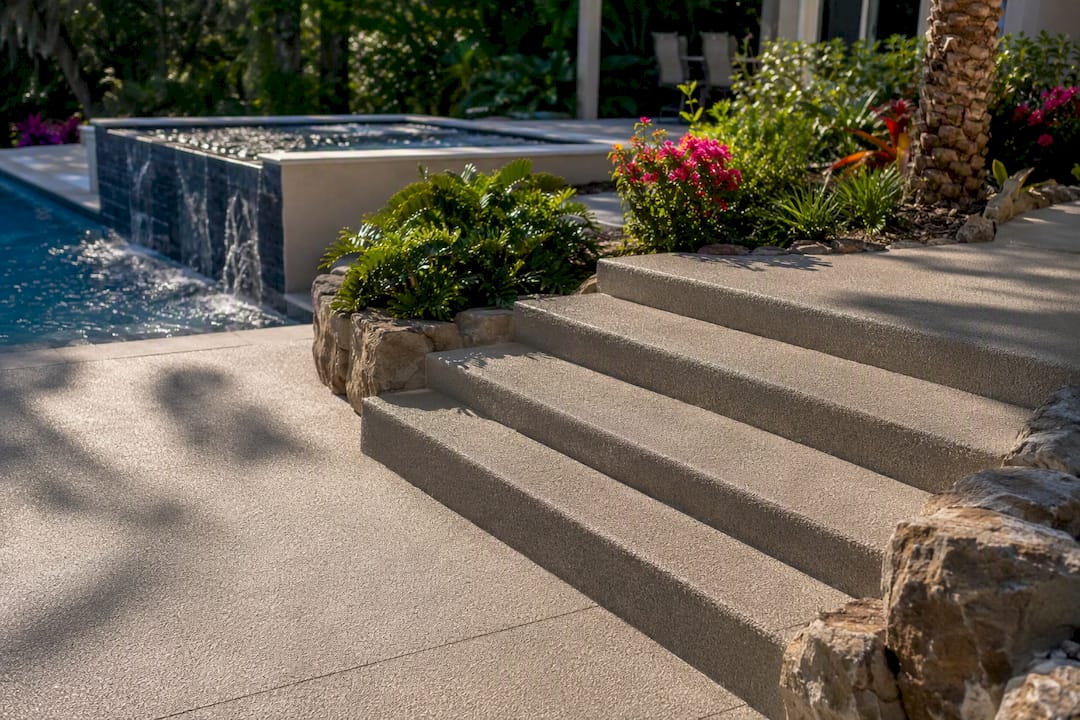
Deck material matters too. Textured, slip-resistant tile or a broom-finished concrete deck around the pool edge cuts down on slips and reduces nail wear compared to smooth stone. Wide steps with textured treads rank among the design features dogs actually use, not just novelty add-ons.
Fences, Gates, and Alarms: What Actually Prevents Accidents
A physical barrier is the backbone of pet pool safety, full stop. Industry professionals recommend a 4 to 5 foot fence with a self-closing, self-latching gate as the baseline for any pool a dog has unsupervised access near.
Alarms and pool covers are useful backups, but they’re reactive by design. An alarm tells you a dog is already in the water; a cover can trap a dog underneath it if they walk onto it expecting solid ground. Neither replaces a fence.
Before you sign off on a design, check:
- Gate hardware self-closes and self-latches above a dog’s nose-reach height
- No gaps under or between fence panels wide enough for a small dog to squeeze through
- Doors from the house that open directly onto the pool deck have their own barrier or alarm
- A written household rule for who supervises pool time, because kids alone shouldn’t be the last line of defense
Pro Tip: If your yard already has a fence but it wasn’t built with pets in mind, a dedicated pet pool fence around just the pool area is often cheaper than re-fencing the whole property.
Chlorine vs. Salt: What’s Actually Safe for Dogs to Swim In
Both properly balanced chlorinated pools and saltwater systems are safe for dogs to swim in. The real risk isn’t which sanitizer you use, it’s how much water your dog swallows and whether treatment chemicals were added recently.
Saltwater pools run at roughly 3,200 ppm salinity, compared to seawater’s 33,000 to 37,000 ppm, so a few accidental laps of pool water won’t cause salt toxicity. Large volumes are a different story: big gulps can trigger vomiting, diarrhea, or in rare cases water intoxication.. A salt system versus traditional chlorine also tends to be gentler on skin and coat over repeated swims, which matters for dogs who spend a lot of time in the water.
After every swim: rinse your dog off, dry the ear canals thoroughly to head off infections, check paw pads for cuts or cracked nails, and keep a full bowl of fresh water on the deck so the pool isn’t their only option.
Training Your Dog to Swim Safely, With or Without a Vest
Supervision and exit training outperform every gadget on the market. No amount of fencing replaces a dog who actually knows where the exit is and uses it without panicking.
- Walk your dog into the pool calmly at the shallow entry, don’t toss them in
- Guide them to the ramp or exit steps and reward heavily the moment they use it
- Repeat from two or three different spots in the pool until the response is automatic
- Introduce a canine life vest for weak swimmers, puppies, or breeds with dense bone structure that makes floating harder
A well-fitted life vest with a sturdy top handle lets you lift a tiring dog straight out of the water, which matters more than most owners expect until they need it.
Pro Tip: Keep first pool sessions under ten minutes. Fatigue, not fear, is what causes most near-misses.
Layout Ideas: Play Shelves, Shade, and Rinse Stations
Start with three elements: a shallow play shelf your dog can stand on, a shaded rest area nearby, and a rinse station within a few steps of the exit. That combination does more for daily usability than any single flashy feature.
For smaller yards, a compact tanning ledge doubles as a dog wading area without eating up deck space. Larger backyards can support a dual-level ledge or even a separate splash pad so kids and dogs aren’t sharing the same few square feet. Landscaping choices around the pool matter too: pick plants that don’t shed heavily into the water, and use hardscaping or low-maintenance ground cover instead of loose mulch a dog will track everywhere.
What a Dog-Friendly Pool Costs and How Long It Takes
Minor retrofits, adding a ramp, upgrading to a non-slip finish, or installing a pet fence section, typically run a fraction of what a full remodel costs and can often be completed in days rather than weeks. A full remodel or new fiberglass inground build is a bigger undertaking with design, permitting, excavation, and finish work all factored in.
A realistic timeline breaks into four phases: design and permitting, demolition or excavation, installation and finish work, and a training window before your dog has unsupervised access. If your budget forces you to phase the project, fund the fence and exit ramp first. Finishes and cosmetic upgrades can wait; safety infrastructure shouldn’t.
Why an Experienced Builder Gets Dog-Friendly Details Right
A specialist closes safety gaps a generalist contractor might miss and specs plumbing and filtration for the extra load pets add. Larger-diameter plumbing and higher-capacity filtration handle pet hair and organic debris better than a standard residential setup, and sand or DE filters clean up easier than cartridge systems when a dog swims regularly.
Randrswimmingpools has built and renovated pools across Central Florida since 1985, with deep experience in both fiberglass and concrete construction. Two decisions an experienced builder gets right the first time: sizing the filtration for pet bather load, and placing the exit where it’s visible from every angle of the pool, not just the shallow end.
A builder’s take on dog-proofing pools
The retrofit we recommend most often isn’t a new pool, it’s adding a proper ramp and fixing the fence gate. The lesson that sticks: paw safety starts with the surface, not the water.
Ready to Build a Pool Your Dog Can Actually Use?
If you’re weighing a full rebuild against a handful of retrofits, the fastest way to get a straight answer is a design consultation, not another hour of browsing forums. R and R Swimming Pools has spent decades building custom concrete and fiberglass pools across Central Florida, and dog owners are a big part of that client base, which means exit placement, filtration sizing, and finish selection for pet households aren’t afterthoughts here.

Browse the inground pool installation guide to see how the process works from design through commissioning, or look at fiberglass pool options if paw comfort is your top priority. If you already have a pool and just need the dog-safety gaps closed, ask about a retrofit estimate for a ramp, fence upgrade, or resurfacing. Request a consultation and bring your dog’s specific needs to the first conversation.
Frequently Asked Questions
Is chlorine or saltwater better for a pool with dogs?
Both are safe when properly balanced. Saltwater tends to be gentler on skin and coat, but the bigger risk in either system is a dog drinking large volumes of water, not the sanitizer itself.
Do dogs need a special ramp, or can they use regular pool steps?
Standard steps are often too narrow and slick for paws to grip. A wide, graduated step or a dedicated ramp gives dogs a reliable, repeatable way out, especially important for small or older dogs.
Can a dog get salt poisoning from a saltwater pool?
It’s unlikely from casual swimming since pool salinity runs far below seawater levels, but drinking large quantities of any pool water can cause vomiting, diarrhea, or in rare cases water intoxication.
What’s the minimum fence height for pool safety around dogs?
Industry guidance points to 4 to 5 feet with a self-closing, self-latching gate as the baseline for preventing unsupervised access.
How much does it cost to retrofit an existing pool for a dog?
It varies by scope. A ramp or fence section is a modest add-on compared to a full remodel; ask a local builder for a retrofit estimate based on your existing pool type.
Sources
- Is it safe for dogs to drink pool water? — FOMA Pets
- How do dogs get out of a pool safely? — PetStep
- Pet pool fences — PoolGuard USA
- Can dogs drink pool water? — Dogster
- Pool safety for dogs — Hill’s Pet
