
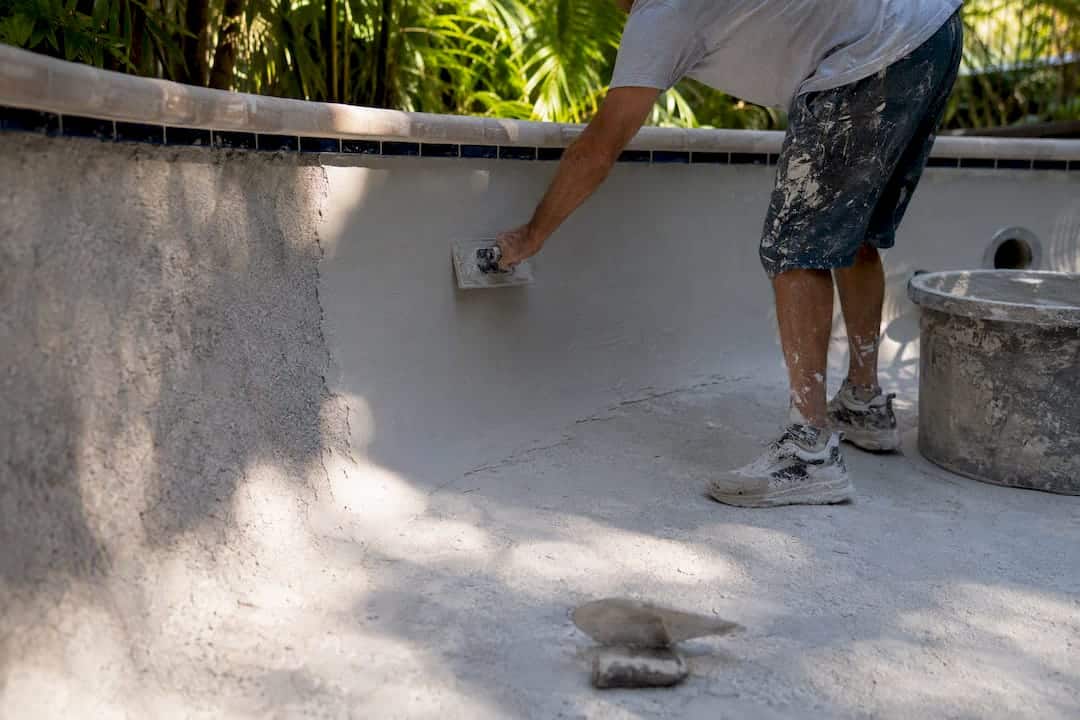
Most homeowners pay between $6,000 and $15,000 to resurface an inground pool, with $11,000 landing as a common national average for a roughly 1,000 square foot pool. That range covers draining, cleaning, surface prep, and a standard finish applied by licensed labor. It does not usually cover major structural repairs, a full tile conversion, or permit fees, which some municipalities require separately.
Per square foot, budget about $1 for basic paint, $4 for standard plaster, and $5 to $10 or more for aggregate and pebble finishes.
- Entry-level paint or epoxy: cheapest, shortest lifespan
- Standard white plaster: the most common midrange choice
- Pebble or quartz aggregate: pricier upfront, decades of service
Randrswimmingpools has priced and built pools across Central Florida since 1985, and local bids often land near the higher end of national ranges once you factor in access and demand. Get a written, itemized quote before you assume any number applies to your backyard.
Key Takeaways
Pool resurfacing cost depends primarily on finish material and pool size, with national averages landing near $6,000 to $15,000 for most residential projects.
| Point | Details |
|---|---|
| National range | Most resurfacing jobs cost $6,000 to $15,000, with $11,000 as a common average for 1,000 sq. ft. |
| Finish drives lifespan | Plaster lasts 7 to 12 years; pebble and aggregate last 15 to 25+ years despite higher upfront cost. |
| Shell repairs raise price | Structural crack repair or delamination fixes can add 20% to 40% to the base quote. |
| Downtime runs about a month | Expect 3 to 7 days of active work plus a 30-day cure period with limited pool use. |
| Get a local, itemized quote | Randrswimmingpools offers on-site Central Florida estimates with line-item pricing and warranty details. |
Table of Contents
- What Does Pool Resurfacing Cost Cover Step by Step?
- How Much Does Pool Resurfacing Cost by Square Foot?
- Which Pool Finish Costs the Least and Lasts the Longest?
- Does Pool Size or Pool Type Change the Resurfacing Price?
- What Other Factors Push Pool Resurfacing Costs Higher?
- How Long Does a Pool Resurfacing Project Take?
- Is Resurfacing Worth It, or Should You Replace the Pool?
- What Questions Should You Ask Before Hiring a Contractor?
- What Does a Sample Pool Resurfacing Estimate Look Like?
- Ready for a Local, Line-Item Pool Resurfacing Quote?
- Frequently Asked Questions
- Sources
What Does Pool Resurfacing Cost Cover Step by Step?
A resurfacing job isn’t a single task. It’s a sequence, and each phase carries its own cost and time commitment. Understanding the order helps you read a contractor’s quote instead of just trusting the bottom line.
It starts with an inspection. A contractor measures square footage, checks for cracks, delamination (where old plaster separates from the shell), and evaluates whether the existing surface will bond with new material. Then comes draining, typically paired with a full clean and acid wash. Crews grind rough spots and patch cracks before anything new goes on, which is where hidden repair costs tend to surface.
Next is the finish application itself, whether that’s plaster, pebble, tile, or a polymer coating. Cure times vary by material, but most finishes need a controlled water fill immediately after application to prevent surface damage. Once the pool refills, water chemistry needs daily attention for about 30 days while the new surface cures.
Pro Tip: On your first site visit, ask the contractor to point out any signs of delamination or hollow spots by tapping the surface. Catching that early keeps a “resurfacing” job from turning into a shell repair job mid-project.
How Much Does Pool Resurfacing Cost by Square Foot?
National pricing breaks into three rough tiers, and each assumes a standard-size residential pool with no major shell damage.
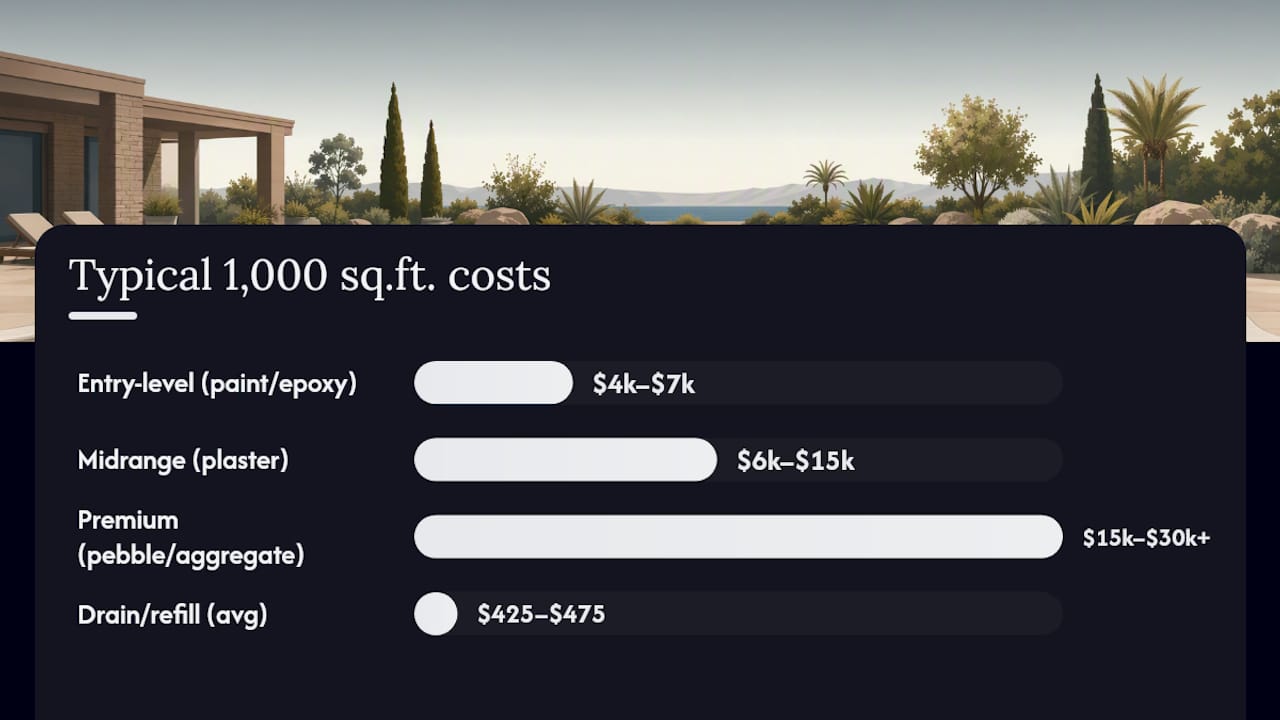
Low-tier jobs, usually basic paint or epoxy on a smaller pool, run $4,000 to $7,000. Midrange jobs, the most common category and typically standard white plaster, land $6,000 to $15,000, with many guides citing a midpoint near $8,000 to $11,000. Premium jobs with pebble, quartz aggregate, or tile accents can climb to $15,000 to $30,000+.
| Finish Tier | Cost per sq. ft. | Typical Total (1,000 sq. ft. pool) |
|---|---|---|
| Entry-level (paint/epoxy) | ~$1 | $4,000–$7,000 |
| Midrange (plaster) | ~$4 | $6,000–$15,000 |
| Premium (pebble/aggregate) | $5–$10+ | $15,000–$30,000+ |
Beyond the finish, expect drain and refill fees. National surveys put drain, clean, and refill averages around $425 to $475, plus disposal fees if old plaster has to be hauled away. Small crack repairs add a few hundred dollars each; the finish material itself is usually the largest single line item on the invoice.
Which Pool Finish Costs the Least and Lasts the Longest?
This is where most homeowners get surprised, because the cheapest finish upfront isn’t always the cheapest over 20 years. Here’s how the main options stack up.
Paint and epoxy cost about $1 per square foot, the lowest entry point by far. But they wear fast, typically needing reapplication every 2 to 5 years, and they can peel or fade in Florida sun. If you’re planning to sell within a year or two and just need the pool to look presentable, paint gets the job done cheaply. For anyone keeping the pool long-term, the repeated cost adds up. A partner resource on epoxy and polymer coatings covers how these products behave on outdoor surfaces, which applies to pool decks as well as pool interiors.
Standard plaster runs around $4 per square foot and remains the most common finish nationally. It typically lasts 7 to 12 years, offers a smooth clean look, and costs the least to install among durable finishes. Its downside is that it stains more easily and shows wear (etching, roughness) sooner than aggregate options. Homeowners weighing a straightforward, budget-conscious resurface often land here. Randrswimmingpools’ plaster overview walks through when plaster makes the most financial sense.
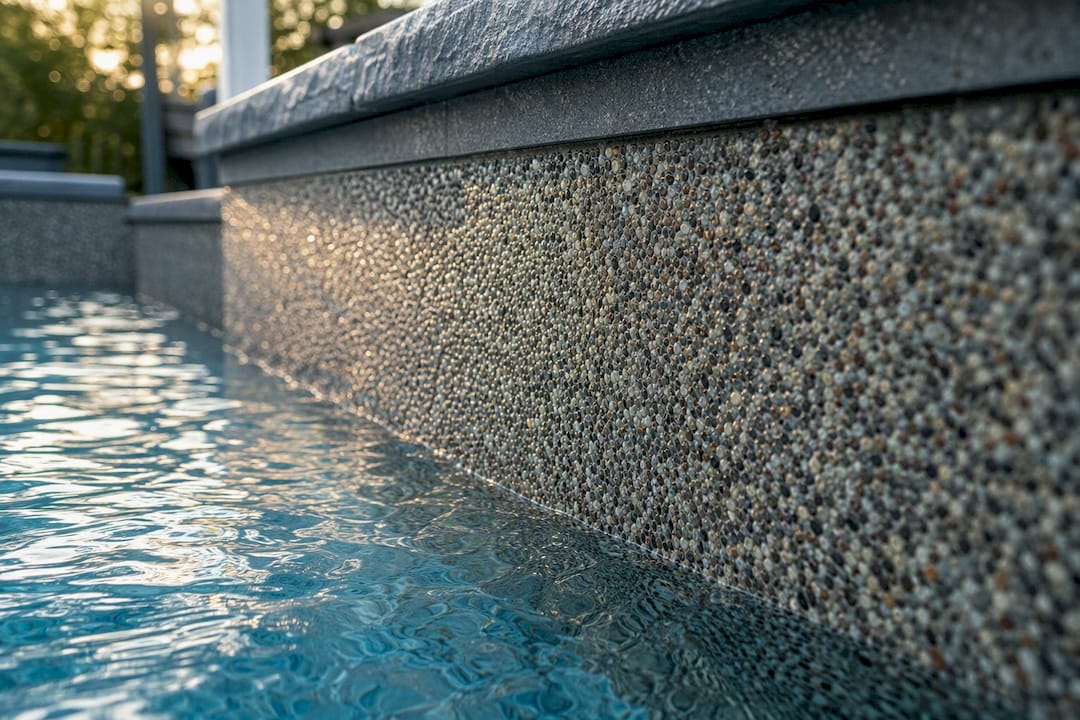
Aggregate and pebble finishes cost $5 to $10 or more per square foot but last 15 to 25 years or longer, which often makes the lifetime cost per year lower than plaster despite the higher sticker price. They also hide minor shell imperfections better than plaster does, since the textured surface doesn’t telegraph small flaws the way a smooth finish does. Families who use the pool constantly tend to favor pebble for exactly this durability. Randrswimmingpools breaks down pebble finish specifics including installation details homeowners should know before committing.
Tile is the most expensive and most durable option, ranging from about $4 per square foot for basic waterline tile up to $25 to $35 per square foot for full glass or mosaic tile shells. Full-tile pools are rare outside luxury builds, but tiling just the waterline band is a popular middle ground. Tiling above the waterline while using plaster or pebble below it balances appearance against cost, and it makes future spot repairs easier since a cracked tile can be swapped individually rather than requiring a full resurface.
Vinyl liner replacement isn’t technically resurfacing since there’s no substrate coating involved, but it’s the comparable process for vinyl pools. Liners typically cost $1,000 to $3,500 depending on pool size and liner thickness, making it the cheapest option on this list by a wide margin.
| Finish | Cost per sq. ft. | Typical Lifespan | Durability/Maintenance | Aesthetics | Relative Price |
|---|---|---|---|---|---|
| Paint/Epoxy | ~$1 | 2–5 years | Low durability, frequent recoating | Flat color, limited texture | Lowest |
| Vinyl liner | N/A (per pool) | 8–15 years | Moderate, vulnerable to punctures | Wide pattern selection | Low |
| Plaster | ~$4 | 7–12 years | Moderate, stains without care | Smooth, classic white/tint | Low to mid |
| Aggregate/pebble | $5–$10+ | 15–25+ years | High durability, low staining | Textured, natural stone look | Mid to high |
| Tile | $4–$35 | 20+ years | Very high, spot-repairable | Widest design range | High |
Pro Tip: If your pool shell has minor surface imperfections, an aggregate or pebble finish will mask them far better than plaster, which telegraphs every flaw in the substrate underneath.
Does Pool Size or Pool Type Change the Resurfacing Price?
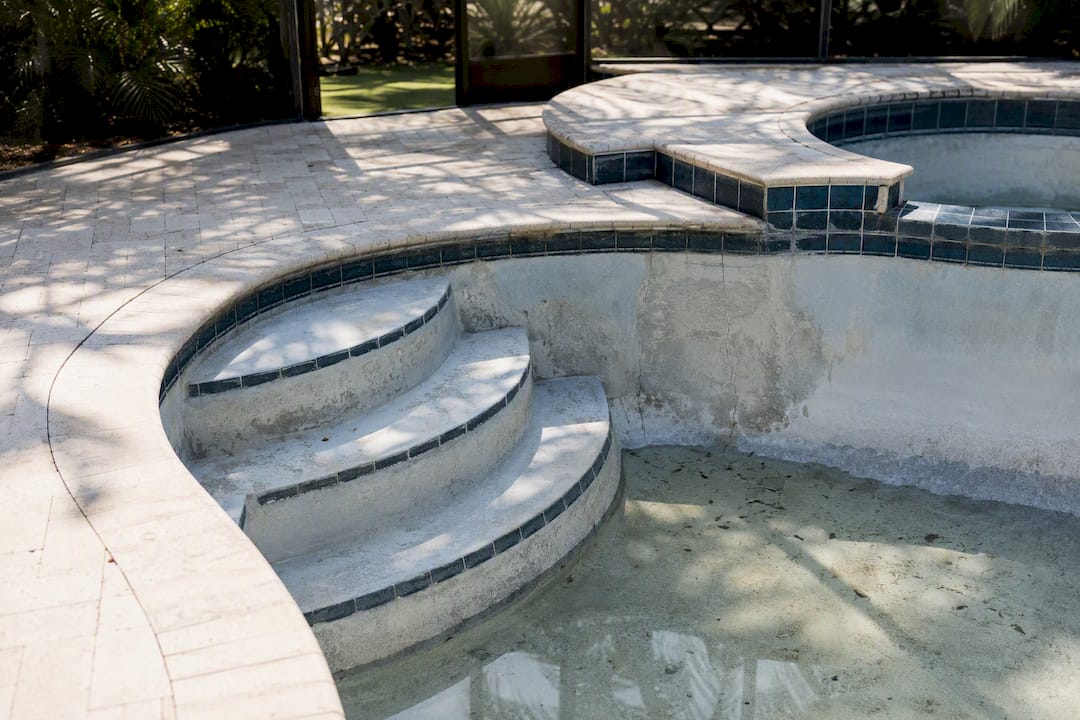
Square footage drives cost more than almost any other single factor, since finish material and labor both scale with surface area. Add steps, benches, or a raised spa, and the surface area (and price) climbs even if the footprint on the ground looks modest.
Here’s how the math plays out for common backyard pool sizes with a standard plaster finish:
Pool type matters just as much as size. Concrete and gunite pools run the highest resurfacing costs because the shell needs a bonded finish applied by hand. Fiberglass pools rarely need full resurfacing in the traditional sense. Instead, they get gel-coat repairs or resurfacing kits, which our fiberglass installation guide touches on. Vinyl pools are the cheapest to refresh since a liner swap avoids the labor-intensive prep and cure process entirely.
A few special cases worth flagging:
- Spa-only resurfacing on a pool/spa combo typically costs less than a full pool but uses the same per-square-foot logic.
- Plunge pools and small cocktail pools sometimes carry a minimum service fee that makes their per-square-foot cost look artificially high.
- Custom geometries (freeform shapes, tanning ledges, beach entries) add labor time even when total square footage stays modest.
What Other Factors Push Pool Resurfacing Costs Higher?
Base pricing assumes a straightforward job. Real projects rarely stay that simple, and a handful of add-ons account for most of the gap between a low estimate and the final invoice.
- Structural repairs: cracks, delamination, or exposed rebar can add 20% to 40% to the base price.
- Tile and coping replacement: swapping waterline tile or deteriorated coping stones is often quoted separately from the resurfacing itself.
- Equipment relocation: moving lights, returns, or skimmers to accommodate new finish work adds plumbing and electrical labor.
- Permits and disposal: some municipalities require permits for resurfacing, and hauling away old plaster or tile debris carries its own dumpster fee.
- Site access: pools behind narrow gates, on sloped lots, or blocked by landscaping require more manual labor and sometimes specialized equipment, which raises labor hours.
Regional labor rates also shift bids by roughly 10% to 25% depending on local demand and cost of living.
Pro Tip: If your pool shows any sign of shell movement, cracking that runs through the plaster into the gunite, or persistent leaks, ask for a separate structural inspection before accepting a resurfacing bid. A contractor should quote structural repair as its own line item, not bury it inside “prep work.”
How Long Does a Pool Resurfacing Project Take?
Most resurfacing jobs run 3 to 7 days from draining to final refill, though weather, finish type, and repair needs can stretch that timeline. Add the 30-day cure period, and homeowners typically go without full pool use for about a month.
Here’s the rough sequence:
- Drain and prep: 1 to 2 days
- Crack repair and surface grinding: 1 to 3 days, longer if damage is extensive
- Finish application: 1 to 2 days
- Refill: 1 to 2 days depending on water source and pool size
- Cure and chemistry stabilization: about 30 days with reduced swimming access
Refilling by hose commonly runs around $55 per 5,000 gallons in some markets, and a standard backyard pool can need 15,000 to 25,000 gallons or more. Some homeowners opt for water delivery trucks to speed up the fill, which adds cost but cuts downtime. Factor in temporary fencing or safety covers if the pool sits empty for more than a day or two, especially with kids or pets around.
Is Resurfacing Worth It, or Should You Replace the Pool?
Resurfacing makes sense when the problems are cosmetic or surface-level. Replacement, meaning a full shell rebuild, only becomes the better option when the underlying structure has failed.
Watch for these signs that point toward resurfacing:
- Widespread etching, roughness, or chalky texture on plaster
- Exposed aggregate that used to be smooth
- Persistent staining that chemical treatment won’t remove
- Minor to moderate cracking confined to the surface layer
- Leaks traced to the finish rather than the shell or plumbing
Resurfacing restores appearance, smooths out safety hazards like rough or sharp surfaces, and extends usable life by a decade or more depending on finish choice. It won’t fix a structurally compromised shell, major foundation settling, or plumbing failures buried in the gunite.
Pro Tip: If a contractor spots cracking that extends deep into the shell rather than just the surface coating, get a second opinion before committing to a resurfacing quote. That’s the line between a resurfacing job and a full renovation budget.
What Questions Should You Ask Before Hiring a Contractor?
A trustworthy quote breaks the job into line items instead of one lump number. You should see separate costs for prep work, crack or patch repairs, finish material, labor, draining and refilling, disposal, permits, and warranty coverage.
Before signing anything, ask:
- Can you show proof of licensing and insurance for pool resurfacing specifically?
- What warranty do you offer on the finish, and what does it cover?
- Can I see photos or visit a past project using the same finish I’m considering?
- Who handles permits if my county requires one?
- What’s the expected timeline from drain to refill?
Red flags include vague bundled quotes with no material breakdown, requests for large upfront-only payments, no written warranty, and reluctance to share references or past work. Randrswimmingpools’ guide on choosing a renovation contractor covers additional vetting steps.
Pro Tip: When comparing bids, normalize for finish type first. A $7,000 paint job and an $11,000 pebble job aren’t competing quotes, they’re different products. Compare within the same finish category to see who’s actually offering the better price.
What Does a Sample Pool Resurfacing Estimate Look Like?
Here’s a line-item breakdown for a typical 1,000 square foot concrete pool getting a standard plaster finish, assuming no major shell damage and normal backyard access.
That works out to roughly $8.50 per square foot all-in, near the midrange figures many national guides report. Swap plaster for pebble aggregate and the material/labor line alone can jump to $9,000 to $12,000, pushing the total closer to $12,000 to $15,000. If the inspection turns up shell cracking or delamination, add another $1,500 to $3,000 for repairs before the finish goes on.
A note from Randrswimmingpools’ Central Florida experience
Since 1985, we’ve priced resurfacing jobs across Lake, Orange, and Marion counties, and Central Florida bids often run near the upper half of national ranges. Heat, humidity, and heavy pool usage accelerate plaster wear here compared to cooler climates, and high seasonal demand means scheduling can stretch during peak spring months. Homeowners frequently ask how their quote compares to national averages. Local access issues, from narrow side yards to HOA landscaping rules, are the most common reason a Central Florida bid runs higher than the national midpoint.
Ready for a Local, Line-Item Pool Resurfacing Quote?
R and R Swimming Pools is the alternative to guessing at national averages: a Central Florida contractor who can walk your actual backyard and hand you an itemized quote instead of a ballpark range. Since 1985, we’ve built and renovated pools across the region, and every resurfacing estimate includes a full inspection, sample finish boards so you can see and feel the material before committing, and a realistic project timeline.
We stand behind our work with clear warranty terms and licensed, insured crews, and we can walk you through financing options if you’d rather spread the cost over time. If you’re weighing resurfacing against a broader renovation, our custom pool installation guide covers what a fuller backyard overhaul involves. Ready to see what your pool actually needs? Request a free, on-site estimate and get a real number instead of a national average.
Frequently Asked Questions
What is the average cost to resurface a pool?
Most homeowners pay between $6,000 and $15,000, with roughly $11,000 as a commonly cited national average for a 1,000 square foot pool with a standard plaster finish.
How much does it cost to resurface a pool in Florida?
Central Florida pricing often runs near the upper half of national ranges due to high demand, humidity-driven wear, and site access challenges common in the region’s neighborhoods.
Is pool replastering the same as resurfacing?
Replastering is one type of resurfacing, specifically applying a new plaster coat. Resurfacing is the broader term covering plaster, pebble, tile, paint, and other finish options.
How often should a pool be resurfaced?
Plaster typically needs resurfacing every 7 to 12 years, while pebble and aggregate finishes can last 15 to 25 years or longer before needing attention.
Can I finance pool resurfacing?
Many contractors, including Randrswimmingpools, offer financing options so homeowners can spread the cost of resurfacing over monthly payments instead of paying the full amount upfront.
Sources
- How Much Does it Cost to Resurface a Pool?
- How Much Does Pool Resurfacing Cost? (2026)
- How Much Does it Cost to Resurface a Pool? – Swimply Host Blog
- 6 Pool Resurfacing Options Compared (w/ Costs & Pros/Cons) | SKIN Microplaster
