
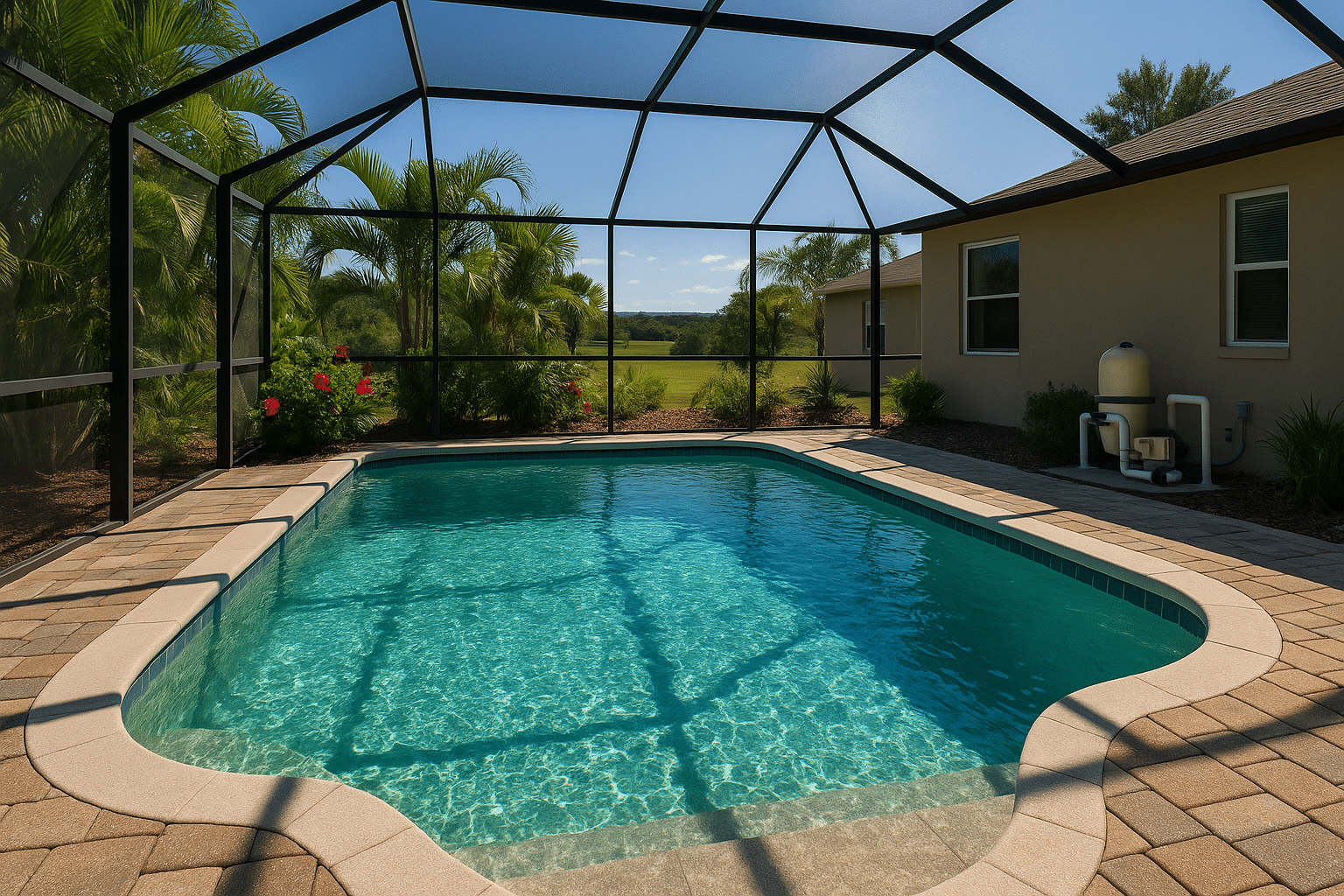
TL;DR: Both saltwater and chlorine pools use the same sanitizer — chlorine — but generate it differently. Saltwater systems cost more upfront but less to maintain year-to-year, while traditional chlorine pools are simpler and cheaper to install. Florida’s intense UV, heat, and year-round swim season tip the scales toward saltwater for many homeowners, but the right answer depends on your budget, pool type, and how hands-on you want to be.
If you’re pricing out a new inground pool in Lake County or Central Florida, one question comes up almost every time: should I go saltwater or chlorine?
The short answer is that neither system is universally better. Both sanitize with chlorine. The difference is how that chlorine gets into your water — and what that means for your wallet, your family’s comfort, and your equipment over a Florida lifetime of swimming.
Here’s everything you need to know before you decide.
What’s the Actual Difference?
A traditional chlorine pool is straightforward: you (or your pool service) add chlorine directly, through tablets in a feeder, a floating dispenser, or liquid chlorine, and manage the levels manually.
A saltwater pool works differently. It uses a salt chlorine generator to convert salt in the water into chlorine through a process called electrolysis — the pool’s filtration system circulates water through electrically charged plates in the generator, breaking down the salt (sodium chloride) into sodium and chlorine.
Despite the name, saltwater pools aren’t like swimming in the ocean — they contain about one-tenth the salt concentration of seawater, creating soft, silky water that’s easier on skin, eyes, and swimwear.
The critical point: your pool still needs chlorine. The difference is production method, not chemistry. Both systems are subject to the same water quality standards under Florida’s pool regulations.
How Florida’s Climate Changes the Math
Most saltwater-vs-chlorine guides are written for four-season climates. Central Florida is a different animal entirely.
Florida’s climate creates chemical management demands that differ substantially from pools in temperate states — year-round high UV index, sustained heat, and frequent rainfall all drive faster chemical depletion and unpredictable pH swings.
Florida receives among the highest annual UV index readings in the continental United States. UV radiation photo-degrades free chlorine at a rate that, without cyanuric acid (CYA) stabilization, would demand chlorine additions multiple times per day for outdoor pools.
Water temperatures routinely exceeding 85°F in Florida summers accelerate chlorine consumption, promote algae growth, and reduce water’s capacity to hold dissolved carbon dioxide — shifting pH upward and reducing total alkalinity stability.
That relentless chlorine demand is one reason saltwater systems appeal to Florida homeowners. Florida’s intense UV exposure and warm temperatures rapidly deplete traditional chlorine. Salt systems continuously generate chlorine, maintaining ideal levels even during peak summer heat — and this consistent sanitization prevents algae growth more effectively than manual chlorination.
There’s a Florida-specific caveat, though. In a Florida climate where the pump runs 10 to 12 hours daily for most of the year, expect salt cell replacement every 3 to 4 years — not the 5 to 7 years quoted in national guides. And summer heat drives rapid evaporation, which concentrates salt in the water, while heavy afternoon rain dilutes it — meaning you’ll check salt levels weekly during rainy season instead of the monthly schedule that works in other climates.
Upfront Costs: Saltwater vs. Chlorine
Traditional chlorine pools have the lower day-one price. A basic chlorine feeder setup adds minimal cost to your build. A saltwater system requires a dedicated generator.
Realistically, expect to pay $1,700 to $2,500 upfront for a salt chlorine generator on top of your base pool cost. This generator requirement can add $1,500 to $2,500 or more to the installation cost.
For context on total project costs, see our guide to inground pool pricing in Central Florida, which covers what drives the full build budget from excavation through finish work.
Annual Maintenance Costs: The Real Comparison
This is where saltwater starts to recoup its higher upfront cost.
A saltwater pool requires less than $100 a year in salt and chemicals if it is consistently maintained. A chlorine pool, on the other hand, will cost between $300 and $800 per year in maintenance chemicals.
Breaking it down for a typical Florida pool year:
- Saltwater ongoing costs: Pool salt top-ups for splash-out and rain dilution run $50 to $100 per year; pH adjusters (saltwater pH tends to drift high) run $80 to $120 per year.
- Traditional chlorine ongoing costs: Most chlorine pool owners spend $175 to $750 per year on chlorine tablets and other chemicals. Professional monthly service for a chlorine pool typically adds more on top of that.
The major long-term cost of a saltwater system is the cell replacement. The biggest long-term cost is salt cell replacement every 3 to 7 years at $200 to $700 per cell (shorter in Florida’s demanding climate). Even with that factored in, most owners spend less annually than they did on traditional chlorine.
Health and Comfort: What Swimmers Actually Notice
One of the most common reasons Florida families choose saltwater is the swimming experience. Saltwater pools have less chlorine and less of the heavy chemical scent and content — they’re gentler on the skin, with less irritation to the eyes, hair, and swimsuits, and the water has a softer, silkier feel compared to chlorine water.
The science behind chlorine’s harshness is worth understanding. According to the CDC, chlorine can combine with sweat, dirt, and other contaminants to create chemical irritants called chloramines — which can turn into gas and irritate the eyes and lungs.
Because saltwater systems maintain steadier, lower-level chlorine production, they tend to produce fewer chloramines than a manually dosed pool that fluctuates between over- and under-chlorinated. This is particularly relevant for families with young children, frequent swimmers, or anyone with sensitive skin or mild asthma.
Important myth to bust: saltwater is not chemical-free, despite what some marketing implies. You still need to test and balance pH, alkalinity, and stabilizer regularly.
Equipment Durability and Corrosion
Salt is corrosive, and that matters for your pool investment. Saltwater pools are gentler on your skin and eyes but more corrosive to pool equipment, while chlorine pools offer more durable fixtures.
Saltwater pools require specific attention to elevated total dissolved solids and the potential for corrosion of metal components at salt levels above 4,000 ppm. Keeping salt in the ideal 2,700–3,400 ppm range protects your equipment — another reason weekly testing matters in Florida’s evaporation-heavy summers.
The pool shell material you choose also matters. Fiberglass shells handle saltwater chemistry very well, with a non-porous surface that resists scaling and doesn’t react with salt. Gunite (concrete) pools can be converted to saltwater, but the finish — whether plaster, quartz, or pebble — should be selected with salt exposure in mind. Our fiberglass vs. concrete cost breakdown covers how these two shell types compare across Florida builds if you’re still deciding on construction type.
Saltwater vs. Chlorine: Side-by-Side Summary
| Factor | Saltwater | Traditional Chlorine |
|---|---|---|
| Upfront equipment cost | $1,700–$2,500+ for generator | Minimal — standard feeder |
| Annual chemical cost | ~$150–$400 | $300–$800+ |
| Periodic replacement cost | Salt cell every 3–5 yrs ($200–$700) | None specific |
| Swimming comfort | Softer water, less eye/skin irritation | Familiar; can cause irritation |
| Chlorine consistency (FL climate) | Automated, continuous | Manual; UV depletes it fast |
| Equipment corrosion risk | Higher — salt-resistant parts needed | Lower with correct chemistry |
| Hands-on maintenance | Less daily dosing; more monitoring | More routine chemical additions |
| Best for | Comfort-focused, low-fuss owners | Budget-conscious, DIY-friendly owners |
Which System Should You Choose?
Choose saltwater if you:
- Want lower year-over-year chemical costs and don’t mind the higher day-one generator investment
- Have family members with sensitive skin, eyes, or mild respiratory sensitivities
- Prefer a more automated system that holds steady chlorine levels without frequent manual dosing
- Plan to use the pool heavily year-round — the automation pays off faster with more swim time
- Are building a fiberglass pool (fiberglass pairs especially well with salt chemistry)
Choose traditional chlorine if you:
- Want the lowest possible upfront build cost
- Are comfortable with routine chemical management or already have a trusted pool service
- Have older metal fixtures or equipment that isn’t salt-compatible
- Prefer a simpler mechanical setup with fewer components to repair or replace
A Note on Financing Your Choice
The saltwater generator is a meaningful line item on top of your base pool budget. If you’re weighing the two systems partly on cost, it helps to understand your full financing picture first. R&R Swimming Pools offers pool financing through Lyon Financial and Viking Capital — our guide to pool financing options in Florida walks through how these programs work, what rates look like, and what to expect during the application process.
Our Recommendation at R&R Swimming Pools
After building more than 1,000 pools in Lake County and Central Florida since 1985, we’ve installed both systems in all kinds of homes — from Villages retirement communities to young family builds in Clermont and Minneola.
For most Central Florida homeowners who plan to swim regularly, we lean toward recommending saltwater. Florida’s year-round UV intensity and heat make the automated, consistent chlorine production a genuine advantage, not just a comfort perk. The higher upfront cost is real, but the original investment of $1,500–$2,500 plus installation is typically recouped within 2–3 years through lower chemical costs.
That said, traditional chlorine is a perfectly solid choice — especially for budget-focused builds or homeowners who want simplicity. Both systems, properly maintained, will keep your pool clean, safe, and enjoyable for decades.
Ready to talk through which setup makes sense for your yard and your family? Contact R&R Swimming Pools to schedule a free design consultation. We serve The Villages, Clermont, Mount Dora, Leesburg, Eustis, Tavares, Lady Lake, Groveland, Fruitland Park, Wildwood, and 30+ surrounding Central Florida communities.
Recommended Reads
- Fiberglass vs. Concrete Pool Cost in Florida: A Side-by-Side Breakdown
- How Much Does an Inground Pool Cost in Central Florida? (2025 Pricing Guide)
- How to Finance a Pool in Florida: Loan Options, Lenders, and What to Expect
