
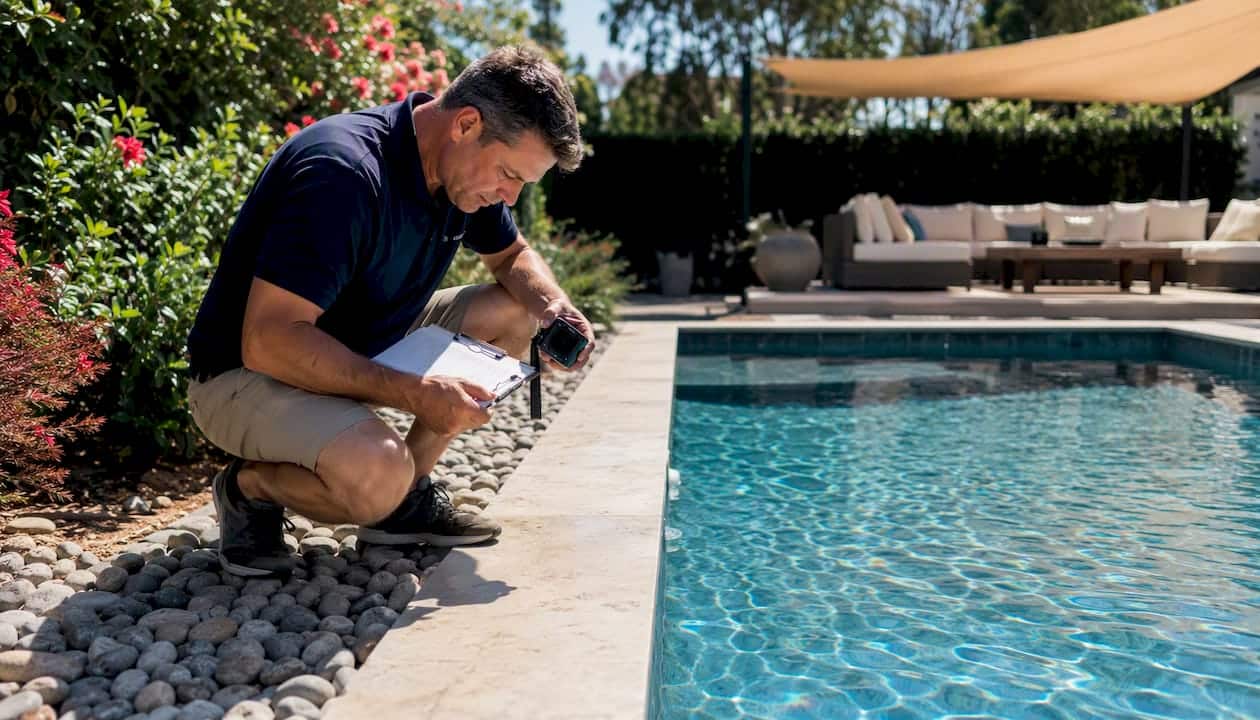
For most homeowners, the right move is a local, licensed design-build contractor who hands you a written diagnostic and scope before a single tool touches your pool. Pool resurfacing typically costs several thousand dollars for a typical residential inground pool, but that range means nothing without knowing what’s underneath the surface first. Shell cracks, exposed rebar, and failing plumbing can double a budget if they surface mid-project. The safest path: schedule a diagnostic, get a written scope that separates structural repairs from optional upgrades, and collect 2–3 itemized bids using identical specs. Randrswimmingpools, operating in Central Florida since 1985, is one such local design-build option worth contacting early.
- Schedule a diagnostic before committing to any finish or price
- Require a written scope that lists mandatory repairs separately from cosmetic upgrades
- Collect multiple bids with identical scope and material specs for a fair comparison
- Confirm the contractor is licensed, insured, and experienced with your pool’s construction type
Table of Contents
- What do the best pool renovation services actually include?
- Which finish is right for your pool?
- How much does a pool renovation cost, and how long does it take?
- How do you vet and hire a pool renovation contractor?
- How does maintenance change after a renovation?
- What happens during a renovation, step by step?
- Key Takeaways
- What most homeowners get wrong about pool renovation
- Randrswimmingpools: Central Florida’s design-build renovation team since 1985
- Useful sources and further reading
What do the best pool renovation services actually include?
The single biggest mistake homeowners make is treating a renovation as a cosmetic project. A thorough diagnostic should evaluate shell integrity, plumbing health, and circulation efficiency before any aesthetic decisions get made. Skipping it is the primary cause of budget-busting surprises.
Diagnostic items that must be checked at the initial consultation:
- Shell integrity: cracks, spalling, hollow spots, and rebar exposure
- Plumbing condition: pressure testing for leaks, pipe age and material
- Circulation system: pump, filter, returns, and skimmer function
- Equipment age: heater, automation, pool lights, and bonding/grounding
Once the diagnostic is complete, the written scope should split into two clear columns: what must be done (structural) and what can be done (aesthetic). Mandatory structural repairs include crack repair, rebar treatment, plumbing replacement, and coping or bond beam work. Optional upgrades cover tile, waterfalls, LED lighting, and deck resurfacing. That separation is your protection against scope creep and surprise invoices.
Pro Tip: Insist that the diagnostic include photographic documentation of every deficiency found. A written scope with a “must vs. may” section and photos attached gives you a paper trail if disputes arise later.
Which finish is right for your pool?
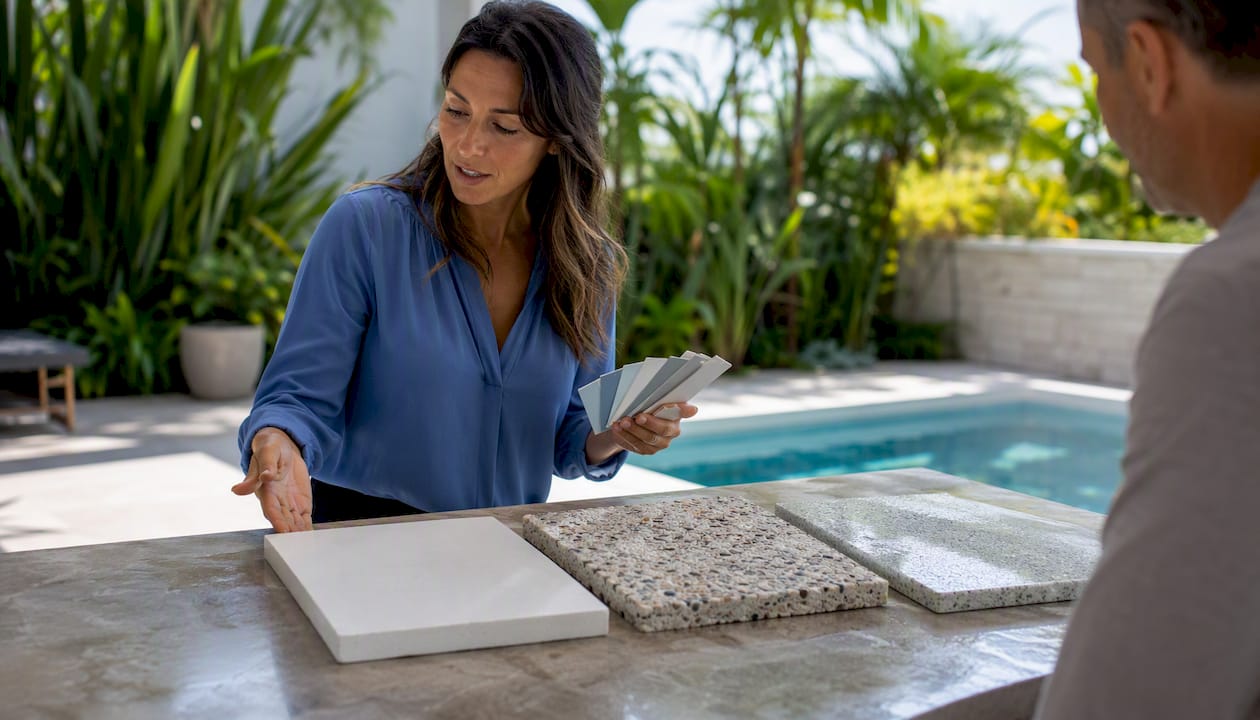
Finish material is the single biggest price driver in any resurfacing project, and each option carries different maintenance demands, lifespans, and failure modes. The table below covers the dimensions that actually matter when choosing.
| Finish | Best For | Approx. Installed Cost | Typical Lifespan | Maintenance Intensity | Common Failure Mode |
|---|---|---|---|---|---|
| Epoxy/paint | Budget refresh, short-term fix | $1,000–$3,000 | 3–7 years | Low (but frequent recoats) | Peeling, fading |
| White plaster | Classic look, lower upfront cost | — | 7 years | Moderate; pH-sensitive | Staining, etching, roughness |
| Quartz aggregate | Durability + value balance | several thousand dollars | — | Moderate; less pH-sensitive | Delamination if prep is poor |
| Pebble/aggregate | Premium durability, natural look | — | wide margin | Low-moderate; texture traps algae | Grout line deterioration |
| Full tile | Lowest cost-per-year long term | — | decades | Low; grout maintenance required | Grout cracking, tile pop-off |
| EcoFinish/polymer | Fiberglass shell refinishing | — | — | Low; different chemistry than plaster | Adhesion failure if improperly applied |
Quartz and pebble finishes outlast classic white plaster by a wide margin and typically deliver better cost-per-year value. For most homeowners, quartz aggregate hits the sweet spot between upfront cost and long-term durability. Full tile makes sense if you plan to own the pool for decades and want to minimize lifetime maintenance costs.
Finish choice also changes your ongoing chemistry routine. Pebble surfaces have more texture, which means algae can take hold in grout lines if brushing frequency drops. Plaster is more sensitive to pH swings and can etch or stain quickly in unbalanced water. For fiberglass shells, EcoFinish thermoplastic coatings bond differently than concrete finishes and require a contractor experienced specifically with that application.
How much does a pool renovation cost, and how long does it take?
Surface prep and structural repairs often represent 20–30% of total project cost, and under-budgeting that line item is the most common cause of premature finish failure. Here’s what typical projects run:
| Project Type | Typical Cost Range | Typical Timeline |
|---|---|---|
| Epoxy/paint refresh | $1,000–$3,000 | 3–5 days |
| Plaster replaster | — | 1–2 weeks |
| Quartz/aggregate resurface | several thousand dollars | 2–3 weeks |
| Pebble finish | — | 2–4 weeks |
| Full tile renovation | — | one to three weeks |
| EcoFinish (fiberglass) | — | 1–2 weeks |
Timelines are driven more by permit queues and cure windows than by labor. Concrete requires a 28-day cure window before the pool can be filled; compressing that window risks structural failure and voids warranties. Permit lead times in Central Florida vary by municipality and can add one to three weeks to any project.
Hidden costs homeowners commonly miss:
- Tile removal and disposal (adds $1,000–$3,000 to most resurface jobs)
- Equipment replacement discovered during diagnostic (pump, heater, automation)
- Deck repair or resurfacing if coping work disturbs the surrounding area
- Water fill costs after draining (especially relevant in drought-restricted areas)
On payment terms: a reasonable deposit is 10–30% of the contract value. Progress payments should tie to defined milestones (drain and demo complete, structural repairs approved, finish applied). Hold the final payment until the contractor completes water-chemistry startup and walks you through the results.
How do you vet and hire a pool renovation contractor?
- Verify license and insurance. In Florida, pool contractors must hold a valid Certified Pool/Spa Contractor license through the Department of Business and Professional Regulation. Ask for the license number and verify it at myfloridalicense.com before signing anything.
- Demand a written diagnostic and scope. If a contractor gives you a price without inspecting the shell, plumbing, and equipment first, walk away. Initial consultations should be diagnostic sessions, not quick estimates.
- Review the portfolio. Before-and-after photos of completed projects in your area tell you more than any sales pitch. Ask specifically for projects similar to your pool type and finish choice.
- Check references. Call two or three recent customers and ask about timeline accuracy, change-order handling, and whether the contractor returned for warranty issues.
- Compare itemized bids. Three bids using identical scope and material specs let you spot the contractor who is cutting corners on prep or skipping structural line items.
Red flags to watch for:
- Verbal-only estimates with no written scope
- Bids significantly lower than others (often means skipped prep or inferior materials)
- High-pressure financing tactics or requests for large upfront deposits above 30%
- No proof of license or insurance when asked
- Contractor who cannot name the specific finish product or its manufacturer
Contract checklist: The signed contract should include the full material specs and brand names, a milestone-based payment schedule, explicit cure time requirements, a change-order process with written approval required, warranty terms and exclusions in plain language, and the permit-pulling responsibility assigned to the contractor.
For a deeper look at common pool renovation mistakes that derail projects, that resource covers the prep and scope issues that show up most often in the field.
How does maintenance change after a renovation?
Homeowner confusion about post-renovation maintenance is one of the most common reasons new finishes fail early. The contractor’s job does not end at the refill.
Surface-specific care differences:
- Plaster: pH must stay between 7.4 and 7.6; even brief swings toward acidic water etch the surface
- Quartz aggregate: more forgiving of chemistry fluctuations, but still requires consistent alkalinity management
- Pebble: texture requires weekly brushing to prevent algae from establishing in grout lines
- Full tile: grout lines need periodic sealing; calcium scaling is the main enemy
- EcoFinish/polymer: avoid abrasive brushes; chemistry balance is less demanding than plaster
The contractor should handle water-chemistry startup and walk you through a 30-day break-in protocol. During that window, brush the surface daily (for plaster and quartz), test chemistry every 48 hours, and avoid automatic cleaners with metal parts.
Pro Tip: Log every water test result and service visit during the first 90 days. If a finish defect appears within the warranty period, that documentation is what gets the claim honored.
After the first 30 days, schedule quarterly inspections for the first year. Use the installing contractor for any warranty-related issues rather than a third-party service, since warranty claims often require the original contractor to assess and repair.
What happens during a renovation, step by step?
Understanding the sequence helps you confirm that milestones are happening on schedule and that nothing is being rushed.
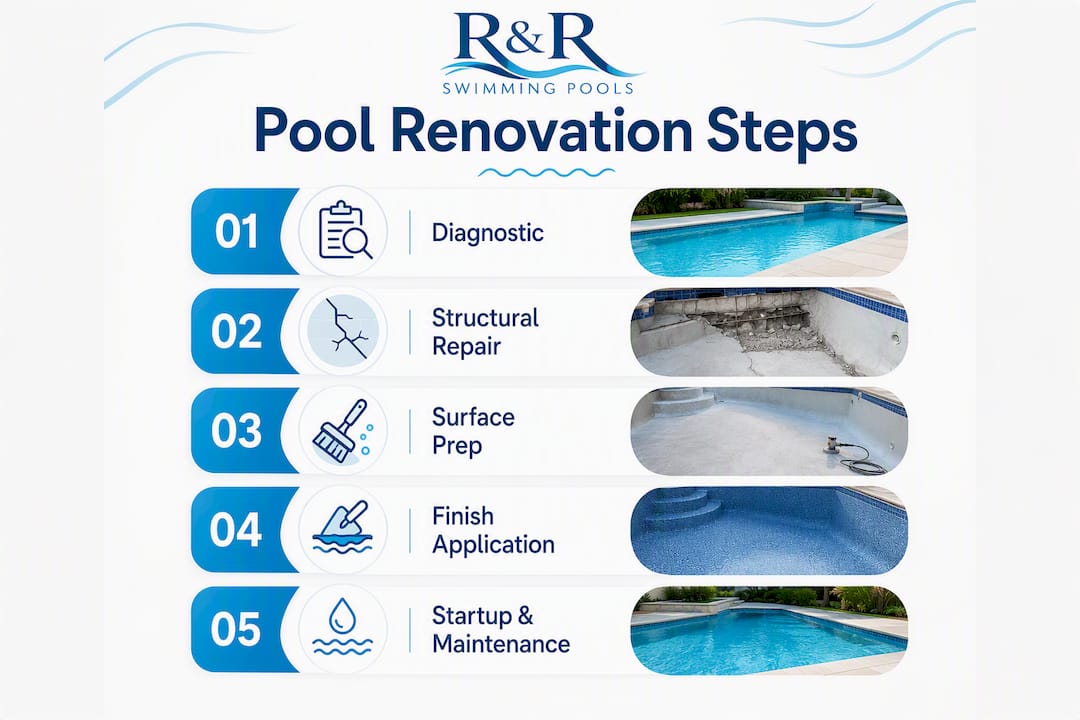
- Pre-inspection and written scope (Days 1–3). Contractor drains the pool, photographs all deficiencies, and delivers a written scope separating structural repairs from optional upgrades. You review and approve before any demolition begins.
- Permits and prep (Days 3–10). Contractor pulls required permits. Your role: confirm permit numbers are posted on site. Permit lead times vary; plan for up to two weeks in some Central Florida jurisdictions.
- Demolition and drain (Days 10–14). Old finish is chipped or blasted off. Plumbing access points are opened for inspection. Expect noise and debris on site.
- Structural repairs and plumbing modernization (Days 14–21). Cracks are repaired, rebar is treated, and any plumbing replacements are completed. This phase must be inspected and approved before the finish goes on.
- Finish installation (Days 21–28). New surface is applied. For concrete-based finishes, the 28-day cure window starts here. Do not let anyone rush this step.
- Refill, water-chemistry startup, and final walkthrough (Days 28–35+). Pool is filled, contractor balances startup chemistry, and you receive a written walkthrough covering the break-in protocol, warranty terms, and service schedule. Final payment releases here.
For a printable version of this sequence, the 6-step renovation checklist from Randrswimmingpools covers Central Florida-specific timing and permit notes.
Key Takeaways
Hiring the right pool renovation contractor comes down to one non-negotiable: a written diagnostic and scope that separates structural repairs from optional upgrades before any work begins.
| Point | Details |
|---|---|
| Written scope is mandatory | Require a diagnostic with photos and a “must vs. may” scope before approving any work. |
| Budget for prep first | Surface prep and structural repairs often represent 20–30% of total project cost; skipping them causes early finish failure. |
| Resurfacing costs $6,000–$15,000 | Typical range for residential inground pools; finish choice and structural condition drive the final number. |
| Cure times are non-negotiable | Concrete requires a 28-day cure window; compressing it risks structural failure and voids warranties. |
| Randrswimmingpools | Central Florida design-build contractor operating since 1985; offers written diagnostics and concrete and fiberglass renovations. |
What most homeowners get wrong about pool renovation
The conventional wisdom says to start with the finish you want and work backward to a budget. That logic gets homeowners into trouble every time. A pool is a structural system first. The finish is the last decision, not the first.
What actually drives project outcomes is the quality of the diagnostic and the clarity of the written scope. Contractors who skip or rush the diagnostic are not saving you time; they are transferring risk onto you. Hidden plumbing failures, rebar corrosion, and bond beam cracks do not disappear because they were not documented. They surface mid-project as change orders, and by then you have limited leverage.
Central Florida adds its own complications. Soil movement from sandy substrate and the region’s aggressive wet season accelerate shell stress in ways that are not obvious from the water line. A contractor without local experience may miss early signs of structural fatigue that a team with decades of regional work would catch immediately. That is the practical argument for choosing a firm with a long local track record over a lower bid from a generalist remodeler.
The design-build model matters here too. When one team handles diagnostics, structural repairs, finish application, and startup chemistry, there are no gaps between subcontractors to fall through. Fragmented projects, where tile, plumbing, and resurfacing go to separate contractors, routinely produce misaligned finishes and incompatible equipment selections that cost more to fix than the original savings justified.
Randrswimmingpools: Central Florida’s design-build renovation team since 1985
Forty years of Central Florida pool work means Randrswimmingpools has seen what the region’s soil, climate, and permit process does to pools that were not built or renovated correctly. The team handles the full scope: written diagnostic, structural repairs, concrete and fiberglass resurfacing, equipment upgrades, and water-chemistry startup. One contractor, one accountable scope.
For homeowners ready to move forward, the first step is a written diagnostic, not a price quote. R and R Swimming Pools offers free consultations across Central Florida, including Clermont, Fruitland Park, Tavares, Mount Dora, and The Villages. You can view the team’s portfolio, review pool renovation options, and request an itemized scope directly on the site. Financing options are also available for qualified homeowners. Contact Randrswimmingpools to schedule your diagnostic and get a written scope you can actually compare.
Useful sources and further reading
These resources back the cost figures, finish comparisons, and contractor-vetting guidance in this article.
- Pool Resurfacing Cost Guide (Angi): National cost data for residential pool resurfacing, including regional variation and finish breakdowns.
- Pool Resurfacing Cost Calculator (Larry’s Pool): Detailed cost-per-finish breakdown and explanation of how prep costs factor into total project price.
- Pool Resurfacing Cost Guide (Adam’s Pool and Spa): Finish lifespan comparisons and value analysis for quartz and pebble options.
- Pool Resurfacing Cost Guide (HomeGuide): Bidding guidance and scope comparison advice for homeowners collecting multiple estimates.
- Complete Pool Renovation Guide (BuildUp Remodeling): Structural-first renovation framework covering diagnostic requirements and design-build delivery.
- Pool Renovation Timeline Expectations (Pool Renovation Authority): Permit lead times, cure windows, and schedule risk factors explained for homeowners.
- Pool Renovation Process Guide (PebbleTec): Finish-specific maintenance guidance and contractor startup responsibilities.
- Pool Condition Assessment Explained: Practical primer on what a pre-renovation diagnostic should cover and how to interpret the findings.
- 6-Step Pool Renovation Checklist for Central Florida Homes (Randrswimmingpools): Printable project checklist with Central Florida permit and timeline notes.
- Why Pool Renovation Matters for Florida Homes (Randrswimmingpools): Regional context on climate, resale value, and structural concerns specific to Florida pools.
