
TL;DR:
- Safety measures like fencing, alarms, and supervision are essential for all pool days.
- Classic pool games can be adapted for all ages and swim levels to ensure inclusive fun.
- Focusing on skill-building and progress creates a safer, more rewarding pool experience for families.
Planning a pool day sounds easy until you realize your six-year-old wants to dive for rings, your toddler needs constant supervision, and grandma just wants to float in peace. Central Florida families are lucky to have warm weather nearly year-round, but that same sunshine puts the pool at the center of almost every weekend. Keeping activities fresh, age-appropriate, and genuinely safe is harder than it looks. This guide gives you 23 creative, adaptable pool activity ideas built specifically for Florida families, covering everything from classic games to inclusive options for non-swimmers, toddlers, and kids with special needs.
Table of Contents
- Start with safety: Setting up your Central Florida pool for family fun
- Classic pool games for all ages
- Creative and active pool activities beyond classic games
- Including everyone: Pool fun for toddlers, non-swimmers, and special needs
- What most guides skip: Focusing on progress, not just entertainment
- Ready to upgrade your pool fun? Next steps for Central Florida families
- Frequently asked questions
Key Takeaways
| Point | Details |
|---|---|
| Safety first | Always prioritize barriers, adult supervision, and short swim sessions for toddlers and non-swimmers. |
| Adapt by age | Choose and tailor pool games to each family member’s age and swim skill for everyone’s enjoyment. |
| Mix classic and creative | Combine traditional games like Marco Polo with new activities like relays and underwater treasure hunts to keep things fresh. |
| Inclusion tips | Leverage poolside games, float toys, and visual schedules to include kids of all abilities and energy levels. |
| Progress through play | View pool activities as opportunities to build confidence, teamwork, and safety habits together. |
Start with safety: Setting up your Central Florida pool for family fun
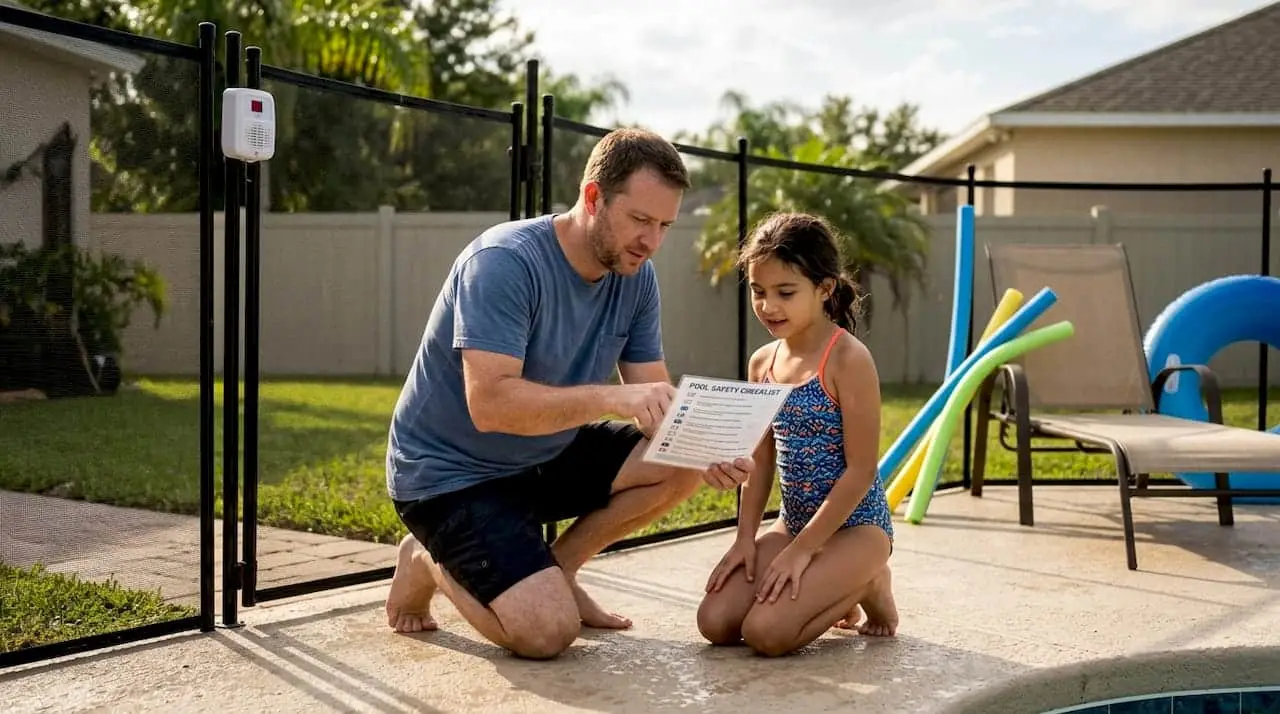
Before anyone jumps in, the foundation of every great pool day is a safe environment. Florida takes this seriously, and so should you. Drowning is the leading cause of death for children ages 1 to 4 in Florida, with 101 child drownings recorded in 2024 and over 500 total drownings in 2023. Those numbers are sobering, but they are also preventable with the right setup and habits.
Start by reviewing your pool’s compliance with FL Statute 515 barriers, which requires fencing, alarms, and proper gate latches for residential pools in Central Florida. A four-sided fence with a self-closing, self-latching gate is the minimum standard. Our Central Florida pool safety guide walks through every requirement in plain language so you are not guessing. Understanding pool enclosure basics is also worth your time, since a screened enclosure adds both safety and comfort during Florida’s bug season.
Beyond barriers, active supervision is non-negotiable. Designate a water watcher for every swim session. This person does not scroll their phone or chat across the yard. They watch the water. Rotate the role every 15 to 20 minutes so attention stays sharp. Every adult in your household should also be CPR-certified. Classes are available through local organizations, and the American Red Cross offers online refreshers.
Swim lessons are one of the most impactful investments you can make. Local options like Rosen Aquatic offer family swim classes designed for all skill levels. Getting kids into lessons early builds the muscle memory and confidence that makes pool games safer and more enjoyable for everyone.
Key safety setup checklist:
- Four-sided fence with self-latching gate
- Pool alarm on gate and door leading to pool
- Designated water watcher for every session
- CPR certification for at least one adult
- Swim lessons for all children
- Age-appropriate flotation devices within reach
Pro Tip: Create a laminated safety checklist and post it near the pool door. For kids with special needs, add a visual schedule showing swim time, break time, and snack time so transitions feel predictable and calm.
Once the pool is properly set up and everyone is safe, you can focus on creative, fun activities.
Classic pool games for all ages
With safety groundwork in place, explore these family favorites you can adapt for every age and swim level.
Classic pool games have survived decades because they work. They require almost no equipment, scale easily for group size, and naturally encourage movement and social interaction. The key is knowing how to tweak each game so a five-year-old and a fifteen-year-old can play together without either getting bored or overwhelmed.
Here are four classics and how to adapt them:
- Marco Polo: The “It” player closes their eyes, calls “Marco,” and everyone else responds “Polo” while trying to avoid being tagged. Younger kids play in the shallow end and can hold the wall. Older kids add a rule where they can briefly go underwater to avoid being tagged.
- Sharks and Minnows: One shark stands in the center while minnows try to swim from one wall to the other without getting tagged. Non-swimmers can play in the shallow end and walk instead of swim.
- Pool Volleyball: Teams rally a beach ball over a floating rope or pool noodle net. Younger kids catch and throw instead of hitting, while older players use proper volleys and keep score.
- Treasure Hunt: Toss weighted dive rings or coins into the shallow end and let kids collect as many as they can. Adjust depth by age and ability.
| Game | Recommended ages | Team or solo | Safety note |
|---|---|---|---|
| Marco Polo | 5 and up | Team | Shallow end for young kids |
| Sharks and Minnows | 6 and up | Team | Non-swimmers walk, don’t swim |
| Pool Volleyball | 7 and up | Team | Use beach ball, not hard ball |
| Treasure Hunt | 4 and up | Solo or team | Limit depth to comfort level |
Pro Tip: Pick up a set of dive rings and a floating volleyball net from local shops like Target or Academy Sports. These two items unlock at least a dozen game variations and cost under $30 combined.
For more family pool game ideas, you can find creative variations that keep things fresh all summer. And if your pool layout limits certain games, consider how upgrading your pool for family fun with a wider shallow area or a tanning ledge could open up more options.
Creative and active pool activities beyond classic games
If you’ve mastered the classics and want to add variety or tailor activities by energy level, try these creative options.
Classic games are great, but variety keeps the pool exciting week after week. These five activities add a fresh spin while still building real swim skills and teamwork.
5 creative pool activities you can try today:
- Relay races: Split into two teams and race across the pool using different strokes each round. Relay-style games build endurance without the pressure of formal lessons.
- Underwater charades: One player acts out a word or animal while holding their breath underwater. Others guess from above. Builds breath control and gets everyone laughing.
- Noodle balance contest: Each player stands on a pool noodle and tries to stay balanced the longest. Great for core strength and coordination.
- Pool fitness circuit: Set up stations around the pool: five jumps off the step, ten kicks holding the wall, three widths of the pool. Works for teens and adults too.
- Memory lane: Toss 10 different colored rings into the pool. Players dive for them in a specific color order called out by a parent. Builds memory and underwater comfort.
| Activity | Energy level | Group size | Setup needed |
|---|---|---|---|
| Relay races | High | 4 or more | None |
| Underwater charades | Medium | 3 or more | None |
| Noodle balance | Medium | Any | Pool noodles |
| Pool fitness circuit | High | Any | Noodles, rings |
| Memory lane | Low to medium | 2 or more | Colored rings |
| Floating reading time | Low | Any | Floats, books |
| Watercolor art poolside | Low | Any | Art supplies |
These activities also double as informal swim skill builders. Relay races improve stroke technique. Underwater charades build breath control. The fitness circuit builds endurance. You can maintain your pool for safe play so water clarity and chemistry never interrupt a session. If your current pool layout does not support these activities well, a pool renovation for more activities can add features like a tanning ledge, wider steps, or a shallow play zone.
Including everyone: Pool fun for toddlers, non-swimmers, and special needs
Fun pool days get even better when everyone finds their fit. Here’s how to make sure no one is left out.
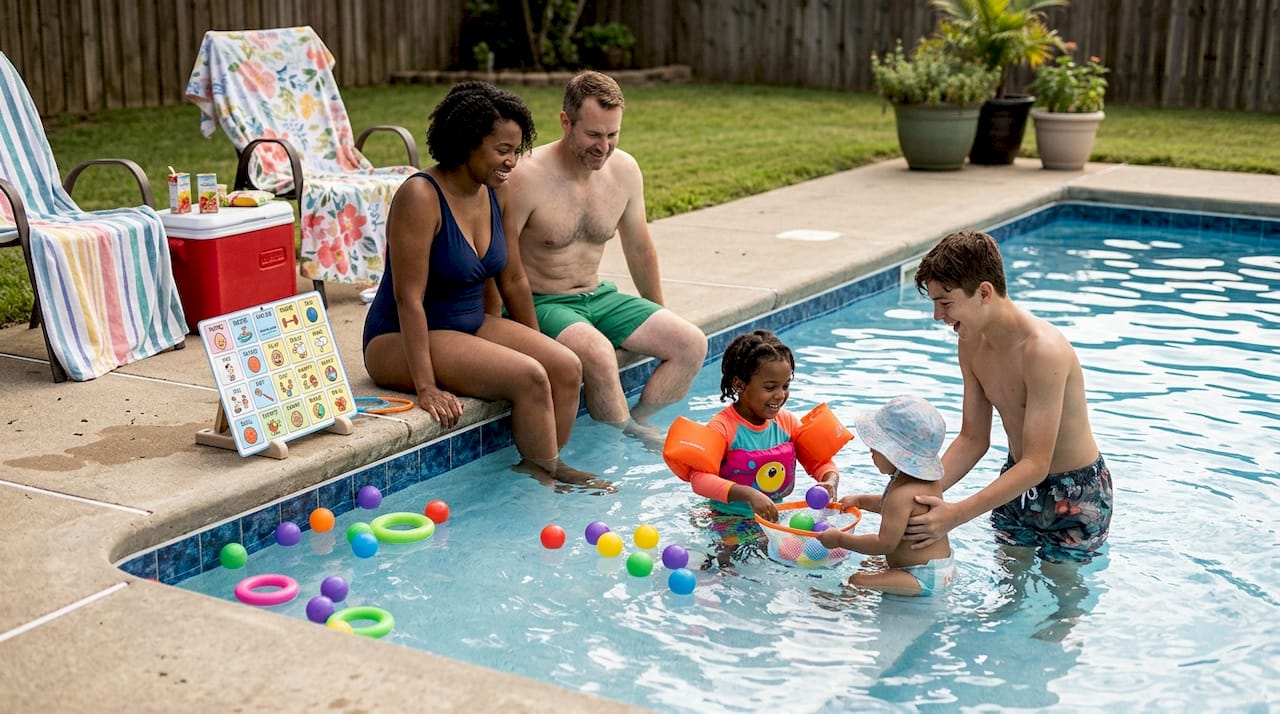
The biggest mistake families make is designing pool time around the strongest swimmers and hoping everyone else keeps up. A better approach is to build your session from the least confident swimmer outward, then layer in challenges for stronger swimmers.
For toddlers, keep water sessions to 5 to 15 minutes maximum before a break. Their bodies tire quickly and they lose the ability to signal distress before parents notice anything is wrong. Always stay within arm’s reach, not just visual range.
Adaptations for specific situations:
- Toddlers (under 3): Shallow splash zones, floating toys, and parent-assisted floating only. No unsupported water time.
- Timid swimmers: Start with poolside games like water balloon toss or sponge relay before entering the water. Build comfort gradually.
- Mixed-age groups: Assign older kids as “swim buddies” for younger ones. It builds responsibility and keeps little ones safer.
- Special needs: Use visual schedules, noise-reducing earplugs for sensory-sensitive kids, and short predictable sessions. Avoid sudden changes in routine.
- Non-swimmers: Keep all activity in water shallow enough to stand. Use life jackets, not just floaties, for any deeper water exposure.
“Pair strong and weak swimmers together and use short sessions for safety. Supervision and structure matter more than any piece of equipment.”
Pool safety consensus from experts is clear: active supervision, proper barriers, and swim lessons reduce risk more than any gadget or flotation toy. The pool maintenance importance piece matters here too, since murky water makes it harder to spot a child in distress. Keep your pool clean, well-lit, and chemically balanced year-round.
What most guides skip: Focusing on progress, not just entertainment
Most pool activity guides hand you a list of games and call it done. What they miss is the mindset that makes pool time genuinely valuable over the long term. We have watched families in Central Florida treat their pool as a pure entertainment zone, and we have watched others treat it as a place where real growth happens. The second group has more fun, and their kids become stronger, safer swimmers faster.
The shift is simple: adopt a skill-building mindset without making it feel like school. When you run relay races, celebrate the kid who improved their stroke, not just the one who won. When you play treasure hunt, notice who is getting more comfortable putting their face in the water. These small wins add up fast.
A swim educator we know keeps a family scoreboard on a whiteboard by the back door. Not for wins, but for personal bests. Most laps without stopping. First time diving to the bottom. First unassisted float. Kids beg to get in the pool because they want to beat their own record.
Active supervision and structured fun always outperform fancy equipment. You do not need a waterslide to build swim confidence. You need consistency, encouragement, and a plan. For more family pool tips that support this approach, our full library covers everything from water chemistry to pool design ideas.
Ready to upgrade your pool fun? Next steps for Central Florida families
If this guide got your family excited to dive in, here’s how to turn inspiration into reality.
Knowing what to do is one thing. Having the right pool setup to do it is another. Whether you are working with an existing pool or thinking about building one, R&R Swimming Pools has been helping Central Florida families create their ideal backyard experience since 1985.
Visit our Pool School for families for activity guides, safety resources, and planning tools built specifically for Florida homeowners. If your current pool could use more space, better features, or a safer layout, explore our options for upgrading your pool area. Our team offers free consultations and can help you design a pool that works for every member of your family, from the tiniest toddler to the most competitive teen.
Frequently asked questions
What are the safest pool games for young children in Central Florida?
Shallow-end games like Marco Polo, floating toy races, and gentle treasure hunts are safest for young kids when a designated adult is watching at all times. Always keep young children in water they can stand in.
How often should non-swimmers and toddlers take pool breaks?
Experts recommend 5 to 15 minute sessions for toddlers and non-swimmers, followed by a rest break on the pool deck. Adults should stay within arm’s reach throughout the entire session.
Can pool activities help teach swim confidence in Central Florida families?
Absolutely. Relay races and diving games build endurance, breath control, and comfort in the water without the formality of a structured lesson. Progress happens naturally when kids are having fun.
What local safety regulations apply to home pools in Central Florida?
Florida Statute 515 requires residential pools to have four-sided fencing, self-latching gates, and alarms on any door or window that opens to the pool area. Non-compliance can result in fines and, more importantly, puts children at serious risk.
Recommended
- 7 Practical Pool Landscaping Ideas for Central Florida Homes
- Pool safety guide for Central Florida homeowners 2026
- 7 Key Benefits of Backyard Pools for Central Florida Homes
- Top pool maintenance tips for Central Florida homeowners
- Guide to Fun Educational Activities for Family Bonding – The World Game
