
Owning a custom inground pool in Central Florida is one of the best investments you can make for your home and lifestyle. But the region’s intense heat, heavy rainfall, and hard water create a unique set of challenges that can turn a sparkling pool into a green, cloudy mess faster than you’d expect. Without a consistent, evidence-based maintenance routine, you risk algae outbreaks, equipment failure, and costly repairs. The good news is that consistent maintenance prevents the 10 to 15 year plaster life reduction caused by calcium scale and pitting in hard water areas like Oviedo. This guide walks you through everything you need to keep your pool performing beautifully year-round.
Table of Contents
- Establish your pool care criteria
- Master the basics: Chemistry, circulation, cleaning
- Fight algae the Florida way
- Handle post-storm recovery and seasonal challenges
- Keep your equipment in top shape
- Cost breakdown: DIY vs. professional pool care
- Maximize pool longevity and your outdoor lifestyle
- Take your pool ownership to the next level
- Frequently asked questions
Key Takeaways
| Point | Details |
|---|---|
| Routine is key | Weekly and monthly schedules prevent repairs and maximize pool life. |
| Algae requires a plan | Specific treatments for each algae type keep your pool clear and safe. |
| Post-storm steps matter | Quick cleanup and chemistry checks protect your pool after severe weather. |
| DIY vs pro costs | Professional pool care costs $100–175 monthly; DIY may save or cost more based on products used. |
| Smart upgrades help | Variable-speed pumps and automation cut maintenance time and lower energy bills. |
Establish your pool care criteria
Before you build a maintenance routine, you need to understand your pool’s specific demands. A pool used daily by kids and dogs needs more attention than one that sits quiet most of the week. Your setup matters too. Screened enclosures block most debris and reduce UV exposure, which means slower chemical breakdown and less frequent cleaning. Open-air pools face direct sunlight, wind-blown leaves, and more evaporation, all of which affect water chemistry faster.
Here are the key factors to assess when setting your maintenance schedule:
- Pool use frequency: Daily family use, weekend parties, or occasional swims each require different chemical dosing and cleaning intervals.
- Screened vs. open: Weekly service is best for open-air or heavily used pools; bi-weekly may work for screened or automated systems.
- Automation level: Salt systems, robotic vacuums, and automatic chemical feeders reduce manual labor significantly.
- Budget and time: Decide upfront how much you want to handle yourself versus outsourcing to a pro.
- Understanding pool maintenance importance helps you prioritize where to spend time and money.
Pro Tip: Set recurring calendar reminders for weekly skimming, monthly equipment checks, and quarterly filter cleaning. Consistency beats intensity every time.
Master the basics: Chemistry, circulation, cleaning
Every healthy pool runs on three pillars: balanced water chemistry, strong circulation, and regular physical cleaning. Neglect any one of them and the other two suffer.
Here is a simple numbered framework to follow every week:
- Test water chemistry. Check chlorine (target 1 to 3 ppm), pH (7.4 to 7.6), and total alkalinity (80 to 120 ppm) at least twice a week in summer.
- Run your pump. Aim for 6 to 8 hours per day minimum. Variable-speed pumps can run longer at lower speeds for better filtration without spiking your electric bill.
- Brush walls and steps. Brushing disrupts biofilm (a thin layer of bacteria and algae) before it takes hold, especially in corners and behind ladders.
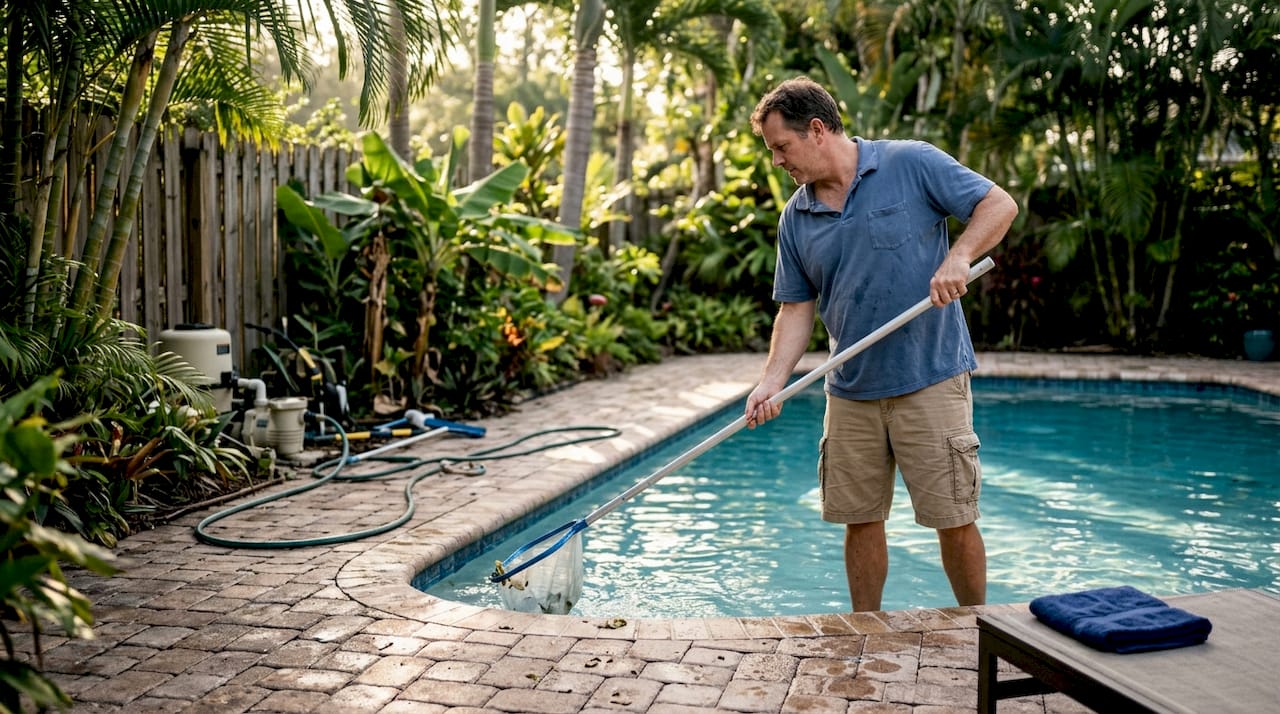
- Skim the surface. Remove leaves and debris daily if your pool is open-air. This prevents organic matter from breaking down and consuming chlorine.
- Vacuum the floor. Weekly vacuuming removes settled debris that brushing dislodges.
“Consistent maintenance prevents the 10 to 15 year plaster life reduction from calcium scale and pitting in hard water areas like Oviedo.”
When algae does appear, you need to act fast. Shock levels vary by type: green algae requires 10 to 20 ppm, mustard or yellow algae needs 30 ppm after brushing, and black algae may require wire brushing and triple shock. Proper shocking also protects the impact on home value that a well-maintained pool delivers.
Fight algae the Florida way
Florida’s warm, humid climate is practically a paradise for algae. Knowing which type you’re dealing with changes your entire treatment approach.
| Algae type | Appearance | Shock level needed | Extra steps |
|---|---|---|---|
| Green algae | Cloudy green water or green walls | 10 to 20 ppm | Brush, filter, vacuum |
| Mustard/Yellow algae | Yellow-brown patches on walls | 30 ppm | Brush thoroughly first |
| Black algae | Dark spots, often on plaster | Triple shock | Wire brush, repeat treatment |
Prevention is far easier than treatment. Keep these habits in place:
- Brush pool walls and floor weekly, even when the water looks clean.
- Use a phosphate remover monthly. Phosphates above 100 ppb accelerate algae growth, and removing them disrupts the biofilms algae need to survive.
- Backwash your filter regularly to remove trapped organic material.
- Maintain proper Florida algae prevention habits year-round, not just in summer.
Pro Tip: If black algae keeps returning despite treatment, inspect your equipment for cracks or rough surfaces where spores can hide. A professional evaluation may save you months of frustration.
Handle post-storm recovery and seasonal challenges
Central Florida averages more than 50 inches of rain per year, and hurricane season runs from June through November. Your pool needs a storm plan just like your home does.
Follow these steps immediately after a storm:
- Do not run equipment until you have visually inspected the pump, filter, and heater for damage or flooding.
- Skim debris from the surface right away. Leaves and organic matter consume chlorine rapidly and can stain plaster.
- Test and rebalance chemistry. Heavy rain dilutes chlorine and shifts pH. After storms, rebalance chemistry and check all equipment before restarting.
- Shock the pool. Rain introduces contaminants. A shock treatment restores sanitizer levels quickly.
- Run the pump for 24 hours straight after rebalancing to circulate treated water through the entire system.
Before a hurricane, shut down all equipment, remove loose accessories, and consider lowering the water level slightly to prevent overflow. Proper pool storm prep protects both your equipment and your pool structure.
Statistic callout: The average Florida pool owner spends $100 to $175 per month on professional pool care, which includes all chemicals and weekly service visits.
Keep your equipment in top shape
Your pump, filter, and heater are the engine of your pool. Ignoring them leads to poor water quality, higher energy bills, and expensive repairs.
Here is what to check and when:
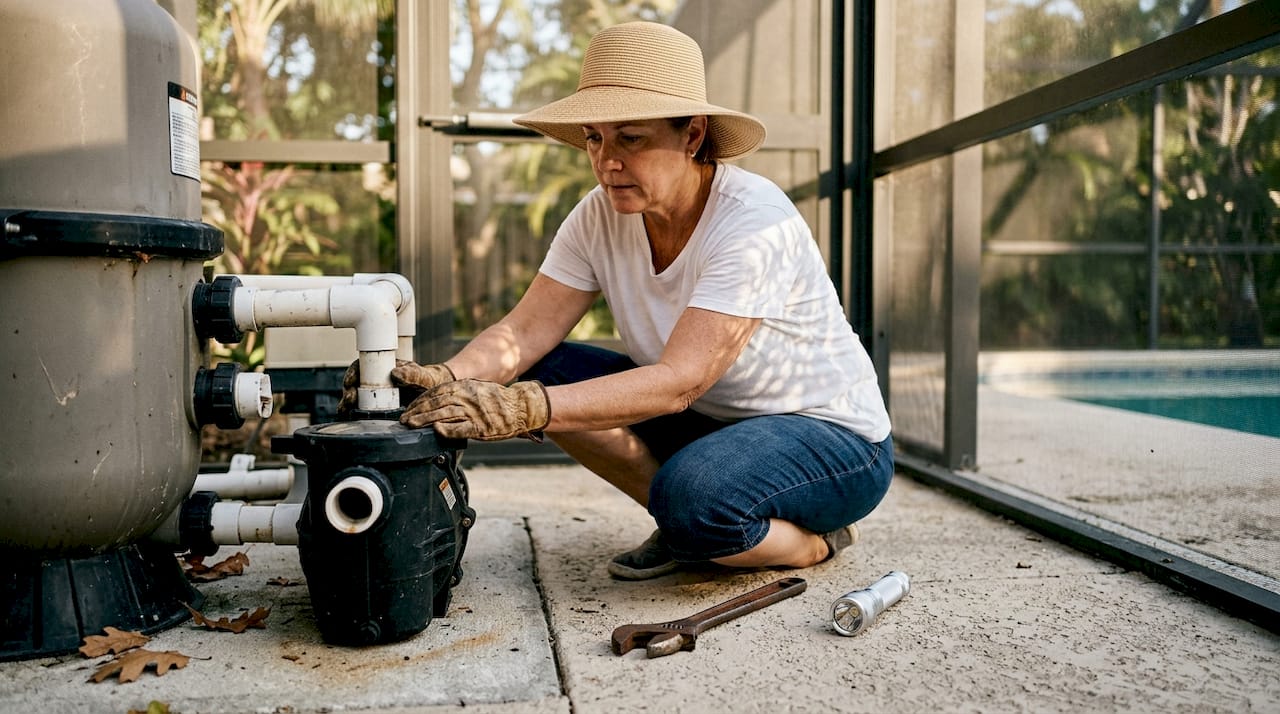
- Monthly: Inspect the pump basket, filter pressure gauge, and heater connections. Look for leaks, unusual noises, or pressure readings outside the normal range. Monthly equipment checks also include lubricating O-rings quarterly and monitoring overall efficiency.
- Quarterly: Lube all O-rings and rubber seals with a silicone-based lubricant. Check for worn gaskets around the pump lid and filter housing.
- Annually: Schedule a full equipment audit with a licensed pool technician. They can catch small issues before they become major failures.
| Feature | Standard single-speed pump | Variable-speed pump |
|---|---|---|
| Energy use | High, fixed speed | Low, adjustable |
| Monthly cost | Higher electric bill | Significantly lower |
| Florida code compliance | May not meet current codes | Meets current FL energy codes |
| Lifespan | 8 to 10 years average | 10 to 12 years average |
| Noise level | Louder | Much quieter |
Upgrading to a variable-speed pump is one of the smartest moves you can make. Pair that with regular pool equipment checks and a solid pool inspection routine to keep everything running at peak performance.
Cost breakdown: DIY vs. professional pool care
Knowing what you’ll spend helps you plan smarter. Here is a realistic look at what pool maintenance costs in Central Florida.
| Service type | Monthly cost | Annual total |
|---|---|---|
| Professional weekly service (chemicals included) | $100 to $175 | $1,200 to $2,100 |
| DIY full maintenance | $130 to $265 | $1,560 to $3,180 |
| Professional bi-weekly service | $75 to $120 | $900 to $1,440 |
Pro weekly service costs $100 to $175 per month with chemicals included, while DIY ranges from $130 to $265 monthly when you factor in chemicals, tools, and test kits.
Tasks that work well as DIY:
- Weekly skimming and brushing
- Basic chemical testing with a home kit
- Emptying pump and skimmer baskets
- Running and monitoring automation systems
Tasks better left to professionals:
- Diagnosing equipment failures
- Acid washing or replastering
- Leak detection and repair
- Algae outbreaks that don’t respond to home treatment
For a full picture of what drives your pool cost breakdown, consider automation upgrades that reduce chemical waste and labor time.
Maximize pool longevity and your outdoor lifestyle
A well-maintained pool is more than clean water. It is a centerpiece for your outdoor living space, and small upgrades around the pool can dramatically reduce your maintenance burden.
Here are the habits and upgrades that make the biggest difference:
- Trim trees and shrubs near the pool regularly. Overhanging branches drop leaves, seeds, and pollen that consume chlorine and clog filters.
- Clean pool decks and screens often. Clean decks and screens combined with trimmed trees reduce debris load and lower your chemical demand.
- Use a solar cover when the pool is not in use. Solar covers minimize evaporation and chemical loss, which is especially valuable during Central Florida’s dry season.
- Consider a pool enclosure if you don’t already have one. It dramatically cuts cleaning time and protects swimmers from insects.
Pro Tip: When planning landscaping around your pool, choose low-shedding plants and avoid anything that drops berries or seeds. A thoughtful design choice today saves hours of skimming every year. Explore your renovation checklist to see which upgrades deliver the best return on your investment.
Take your pool ownership to the next level
You now have a solid foundation for keeping your Central Florida pool clean, safe, and efficient through every season. But sometimes the best move is getting expert eyes on your specific setup.
At R&R Swimming Pools, we have been helping Central Florida homeowners build and maintain stunning custom pools since 1985. Whether you are ready to automate your system, renovate an aging pool, or start fresh with a brand-new design, our team is here to help. Visit our Pool School for in-depth guides on every aspect of pool ownership. When you are ready to plan a new build, our inground pool installation guide and custom pool installation guide walk you through every step of the process. Let us help you turn your backyard into the outdoor retreat you have always wanted.
Frequently asked questions
How often should I shock my inground pool in Central Florida?
Shock your pool every 2 to 4 weeks during summer and after heavy use or storms. For algae treatment, shock levels vary from 10 to 20 ppm for green algae up to triple shock for black algae.
What is the best way to prevent pool algae in Florida’s climate?
Maintain chlorine between 1 and 3 ppm, brush walls weekly, and use a phosphate remover monthly. Phosphates above 100 ppb accelerate algae growth, so keeping them low is one of your best defenses.
How much does professional pool service cost in Central Florida?
Professional weekly service averages $100 to $175 per month with chemicals included. DIY maintenance typically runs $130 to $265 monthly when you account for all supplies.
What do I check after a Florida thunderstorm or hurricane?
Skim debris first, then test and rebalance your water chemistry since rain dilutes chlorine. After storms, check equipment thoroughly before restarting pumps or heaters to avoid damage.
Are variable-speed pool pumps worth the investment?
Absolutely. They use significantly less energy than single-speed models and meet Florida energy codes, which means lower monthly bills and better long-term compliance for your home.
