
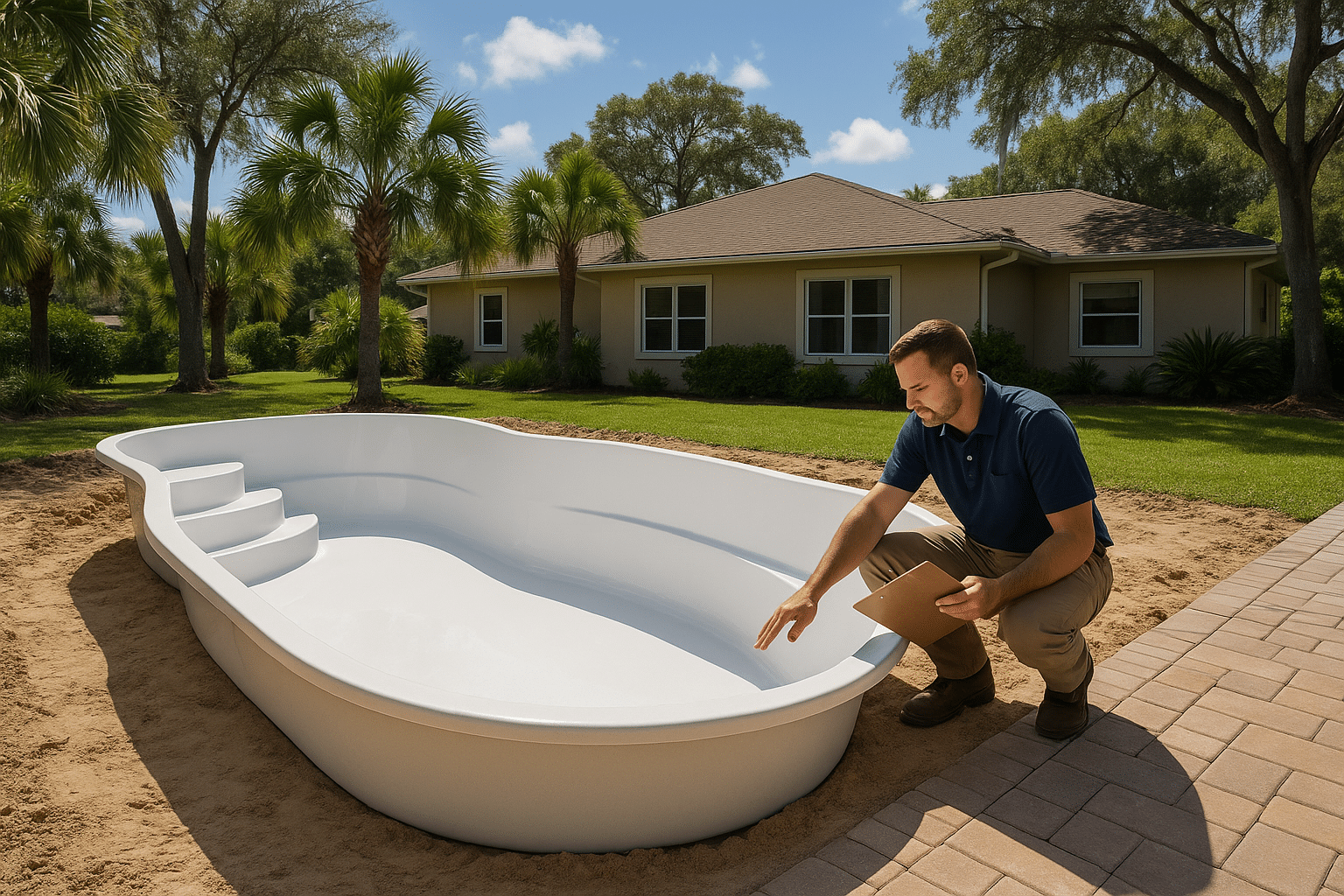
TL;DR: A fiberglass pool warranty is really two separate warranties, a structural warranty on the shell and a surface warranty on the gel coat, and they come from the manufacturer, not the builder. In Lake County’s sandy, high-water-table soil, proper installation and drainage practices matter just as much as the warranty paperwork itself.
If you’re comparing pool builders in Lake County or Marion County, you’ve probably seen the phrase ‘limited lifetime warranty’ on more than one website. It sounds reassuring, but most homeowners never read past the headline to find out what it actually covers, what it excludes, and who is on the hook if something goes wrong.
Here’s the plain-English version, including how it works specifically for pools installed in our part of Central Florida.
A Fiberglass Pool Warranty Is Really Two Warranties
When a manufacturer says ‘lifetime warranty,’ they almost always mean two separate things bundled together: a structural warranty and a surface warranty. Understanding the difference is the single most important thing you can do before you sign a contract.
The Structural Warranty
The structural warranty is one of the most critical aspects of a fiberglass pool warranty, covering the pool shell against structural failure and ensuring that the pool maintains its integrity over time.
In practical terms,
the structural warranty says how long the manufacturer guarantees the pool will hold water, and it usually lasts for the life of the pool, meaning as long as the pool is owned and in normal use.
As an authorized Latham Pool Products dealer, the fiberglass shells we install carry Latham’s manufacturer-backed coverage.
Latham provides its customers a lifetime structural defect warranty related to its manufacturing of its pool shells.
Under Latham’s current written warranty,
a covered structural failure is defined as water loss due to fracture, void, crack, or other similar separation of the pool that arose from a defect in the manufacturer’s workmanship or materials, not from excluded circumstances.
The Surface (Gel Coat) Warranty
This is the part most homeowners misunderstand.
A warranty that only covers osmosis in the pool structure just means the pool will continue to hold water, but it leaves you high and dry if you see bubbles or blisters in the gelcoat, because osmotic blisters are a cosmetic issue, not structural, and are not covered by a structural-only warranty.
Latham addresses this with a dedicated surface warranty.
The surface finish, meaning the cosmetic gelcoat finish, is warranted against osmotic blistering due to defects in materials or workmanship for as long as the original buyer at retail owns the pool.
Industry-wide, surface warranty terms vary by manufacturer and have changed over time, so
a fiberglass pool buyer should expect a limited lifetime structural warranty on the shell paired with a multi-year surface warranty against blistering and delamination.
Who Actually Honors the Warranty: Manufacturer vs. Builder
This is a detail that matters more in Florida’s competitive pool market than people realize.
If a fiberglass pool installer puts the pool in and later goes out of business, the pool itself is still under the manufacturer’s warranty, so the homeowner can still contact the manufacturer directly to have it fixed.
That’s a real advantage over a concrete pool, where the structural warranty runs through the builder itself rather than an independent manufacturer.
As R & R’s installing dealer, we handle the day-to-day relationship: we inspect any reported issue, document it, and manage the claim with Latham on your behalf. But the underlying structural and surface guarantees belong to Latham, not to us, which is exactly why that coverage survives even decades after installation. If you’re weighing a fiberglass shell against a custom gunite pool for a project in Clermont or elsewhere in Lake County, this manufacturer-backed structure is one of the clearest practical differences between the two pool types.
What Voids a Fiberglass Pool Warranty
Warranty exclusions are where most disputes happen, and they’re worth understanding before you ever need to file a claim.
- Unlicensed or DIY repairs.
Most manufacturers consider it a major violation to have an unlicensed person install, drain, or repair the pool, and doing so can void coverage. - Improper draining.
One of the most common causes of fiberglass pool damage is improper water removal; draining the pool without professional help risks a pool float, which happens when groundwater pressure beneath the pool becomes greater than the weight of water inside, and the shell can lift, crack, or shift. - Hydrostatic pressure damage. This exclusion shows up directly in real warranty determinations. In one documented case, a manufacturer denied coverage because
the reported condition appeared consistent with hydrostatic pressure and/or related external site conditions, which are excluded from warranty coverage under the applicable limited lifetime warranty. - Site and soil conditions.
Manufacturers also look at whether installation, drainage, backfill, groundwater management, maintenance, soil conditions, or other external factors contributed to a reported issue
before approving a claim. - Neglect or poor water chemistry.
Discoloration or deterioration caused by abnormal use, failure to maintain proper water chemistry, or failure to follow the owner’s manual instructions is excluded from coverage. - Low water level.
The pool must always remain full of water, since damage can occur if the water level drops below the skimmer.
Why This Matters More in Lake County and Marion County Soil
This is where the national warranty talk becomes a very local issue. Lake County, Ocala, Belleview, Summerfield, Silver Springs, and Webster all sit on sandy Central Florida soil with a seasonally shallow water table.
Typical seasonal high water table depth in Central Florida runs roughly 3 to 8 feet below grade
, and
during rainy season from June through September, the water table rises even higher, sometimes reaching within 1 to 2 feet of the surface.
Fiberglass shell float-out, where a shell lifts out of the ground from hydrostatic pressure, is a known risk that qualified Florida installers guard against with hydrostatic relief valves and proper backfilling.
In other words, the warranty exclusions around drainage and groundwater aren’t boilerplate legal language here, they describe a real risk in our regional soil. A hydrostatic relief valve and correct backfill procedure during the original installation are what keep a structural warranty claim from turning into an uncovered float-out repair. This is one more reason the installing crew matters just as much as the shell manufacturer: proper engineering and site prep up front are what keep the manufacturer’s warranty meaningful for the life of the pool.
Fiberglass Warranty vs. Concrete Pool Warranty
Since many Central Florida buyers compare both pool types, it’s worth noting how warranty coverage differs structurally between them.
Because fiberglass pools feature one-piece shell construction, manufacturers typically offer extensive structural warranties ranging from 25 years to lifetime coverage, protecting against major structural defects including delamination and osmotic blistering.
By comparison,
concrete pool warranties generally last 10 to 15 years despite the pool’s longer potential lifespan, with strict limitations on coverage for surface cracking and chemical damage.
That gap exists mainly because a fiberglass shell is a single factory-molded piece covered by an independent manufacturer, while a concrete shell is built on-site and its warranty typically comes only from the builder.
Questions to Ask Before You Sign
- Does the quote include both a structural warranty and a surface warranty against osmotic blistering, or only one of the two?
- Is the warranty transferable if you sell your home?
- What specific installation steps (relief valve placement, backfill material, compaction) does the manufacturer require to keep the warranty valid?
- Who do you call first if an issue appears, the builder or the manufacturer, and how is that claim documented?
How R & R Handles Warranty Coverage
We install Latham fiberglass shells as an authorized dealer across The Villages, Leesburg, Lady Lake, Mount Dora, Eustis, Tavares, Minneola, Wildwood, Groveland, and the surrounding communities we’ve served since 1985. Every fiberglass project carries the manufacturer’s limited lifetime shell warranty, and our in-house crew handles the excavation, hydrostatic relief setup, plumbing, and backfill ourselves, rather than subcontracting the steps that most affect whether a future claim gets approved. If a shell ever needs warranty service, we’re the ones who inspect it and manage the claim with Latham directly. You can see model options and process details on our fiberglass pool installation page.
Recommended Reads
- Fiberglass Pool Installation Lady Lake FL | R & R Pools
- Fiberglass Pool Installation Leesburg FL | R & R Pools
- Fiberglass Pool Installation Clermont FL | R & R Pools
