TL;DR: A Florida inground pool build moves through five core stages: design and permitting, excavation, shell installation (fiberglass) or gunite and curing (concrete), plumbing/electrical/decking, and final inspection. Fiberglass projects generally finish in 2 to 4 months and concrete in 4 to 6 months, with permitting and curing time being the biggest variables for Lake County, Ocala, Belleview, Summerfield, Silver Springs, and Webster homeowners.
If you’re planning an inground pool in Lake County or the Ocala/Belleview area, the single most common question we hear is simple: how long is this actually going to take? The honest answer depends on whether you choose fiberglass or concrete, how quickly your permit clears your local building department, and Central Florida’s weather during your build window. This guide walks through every stage of a Florida pool build so you know what to expect, week by week.
Why Timelines Vary So Much in Florida
Every inground pool in Florida requires a building permit before construction can begin, and that permit process is the biggest variable in any project timeline. Florida is governed by the Florida Building Code (FBC), which establishes minimum standards for structural design, plumbing, electrical work, drainage, and safety barriers for all residential pool installations. The permit is issued by the local building department of the authority having jurisdiction (AHJ), typically the city or county where your property is located.
Permit review generally runs a few weeks, though timing shifts by county and how complete your application package is. All residential pools require stamped engineering plans showing pool volume, depth specs, and site plans, and approval typically takes 2-6 weeks once submitted. Lake County, Ocala/Marion County, and Sumter County each run their own review queues, which is one reason an experienced local builder who knows these departments can keep your project moving instead of stuck in a review cycle.
Stage 1: Design, Engineering, and Permitting (2-6+ Weeks)
Before any dirt moves, your builder finalizes the pool design, site plan, and engineering drawings, then submits the full package to your local building department. This includes structural plans, electrical and plumbing layouts, and a site-specific safety barrier plan. Many jurisdictions also require a site plan or survey showing all property lines and dimensions, detailed construction plans signed and sealed by an engineer or architect, and a completed site-specific Swimming Pool Safety Affirmation form identifying required barriers before the permit is issued.
Florida’s pool safety rules aren’t optional paperwork, either. Florida has some of the strictest residential pool barrier laws in the country, under Florida Statute 515, the Residential Swimming Pool Safety Act, and every new residential pool must have at least one of four approved safety features: an isolation fence, a compliant safety cover, door alarms, or a subsurface pool alarm. Your builder should factor your chosen barrier into the permit set from day one so inspections don’t stall later. Once the permit clears, subsidiary electrical and plumbing permits are typically pulled and inspected separately as the project progresses.
Stage 2: Excavation and Layout
With permits in hand, crews mark the exact pool footprint, set elevations, and excavate. This stage usually takes a few days for a standard residential project, though unexpected site conditions, such as high water table, tree roots, or unstable soil common in parts of Central Florida, can add time. This is also when decisions about yard access, equipment staging, and neighboring property lines get finalized.
Stage 3: The Shell Goes In – Fiberglass vs. Concrete
This is where fiberglass and concrete timelines really diverge, and it’s the main reason one typically takes months less than the other.
Fiberglass (Latham) Shell Installation
As an authorized Latham dealer, we set a factory-built one-piece shell into the excavated hole. Because the shell arrives fully cured and manufactured off-site, this stage moves fast. From the start of excavation, you can expect up to three days until the fiberglass pool is nestled into the excavation site, with backfilling, plumbing tie-ins, and decking following immediately after. Manufacturer data shows the full installation, from prep through deck, typically takes between 2-4 weeks from start to finish, beginning with pool preparation that takes 2-3 days.
Gunite/Concrete Shell: Shoot and Cure
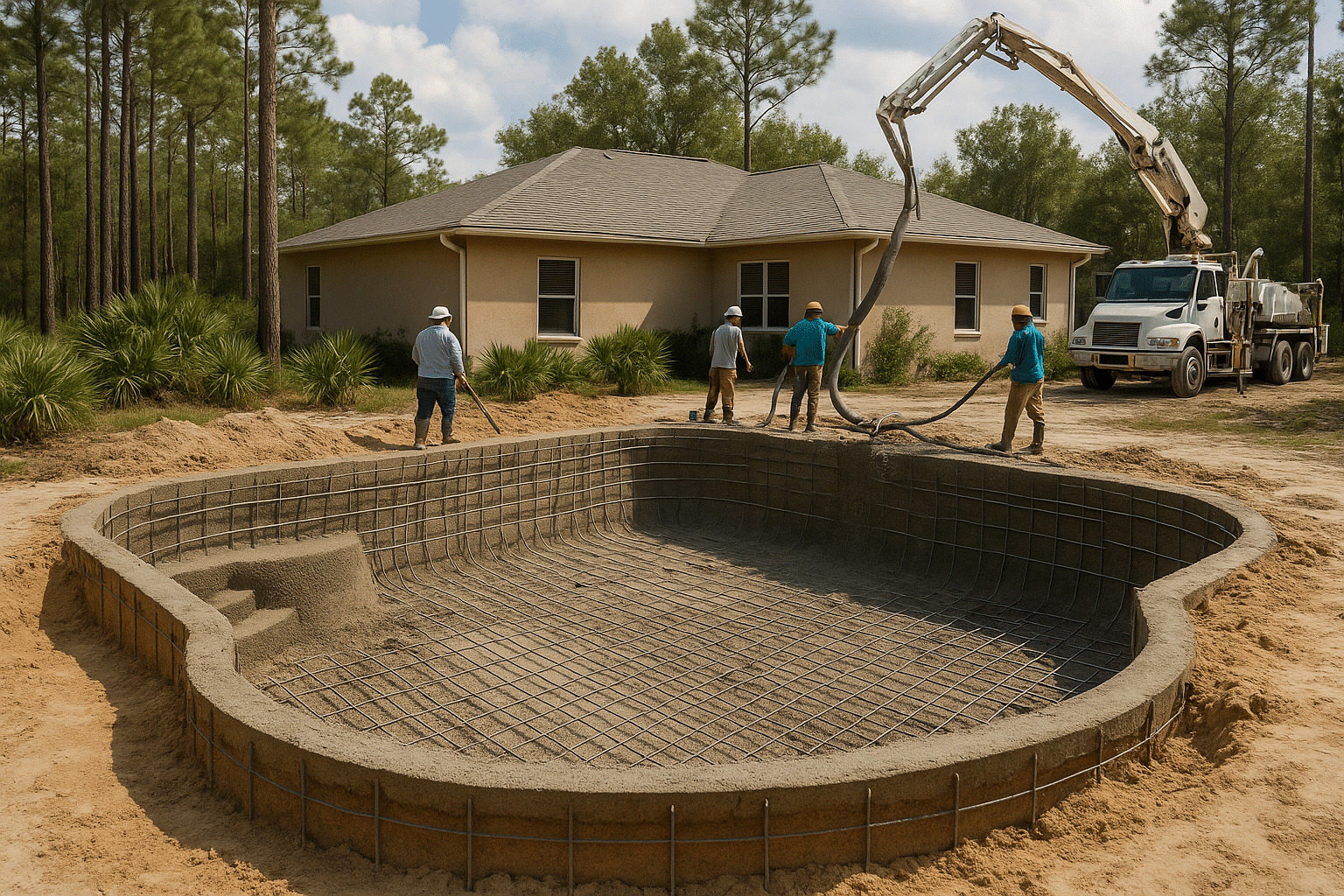
Our in-house gunite crew builds custom shells 6 to 12 inches thick by spraying reinforced concrete over steel rebar in a single day of work, but the project doesn’t move forward immediately afterward. The chemical reaction that turns gunite into rock-hard concrete takes up to 28 days to fully complete, and industry standards call for active wet-curing during the first week. The American Shotcrete Association recommends a minimum of seven days of continuous wet curing, which is a standard for controlling shrinkage, not just a suggestion. By day 7, with proper watering, the gunite should reach about 70% to 85% of its 4,000 PSI target, which is generally enough strength to move into tile, coping, and decking while full 28-day strength continues developing underneath.
This curing window is exactly why concrete pools take longer: it’s not extra labor, it’s chemistry, and rushing it risks cracking down the road. For a detailed week-by-week breakdown of a concrete build, see our month-by-month concrete pool timeline guide.
Stage 4: Decking, Plumbing, Electrical, and Interior Finish
Once the shell is set (fiberglass) or sufficiently cured (gunite), the project moves into finishing: plumbing lines are connected to the pad equipment, bonding and electrical work is completed to code, decking or pavers are poured or set, and the interior finish (for concrete) or gelcoat surface (for fiberglass) is completed. Tile and coping work on a gunite pool typically can’t start until the shell has cured enough to bear weight and bond properly, which is why skipping ahead here is one of the most common build-quality mistakes in the industry.
Electrical and plumbing inspections happen as sub-permits tied to your original building permit. Sub-permits are required for the plumbing and electrical components of a pool installation, and these involve their own inspections before the project can advance.
Stage 5: Fill, Startup, and Final Walkthrough
With the shell finished and equipment installed, the pool is filled, chemically balanced, and started up. Your final barrier and safety inspection happens here too; inspectors confirm your fence, gate, or alarm system meets the state’s minimum standard before sign-off. Residential pool fence height minimum is 48 inches, measured on the exterior side of the fence, with additional specs for gaps and gate hardware. Once the final inspection passes and your certificate of completion is issued, we walk you through equipment operation, chemical care, and warranty paperwork before handing over the keys to your new backyard.
Typical Total Timelines in Lake County and Central Florida
- Fiberglass (Latham) pools: typically 2 to 4 months from signed contract to final walkthrough, including permitting, once you account for Florida permitting timelines on top of the 2-4 week physical installation.
- Custom gunite/concrete pools: typically 4 to 6 months from signed contract to final walkthrough, driven mainly by the 28-day cure window plus tile, decking, and finish work.
Both pool types we build carry a limited lifetime shell warranty, so the extra weeks a concrete pool takes to cure properly are an investment in long-term durability, not wasted time.
What Can Speed Up or Slow Down Your Build
- Permit completeness: A fully documented application with engineering plans, survey, and safety barrier affirmation avoids review delays.
- Weather: Central Florida’s summer rainy season can push back excavation and curing days; winter and spring tend to move faster.
- HOA and community review: Many active adult and planned communities in The Villages, Fruitland Park, and Lady Lake require architectural review before the county permit is even submitted.
- Site conditions: High water table, tree removal, or difficult yard access can add days to excavation.
- Change orders: Adding features like sun shelves, spas, or water features mid-project will extend both design and build time.
Planning Your Build in Lake County and Beyond
We’ve built more than 1,000 pools and spas across Lake County since 1985, including ongoing work throughout The Villages, Clermont, Mount Dora, Leesburg, Eustis, Fruitland Park, Lady Lake, Tavares, Minneola, Wildwood, Okahumpka, Groveland, Montverde, Sorrento, Yalaha, and Bassville Park, plus Ocala, Belleview, Summerfield, Silver Springs, and Webster. Because we handle design, engineering, permitting, excavation, plumbing, electrical, and finishing all in-house, we can keep each stage moving without waiting on outside subcontractors to free up schedule space.
If you’re still weighing fiberglass against concrete for your own timeline and budget, our fiberglass vs. concrete pool cost comparison breaks down the tradeoffs side by side, and our Lake County new pool construction page has more on our local process and service area. We also offer financing through Lyon Financial and Viking Capital for homeowners who want to spread project costs over time.
FAQ
Recommended Reads
- How Long Does It Take to Build a Concrete Pool in Florida? A Month-by-Month Timeline
- New Pool Construction in Apopka, FL | R & R Swimming Pools
- New Pool Construction Lake County FL | Custom Inground Pools
