
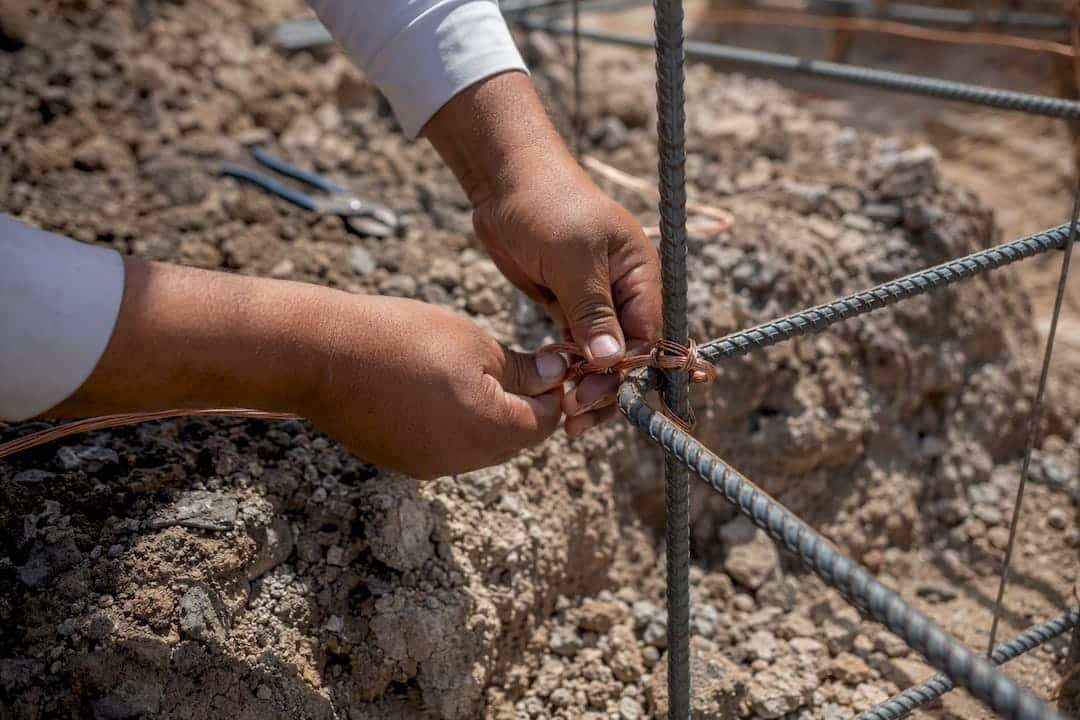
For a new or renovated inground pool, require equipotential bonding per NEC 680.26 in your plans and contract, not as an afterthought. Specify an #8 AWG copper grid or bonded structural rebar extending at least 3 feet beyond the pool perimeter, tied into every metal fitting, pump, and fixed metal part within reach of the water. This is the backbone of lightning safety for pools and the single spec that separates a code-compliant build from a liability.
Bonding equalizes electrical potential across the pool area. It does not stop a direct lightning strike, and no contractor should tell you it does. What it does is eliminate the dangerous voltage gradients that make wet concrete and pool water hazardous during storms, stray current events, or equipment faults. Pair it with proper wiring and GFCI protection on every pump, light, and receptacle near the water.
- Require NEC 680.26 equipotential bonding in writing, not verbally promised
- Specify #8 AWG solid copper minimum for grid or ring conductors
- Confirm bonding extends a minimum of 3 feet past the pool’s edge
- Ask which standard your contractor follows: NEC Article 680, NFPA-funded testing, or field guidance from trainers like Mike Holt
Key Takeaways
Equipotential bonding under NEC 680.26, built with a copper grid rather than a single conductor ring, is the specification that actually protects swimmers from dangerous voltage gradients around a pool.
| Point | Details |
|---|---|
| Require NEC 680.26 in writing | Put the exact code section, conductor size, and grid extent in your contract before signing. |
| Choose grid over single ring | Grid installations cut measured step and deck voltages significantly versus a single conductor ring. |
| Use #8 AWG copper minimum | Specify solid copper conductor at 12 inch by 12 inch spacing for grid sections. |
| Demand testing and documentation | Get continuity test results, weld photos, and AHJ sign-off before final payment. |
| Plan bonding during new construction | Randrswimmingpools integrates NEC-compliant bonding into every design so retrofitting later isn’t necessary. |
Table of Contents
- Why trust this guidance on pool electrical safety?
- What exactly must be bonded under pool electrical code?
- Should you choose a copper grid or a single conductor ring?
- How do you write bonding requirements into your pool contract?
- What if you’re retrofitting an existing pool instead of building new?
- What materials and workmanship standards should you demand?
- The gap between what “code-compliant” promises and what protects your family
- How Randrswimmingpools builds bonding into every pool design
- Sources
Why trust this guidance on pool electrical safety?
Randrswimmingpools has built and renovated inground pools across Central Florida since 1985, coordinating with licensed electrical contractors on bonding and grounding for both concrete and fiberglass installations. That means decades of watching inspections pass, and occasionally watching them fail because a subcontractor skipped a bond point nobody double-checked.
This guide leans on the actual code language in NEC 680.26, the NFPA Research Foundation’s grid-versus-conductor testing, and the plain-language electrical training materials Mike Holt publishes for working electricians. None of it promises lightning immunity.
- NEC Article 680.26: the legal minimum for pool bonding
- NFPA Research Foundation: the experimental data behind grid recommendations
- Mike Holt training materials: field-level clarity on bonding versus grounding
Pro Tip: Ask any contractor bidding your job to name the NEC subsection they’re building to. If they can’t say “680.26” without hesitating, that’s a red flag worth pursuing before you sign anything.
What exactly must be bonded under pool electrical code?
NEC 680.26(B) lists the parts of a pool system that must tie into the equipotential bonding grid, and it’s more comprehensive than most homeowners expect.
- All structural reinforcing steel (rebar) not encapsulated in a nonconductive compound
- Metal forms and stop rails used in construction
- Metal fittings inside or attached to the pool structure
- Underwater lighting fixture shells and mounting brackets, unless listed as low-voltage and non-metallic
- Metal parts of pumps, filters, and other equipment associated with circulation
- Metal-sheathed cables and raceways, metal piping, and metal equipment near the pool
- Fixed metal parts within 5 feet horizontally or 12 feet vertically of the water’s edge
The bonding grid itself needs a minimum #8 AWG solid copper conductor, whether you’re using a dedicated grid or bonded rebar as the conductive plane. Equipment grounding conductors, which serve a different purpose than bonding, follow separate sizing rules and are commonly sized appropriately for the load without a specific minimum number stated here.
By the numbers: perimeter bonding must extend a minimum of 3 feet from the inside wall of the pool, with attachment points distributed around that perimeter, typically at least four when a grid isn’t continuous. Underwater luminaires and pump circuits need GFCI protection as part of the same code section, closing the gap between bonding (equalizing potential) and wiring safety (interrupting fault current fast).
Should you choose a copper grid or a single conductor ring?
Code allows two paths for perimeter bonding: a single #8 AWG conductor ring buried around the pool, or a full 12-inch by 12-inch #8 AWG copper grid (bonded rebar counts as an equivalent conductive plane). Both satisfy the letter of NEC 680.26. They do not perform equally.
EnerNex testing conducted for the NFPA Research Foundation measured deck and step voltages under both configurations. The grid consistently outperformed the single ring.
- Single conductor ring: lower material cost, less excavation, still code-legal
- Copper grid: dramatically lower step and touch voltages, better protection for anyone with a pacemaker or heightened sensitivity to current
- Grid installation costs more labor and trenching but adds relatively little to a new-construction budget compared to a full retrofit later
For new builds, specify the grid. The excavation is already open, the concrete hasn’t been poured, and the incremental cost is far lower than what you’d pay to retrofit the same protection into a finished deck.
How do you write bonding requirements into your pool contract?
Vague contract language is how bonding gets skipped. Put the specifics in writing before anyone breaks ground.
- Name the code section directly: “Equipotential bonding per NEC 680.26, including all parts listed in 680.26(B)(1) through (7).”
- Specify conductor type and size: “#8 AWG solid copper, minimum, for grid or perimeter ring.”
- Define grid extent: “Bonding grid or bonded rebar extending minimum 3 feet beyond pool perimeter.”
- Require listed connectors or exothermic welds (CADWELD or equivalent) at every bond point, not twist-and-tape connections.
- Require continuity and resistance testing after backfill, with written results provided before final payment.
- Require GFCI device locations to be documented on the electrical plan, matched against pump and lighting circuits.
On install day, walk the site before concrete or deck material covers the grid. Check bond-point spacing, confirm the connector type matches the spec, and ask for photos of every weld or clamp. Your general contractor manages the sequence, but a licensed electrical contractor should perform and test the bonding work, and your local Authority Having Jurisdiction signs off before you’re legally clear to fill the pool.
Pro Tip: Request the continuity test readings in writing, not just a verbal “it passed.” A one-page test sheet costs your contractor nothing and gives you a record if a future buyer’s inspector asks.
What if you’re retrofitting an existing pool instead of building new?
Retrofitting bonding into an existing pool is genuinely harder than doing it right the first time. Industry commentary on equipotential bonding consistently flags the same problem: once concrete is poured, the rebar plane is buried and inaccessible, and getting a conductor into the ground means tearing something up.
Common retrofit approaches include:
- A buried single-conductor ring trenched around the pool perimeter, tied into accessible metal parts
- Localized mesh sections installed only where deck replacement is already planned for other reasons
- Bonding whatever exposed metal exists (rails, ladders, equipment pads) even if a full grid isn’t feasible
Cost drivers on a retrofit job stack up fast: deck demolition and replacement, trenching depth and length, the need for CADWELD exothermic connections at each bond point, and the electrical labor to test and document everything afterward. A retrofit that would have added a modest line item during original construction can become one of the pricier parts of a renovation once decking has to come out first.
What materials and workmanship standards should you demand?
Ambiguity about parts and terminations is where inspections stall. Lock these down in your spec sheet, not just your verbal conversation with the builder.
- Prefabricated copper mesh, #8 AWG at 12 inch by 12 inch spacing, or bonded reinforcing steel where structurally available as an equivalent conductive plane
- Listed direct-burial clamps rated for wet locations, not generic hardware-store connectors
- CADWELD or equivalent exothermic welds at critical junctions where a mechanical clamp isn’t sufficient
- Pool junction boxes rated for the application, positioned per the electrical plan, not improvised on site
| Documentation Item | What It Should Show |
|---|---|
| Labeled bonding diagram | Grid layout, bond points, and conductor routing matched to as-built conditions |
| Weld and clamp photos | Every exothermic weld or listed clamp, taken before backfill or deck pour |
| Continuity test readings | Measured resistance values confirming a complete, low-impedance bond |
| AHJ sign-off | Local inspector approval recorded before the pool is filled |
The gap between what “code-compliant” promises and what protects your family
Most homeowners hear “code-compliant” and assume it means “as safe as possible.” It doesn’t. NEC 680.26 sets a floor, not a ceiling, and the floor allows a single conductor ring that the NFPA’s own testing shows performs meaningfully worse than a grid. If your contractor’s bid meets code and nothing more, you’ve bought the legal minimum, not the safest available option.
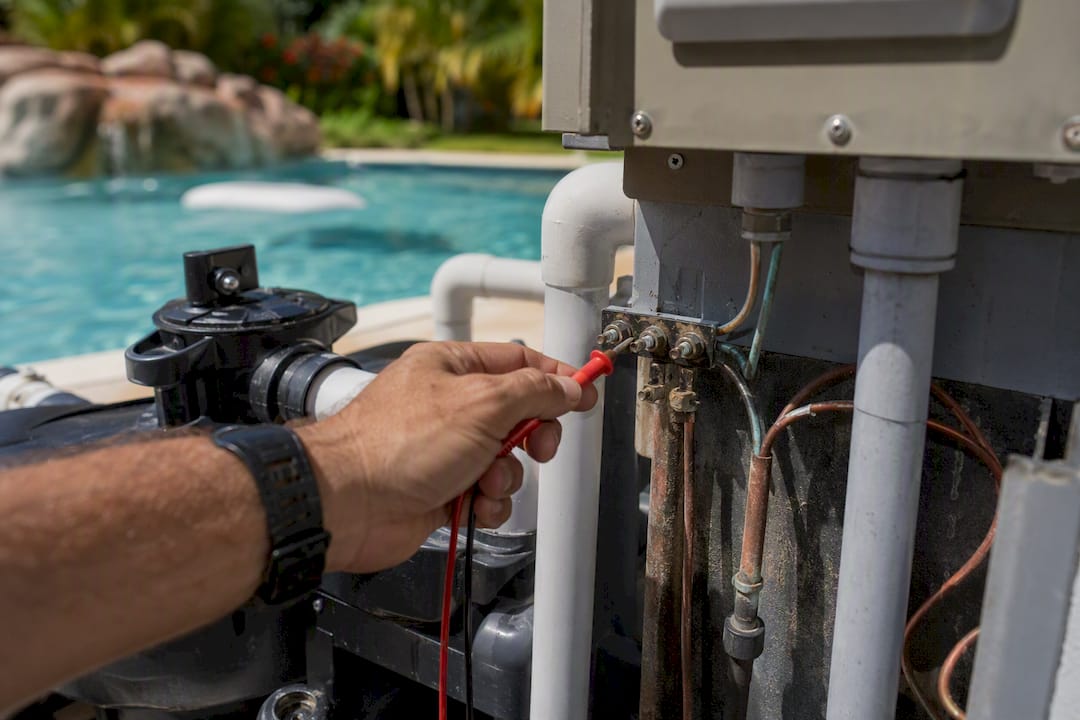
The bigger misconception, though, is thinking bonding is about lightning strikes at all. It isn’t. Bonding equalizes potential across wet surfaces and metal parts so a fault, a stray current, or a nearby strike doesn’t create a voltage gradient a swimmer’s body completes. That distinction gets lost in marketing copy that promises “lightning protection” when what’s actually being sold is a voltage-equalization grid. Ask your contractor to explain the difference. If they can’t, they haven’t read the code they’re supposedly building to.
Prioritize the grid over the ring for new construction, get your bonding specified in writing before you sign a contract, and treat the electrical scope with the same scrutiny you’d give the shell or the plumbing. It’s cheaper to get right once than to fix twice.
— Results
How Randrswimmingpools builds bonding into every pool design
Randrswimmingpools is the alternative to hiring a builder and a separate electrician who’ve never coordinated a bonding grid together before. Every design we draft integrates NEC-compliant equipotential bonding from the first plan revision, and we coordinate directly with licensed electrical contractors so the grid, the conductor sizing, and the continuity testing happen as one sequence instead of a guessing game between trades.

That coordination is the difference between a bonding spec that lives in a contract binder and one that actually gets built the way it’s drawn. Since 1985, our design and electrical planning process for Central Florida homeowners has treated bonding grids and GFCI wiring as core scope, not an add-on negotiated after the concrete truck shows up.
If you’re planning a new inground pool or a renovation that touches the deck or shell, request a drawing review with our team before you finalize your electrical spec. Visit our inground pool installation guide to see how we structure design, bonding, and inspection sign-off into one build process, or reach out to schedule a site visit.
Sources
- Evaluation of alternate equipotential bonding means to reduce voltage gradients in pool areas (NFPA Research Foundation)
- Pool Grounding (Nespa Pool guidance)
- Swimming Pools and Spas (Mike Holt electrical training PDF)
