
TL;DR:
- Pool automation systems centralize control of pool equipment, enabling remote management through smartphone apps or panels. They reduce maintenance time and energy costs by scheduling device operation, adjusting heating, lighting, and chemical dosing automatically. Proper sizing and professional installation ensure long-term efficiency and optimal performance.
A pool automation system is a centralized controller that connects your pool’s pumps, heaters, lights, and valves into one interface you operate from a smartphone app or touchscreen panel. With pool automation systems explained clearly, the core value is simple: you stop walking to the equipment pad for every adjustment and start managing everything remotely. Brands like Jandy AquaLink, Pentair EasyTouch, and Hayward AquaPlus have made this technology accessible for both new builds and existing pools. The result is less daily effort, lower energy bills, and a pool that stays ready when you are.
How do pool automation systems work?
A pool automation system works by connecting a central hub to your pool equipment through relays and low-voltage wiring. The hub sends signals to each device, turning pumps on or off, adjusting heater temperature, switching lights, and opening or closing valves. Pool automation systems replace manual timers and switches with this single controller, and a well-configured system can manage between 2 and 8 or more devices depending on installation complexity.
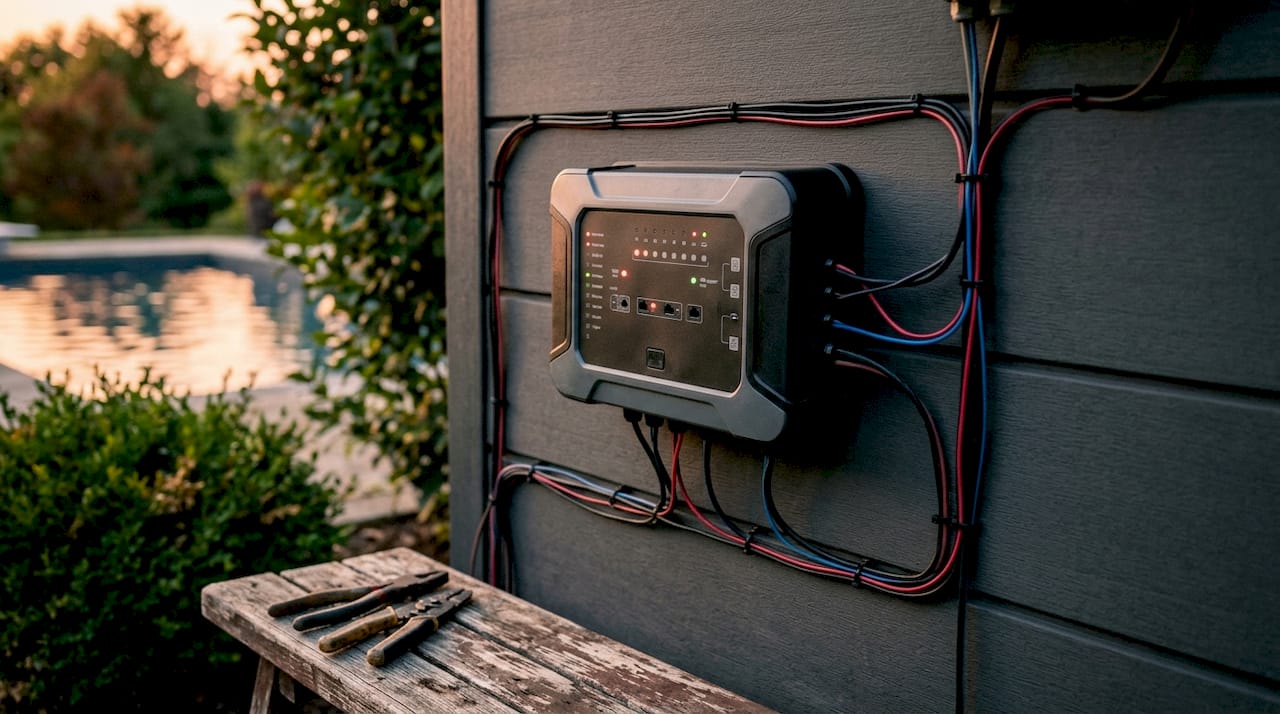
Most systems also integrate sensors. Flow sensors confirm water is moving before the heater fires. Temperature sensors keep your spa at the exact degree you set. ORP sensors measure chlorine levels and trigger chemical feeders automatically. Pool automation systems typically include control over pumps, heaters, lights, valves, water features, and chemical feeders, and many now connect to smart home platforms like Amazon Alexa or Google Home.
The interface you use daily is either a wall-mounted touchscreen panel or a smartphone app. Both let you set schedules, run equipment on demand, and receive alerts when something goes wrong. Scheduling is where most homeowners see the biggest daily payoff. You set the pump to run during off-peak electricity hours and the heater to warm the spa 30 minutes before you get home.
Key features most systems include:
- Pump scheduling and variable-speed pump control
- Heater and spa temperature management
- Color LED lighting control and scene programming
- Automated chemical dosing via ORP and pH sensors
- Valve control for water features and spa jets
- Remote access through smartphone apps
- Equipment fault alerts and diagnostic notifications
Pro Tip: Set your pump schedule to run during off-peak electricity hours, typically late night or early morning. Combined with a variable-speed pump, this single change can produce meaningful savings on your monthly utility bill.
What are the key benefits of pool automation for homeowners?
The most direct benefit of pool automation is time. Homeowners shift from active pool management to a passive maintenance model once remote access and scheduling are in place. You check your pool’s status from your phone instead of walking outside to inspect equipment. That shift adds up to hours saved each month.
Energy savings are the second major benefit, and they are significant. Variable-speed pumps controlled by automation can reduce energy use up to 70% compared to single-speed pumps running at full power all day. The automation system coordinates pump speed dynamically, running low speeds for routine filtration and higher speeds only when spa jets or water features are active.
- Time savings. Scheduling eliminates manual on/off routines for every device.
- Energy cost reduction. Variable-speed pump control cuts electricity consumption significantly.
- Consistent water chemistry. Automated dosing maintains chlorine and pH within target ranges daily.
- Equipment protection. Remote monitoring and alerts catch faults early, preventing costly damage before it escalates.
- Better pool enjoyment. You control lighting scenes and spa temperature from your phone before you step outside.
“Pool automation should be considered an investment in efficiency that delivers long-term savings on energy and chemical costs.” — Larry’s Pool
Automated chemical dosing is one feature homeowners underestimate until they experience it. The system measures ORP and pH continuously and doses accordingly. Your water stays balanced without daily manual testing. The caveat is that automation handles the routine work, but a weekly manual check remains necessary for parameters sensors cannot read.
How do pool automation systems compare across types and brands?
Pool automation options range from basic single-function controllers to full systems that integrate every piece of equipment on your pad. Understanding where a product sits on that range helps you avoid paying for features you will never use, or buying a system that cannot grow with your pool.
Brand and system comparison:
| Brand and System | Best For | Automation Level | Smart Home Integration |
|---|---|---|---|
| Hayward AquaPlus | Entry-level retrofits | Pump, light, basic scheduling | Limited |
| Pentair EasyTouch | Mid-range new builds | Full equipment control | Yes, via app |
| Pentair IntelliCenter | Premium full automation | All devices plus chemical | Yes, advanced |
| Jandy AquaLink | New and retrofit installs | Full equipment control | Yes, via iAquaLink |
Entry-level controllers like Hayward AquaPlus handle pump and light scheduling at a lower cost. They suit homeowners who want basic convenience without full integration. Premium systems like Pentair IntelliCenter and Jandy AquaLink go further, supporting chemical automation, multi-speed pump coordination, and full smart home connectivity.
Retrofitting an existing pool is possible with most brands, but the complexity depends on your current equipment. Older pools with limited electrical panel space require more labor to add relay banks and new conduit runs. New builds are wired for automation from the start, which keeps installation costs lower and gives you more flexibility on system choice.
Compatibility factors to check before buying:
- Whether your existing pump is variable-speed or single-speed
- The number of devices you want to control
- Your electrical panel’s available capacity
- Whether you want smart home integration now or later
Pro Tip: If you are retrofitting, ask your installer to assess your equipment pad’s electrical panel before selecting a system. Choosing a controller that exceeds your panel’s capacity adds unexpected labor costs to the project.
What does pool automation installation cost, and what should you expect?
A complete pool automation system costs between $1,200 and $4,500 installed depending on feature complexity and the number of devices integrated. Entry-level systems like Hayward AquaPlus sit near the lower end of that range. Premium systems like Pentair IntelliCenter with full chemical automation and smart home integration sit at the higher end.
| System Type | Approximate Installed Cost | Devices Supported |
|---|---|---|
| Entry-level controller | $1,200–$1,800 | 2–4 devices |
| Mid-range full system | $2,000–$3,200 | 4–6 devices |
| Premium full automation | $3,500–$4,500+ | 6–8+ devices |
New builds are the most cost-effective time to add automation. Wiring runs during construction before concrete is poured, which eliminates the labor of retrofitting conduit later. For existing pools, retrofitting older pools can be more expensive due to limited electrical panel space and the need to add relay banks and new conduit runs.
Controllers support pools ranging from 5,000 to 40,000 gallons, so pool size rarely limits your options. What matters more is the number of devices you want to control and whether your equipment pad has room for the new controller enclosure. A professional consultation before purchase prevents mismatches between system capacity and your actual setup.
The long-term math favors automation for most homeowners. Energy savings from variable-speed pump scheduling, reduced chemical waste from automated dosing, and fewer emergency service calls from early fault detection all offset the upfront cost over time. Treat it as infrastructure, not an accessory.
How to get the most from your pool automation system
Pairing automation with a variable-speed pump is the single highest-return decision you can make. The automation system controls pump speed dynamically, running slow for filtration and fast for spa jets or cleaning cycles. Without a variable-speed pump, you lose most of the energy savings the system is designed to deliver.
Automated chemical dosing is powerful, but it does not replace all manual testing. Automated ORP dosing requires weekly manual water testing to calibrate sensors and check parameters like Cyanuric Acid and Total Dissolved Solids that sensors cannot measure. Skipping manual tests while relying entirely on automation leads to water chemistry problems that are expensive to correct.
Best practices for daily and weekly use:
- Schedule pump runs during off-peak electricity hours every day
- Review your app’s alert history weekly, not just when something breaks
- Test water manually once a week even with automated dosing active
- Keep sensor probes clean and calibrated on the manufacturer’s schedule
- Avoid programming rarely used features that add complexity without benefit
Pro Tip: Start with the features you will actually use daily: pump scheduling, heater control, and lighting. Add chemical automation and advanced integrations after you are comfortable with the basics. A simpler setup you use consistently beats a complex one you ignore.
Monitoring your system’s alerts is where many homeowners leave value on the table. The alert system notifies you of low flow, heater faults, and chemical imbalances before they cause equipment damage. Responding to alerts promptly is the difference between a $50 sensor replacement and a $2,000 pump repair. Check your pool maintenance workflow regularly to keep automation working as intended.
Key Takeaways
Pool automation systems deliver the greatest value when paired with variable-speed pumps, consistent sensor maintenance, and scheduled pump runs during off-peak electricity hours.
| Point | Details |
|---|---|
| Core function | A central controller manages pumps, heaters, lights, and valves from one app or panel. |
| Energy savings | Variable-speed pumps controlled by automation can cut energy use up to 70%. |
| Cost range | Installed systems run from $1,200 for entry-level to $4,500+ for full premium automation. |
| Manual testing still required | Automated dosing cannot measure Cyanuric Acid or TDS, so weekly manual water tests remain necessary. |
| Best time to install | New pool construction is the most cost-effective point to add automation wiring. |
What I have learned after years of watching homeowners use pool automation
Most homeowners who hesitate on pool automation are worried about complexity. They picture a system with dozens of settings they will never understand. That concern is real, but it is also the wrong frame. The best automation setups are the ones that disappear into the background. You set your schedules once, you get alerts when something needs attention, and the pool is ready when you want it.
The brand debate matters less than most people think. Jandy AquaLink, Pentair EasyTouch, and Hayward AquaPlus all do the core job well. What actually determines your experience is whether the system was sized correctly for your equipment and installed by someone who knows pool electrical work. A premium controller installed carelessly will frustrate you. A mid-range system installed correctly will feel effortless.
The one thing I would tell every homeowner considering automation: get a professional assessment of your equipment pad before you pick a system. The electrical panel space, your existing pump type, and the number of devices you want to control all shape which system fits your situation. Skipping that step is how people end up with a controller that cannot handle their setup or a retrofit that costs twice what it should. Automation is a genuine quality-of-life upgrade. It just works best when it is matched to your pool from the start.
— Randrswimmingpools
Pool automation installation with Randrswimmingpools
Randrswimmingpools has been building and installing custom inground pools across Central Florida since 1985. That experience extends to pool automation, where matching the right system to your equipment pad and pool size makes the difference between a setup that runs itself and one that creates headaches.
Whether you are planning a new build or retrofitting an existing pool, Randrswimmingpools guides you through system selection, electrical requirements, and installation. The team works with leading automation brands and helps you choose the features that fit your lifestyle, not just the most expensive option on the shelf. Start with a custom pool installation consultation to see how automation fits your project, or review the inground pool installation guide to understand the full build process before your first conversation.
FAQ
What is a pool automation system?
A pool automation system is a centralized controller that manages pool equipment including pumps, heaters, lights, and valves from a single smartphone app or touchscreen panel. It replaces manual switches and timers with scheduled and remote control.
What does pool automation cost to install?
Installed pool automation systems range from approximately $1,200 for entry-level controllers to $4,500 or more for premium full-integration systems. The final cost depends on the number of devices, system brand, and whether the pool is a new build or a retrofit.
Can I add automation to my existing pool?
Yes, most major brands including Jandy AquaLink and Pentair EasyTouch offer retrofit-compatible controllers. Older pools may require additional electrical work due to limited panel space, which increases labor costs.
Do automated chemical systems replace manual water testing?
No. Automated ORP and pH dosing handles routine chemical balance, but parameters like Cyanuric Acid and Total Dissolved Solids require weekly manual testing because sensors cannot measure them accurately.
How much energy can pool automation save?
Variable-speed pumps controlled by an automation system can reduce energy use up to 70% compared to single-speed pumps running at constant full power. The savings come from running the pump at low speed for filtration and high speed only when needed.