
TL;DR:
- Pool finish color choices significantly influence water appearance, surface longevity, and maintenance needs. Pebble finishes offer the widest color palette and longest lifespan, while plaster is more affordable but fades faster. Real-world environment greatly alters the final pool color, making it essential to view actual filled pools before selection.
Pool finish color options are the single biggest factor determining how your pool water looks, how long your surface lasts, and how much maintenance you face every season. In Central Florida, where intense UV exposure and year-round swim seasons push every surface to its limit, the choice between plaster, quartz, and pebble finishes carries real consequences. The right swimming pool finish color transforms a basic backyard pool into a resort-style retreat. The wrong one fades within a few years and costs you thousands in early resurfacing. This guide breaks down every major option so you can choose with confidence.
1. What are the most popular pool finish color options?
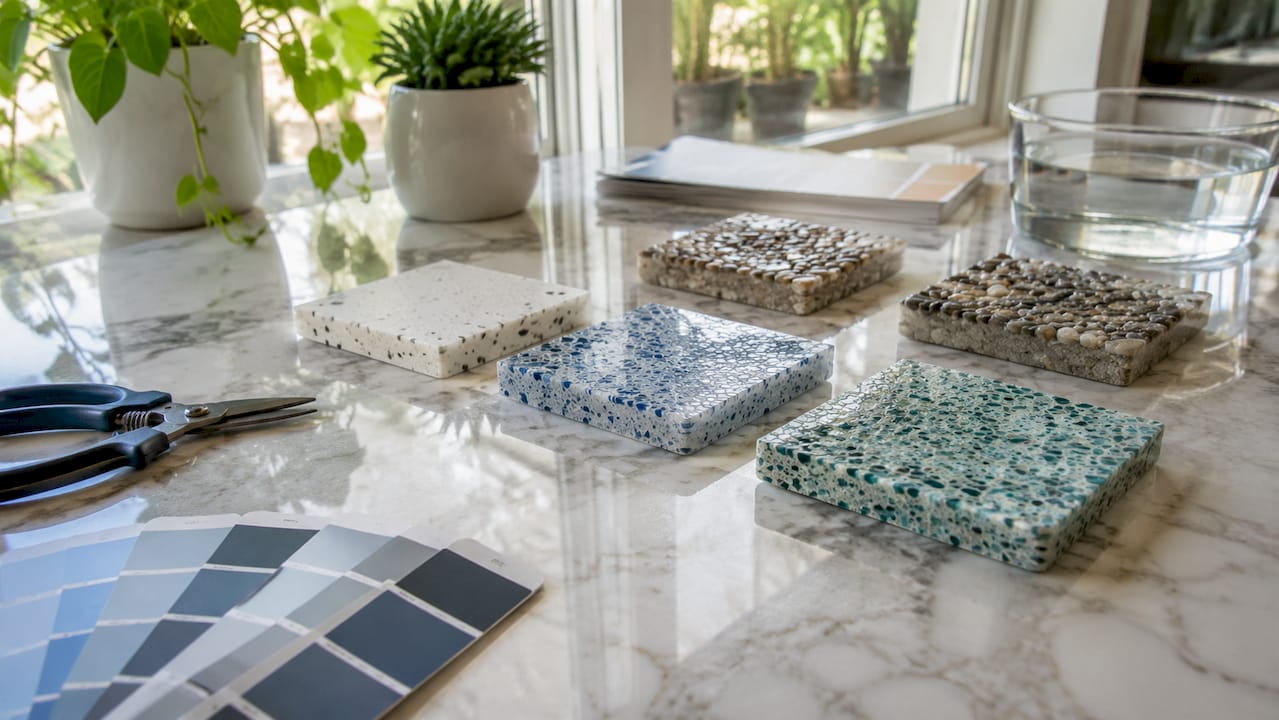
Pool finishes fall into three main categories: plaster, quartz aggregate, and pebble aggregate. Each category offers a distinct range of pool surface colors, durability levels, and price points.
Plaster finishes are the most affordable entry point. Standard white plaster is the classic choice, but manufacturers now offer gray, blue, and black tints. The color range is limited compared to other finish types, and pigments tend to fade faster under Florida’s sun.
Quartz aggregate finishes blend white cement with quartz crystals and pigment. Brands like SGM and Diamond Brite offer dozens of shades, from soft aqua to deep charcoal. The quartz crystals add texture and help lock in color longer than plain plaster.
Pebble finishes use natural river pebbles, glass beads, or crushed quartz set in cement. Brands like PebbleTec and Pebble Sheen offer the widest color palette and the longest lifespan. Pebble finishes are the industry gold standard for durability, staining resistance, and long-term color stability.
- Plaster: White, gray, blue, black tints. Lifespan 7–10 years. Cost $6,000–$8,500 per standard pool.
- Quartz: Aqua, turquoise, tan, charcoal, and more. Lifespan 12–20 years. Cost $8,500–$13,000.
- Pebble: Broadest palette including earth tones, blues, and blends. Lifespan 20+ years. Cost $10,000–$18,000+.
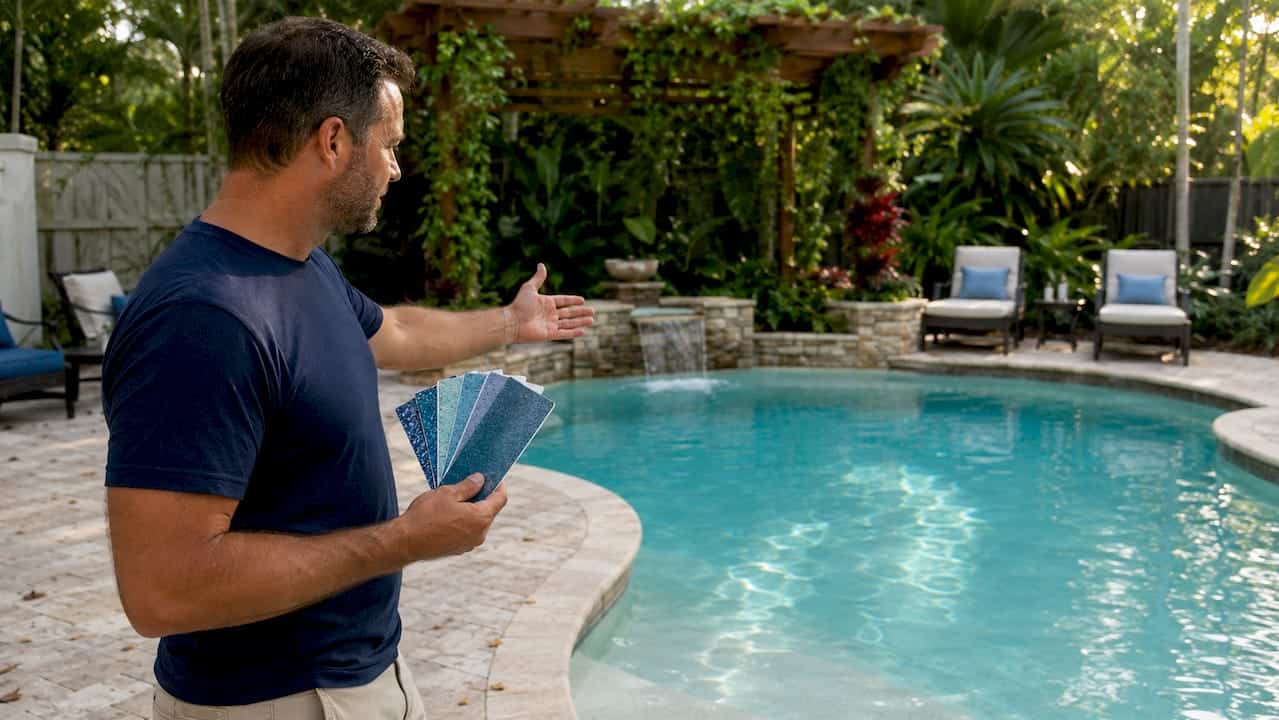
Pro Tip: Never choose a finish based solely on the dry color chip. Ask your contractor to show you a filled reference pool with the same finish so you see the actual water color effect.
2. How does pool finish color affect water appearance?
Interior pool finish colors directly dictate perceived water color. White and light finishes reflect nearly all incoming light, producing that bright Caribbean blue effect you see in resort pools. Dark gray or charcoal finishes absorb longer wavelengths, shifting the water toward deep teal or lagoon green.
Light blue finishes produce the classic blue water tone most homeowners picture. Aqua and turquoise finishes push the water toward a vibrant tropical look. Gray finishes create a sophisticated, reflective surface that reads almost black in deep areas.
| Finish color | Typical water appearance |
|---|---|
| White plaster | Bright Caribbean blue |
| Light blue | Classic pool blue |
| Aqua or turquoise | Tropical, vibrant teal |
| Gray or charcoal | Deep lagoon, reflective |
| Black or dark blue | Near-black, mirror-like |
Light blue and Caribbean tones remain the most popular choices in residential pools for their refreshing, vibrant water appearance. That popularity makes sense in Central Florida, where bright water complements the sunshine and lush landscaping.
Pro Tip: Water depth changes everything. A light blue finish looks soft and pale in a 3-foot shelf but turns a rich cobalt in an 8-foot deep end. Ask your contractor how depth will shift your chosen color.
3. Why the environment around your pool changes the color you see
Real-world color appearance changes with water depth, landscaping, sunlight, and sky reflection. A finish that looks perfect on a sample board may look completely different once your pool is filled and surrounded by your yard. This is one of the most common surprises homeowners face.
In Central Florida, afternoon sun hits pools at a steep angle for most of the year. That direct light intensifies lighter finishes and makes dark finishes shimmer. Pools surrounded by green tropical landscaping reflect green tones into the water, which can shift a gray finish toward olive.
Sky color matters too. On overcast days, even a bright white finish produces muted, gray-toned water. On clear blue days, the same finish glows. Sample boards rarely match the final filled pool color because they cannot replicate these environmental variables.
The practical takeaway: visit real pools in your neighborhood or ask Randrswimmingpools to show you completed projects with the finish you are considering. Seeing a filled pool in a similar yard setting is the only reliable way to preview your result.
4. Light vs dark pool finishes: which is right for you?
Light finishes and dark finishes each have a strong case, and the right choice depends on your priorities. Light finishes produce bright, inviting water and make the pool floor easy to see. Dark finishes create a dramatic, resort-style look that photographs beautifully.
Dark finishes can show mineral deposits more easily and may reduce pool floor visibility, which is a real safety consideration for families with young children. If your pool has a deep end, a dark finish makes it harder to spot a child on the bottom. That is not a reason to avoid dark finishes entirely, but it is a factor worth weighing carefully.
Light finishes face their own challenges. White plaster stains more visibly from algae, iron, and copper. A single algae bloom can leave permanent gray patches on a white surface. Quartz and pebble finishes in lighter shades handle staining better than plain plaster because the aggregate texture hides minor discoloration.
For families with young children, a medium-tone finish such as light gray or soft aqua offers a good middle ground. You get visual interest and a beautiful water color without sacrificing floor visibility.
5. What maintenance and durability trade-offs should Central Florida homeowners consider?
Plaster resurfacing occurs roughly three times more often than pebble finish resurfacing, which means the lower upfront cost of plaster does not always translate to lower long-term spending. In Central Florida’s climate, UV exposure and heavy chemical demand from year-round use accelerate finish wear on all surfaces.
Pebble finishes have superior fade resistance compared to plaster because natural mineral pigments in pebble aggregate hold color far better than synthetic dyes in plaster. Quartz finishes sit in the middle: better fade resistance than plaster, but not quite as stable as pebble over a 15-year period.
Maintenance needs also differ by finish color. Darker pools require more specialized care to manage scale and mineral deposits, while lighter pools face greater staining challenges from algae and metals. Neither is maintenance-free, but the type of maintenance differs.
Key maintenance tips by finish type:
- White or light plaster: Test water chemistry weekly. Address algae immediately to prevent staining. Expect resurfacing every 7–10 years.
- Quartz finishes: Brush weekly to prevent calcium buildup in the aggregate texture. Resurfacing typically needed every 12–20 years.
- Pebble finishes: Acid washing every few years removes scale. The pool resurfacing timeline extends to 20+ years with proper care.
- Dark finishes of any type: Use a sequestering agent monthly to prevent metal staining. Brush regularly to keep mineral deposits from building up.
6. How to choose the best pool color combinations for your backyard style
Your pool finish color should connect to your overall backyard design. A mismatch between pool color and landscaping creates a jarring visual effect that no amount of furniture or lighting can fully fix.
| Backyard style | Recommended finish color | Why it works |
|---|---|---|
| Modern/minimalist | Charcoal or dark gray | Creates a sleek, reflective surface |
| Tropical/resort | Aqua or Caribbean blue | Matches lush greenery and bright sun |
| Traditional | Classic white or light blue | Timeless, bright, and family-friendly |
| Natural/lagoon | Earth-tone pebble blends | Mimics natural water bodies |
| Luxury/upscale | Glass bead or dark pebble | Adds depth and premium visual texture |
Budget-conscious homeowners planning to sell within five years often choose white or light blue plaster. The lower upfront cost makes sense when you will not be around to benefit from a 20-year pebble finish. Long-term homeowners get better value from premium pool finishes in quartz or pebble, where the reduced resurfacing frequency pays back the higher initial investment.
Families with children benefit from lighter finishes that keep the pool floor visible. Homeowners focused on aesthetics and willing to invest in maintenance can go darker for a dramatic effect. Randrswimmingpools has been helping Central Florida homeowners match finish colors to their specific backyard goals since 1985, and the team can walk you through real examples from completed local projects.
Key takeaways
The best pool finish color options balance water appearance, durability, and maintenance demands specific to Central Florida’s climate and your personal ownership timeline.
| Point | Details |
|---|---|
| Finish type drives color range | Pebble offers the widest palette; plaster offers the narrowest and fades fastest. |
| Light finishes brighten water | White and light blue produce Caribbean blue tones and keep the pool floor visible. |
| Dark finishes need more upkeep | Charcoal and black finishes show mineral deposits faster and reduce floor visibility. |
| Lifespan affects total cost | Pebble lasts 20+ years; plaster needs resurfacing every 7–10 years at significant cost. |
| Environment changes color perception | Always view a filled reference pool before committing to any finish color. |
What I have learned after decades of Central Florida pool projects
Color trends in Florida shift, but the homeowners who end up happiest are almost never the ones who chased the most dramatic look. They are the ones who matched their finish to how they actually use their pool.
The biggest mistake I see is choosing a finish color from a dry sample chip under fluorescent lighting in a showroom. That chip tells you almost nothing about how your pool will look on a Tuesday afternoon in july when the sun is high and your bougainvillea is casting pink reflections across the water. The environment owns the final result more than the finish chip does.
Dark finishes have surged in popularity across Central Florida over the past several years, and I understand why. They look incredible in photos and create a genuine resort atmosphere. But I have watched homeowners with young kids realize too late that they cannot see the bottom of their pool clearly. That is a safety issue, not just an aesthetic preference.
My honest recommendation: if you are building or renovating and plan to stay in your home for more than a decade, invest in a pebble finish. The pool material durability advantage over plaster is not marginal. It is substantial. You will spend less on resurfacing, deal with fewer staining problems, and enjoy a finish that still looks good in year 15. The upfront cost difference pays for itself.
— Randrswimmingpools
How Randrswimmingpools helps you choose the right finish
R and R Swimming Pools has designed and installed custom inground pools across Central Florida since 1985, and finish selection is one of the most personal decisions in the entire build process.
The team at Randrswimmingpools walks every homeowner through real completed projects so you see actual water colors in real backyards, not dry sample chips. Whether you are building a new pool or planning a renovation, the inground pool installation guide covers finish selection as part of a complete step-by-step process. Randrswimmingpools offers free consultations to help you match your finish color to your backyard style, budget, and long-term ownership goals. Contact the team to schedule yours and see what the right finish can do for your backyard.
FAQ
What pool finish color makes water look the bluest?
White plaster and light blue finishes produce the brightest Caribbean blue water appearance. Light surfaces reflect more sunlight, which intensifies the blue tone of the water.
How long do pool finish colors last before fading?
Plaster finishes typically show fading within 7–10 years. Quartz finishes hold color for 12–20 years, and pebble finishes with natural mineral pigments maintain color stability for 20 or more years.
Are dark pool finishes harder to maintain?
Yes. Dark finishes show mineral deposits and scale more visibly than light finishes, requiring more frequent brushing and monthly use of a sequestering agent to prevent buildup.
Can I see what my pool color will look like before committing?
Sample boards rarely match the final filled pool color due to water depth, sunlight, and landscaping effects. Viewing a completed pool with the same finish in a similar setting gives you the most accurate preview.
What is the best pool finish for a family with young children?
Light or medium-tone finishes such as white, light blue, or soft aqua are the best choices for families. They keep the pool floor clearly visible, which is a key safety factor for pools with young swimmers.
