TL;DR:
- Pools provide essential health benefits, social connections, and property value enhancement in 55+ communities. Proper accessibility, programming, and maintenance are critical to maximizing these advantages and ensuring safety. Well-run community pools foster lifelong activity, belonging, and improved quality of life for older residents.
Pools are the single most versatile amenity in any active adult or 55+ community. They deliver low-impact cardiovascular exercise, daily social contact, and measurable property appeal — all in one facility. If you’re evaluating a community or already living in one, understanding how a pool actually functions changes what you look for on a tour.
- Health: Water’s buoyancy reduces joint loading by 50–90%, making aquatic exercise accessible to people who can’t tolerate land-based workouts. Research shows measurable gains in balance, lower-limb strength, and cardiovascular function when residents swim or do water aerobics regularly.
- Social life: Pool classes and casual poolside routines consistently become the social anchor of a community. Regular group participation reduces loneliness and depressive symptoms among older adults.
- Buyer considerations: Accessibility features (ADA lifts, graduated entry, non-slip decking), HOA reserve funding for maintenance, and the quality of programming matter far more than pool size alone.
Table of Contents
- How pools in active adult communities support health and fitness
- How a pool builds social connection and daily routine
- Accessibility and safety features that actually matter for older adults
- Indoor vs. outdoor pools: what communities actually choose and why
- What good pool programming looks like in a 55+ community
- HOA costs, maintenance, and what communities actually spend
- How a pool affects community desirability and resale value
- How to evaluate a community’s pool when choosing a 55+ community
- What the research says about aquatic benefits for older adults
- Sustainability and energy efficiency in community pools
- Key Takeaways
- What living with a great community pool actually feels like
- Thinking about adding or upgrading a pool in Central Florida?
- Useful sources and further reading
How pools in active adult communities support health and fitness
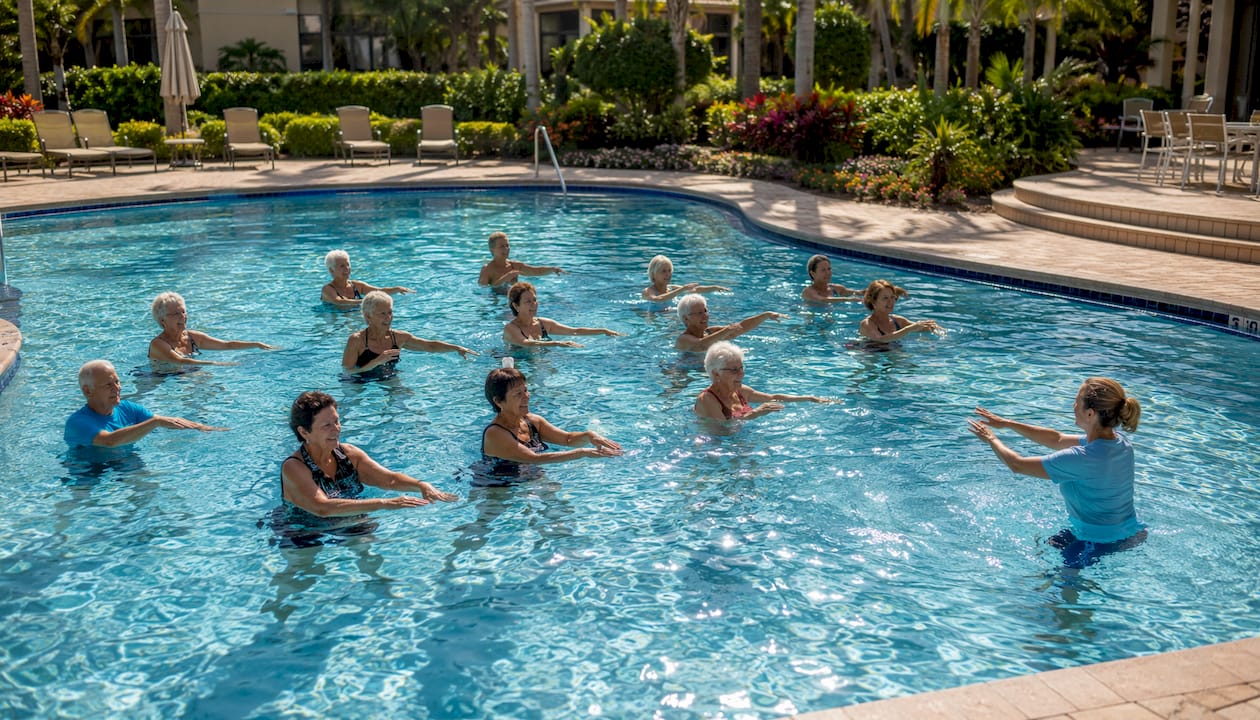
Water is a uniquely forgiving training environment. The buoyancy effect reduces joint loading by 50–90% compared with land exercise, which is why aquatic workouts remain accessible to residents managing arthritis, osteoporosis, or post-surgical recovery. The Cleveland Clinic lists aquatic therapy as a safe, low-impact option that temporarily relieves pain, stiffness, and swelling in chronic musculoskeletal conditions.
The benefits go well beyond pain relief:
- Cardiovascular conditioning: Regular pool sessions improve aerobic capacity and resting heart rate in older adults, with effects comparable to moderate land-based cardio.
- Strength and body composition: A 2025 systematic review of 19 RCTs (866 participants) found aquatic exercise improves lower-limb strength, flexibility, mobility, and some lipid measures in older adults.
- Balance and fall-risk reduction: A meta-analysis of 23 RCTs (1,179 participants) showed significant improvements in static and dynamic balance — one of the most clinically meaningful outcomes for fall prevention.
- Sleep quality: Regular moderate exercise, including swimming, is associated with better sleep onset and duration in older adults, according to the American Academy of Sleep Medicine.
- Cognitive and mood benefits: U.S. Masters Swimming cites swimming’s brain health benefits, including stress reduction and mood stabilization. Research on Masters swimmers describes the experience as “comforting and calming” with a “meditative effect” that wipes away daily anxiety.
Dose matters. The same meta-analysis found a clear dose-response relationship: more than two sessions per week and programs lasting more than 12 weeks produced the largest improvements in balance, strength, and cardiovascular markers. Practitioners recommend targeting multiple sessions per week, of moderate duration, at moderate-to-high intensity.
Pro Tip: When touring a community, ask to see the class schedule and note whether sessions run at least twice a week. A community offering only one weekly water aerobics class will likely not produce the functional gains the research supports. Ask the instructor whether they use the Borg RPE scale (a rating of 10–12 on the 20-point scale corresponds to moderate-high intensity) — it’s a quick signal that programming is evidence-informed rather than recreational.
How a pool builds social connection and daily routine
The health benefits are well-documented, but the social role of a community pool is what keeps residents showing up. Gerontology researchers at the University of Alaska Anchorage Healthy Aging Lab note that pools reduce the psychological barrier many older adults feel toward exercise, and that the social bonds formed around pool activities are frequently the main driver of regular attendance.
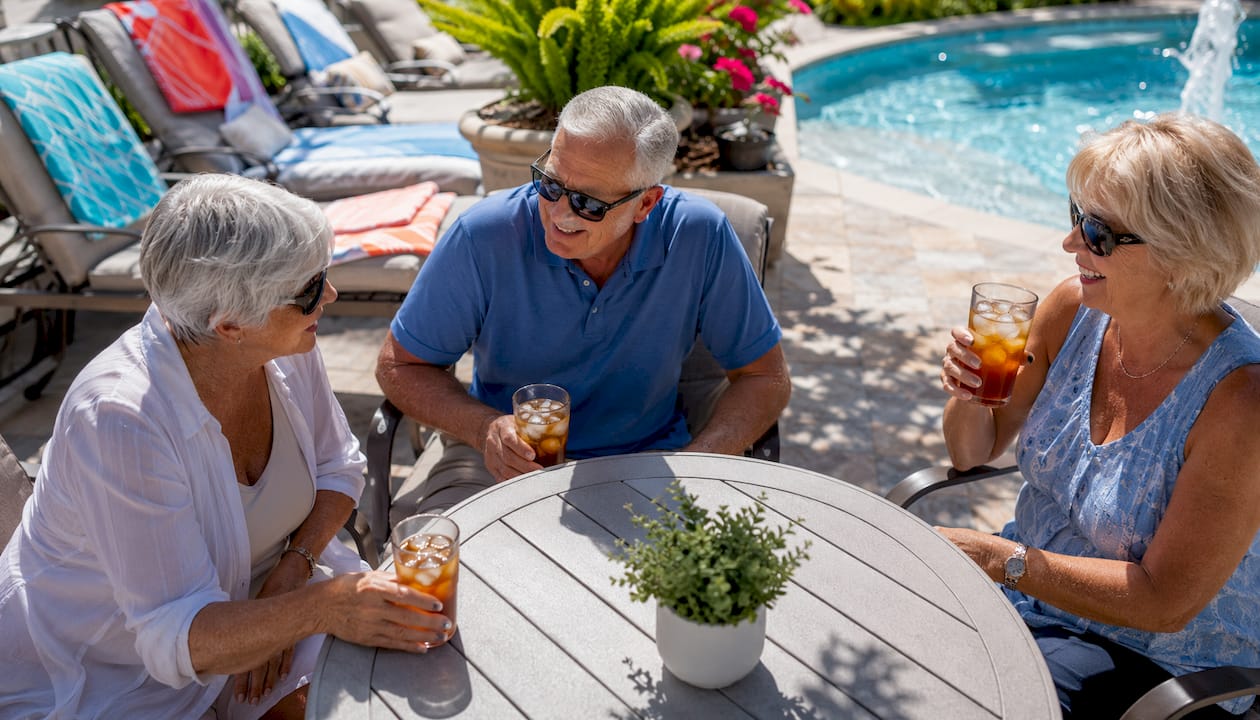
A water aerobics class at 9 AM becomes more than exercise. It becomes the reason two neighbors grab coffee afterward, the place where a new resident meets her first friend, and the routine that makes Tuesday feel different from Monday. A Business Insider feature on water aerobics described exactly this dynamic: the class became a social anchor that changed the author’s entire relationship with fitness and aging.
Common social outcomes in communities with active pool programming include:
- Informal friendship networks that extend to other amenities (dining, walking clubs, game nights)
- Volunteer-led aquatic clubs (Masters swim groups, water polo, aquatic Tai Chi)
- Intergenerational events when grandchildren visit
- Consistent daily routines that reduce the isolation risk that spikes after retirement
A PMC study on community regeneration found that well-maintained aquatic facilities improve perceptions of neighborhood quality and reduce isolation among older residents. The pool isn’t just exercise equipment. It’s infrastructure for community life.
Accessibility and safety features that actually matter for older adults
A pool that isn’t genuinely accessible isn’t an amenity — it’s a liability. When evaluating any 55+ community, look past the aesthetics and check for these specific features:
- ADA-compliant pool lift or ramp: Required by law for public pools under the Americans with Disabilities Act. Confirm the lift is operational, not just present.
- Graduated entry (beach entry or steps with handrails): Allows residents with balance issues or joint pain to enter without jumping or climbing a ladder.
- Non-slip decking: Textured concrete, rubberized surfaces, or pavers with adequate grip. Smooth tile around a wet pool deck is a fall waiting to happen.
- Shallow therapy zone: A dedicated area at 3–3.5 feet allows standing exercises, hydrotherapy, and low-confidence swimmers to participate safely.
- Accessible restrooms and changing areas: Wide doorways, grab bars, and roll-in showers are non-negotiable for residents with mobility aids.
- Adequate lighting: Evening and early-morning use requires well-lit decks, entry points, and pathways.
- Clear sightlines: No blind corners or obstructions that prevent staff or lifeguards from seeing the full pool area.
On the policy side, ask specifically about:
- Adult-swim scheduling: Dedicated adult-only swim times protect older residents from crowded recreational sessions.
- Lifeguard or supervision policy: Some communities use certified lifeguards; others rely on a “swim at your own risk” model. Know which one you’re getting.
- Emergency response plan: Is there an AED on deck? Are staff trained in CPR? What’s the protocol for a medical event in the water?
- Water temperature: Therapy users and arthritis patients typically need water at 86–92°F. A pool maintained at 78°F for lap swimmers may not serve therapy needs.
For immunocompromised residents or those with skin sensitivities, ask about the chemical management approach. Saltwater chlorination systems maintain more stable chlorine levels with less chemical fluctuation than traditional tablet systems.
Pro Tip: Walk the pool deck yourself during a tour. Look for wet areas without grip texture, check whether the lift has a posted weight capacity and a working battery, and note whether the signage (depth markers, no-diving warnings) is clearly visible. These details reveal how seriously a community takes day-to-day safety management.
For communities considering ADA-compliant pool design, retrofitting an existing pool with proper lifts, handrails, and graduated entry is often more straightforward than residents assume.
Indoor vs. outdoor pools: what communities actually choose and why
Most 55+ communities in the U.S. choose based on climate first, budget second. The trade-offs are real on both sides.
Outdoor pools cost less to build and operate, offer natural light and fresh air (both linked to mood and health benefits), and create the resort-style atmosphere that many buyers are specifically looking for. The downside is seasonality. In northern states, an outdoor pool may be usable only five or six months a year, which limits programming continuity and the social routines that drive adherence.
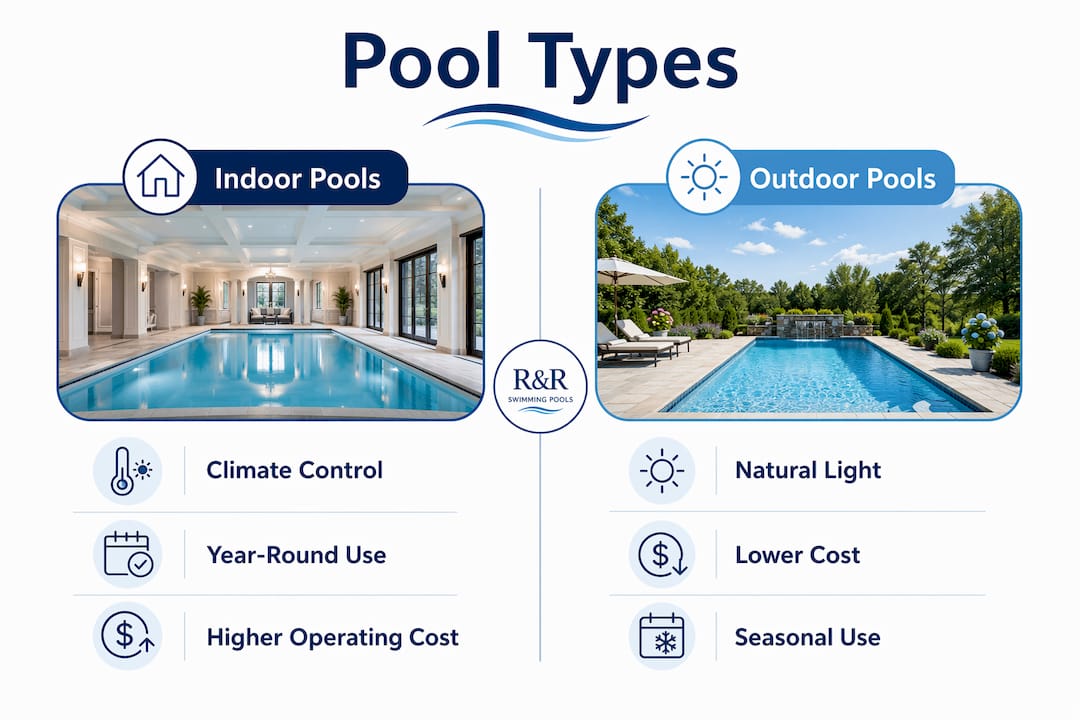
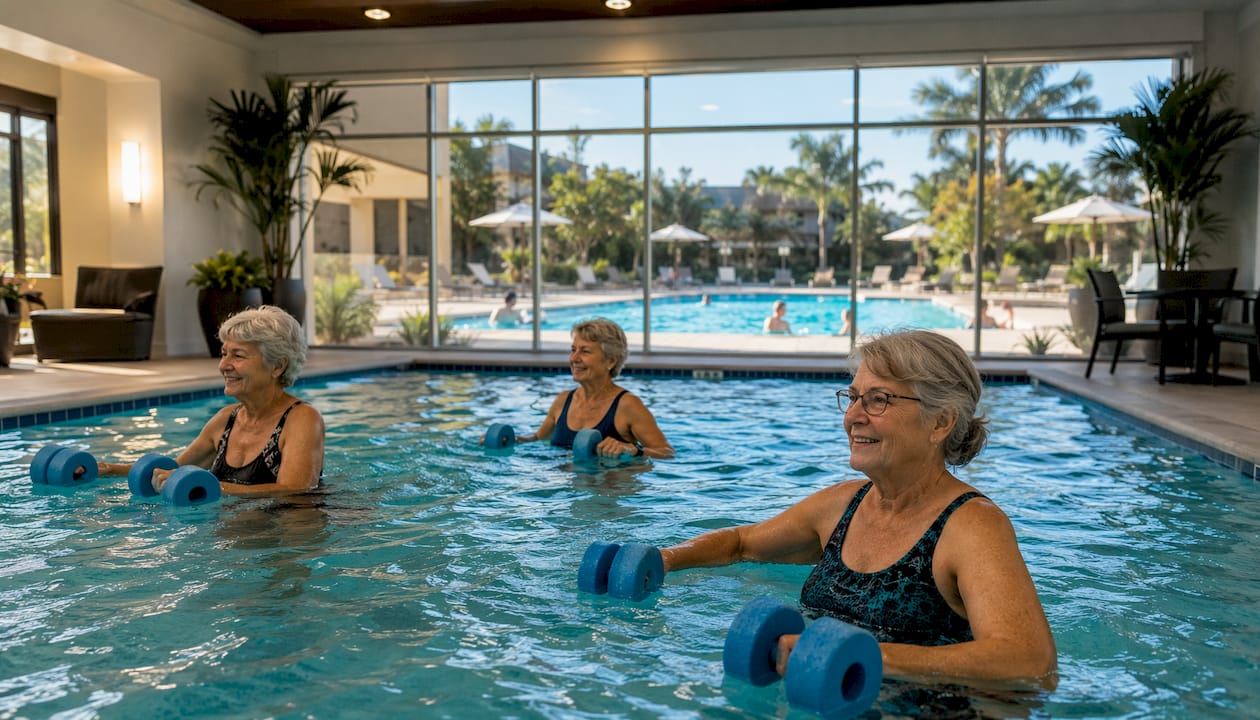
Indoor pools solve the seasonality problem and give climate-sensitive therapy users a controlled environment year-round. They’re easier to heat to therapeutic temperatures and eliminate UV exposure concerns. The trade-offs are higher construction cost, ongoing HVAC expenses, and the loss of the outdoor amenity feel that many active adults prefer.
Heated outdoor pools are the most common compromise in warm-weather markets. A gas or heat-pump system extends the usable season significantly without the full cost of an indoor enclosure.
Statistic: Masters swimmers in a PMC study cited cold water and outdoor darkness as the primary physical environment barriers to consistent participation — a finding that directly supports the case for heated pools or indoor alternatives in colder climates.
Pro Tip for Central Florida communities: Outdoor pools are the dominant choice here, and for good reason — the climate supports year-round use. The real design priorities shift to shade structures, UV protection, and hurricane-readiness. A well-placed pergola or shade sail over the deck, combined with a heat pump for the cooler months (December through February), gives residents comfortable year-round access. Proper drainage and pool covers rated for high-wind events are worth asking about specifically in Florida communities. Central Florida pool maintenance in a subtropical climate also means more frequent water chemistry checks due to heat and heavy rainfall.
What good pool programming looks like in a 55+ community
Programming is where the health research meets daily life. A pool with no structured programming is a lap lane that most residents will use occasionally and then forget. A pool with varied, well-scheduled programming becomes the center of community activity.
A sample weekly schedule that reflects evidence-based programming:
- Monday/Wednesday/Friday, 7–8 AM: Lap swim (open lanes, self-directed)
- Monday/Wednesday/Friday, 9–10 AM: Water aerobics (instructor-led, moderate intensity)
- Tuesday/Thursday, 9–10 AM: Aquatic Tai Chi or gentle mobility class
- Tuesday/Thursday, 3–4 PM: Open social swim / casual pool time
- Saturday, 10–11 AM: Higher-intensity water aerobics or interval class
- Weekly (rotating day): Therapy drop-in session, optionally with a physical therapist on-site
The research is clear that intensity should be a deliberate design choice. A randomized trial found high-intensity water aerobics produced larger improvements in fat mass, triglycerides, and strength markers compared with moderate-intensity sessions. That doesn’t mean every class should be high-intensity — it means the schedule should offer both, so residents can progress.
When evaluating a community’s programming, look for:
- At least two structured group classes per week (the minimum dose for measurable functional gains)
- A mix of intensity levels so beginners and more advanced participants both have appropriate options
- Dedicated therapy or gentle-movement sessions separate from fitness classes
- Consistent scheduling (same days and times each week) to support habit formation
On staff qualifications: Ask whether instructors hold a Water Safety Instructor (WSI) certification from the American Red Cross, an Aquatic Fitness Professional (AFP) credential from the Aquatic Exercise Association, or a similar recognized certification. A community that can’t answer that question clearly is worth noting.
HOA costs, maintenance, and what communities actually spend
A pool is a significant operating expense, and HOA fees reflect that. Understanding the cost structure helps you evaluate whether a community is managing its pool responsibly or deferring maintenance that will eventually become a special assessment.
Recurring operating costs typically include:
- Chemical treatments (chlorine, pH balancers, algaecides)
- Heating (gas, heat pump, or solar — costs vary significantly by system type and climate)
- Utilities (electricity for pumps, filtration, lighting)
- Lifeguard or pool monitor staffing (if applicable)
- Routine cleaning and equipment inspection
Periodic capital costs include resurfacing (typically every 10–15 years for plaster, longer for pebble or tile finishes), mechanical upgrades (pump and filter replacement every 8–12 years), and ADA retrofit projects. A well-funded HOA maintains a capital reserve specifically for these items. Ask to see the reserve study — it’s a document that projects major expenses over a 20–30 year horizon and tells you whether the community is saving adequately.
Key figure: Pool resurfacing costs vary widely by surface material and pool size, but communities that defer resurfacing beyond the recommended cycle typically face significantly higher repair costs due to structural damage to the shell. Ask when the pool was last resurfaced and what the reserve balance is for the next cycle.
For a practical overview of pool maintenance workflow and what responsible upkeep looks like, the step-by-step breakdown is worth reviewing before an HOA meeting.
Insurance and liability are real line items. Community pools require commercial general liability coverage, and communities with lifeguards carry additional workers’ compensation costs. Ask the HOA manager what the community’s pool-related insurance costs annually — a reluctance to share that figure is a yellow flag.
| Maintenance Item | Typical Cycle | Questions to Ask |
|---|---|---|
| Plaster resurfacing | 10–15 years | When was the last resurface? What’s the reserve balance? |
| Pump/filter replacement | 8–12 years | Age of current equipment? Any recent repairs? |
| ADA lift inspection | Annual | Is the lift certified and operational? |
| Water chemistry testing | Daily/weekly | Who performs it? Are logs available? |
| Deck reseal/repair | 3–5 years | Any cracking or trip hazards noted in last inspection? |
How a pool affects community desirability and resale value
A well-maintained, accessible pool is one of the strongest amenity signals a 55+ community can offer. Buyers in this demographic are specifically seeking communities where they can stay active without high-impact exercise, and a pool is the most direct answer to that need.
From a resale perspective, the pool’s condition and programming quality matter more than its size. A smaller pool with a strong water aerobics program, good accessibility features, and a well-funded HOA reserve is more attractive to informed buyers than a large pool with deferred maintenance and no programming. Pool maintenance’s impact on home value is well-documented: neglected facilities actively reduce buyer interest and can complicate appraisals.
Features that tend to support resale appeal in active adult communities:
- ADA-compliant entry (lifts, ramps, graduated steps)
- Heated pool for year-round use
- Covered or shaded deck area
- Active programming with consistent class schedules
- Low per-unit HOA contribution relative to the facility’s condition
Features that can reduce appeal or raise buyer concerns:
- Visible surface deterioration (staining, cracking, rough plaster)
- No lifeguard or supervision policy in a community with frail residents
- High special assessment history related to pool repairs
- Outdated mechanical equipment with no documented replacement plan
Pro Tip: If you’re selling in a 55+ community, ask the HOA for a one-page summary of recent pool improvements and the current reserve balance. Buyers’ agents increasingly ask for this, and having it ready signals a well-managed community. If you’re buying, request the last two years of HOA meeting minutes — pool-related discussions (complaints, repair votes, deferred items) tell you more than any marketing brochure.
Broader home improvement upgrades, like interior door replacements, can complement a pool amenity when sellers are preparing a unit for market.
How to evaluate a community’s pool when choosing a 55+ community
Use this checklist on your tour. The questions are specific enough that vague answers are themselves informative.
- Safety and supervision: Is there a certified lifeguard on duty during all open hours, or is it self-supervised? What is the emergency response protocol, and is there an AED on deck?
- Accessibility: Is the pool lift ADA-compliant, operational, and recently inspected? Is there a graduated entry option (beach entry or steps with handrails)?
- Water temperature: What is the standard pool temperature? Is there a separate heated therapy area?
- Programming: How many structured classes run per week? What certifications do instructors hold? Has the schedule changed in the past year?
- Maintenance and condition: When was the pool last resurfaced? What is the current reserve balance for pool capital expenses? Has the community levied a special assessment for pool repairs in the past five years?
- Operating hours: What are the posted hours? Are there dedicated adult-swim times that limit recreational crowding?
- Chemical management: Is the pool chlorinated with a traditional or saltwater system? How often is water chemistry tested and logged?
- Staffing model: Is pool maintenance handled by in-house staff or a contracted service? Who is the point of contact for complaints or safety concerns?
- Insurance: What is the community’s liability coverage for the pool? Has there been a claim in the past three years?
- Recent inspection: Has the pool passed its most recent county health inspection? Ask to see the report.
Sample question phrasing for a tour: “Can you show me the most recent health inspection report for the pool, and tell me when the surface was last replaced?” A community manager who handles that question smoothly — with documents ready or a clear answer — is running a well-managed facility.
What the research says about aquatic benefits for older adults
The clinical case for aquatic exercise in 55+ communities is now supported by multiple high-quality meta-analyses, not just observational studies. Here’s what the strongest evidence actually shows:
“Aquatic exercise significantly improves static and dynamic balance, lower-limb strength, joint mobility, and cardiovascular function in older adults. Higher frequency (more than twice per week) and longer duration (more than 12 weeks) produce larger effects.”
— BMC Sports Science, Medicine and Rehabilitation, meta-analysis of 23 RCTs, 1,179 participants
The dose-response finding is the most practically useful result for community planners. It means a community offering only one weekly class is unlikely to deliver the full health benefit. Research supports that multiple sessions per week, sustained over several months, are needed for measurable functional gains.
| Outcome | Evidence Level | Minimum Effective Dose |
|---|---|---|
| Balance improvement | Meta-analysis (23 RCTs) | 2+ sessions/week, 12+ weeks |
| Lower-limb strength | Meta-analysis (19 RCTs) | 2–3 sessions/week |
| Cardiovascular markers | Multiple RCTs | Moderate-high intensity (Borg RPE 10–12) |
| Joint pain/stiffness relief | Cleveland Clinic clinical guidance | Ongoing; benefits are temporary without consistency |
| Social/mental health | Survey and interview studies | Regular group participation |
One nuance worth noting: aquatic exercise works primarily through an adherence advantage, not because water is inherently superior to land training. Residents stick with it longer because it’s less intimidating, more social, and gentler on joints. Program design, intensity, and consistency determine outcomes — the pool is the means, not the destination.
From a contractor perspective, the most common retrofit requests Randrswimmingpools sees in communities looking to upgrade their aquatic facilities include adding handrails at entry points, installing shallow therapy ledges, improving deck drainage and non-slip surfaces, adding shade structures, and upgrading to heat-pump heating systems for better temperature control and energy efficiency. These upgrades are typically less disruptive than a full renovation and can meaningfully improve both safety and programming capacity.
Sustainability and energy efficiency in community pools
A community pool is one of the largest energy consumers in any HOA’s operating budget. The good news is that the technology for reducing that footprint has improved significantly, and many upgrades pay for themselves within a few years.
Energy-efficient heating is the highest-impact area. Heat pump pool heaters use roughly 80% less energy than gas heaters to produce the same water temperature, according to the U.S. Department of Energy. Solar thermal systems are another option, particularly well-suited to Florida’s climate, though they require adequate roof or ground space and a backup system for cloudy periods.
Variable-speed pumps are now required by the Department of Energy for most new residential pool installations, and many communities are retrofitting older single-speed pumps. A variable-speed pump can reduce pump energy consumption by 50–75% compared with a single-speed model running at full capacity continuously.
Water conservation is increasingly relevant as drought conditions affect more U.S. regions. Automatic pool covers reduce evaporation by up to 95% when the pool is not in use, which is the single most effective water-saving measure available. Leak detection programs and regular equipment inspections prevent the slow losses that can add up to thousands of gallons per year without anyone noticing.
Eco-friendly materials in pool construction and renovation include recycled-content plaster aggregates, low-VOC deck coatings, and saltwater chlorination systems that reduce the need for transported chemical products. For communities planning a renovation, specifying these materials adds minimal cost and meaningfully reduces the facility’s environmental footprint.
LED lighting is a straightforward upgrade that reduces electricity consumption by roughly 75% compared with incandescent or halogen pool lights, with a lifespan measured in decades rather than years.
Key Takeaways
Pools in 55+ communities are health infrastructure, social infrastructure, and property value infrastructure — all three, simultaneously, when managed well.
| Point | Details |
|---|---|
| Dose determines health outcomes | Aquatic exercise needs 2+ sessions per week for 12+ weeks to produce measurable balance and strength gains. |
| Accessibility features are non-negotiable | ADA lifts, graduated entry, non-slip decking, and a shallow therapy zone separate a usable pool from a liability. |
| Programming quality drives adherence | Social group classes are the main reason residents show up consistently; varied intensity and scheduling matter. |
| HOA reserve funding signals management quality | Ask for the reserve study and the date of the last resurfacing before committing to a community. |
| Randrswimmingpools handles retrofits and new builds | For communities or homeowners in Central Florida considering pool upgrades, Randrswimmingpools has designed and installed custom pools since 1985. |
What living with a great community pool actually feels like
The research captures what happens in aggregate. What it doesn’t fully capture is the texture of daily life when a pool is genuinely well-run. You wake up knowing Tuesday means water aerobics at 9 AM, which means you’ll see the same three people you’ve been seeing every Tuesday for two years. You don’t think of it as exercise anymore. You think of it as Tuesday. The pool gave you a reason to get out of the house on a schedule, and the schedule gave you a social life you didn’t have to engineer. The design details mattered more than you expected: the handrail at the entry point that made you feel confident getting in, the shaded deck where you could sit afterward without baking, the water temperature that was warm enough to stay in for a full hour. Those specifics are worth asking about before you sign anything.
Thinking about adding or upgrading a pool in Central Florida?
If you’re a homeowner or community developer in Central Florida considering a new pool or a meaningful upgrade, the specifics matter: soil conditions, drainage, hurricane-rated equipment, heating options, and ADA features all require local expertise, not generic contractor advice.
R and R Swimming Pools has been designing and building custom inground pools across Central Florida since 1985. Whether you’re starting from scratch or retrofitting an existing pool with therapy ledges, better accessibility features, or energy-efficient heating, the team brings four decades of regional experience to every project. Financing options are available for qualified projects.
Questions to ask any pool contractor before signing:
- What soil testing do you perform before excavation, and how does drainage factor into your design?
- Are your pool structures and equipment rated for Florida wind-load requirements?
- What heating system do you recommend for year-round use in Central Florida, and why?
- Can you incorporate ADA-compliant features (lifts, graduated entry, handrails) into the design?
- What is your timeline from permit to water, and who handles the permit process?
To get a clear picture of what a custom pool project looks like from site visit to finished build, the inground pool installation guide for Central Florida walks through every stage. Request a free estimate directly through the site to start the conversation.
Useful sources and further reading
- Hydrotherapy — Cleveland Clinic: Clinical overview of aquatic therapy benefits, pain relief, and safe use for musculoskeletal conditions.
- Effects of aquatic exercise on body composition and muscle strength in older adults (Frontiers in Public Health, 2025): Systematic review of 19 RCTs covering strength, flexibility, and lipid outcomes.
- Dose–effect relationship of aquatic exercise in older adults (BMC Sports Science, Medicine and Rehabilitation): The strongest current meta-analysis on frequency, duration, and intensity thresholds for functional gains.
- Role of exercise intensity in water aerobics (Journal of Science in Sport and Exercise): Randomized trial comparing high- vs. moderate-intensity aquatic programs in older adults.
- Community aquatic activities and mental health in older adults (Atlantis Press, ICLI-25): Survey and interview study on loneliness reduction and life satisfaction through aquatic participation.
- Physical Activity and Aging: Motivations of Masters Swimmers (PMC): Qualitative study on why older adults swim, including social bonds, enjoyment, and barriers.
- Aquatic exercise adherence and comparative effectiveness (BMC Musculoskeletal Disorders): Practitioner synthesis on why adherence — not inherent superiority — drives aquatic exercise outcomes.
- Community regeneration and public amenity impact (PMC): Evidence on how well-maintained community facilities reduce isolation and improve neighborhood quality perceptions.
- Friendships forged through fitness programs (UAA Healthy Aging Lab): Gerontology research on social bonds formed through structured fitness participation.
- 5 Reasons Swimming Is Great for Brain Health (U.S. Masters Swimming): Accessible summary of cognitive and mood benefits from regular swimming.
- Water aerobics helped me make friends and rethink healthy aging (Business Insider): First-person account of how aquatic programming changed social life and attitudes toward fitness.
