
TL;DR:
- Pool insulation prevents heat loss through conduction, reducing energy bills and extending pool lifespan in Central Florida. Proper installation with high-quality materials like XPS foam enhances efficiency when combined with covers and windbreakers. Including insulation during initial construction yields the best long-term savings and pool performance.
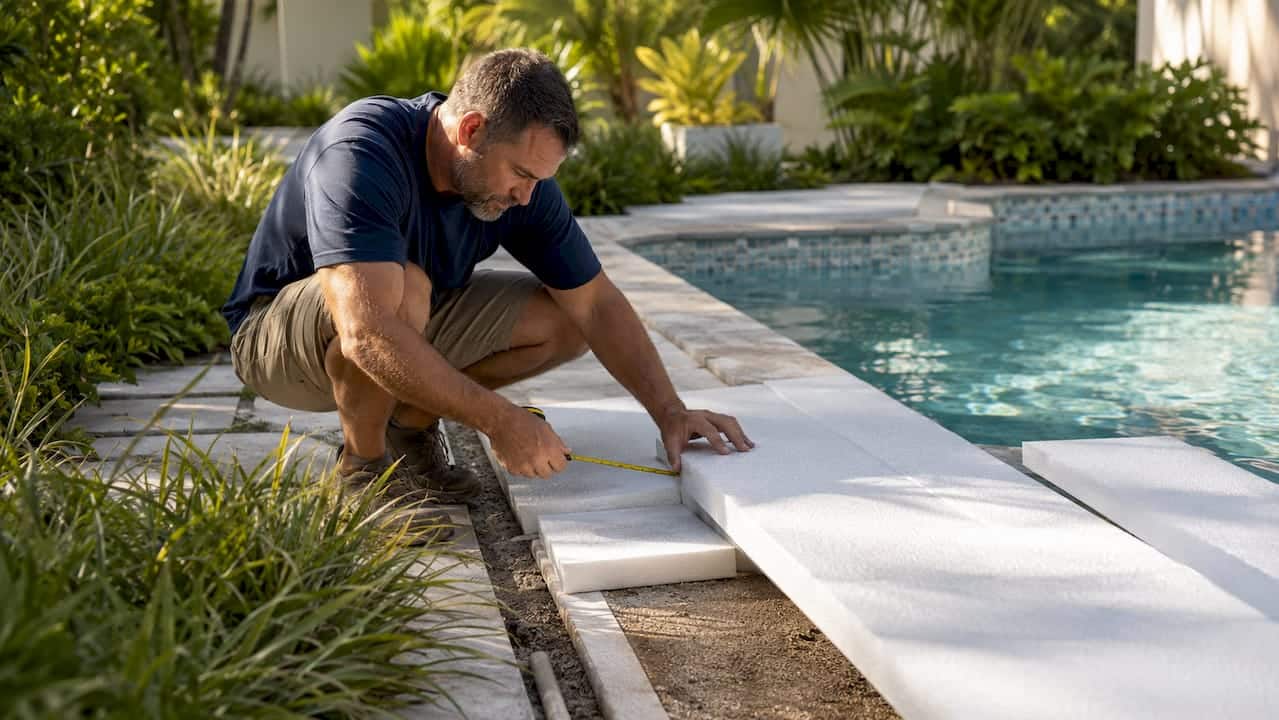
Pool insulation is defined as a thermal barrier system installed around a pool’s walls, floor, and shell to prevent heat from escaping into the surrounding ground. For Central Florida homeowners, the role of pool insulation goes well beyond comfort. It directly cuts energy bills, protects heating equipment, and keeps your water at a swimmable temperature for more months of the year. Materials like Styropool XPS foam and fiberglass panels are the industry standard for this application, and understanding how they work gives you a real advantage when planning or upgrading your pool.
How does pool insulation work to improve heating efficiency?
Heat loss in a swimming pool happens through three main pathways: conduction through the pool walls and floor into the surrounding soil, evaporation from the water surface, and convection as wind moves across the water. Conduction is the pathway insulation addresses most directly. Without a thermal barrier, the ground surrounding your pool acts like a heat sink, constantly pulling warmth away from the water and forcing your heater or heat pump to run longer to compensate.
Insulation works by placing a low-conductivity material between the pool shell and the soil. XPS foam boards and spray foam both resist heat transfer, slowing the rate at which ground temperatures draw energy out of your pool water. A properly insulated pool can reduce energy consumption by up to 50% compared to an uninsulated pool. That figure translates directly to lower monthly utility bills and fewer hours of heater run time each week.
The placement of insulation relative to the pool shell matters as much as the material itself. Insulation placed close to the pool shell’s inner wall accelerates heating response and prevents the heat sink effect that occurs when thick layers are positioned too far out. This means your heater reaches the target temperature faster, which reduces mechanical cycling and wear on the equipment.
Evaporation still accounts for the majority of surface heat loss, so insulation alone does not solve every problem. Combining wall and floor insulation with a quality pool cover addresses both pathways at once, giving you the most complete heat retention system possible.
- Conduction through walls and floor: addressed by foam or fiberglass insulation panels
- Evaporation from the surface: addressed by a fitted pool cover
- Convection from wind: reduced by windbreaks, enclosures, or covers
- Equipment strain: reduced by all of the above working together
Pro Tip: Ask your pool contractor to confirm that insulation is installed flush against the pool shell with no gaps at the seams. Even a small void at the perimeter can allow ground temperatures to pull heat away and undermine the entire system.
What are the best types of pool insulation materials for Central Florida pools?
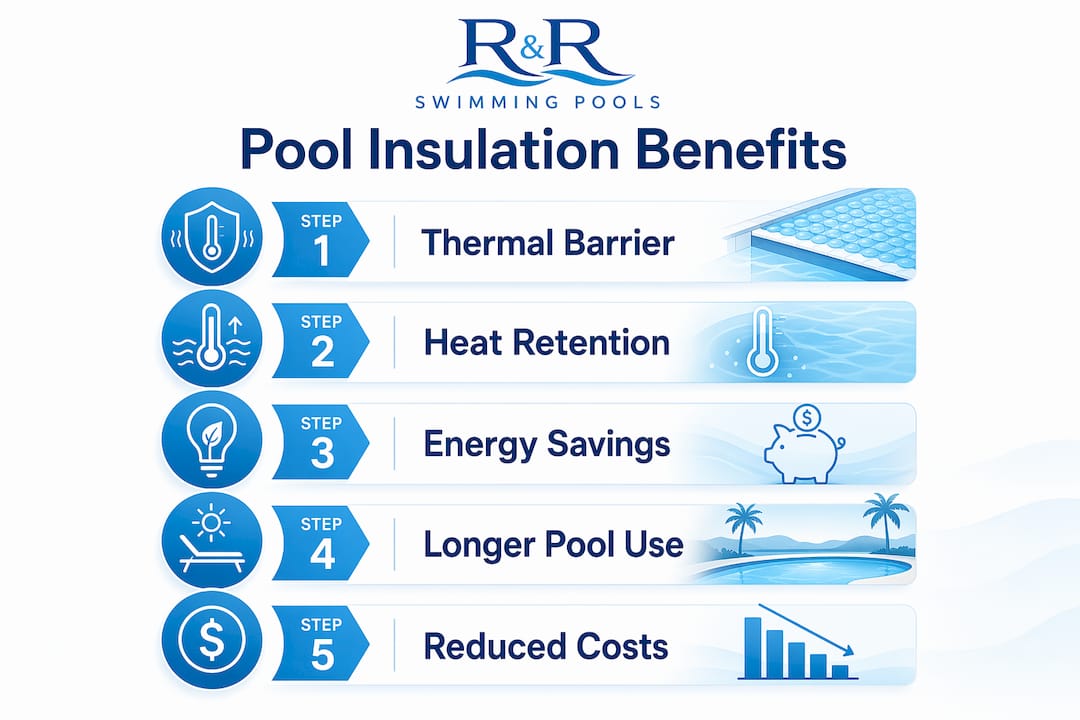
Selecting the right insulation material for a Florida pool comes down to four factors: thermal resistance (measured as R-value), compressive strength, water absorption rate, and long-term durability in a humid climate. Central Florida’s soil conditions and year-round moisture make material selection more consequential than in drier climates.
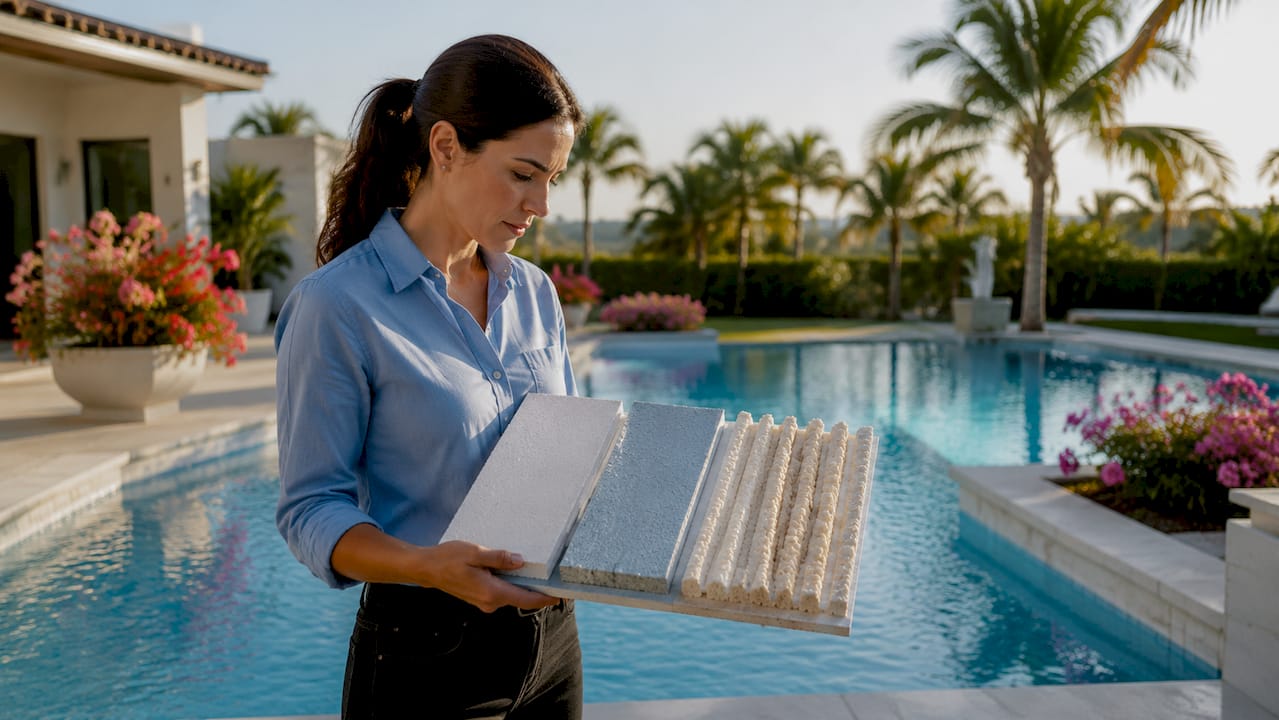
Styropool, a high-compressive-strength extruded polystyrene (XPS) foam product, is one of the most widely used materials in pool insulation. It offers low thermal conductivity, resists water absorption, and carries zero ozone depletion potential with a low Global Warming Potential. Those environmental properties matter increasingly to Florida homeowners who want efficient pools without a heavy environmental footprint.
| Material | R-value | Water resistance | Best use case |
|---|---|---|---|
| XPS foam (Styropool) | High | Excellent | In-ground pool walls and floors |
| Fiberglass batts | Moderate | Poor without vapor barrier | Above-ground pool walls |
| Spray foam | High | Good | Irregular surfaces, gaps, and edges |
| EPS foam board | Moderate | Fair | Budget-friendly floor applications |
Fiberglass insulation works well for above-ground pools but requires a vapor barrier in Florida’s humidity, otherwise moisture infiltration degrades its R-value over time. Spray foam is the best choice for sealing irregular surfaces and filling gaps around plumbing penetrations, where rigid boards cannot conform to the shape. For in-ground concrete and fiberglass pools, XPS foam boards like Styropool deliver the best combination of compressive strength and thermal performance. The compressive strength matters because the material must support the weight of the pool shell and surrounding backfill without compressing and losing its insulating properties.
Pro Tip: For in-ground pools in Central Florida, specify XPS foam with a compressive strength of at least 25 psi. Standard EPS foam compresses under the load of backfill and loses its R-value within a few years, making the upgrade to XPS worth every dollar.
How does pool insulation complement other heat retention strategies?
Insulation works best in conjunction with a well-fitted pool cover that reduces evaporation, which is the primary source of heat loss from the water surface. Wall and floor insulation handles conductive loss through the structure, while a cover handles the surface. Neither system is fully effective without the other, and Central Florida homeowners who invest in both see the greatest reduction in heating costs.
A solar pool cover, also called a solar blanket, adds a second layer of benefit by capturing daytime solar energy and transferring it to the water. When combined with XPS foam insulation in the walls and floor, this pairing can extend swimming seasons by maintaining warmer water temperatures well into the cooler months of November and December, which matter in Central Florida even if full winter is mild.
The combined strategy also protects your heating equipment. Pool insulation reduces mechanical strain on heat pumps by reducing how often they cycle on and off. Less frequent cycling means less wear on compressors and heat exchangers, which translates to a longer operational lifespan and fewer repair bills. For homeowners who have invested in a quality heat pump, insulation is the most cost-effective way to protect that investment.
- Install a snug-fitting solar or thermal cover to address surface evaporation
- Use XPS foam boards on walls and floors to address conductive loss
- Add windbreaks or screen enclosures to reduce convective loss
- Combine all three to maximize pool heating efficiency and lower monthly bills
For indoor pools, the strategy expands further. Vapor retarders and proper ventilation alongside insulation prevent condensation damage and mold growth in the surrounding structure. Thermal regulation and vapor control are both required for indoor pool comfort and long-term structural protection, making the insulation system more complex but equally important.
What are key pool insulation installation tips and common pitfalls?
Getting the installation right the first time saves you from expensive corrections later. These steps reflect the most common points where installations fail and where attention pays off most.
- Install insulation directly against the pool shell. The thermal barrier must sit flush against the shell wall with no air gap between the foam and the structure. An air gap acts as a convective channel that undermines the insulation’s R-value.
- Seal all seams and penetrations with spray foam. Rigid boards leave small gaps at corners, edges, and plumbing penetrations. Spray foam fills these voids and maintains the continuity of the thermal barrier. Gaps or voids in insulating layers drastically reduce efficiency by allowing ground temperatures to draw heat away.
- Use high-compressive-strength material under the pool floor. The floor insulation bears the weight of the water, the shell, and the surrounding soil. Standard EPS foam compresses under this load and loses its insulating properties within a few seasons.
- Apply a vapor barrier in humid environments. Central Florida’s moisture levels make vapor control a real concern, particularly for above-ground pools and any pool with fiberglass insulation. A polyethylene vapor barrier between the insulation and the soil prevents moisture from degrading the material.
- Plan for long-term access to plumbing. Insulation installed without accounting for future pipe repairs can make maintenance far more difficult. Work with your contractor to map plumbing runs before the insulation layer goes in.
Pro Tip: Before backfilling, have your contractor do a thermal inspection of the insulation layer. Infrared cameras can identify cold spots where the barrier has gaps or where the material has shifted, catching problems before they are buried.
Common mistakes include using the wrong foam density for floor applications, skipping vapor control in humid climates, and failing to insulate the pool floor at all. Many builders insulate walls but leave the floor exposed, which accounts for a significant portion of conductive heat loss in in-ground pools. A complete installation covers walls, floor, and any exposed plumbing runs.
Key takeaways
Pool insulation is the single most effective structural upgrade for reducing heat loss, cutting energy costs, and extending the life of your pool heating equipment.
| Point | Details |
|---|---|
| Thermal barrier function | Insulation placed against the pool shell blocks conductive heat loss through walls and floor. |
| Material selection matters | XPS foam like Styropool outperforms EPS and fiberglass for in-ground Florida pools due to compressive strength and water resistance. |
| Covers complete the system | Combining insulation with a fitted pool cover addresses both conductive and evaporative heat loss for maximum efficiency. |
| Installation quality is critical | Gaps, voids, and poor sealing nullify insulation benefits and increase heater wear and energy costs. |
| Equipment longevity benefit | Reduced heater cycling from proper insulation extends heat pump lifespan and lowers long-term maintenance costs. |
Why pool insulation is one of the smartest decisions a Florida homeowner can make
After working with Central Florida pool owners for decades, the pattern is consistent. Homeowners who skip insulation during the build phase spend years paying higher energy bills and replacing heating equipment ahead of schedule. The upfront cost of quality XPS foam insulation is modest compared to the cumulative savings on electricity and equipment repairs over a ten-year period.
What surprises most homeowners is how much the floor matters. The conventional focus is on wall insulation, but an uninsulated pool floor sitting on Florida’s sandy, moisture-rich soil loses heat continuously. Addressing the floor as part of the original installation, rather than as an afterthought, makes a measurable difference in how quickly the pool reaches temperature and how long it holds it.
The other insight worth sharing is that insulation and pool covers are not competing investments. Some homeowners treat them as alternatives and choose one or the other. They address different heat loss pathways entirely. A cover without wall insulation still loses heat through the shell. Wall insulation without a cover still loses heat through evaporation. The combination is where the real savings appear, and it is the approach Randrswimmingpools recommends for every new build and renovation in Central Florida.
If you are evaluating contractors, ask specifically whether they insulate the pool floor and how they handle seam sealing at plumbing penetrations. Those two questions will tell you quickly whether you are talking to someone who treats insulation as a genuine system or as a checkbox item.
— Randrswimmingpools
Build your pool right from the start with Randrswimmingpools
R and R Swimming Pools has been designing and building custom inground pools across Central Florida since 1985. Every pool we build incorporates energy-efficient construction practices, including proper insulation placement, material selection suited to Florida’s climate, and integration with heating and cover systems that reduce your long-term operating costs.

Whether you are planning a new build or upgrading an existing pool, our inground pool installation guide walks you through every decision that affects efficiency and comfort. For homeowners ready to explore options, our custom pool installation guide covers material choices, design considerations, and the construction process specific to Central Florida conditions. Contact Randrswimmingpools for a free consultation and find out how the right insulation strategy can lower your energy bills from day one.
FAQ
What is the role of pool insulation in an inground pool?
Pool insulation acts as a thermal barrier between the pool shell and the surrounding soil, preventing conductive heat loss through the walls and floor. It reduces heater run time, lowers energy costs, and extends the lifespan of heating equipment by reducing mechanical cycling.
How much energy can pool insulation save?
A properly insulated pool can reduce energy consumption by up to 50% compared to an uninsulated pool. The savings come from reduced heater run time and less frequent cycling of the heat pump.
What is the best insulation material for a Florida pool?
XPS foam, sold under product names like Styropool, is the top choice for in-ground Florida pools because it combines high R-value, excellent water resistance, and the compressive strength needed to support the pool shell and backfill without degrading over time.
Does pool insulation work without a pool cover?
Insulation addresses conductive heat loss through the pool structure, but evaporation accounts for the majority of surface heat loss. A fitted pool cover is required alongside insulation to achieve maximum heat retention and energy savings.
Can pool insulation be added to an existing pool?
Adding insulation to an existing in-ground pool is possible during a renovation that involves excavation, but it is most cost-effective when included in the original construction. Randrswimmingpools can assess your current pool during a pool remodeling consultation to determine what options are practical for your specific situation.
