
TL;DR:
- Effective pool safety relies on layered barriers, with four-sided fencing and self-latching gates as the primary protections. supplementing fences with alarms, certified safety covers, and vigilant supervision reduces drowning risks for children and pets during non-swim times. Regular inspections and integrating safety features into original pool designs ensure long-term protection and compliance with safety standards.
Safety features in residential swimming pools are defined as physical barriers, alert systems, and access controls that work together to prevent unsupervised entry and reduce drowning risk for children and pets. The role of safety features in pools goes far beyond a single fence or alarm. According to the American Academy of Pediatrics (AAP), drowning is one of the leading causes of accidental death for children under five, and the majority of those incidents happen at home pools during non-swim times. No single device eliminates the risk. The most effective protection comes from layering multiple systems so that if one fails, another catches the gap.
What are the essential pool safety features and their roles?
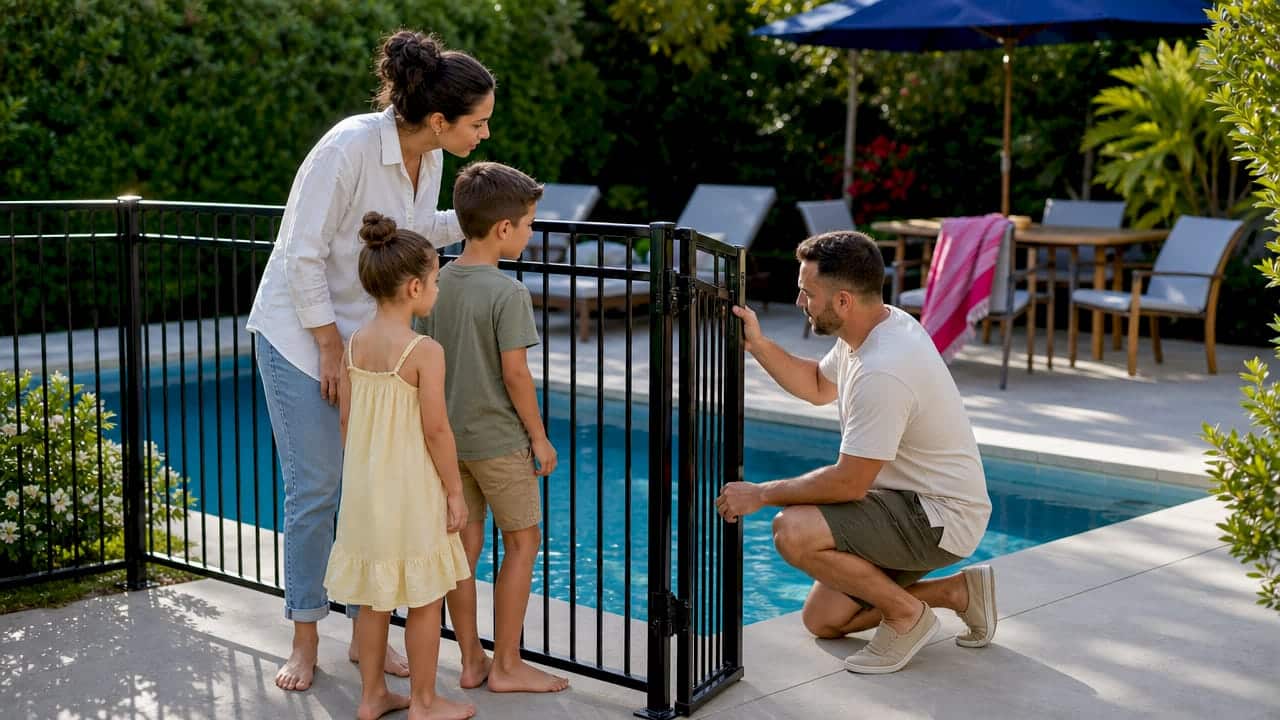
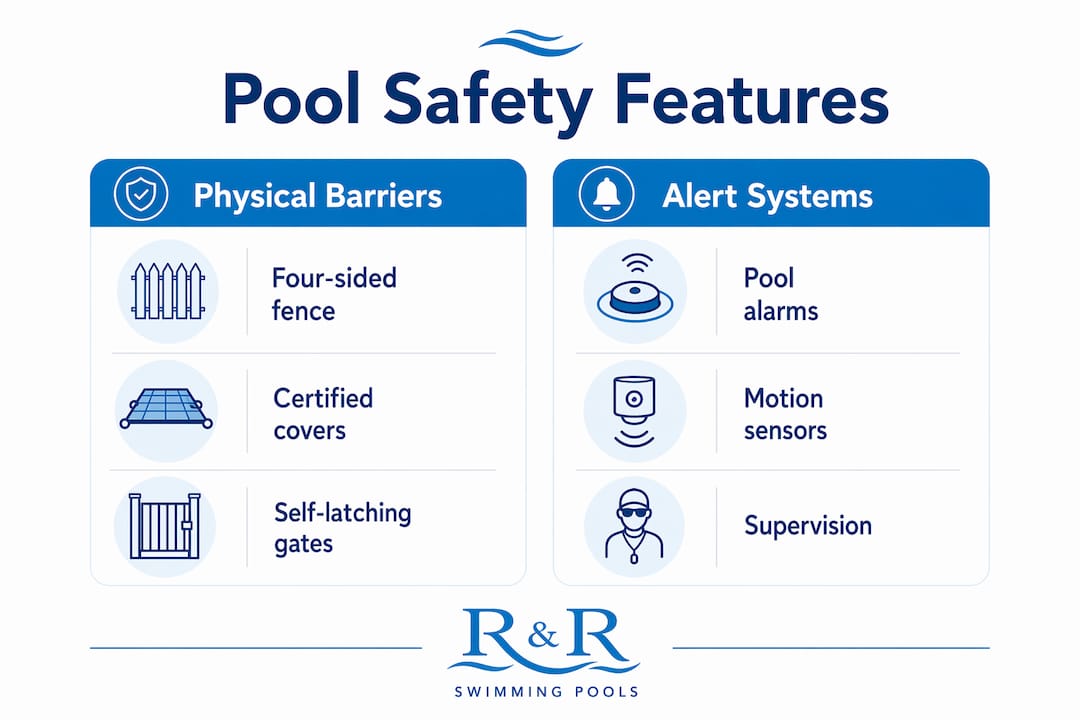
Four-sided fencing is the primary and most proven barrier against unsupervised pool access. The AAP recommends fences that are at least 4 feet high, climb-proof, with slat spacing no wider than 4 inches, and fitted with self-closing, self-latching gates. That specific combination matters because a gate that swings closed on its own removes the human error of forgetting to latch it. The fence must surround all four sides of the pool, isolating it completely from the house and yard.
Beyond fencing, the following features each add a distinct layer of protection:
- Pool alarms: Door alarms, gate alarms, and perimeter motion sensors alert adults when someone enters the pool area. They require regular battery maintenance and should never replace a fence, but they add a critical audio warning when a child moves toward the water.
- Safety pool covers: Power-operated, weight-bearing covers physically block access to the water surface. They differ fundamentally from solar or winter covers, which can trap a child underneath.
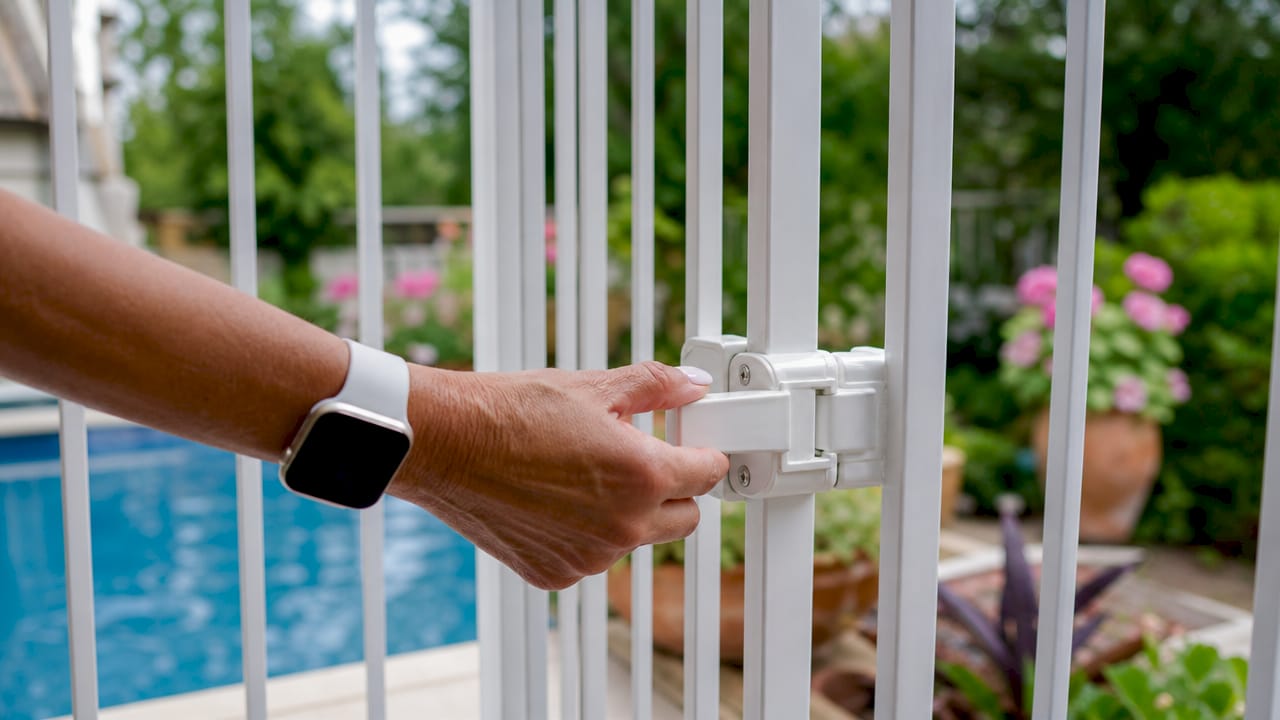
- Child-resistant gates and locks: Gate latches should be positioned at the top of the gate, out of a child’s reach, and should require two simultaneous actions to open.
- Ladder and step controls: For aboveground pools, removable or lockable ladders prevent children from climbing in when adults are not present.
- Clear pool surroundings: Patio furniture, planters, and toys placed near the fence become climbing aids. Keeping the perimeter clear is a low-cost safety measure that directly reduces fence breaches.
Pro Tip: Install your gate latch on the pool-side of the gate, at least 54 inches from the ground. This single adjustment makes it nearly impossible for a toddler to reach, even if they figure out the mechanism.
For Central Florida homeowners, the pool safety fencing guide from Randrswimmingpools covers local code requirements and material options that meet AAP standards without sacrificing curb appeal.
How do safety features protect young children and pets?
About 69% of drownings in children age 4 and younger occur during non-swim times, meaning the pool was not in active use when the incident happened. This single statistic reframes the entire safety conversation. Supervision during swim time matters, but the hours when no one is watching are statistically more dangerous. Physical barriers that work without human attention are the only reliable defense during those periods.
The threat profile for toddlers and pets shares key characteristics. Both move quickly, have no reliable sense of danger near water, and can be drawn to a pool by curiosity or a floating object. Children can drown in as little as two inches of water, which means even a partially uncovered pool surface is a hazard. For pets, the risk is compounded by the fact that many animals can enter the water but struggle to find the exit point.
| Safety Feature | Primary Threat Addressed | Effective For |
|---|---|---|
| Four-sided fence | Unsupervised access during non-swim times | Children, pets |
| Self-latching gate | Human error (forgotten latch) | Children, pets |
| Weight-bearing safety cover | Accidental fall into uncovered pool | Children, pets |
| Perimeter alarm | Silent approach to pool area | Children |
| Child-resistant ladder lock | Aboveground pool access | Children |
Fence design details matter more than most homeowners realize. Climb-proof fencing materials are strongly preferred over chain-link, because chain-link provides natural footholds for determined toddlers. If chain-link is already installed, slat inserts with openings no larger than 1¾ inches reduce the climbing risk significantly.
Pro Tip: Walk your pool perimeter every spring and after any landscaping work. Overgrown shrubs, new patio furniture, or a moved planter can create an unintentional climbing route to the top of your fence within a single season.
What are the limitations of pool safety features?
Pool safety equipment is not foolproof, and understanding where each feature falls short is as important as knowing what it does well. Alarms require maintenance to function reliably. Dead batteries, sensor drift, and false alarms that train adults to ignore them are real operational problems. Wave-sensor alarms designed to detect a child entering the water may not trigger reliably for a small toddler who enters slowly or slides in rather than falls.
Pool covers carry their own set of misconceptions. Solar covers and winter covers are not safety covers. A child who steps onto a floating solar cover can slip underneath it and become trapped, with the cover itself blocking rescue. Only power-operated, weight-bearing covers certified to ASTM F1346 standards qualify as true safety covers.
The most common ways safety features fail in practice:
- Fence gaps and climbable objects: A fence with a gap at the base or a nearby tree branch eliminates the barrier entirely.
- Unlocked or propped gates: Gates propped open for convenience during a party or yard work create the exact unsupervised access window that causes incidents.
- Aboveground pool ladders left in place: Between 2020 and 2025, 128 fatal drowning incidents involving children under five were linked to pool ladders as the suspected means of entry. The U.S. Consumer Product Safety Commission (CPSC) is actively working to establish measurable standards for child-resistant ladder designs, but those standards do not yet exist in final form.
- Overconfidence in a single feature: Families who install a fence but skip alarms and cover protocols create a single point of failure.
The most effective approach combines supervision with physical barriers, safety equipment, and swim education. Designating a specific adult as the “water watcher” during swim time, with no phone or social distraction, is a practice the AAP specifically recommends.
Comparing pool safety features by type and pool setup
Not every safety feature suits every pool. The right combination depends on whether you have an inground or aboveground pool, your yard layout, and the ages of children and pets in your household.
| Feature | Inground Pool | Aboveground/Portable Pool | Key Limitation |
|---|---|---|---|
| Four-sided fence | Highly recommended, code-required in most states | Fence around the pool base or yard | Requires no climbable objects nearby |
| Power-operated safety cover | Ideal fit, motorized systems available | Rarely compatible with round portable pools | High upfront cost |
| Solar/winter cover | Common but NOT a safety cover | Common but NOT a safety cover | Increases drowning risk if misused |
| Wave/perimeter alarm | Effective supplemental layer | Effective supplemental layer | Battery maintenance required |
| Child-resistant ladder | Less relevant (built-in steps) | Critical access control point | No federal standard yet (CPSC pending) |
| Gate with self-latching lock | Standard on all compliant fences | Required if fence is installed | Must be pool-side mounted |
Permanent inground pools built by professional contractors can integrate safety features into the original design, including recessed fence posts, built-in safety cover tracks, and gate hardware that meets local code from day one. Aboveground and portable pools present a harder challenge because their access points, primarily ladders, are the weakest link in the safety chain. Health Canada recommends fencing at least 1.2 meters high with self-closing, self-latching gates for all residential pools, a standard that aligns with AAP guidance and applies regardless of pool type.
For homeowners weighing entry design options, Randrswimmingpools offers detailed guidance on pool entry options that balance safety with usability for families in Central Florida.
Key takeaways
Layered pool safety, anchored by four-sided fencing and supplemented by alarms, certified covers, and child-resistant access controls, is the only approach that reliably reduces drowning risk for children and pets in residential pools.
| Point | Details |
|---|---|
| Fencing is the primary barrier | Four-sided, climb-proof fencing with self-latching gates is the single most effective safety feature. |
| Alarms supplement, never replace | Door, gate, and wave alarms add alerts but require maintenance and cannot substitute for physical barriers. |
| Only certified covers qualify | Power-operated, weight-bearing covers prevent access; solar and winter covers can increase drowning risk. |
| Ladders are a critical vulnerability | Aboveground pool ladders were linked to 128 child drowning incidents between 2020 and 2025; lock or remove them when not in use. |
| Layered protection works best | Combining fencing, alarms, covers, supervision, and swim education creates overlapping defenses that catch single-point failures. |
What most families get wrong about pool safety
After decades of watching families plan and build pools across Central Florida, I’ve noticed a consistent pattern. Homeowners spend weeks choosing tile colors and waterfall designs, then treat safety features as an afterthought they’ll “figure out later.” That delay is where the real risk lives.
The families I see make the most progress are the ones who treat the fence as part of the pool design, not a separate project. When you build the fence into the original plan, you get better placement, cleaner aesthetics, and hardware that actually meets code. Retrofitting a fence after installation almost always means compromises.
I also want to push back on the alarm-as-safety-net mindset. Alarms are useful. They are not reliable enough to carry the weight of your child’s safety on their own. I’ve seen gate alarms with dead batteries, wave sensors that never triggered during a test, and door alarms that families disabled because they kept going off accidentally. None of those families had a bad fence.
The other thing most articles skip is the cover conversation. I talk to homeowners every week who point to their solar cover and call it a safety feature. It is not. A solar cover is a heat-retention tool. A certified safety cover is a structural barrier. The difference between those two things is the difference between a false sense of security and actual protection.
My honest recommendation: start with the fence, get the gate hardware right, invest in a certified safety cover if your budget allows, and add alarms as a backup layer. Then review the whole setup every spring, because a fence that was safe last year may have a new climbing hazard next to it today.
— Randrswimmingpools
Build your pool with safety built in from day one

R and R Swimming Pools has been designing and installing custom inground pools across Central Florida since 1985, and safety features are part of every project from the first design conversation. Whether you are planning a new pool or upgrading an existing one, the team at Randrswimmingpools can help you select fencing, certified covers, gate hardware, and alarm systems that meet AAP guidelines and Florida code requirements. Safety does not have to compromise the look of your backyard. The right design integrates protection into the pool’s structure so it feels intentional, not bolted on. Start with the inground pool installation guide to see how safety planning fits into every stage of the build process, or explore the expert inground pool guide for feature-by-feature guidance.
FAQ
What is the most effective pool safety feature for young children?
Four-sided fencing with self-closing, self-latching gates is the most effective single safety feature for young children, according to the American Academy of Pediatrics. The fence must be at least 4 feet high, climb-proof, and completely isolate the pool from the rest of the yard.
Can a pool alarm replace a pool fence?
A pool alarm cannot replace a pool fence. Alarms serve as supplemental alerts and require regular battery maintenance, and wave-sensor alarms may not reliably detect small children entering the water slowly.
Are solar pool covers safe for child protection?
Solar pool covers are not safety covers and can increase drowning risk. A child who steps onto a floating solar cover can slip underneath it. Only power-operated, weight-bearing covers certified to ASTM F1346 standards provide genuine physical protection.
How do I make an aboveground pool safer for toddlers?
Remove or lock the ladder whenever the pool is not in active use, and install fencing around the pool base with a self-latching gate. Between 2020 and 2025, the CPSC linked 128 fatal child drowning incidents to pool ladders as the suspected access point.
How often should I inspect my pool safety features?
Inspect all pool safety features at least once per season, and after any landscaping, furniture rearrangement, or storm. Check gate latches, fence integrity, alarm batteries, and the pool perimeter for any new objects that could serve as climbing aids.
