
TL;DR:
- Pool renovation in The Villages can boost home value and reduce energy costs through upgrades of surfaces and equipment. Planning, proper contractor selection, and early permit application are essential for a smooth, cost-effective project. Modern designs focus on mid-size pools with premium features like smart automation and durable finishes to maximize enjoyment and long-term savings.
Pool renovation is the process of updating an existing pool’s surface, equipment, and features to restore function, improve efficiency, and raise the overall value of your backyard. For homeowners in The Villages, a well-planned pool upgrade does more than refresh the look. It can increase home value up to 8% while cutting monthly energy costs. The Villages pool renovation projects range from a simple plaster refresh to a full remodel with smart automation, spa additions, and custom lighting. This guide covers costs, design trends, contractor selection, and the exact steps to get your project done right in 2026.
What do Villages homeowners need to know before starting a pool renovation?
Planning is the step most homeowners skip, and it is the one that causes the most delays. The Villages sits across three counties: Sumter, Marion, and Lake. Each county manages its own permitting office independently. Permit processing can add 5–15 business days to your project start date depending on which county your property falls in. Knowing your county before you call a contractor saves you from scheduling conflicts.
Permitting rules also depend on the scope of work. Spot repairs typically do not require permits, but full resurfacing is classified as major construction and does. This distinction matters for budgeting and scheduling.
Budget ranges in 2026 vary widely based on project scope. A simple cosmetic refresh costs a few thousand dollars. Resurfacing runs $8,000–$15,000. A full modernization with new equipment, smart controls, and a spa can reach $40,000–$50,000 or more. Getting a professional assessment before committing to a scope prevents costly mid-project changes.
| Renovation scope | Estimated cost | Permit required | Typical timeline |
|---|---|---|---|
| Cosmetic refresh | Low thousands | No | 1–3 days |
| Resurfacing only | $8,000–$15,000 | Yes | 1–2 weeks |
| Equipment upgrade | $8,000–$15,000 | Sometimes | 1–2 weeks |
| Full modernization | $40,000–$50,000+ | Yes | 3–8 weeks |
How to choose the best design elements and modern features for your pool upgrade
The biggest shift in 2026 pool design trends is the move away from larger pools toward better-used mid-size pools loaded with premium features. Homeowners now prioritize smart automation, spa combinations, beach entries, and LED lighting over raw square footage. A well-designed 400-square-foot pool with a spa and waterfall delivers more daily enjoyment than a plain 600-square-foot pool.
Surface material is one of the most consequential decisions in any remodel. Plaster is the most affordable option but needs replacement every 7–10 years. Quartz finishes last longer and resist staining better than plaster. Pebble finishes last 15–25 years, resist chemical staining, and outperform both plaster and quartz for long-term durability. The higher upfront cost of pebble pays off over a decade of reduced resurfacing expenses.
Modern equipment upgrades deliver real, measurable savings. Variable-speed pumps reduce pool energy consumption by 50–70% compared to single-speed models. Saltwater systems reduce the weekly chemical maintenance load and produce softer water that is gentler on skin and swimwear. Smart automation packages with smartphone app controls and salt chlorine generators typically add $8,000–$15,000 to project costs. That investment pays back through lower utility bills and reduced chemical purchases over time.
Top features worth adding to your Villages pool upgrade:
- Variable-speed pump: cuts energy use by 50–70% and qualifies for utility rebates in many Florida counties
- Saltwater chlorination: reduces chemical costs and maintenance time; salt cells last 5–7 years
- LED lighting: low energy draw, long lifespan, and full color control via smartphone
- Smart automation: control temperature, lighting, and jets from your phone; pairs well with pool smart controls
- Spa or hot tub combo: adds wellness value and year-round usability; see spa and pool combos for Florida-specific ideas
- Beach entry: gradual slope entry adds accessibility and a resort feel without major structural changes
Pro Tip: Balance aesthetics with maintenance reality. A waterfall adds beauty and improves water circulation, but it also increases evaporation and chemical demand. Factor in the ongoing cost before adding water features.
What is the step-by-step process for a successful pool remodel?
A successful renovation follows a clear sequence. Skipping steps or rushing phases is the most common cause of rework and budget overruns. Typical timelines run 1–2 weeks for resurfacing and 3–8 weeks for a complete remodel. Florida weather, particularly afternoon thunderstorms from june through september, can add days to outdoor work phases.
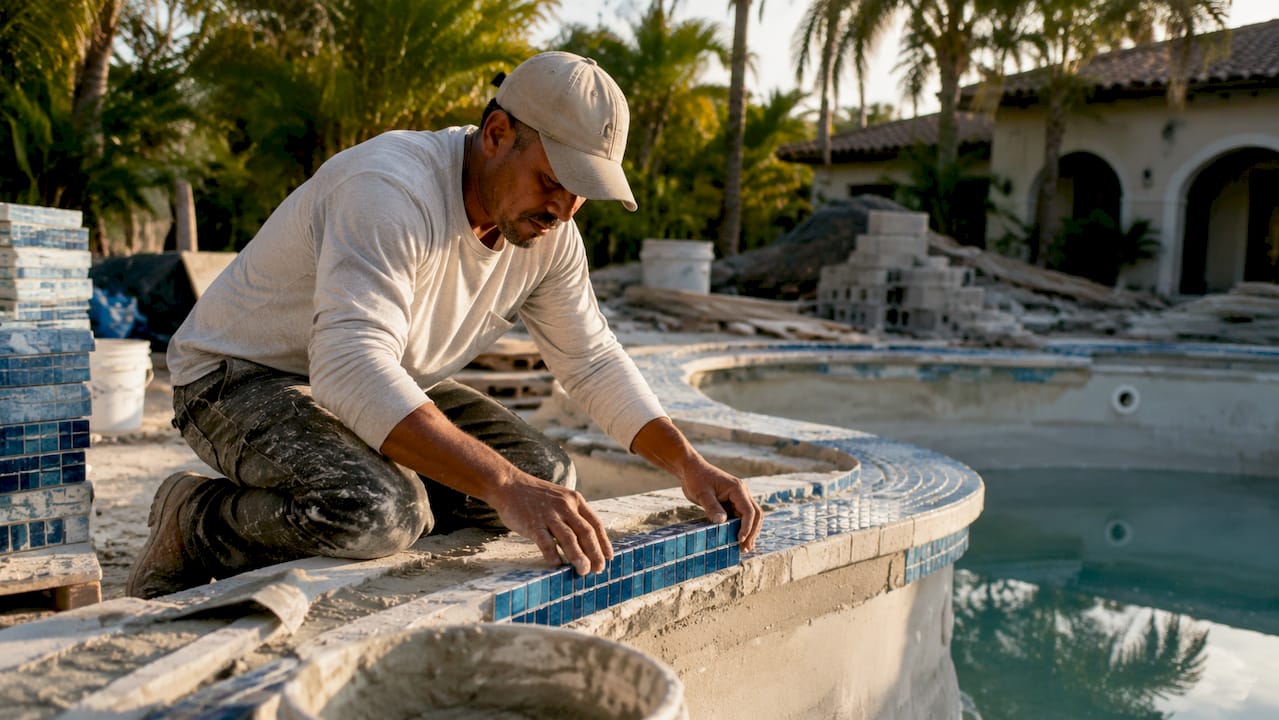
Bundling related tasks into one project is one of the most effective cost-saving moves available. Combining resurfacing, tile replacement, and coping installation in a single project eliminates redundant labor and site preparation costs. Doing each task separately over several years costs significantly more in total.
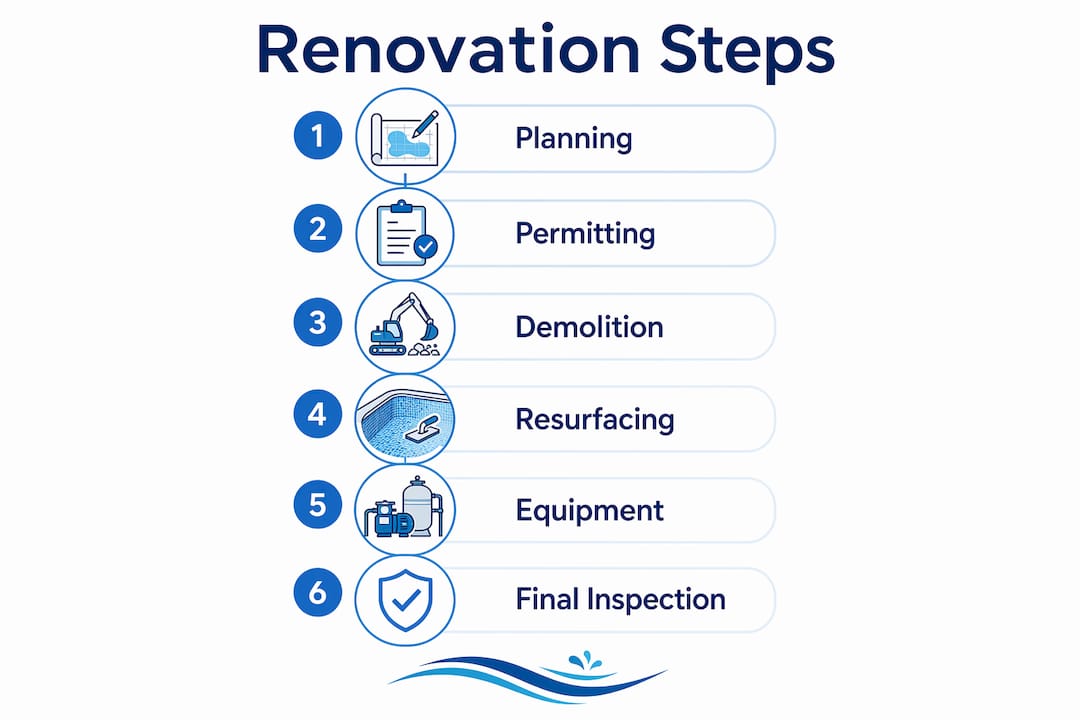
The renovation phases in order:
- Professional assessment: A licensed contractor inspects the shell, equipment, and plumbing to identify all issues before work begins.
- Permit application: Submit to the correct county office (Sumter, Marion, or Lake) and plan for a 5–15 business day processing window.
- Pool draining: The pool is fully drained and the surface is cleaned and prepped for new material.
- Surface preparation: Old plaster or finish is chipped away. Cracks and structural issues are repaired at this stage.
- Resurfacing: New plaster, quartz, or pebble finish is applied and cured according to manufacturer specifications.
- Tile and coping: New waterline tile and coping stones are set while the surface cures.
- Equipment installation: New pump, filter, heater, automation system, and lighting are installed and wired.
- Refilling and startup: The pool is refilled and water chemistry is balanced over 7–10 days to protect the new finish.
- Final inspection: The contractor walks through the completed work with you before closing the project.
Pro Tip: Submit your permit application in january or february. Permit offices in Sumter, Marion, and Lake counties see the highest volume in spring, which extends processing times. An early submission puts your project ahead of the seasonal rush.
How to select trusted pool renovation contractors in The Villages
Contractor selection is where most renovation projects succeed or fail. The Villages market has a mix of large regional companies and smaller local operators. Local contractors with experience in The Villages pools bring familiarity with county permitting offices, local soil conditions, and the specific materials that perform best in Central Florida’s climate. That local knowledge shortens timelines and reduces surprises.
When evaluating contractors, ask these questions directly:
- Are you licensed in Florida and insured for pool construction?
- Have you completed projects in Sumter, Marion, or Lake County in the past 12 months?
- Can you provide three references from Villages homeowners?
- Do you handle permit applications, or does the homeowner?
- What is your written warranty on labor and materials?
Transparent pricing and a written contract are non-negotiable. Any contractor who resists putting the full scope, timeline, and cost in writing is a contractor to avoid. Get at least three written quotes before signing anything.
| Contractor criteria | What to look for | Red flag |
|---|---|---|
| Florida state license | Active license on DBPR website | No license number provided |
| Local experience | Projects in Sumter, Marion, or Lake County | Only references from other regions |
| Permit handling | Contractor pulls permits on your behalf | Asks homeowner to pull permits |
| Written contract | Full scope, cost, and timeline in writing | Verbal agreements only |
| Warranty | Minimum 1-year labor warranty | No written warranty offered |
Randrswimmingpools has operated in Central Florida since 1985 and serves The Villages area with both new construction and renovation services. Their team handles permitting, design, and construction under one roof, which reduces coordination delays for homeowners.
What are the best maintenance practices after your pool renovation?
A new finish and new equipment only stay in top condition with consistent care. The first 30 days after resurfacing are the most critical. New plaster and pebble finishes require daily brushing and careful chemical balancing during the startup period. Skipping this step causes calcium deposits and staining that are difficult to remove later.
Ongoing maintenance for a renovated pool centers on three areas: water chemistry, equipment servicing, and surface care. Test water chemistry at least twice per week. Run your variable-speed pump on a low-speed schedule during off-peak hours to cut energy costs and extend motor life. Schedule a professional equipment inspection once per year.
Maintenance do’s and don’ts for Villages homeowners:
- Do brush the pool walls and floor weekly to prevent algae and mineral buildup
- Do keep pH between 7.2 and 7.6 to protect the new finish and equipment
- Do clean salt cell every 3 months to maintain chlorine output; learn more about saltwater pool care
- Do trim nearby trees and shrubs to reduce debris load and chemical demand
- Don’t drain the pool without professional guidance; an empty pool in Florida’s clay soil can pop out of the ground
- Don’t ignore small cracks or stains; early repair costs far less than deferred maintenance
- Don’t run single-speed pumps at full speed 24 hours a day; it wastes energy and shortens motor life
Key Takeaways
A Villages pool renovation delivers the best return when homeowners plan for county permits, bundle related tasks, and choose local contractors with proven Central Florida experience.
| Point | Details |
|---|---|
| Budget by scope | Costs range from low thousands for a refresh to $40,000–$50,000+ for full modernization. |
| Permit early | Sumter, Marion, and Lake counties each add 5–15 business days; apply in winter to avoid delays. |
| Choose durable finishes | Pebble finishes last 15–25 years and outperform plaster and quartz for long-term value. |
| Bundle renovation tasks | Combining resurfacing, tile, and coping in one project eliminates redundant labor costs. |
| Hire local specialists | Contractors with Villages experience navigate local codes and permitting faster than outside firms. |
What I’ve learned from 40 years of Central Florida pool renovations
The homeowners who get the best results are not the ones with the biggest budgets. They are the ones who plan before they spend. I have seen $50,000 renovation projects go sideways because the homeowner skipped the professional assessment phase and discovered a cracked shell after the new finish was already applied. That discovery added weeks and thousands of dollars to the project.
The trend I find most interesting in 2026 is the shift toward mid-size pools with premium features. Villages homeowners are not asking for bigger pools. They are asking for pools that work better, feel better, and cost less to run. A well-placed spa, a variable-speed pump, and smart lighting deliver more daily satisfaction than an extra 200 square feet of water.
The one mistake I see most often is choosing a contractor based on price alone. The lowest bid almost always reflects a gap somewhere: thinner materials, less experienced labor, or a contractor who will disappear when a warranty issue surfaces. In The Villages, where permitting spans three counties and local knowledge genuinely matters, the right contractor is worth paying for. Check the Florida DBPR license database before you sign anything. It takes two minutes and it protects your entire investment.
— Results
Randrswimmingpools: your local partner for pool renovations in The Villages
Randrswimmingpools has been building and renovating pools across Central Florida since 1985. Their team serves The Villages area with full-service renovation packages that cover design, permitting, resurfacing, equipment upgrades, and finishing work under one contract.
If you are planning a Villages pool upgrade in 2026, the pool remodeling process guide on their site walks through every phase from assessment to startup. R and R Swimming Pools handles permit applications across Sumter, Marion, and Lake counties, which removes the most common source of project delays for homeowners. You can also review their pool renovation ideas for Florida homeowners to build your feature wish list before your first consultation. Contact Randrswimmingpools to schedule a free quote and get your 2026 project on the calendar.
FAQ
How much does a pool renovation in The Villages cost?
Costs range from a few thousand dollars for a cosmetic refresh to $8,000–$15,000 for resurfacing and $40,000–$50,000 or more for a full modernization with smart features and a spa.
Do I need a permit for pool resurfacing in The Villages?
Full resurfacing is classified as major construction and requires a permit from your county office in Sumter, Marion, or Lake County. Spot repairs typically do not require permits.
How long does a pool renovation take?
Resurfacing takes 1–2 weeks. A complete remodel with new equipment and features runs 3–8 weeks, depending on permit processing times and project scope.
What is the most durable pool finish for Central Florida?
Pebble finishes last 15–25 years and resist chemical staining better than plaster or quartz. They cost more upfront but reduce long-term resurfacing expenses significantly.
How do I find a reliable pool renovation contractor in The Villages?
Look for a Florida-licensed contractor with recent projects in Sumter, Marion, or Lake County. Verify their license on the Florida DBPR website and require a written contract with a full scope, timeline, and warranty before signing.
