
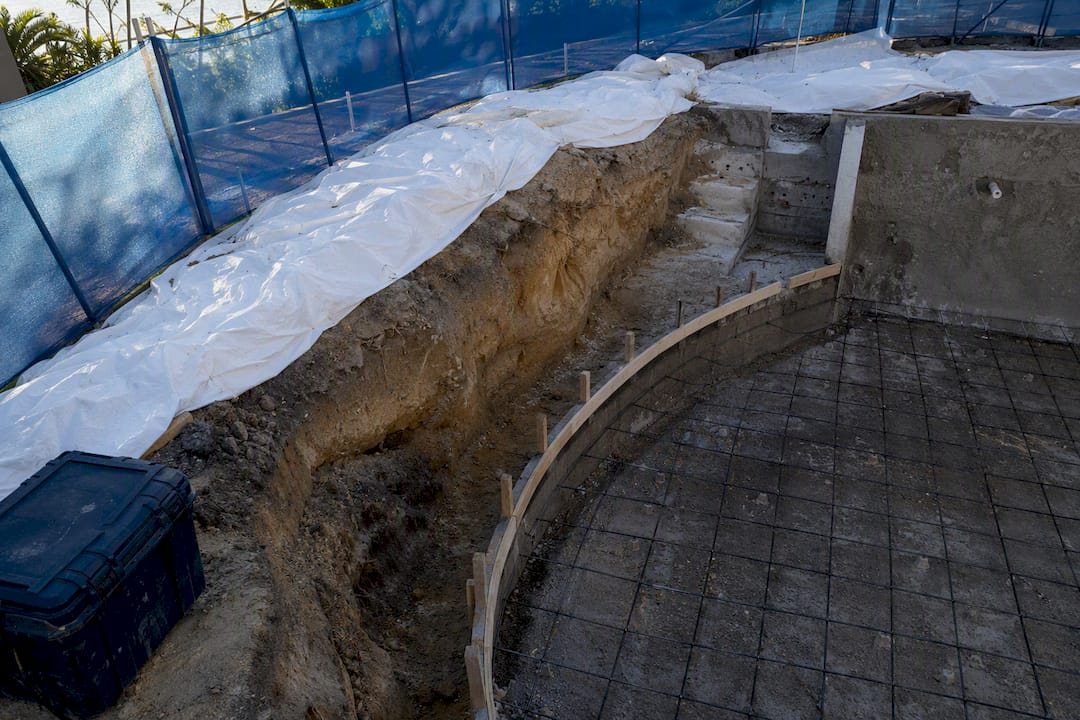
Yes, a vinyl liner pool can be converted to concrete, but treat it as a full structural rebuild, not a quick upgrade. Most projects run $50,000 to $65,000, take roughly 8 to 12 weeks from demolition to first swim, and pay off through the durability, custom design options, and resale value concrete offers over a liner that needs replacing every decade or so.
TL;DR:
- Converting a vinyl pool to concrete typically costs $50,000 to $65,000 and takes about 8 to 12 weeks, requiring full demolition and rebuild.
- Site conditions such as high groundwater or unstable soil can significantly increase costs and delay timelines, making pre-project inspections essential.
- The process involves removing the vinyl liner, installing a rebar grid, spraying gunite or shotcrete, and finishing with tile or plaster, with careful attention to skimmer placement.
- Concrete shells last much longer than vinyl liners, often decades, but require proper soil stabilization to prevent cracking and structural issues over time.
- Energy efficiency can improve with concrete due to its thermal mass, and conversion offers opportunities to upgrade heating, automation, and custom design features.
Table of Contents
- What Does a Vinyl to Concrete Pool Conversion Involve?
- What Does It Cost to Convert a Vinyl Pool to Concrete?
- How Long Does a Concrete Pool Conversion Take?
- What Site and Structural Issues Affect Feasibility?
- What Permits, Plumbing, and Electrical Work Should You Budget For?
- Which Finish Should You Choose After Conversion?
- How a Contractor Evaluates a Conversion Before Bidding
- Does Concrete Outlast Vinyl After a Conversion?
- Does Converting to Concrete Change Energy Efficiency and Heating?
- Can You Redesign Your Pool’s Shape During Conversion?
- Is a Concrete Pool Conversion More Environmentally Sound?
- Will Converting to Concrete Change Your Pool Insurance?
- Why Feasibility, Not Cost, Should Drive Your Decision
- How R&R Swimming Pools Handles Your Conversion Project
- Sources
What Does a Vinyl to Concrete Pool Conversion Involve?
A vinyl to concrete pool conversion strips your pool down to its hole and rebuilds nearly everything inside it. The existing shell becomes a shape template, not a structure you keep.
Here’s the sequence a qualified crew follows:
- Drain the pool completely and remove the vinyl liner.
- Pull out the wall panels and any bracing or support structure behind them.
- Regrade and adjust excavation where the new shell profile differs from the old one.
- Install a steel rebar grid, typically #3 or #4 bar spaced 8 to 12 inches on-center, and tie it into a bond beam and coping form.
- Spray gunite or shotcrete over the rebar to form the new shell, generally 6 to 8 inches thick.
- Cure the shell, keeping it moist for the first week and holding off further work for 28 to 30 days total.
- Finish with tile, coping, and an interior surface such as plaster or aggregate.
Skimmer placement deserves special attention here. The skimmer has to be encased directly in the concrete bond beam rather than bolted to a wall panel like it was with vinyl. Skip that detail and you’re looking at differential movement and leaks within a few years.
What Does It Cost to Convert a Vinyl Pool to Concrete?
Most homeowners land somewhere between $50,000 and $65,000 for an average residential pool, though your region, pool size, and site conditions push that number in either direction. Labor and material costs in Central Florida tend to run more favorably than in the Northeast or California, but a conversion is never a bargain project.
The math behind that price tag comes down to what you’re actually reusing. You keep the hole in the ground. Everything else, from plumbing to walls to the finish, gets rebuilt from scratch. That’s why contractors often describe a conversion as a new gunite pool build plus demolition costs rather than a renovation.
Line items that show up on nearly every bid:
- Demolition and liner/wall removal
- Rebar and gunite/shotcrete labor and material
- Plumbing and electrical upgrades to meet current code
- Interior finish (plaster, aggregate, or tile)
- Permit fees and inspections
- Site work, including regrading or backfill
- Contingency for hidden site issues
Pro Tip: Ask your contractor to break the estimate into these line items rather than accepting one lump sum. It’s the only way to tell whether a “too good to be true” bid is skipping a step you’ll pay for later.
When your existing excavation is close to the ideal shape and depth for the new shell, you save on digging, which is often the only real discount versus a brand new concrete build in an empty yard.
How Long Does a Concrete Pool Conversion Take?
Plan on roughly 8 to 12 weeks from demolition to swimming, and build in slack for permitting delays or bad weather. Compare that to a fiberglass insert, which can go in in 2 to 4 weeks because the shell arrives precast rather than sprayed in place.
A rough week-by-week breakdown looks like this:
- Weeks 1 to 2: Drain, demo, liner and wall removal, site regrading.
- Weeks 3 to 4: Plumbing rerouting, electrical bonding, rebar cage installation and inspection.
- Week 5: Gunite or shotcrete shell application (the shoot itself often takes one day).
- Weeks 6 to 9: Structural cure, generally 28 to 30 days, with the surface kept moist early on.
- Weeks 10 to 12: Tile, coping, interior finish, equipment startup, and water chemistry balancing.
Curing isn’t optional downtime. The shell needs that window to reach the compressive strength it’s engineered for, and rushing a finish onto a green shell risks cracking. Weather and permit turnaround are the two delays that blow up timelines most often, so contractors who manage both proactively tend to hit their dates.
What Site and Structural Issues Affect Feasibility?
Not every backyard converts as cleanly as the brochure suggests. Soil composition and groundwater are the two variables that decide whether your project stays on budget or turns into a change-order nightmare.
Watch for these before signing a contract:
- High water tables or hydrostatic pressure, which may require relief valves or extra drainage
- Expansive or unstable soil that needs stabilization before shotcrete goes on
- Wall panels showing rust, warping, or separation, which usually means full removal rather than partial reuse
- Cracked or shifted decking that signals a deeper settlement issue
Groundwater mitigation and soil stabilization are two of the most common reasons an initial bid grows once digging starts, since neither shows up clearly until the crew opens the ground. If your site has known drainage problems or you’re near a lake or wetland, ask upfront whether an engineer’s report is warranted.
Pro Tip: Insist on a written exceptions list with your estimate. It should spell out exactly what happens to your price if the crew hits unexpected groundwater or bad soil, so you’re not negotiating mid-project.
What Permits, Plumbing, and Electrical Work Should You Budget For?
Permits aren’t a formality here. You’re rebuilding a structure, rerouting utility lines, and reconnecting bonded electrical systems, all of which local building departments want to inspect. Permit requirements and fees vary by jurisdiction, so confirm specifics with your local building department rather than trusting a flat number from a contractor in another county.
Expect these mechanical and code items on your scope:
- Structural, plumbing, and electrical permits, each with its own inspection
- Rigid PVC plumbing replacing the flexible lines vinyl pools typically use
- Upgraded skimmer and main drain installations to meet current suction-entrapment codes
- Electrical bonding of all metal components around the pool
- Pump, heater, and automation upgrades where old equipment doesn’t match the new shell’s hydraulics
Most contractors recommend replacing every buried line during a conversion rather than reusing anything underground. Once the deck is open, it’s the cheapest that plumbing will ever be to access again.
Which Finish Should You Choose After Conversion?
Your finish choice determines how much maintenance you’re signing up for over the next 10 to 20 years, not just how the pool looks on day one.
- Plaster: Lowest upfront cost, smooth texture, but shows staining sooner and typically needs resurfacing every 7 to 10 years.
- Pebble/aggregate: Higher upfront cost, more texture underfoot, but holds up longer and resists staining better, which our pebble finish guide breaks down in more detail.
- Tile (full or accent): Highest cost, longest lifespan, minimal chemical absorption, often reserved for waterlines or feature areas.
Finish choice also affects chemical demand. Rougher aggregate surfaces can be tougher on brushing routines, while smoother plaster needs more frequent balancing to avoid etching. Buyers touring a home with a concrete pool tend to notice finish quality immediately, and a well-chosen aggregate or tile surface reads as a higher-end feature during resale.
How a Contractor Evaluates a Conversion Before Bidding
Randrswimmingpools has built and renovated concrete pools across Central Florida since 1985, and every serious conversion bid starts with an inspection, not a price sheet. A phased estimate only means something if the site work behind it is accurate.
What a thorough contractor checks before quoting:
- Soil conditions and groundwater depth around the existing shell
- Wall panel condition to determine what can stay versus what must come out
- Existing plumbing runs and whether they meet current code
- Deck and coping condition for signs of settlement
Staged payments tied to project milestones, along with permit management handled in-house, are two of the clearest signs a contractor has done this before. Ask to see past concrete builds and project photos from similar conversions in your area before you sign anything.
Does Concrete Outlast Vinyl After a Conversion?
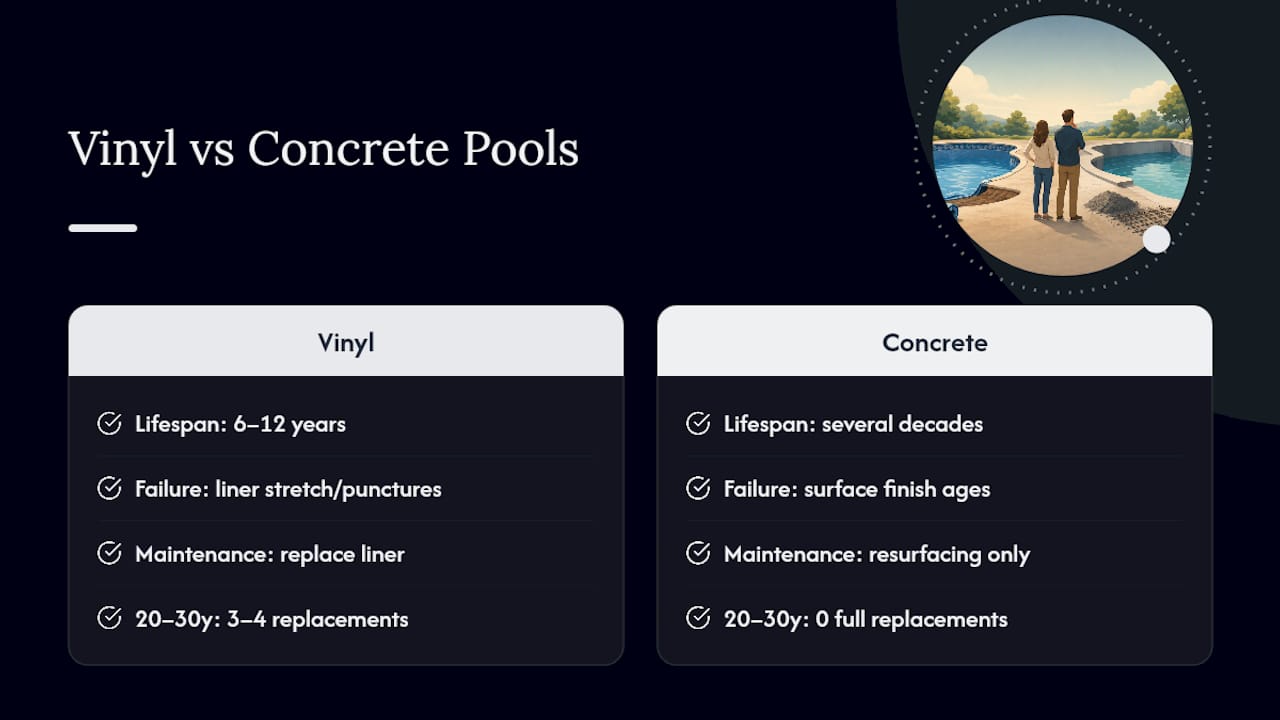
Concrete shells routinely outperform vinyl liners on raw lifespan, which is the entire financial argument for converting in the first place. A vinyl liner typically needs replacement every 6 to 12 years depending on water chemistry and sun exposure, while a properly built gunite shell can last several decades with resurfacing rather than full replacement.
The difference comes down to what actually fails. Vinyl liners degrade through stretching, fading, and small punctures that eventually can’t be patched anymore. A concrete shell doesn’t have a liner to replace at all. What ages over time is the surface finish, plaster or aggregate, and that’s a resurfacing job rather than a full liner swap.
That said, concrete isn’t immune to problems. Shells can crack if soil shifts underneath them or if the rebar grid wasn’t spaced and tied correctly during construction, which is exactly why the geotechnical checks in the site considerations above matter so much before you sign a contract. A concrete pool built on unstable soil without proper stabilization can develop structural cracks faster than a vinyl pool would show liner wear.
Over a 20 to 30 year ownership window, most homeowners spend less in total on a concrete pool than on a vinyl pool cycling through three or four liner replacements, since converting to a permanent structure removes that recurring cost entirely. The upfront number is bigger. The lifetime number often isn’t.
Does Converting to Concrete Change Energy Efficiency and Heating?
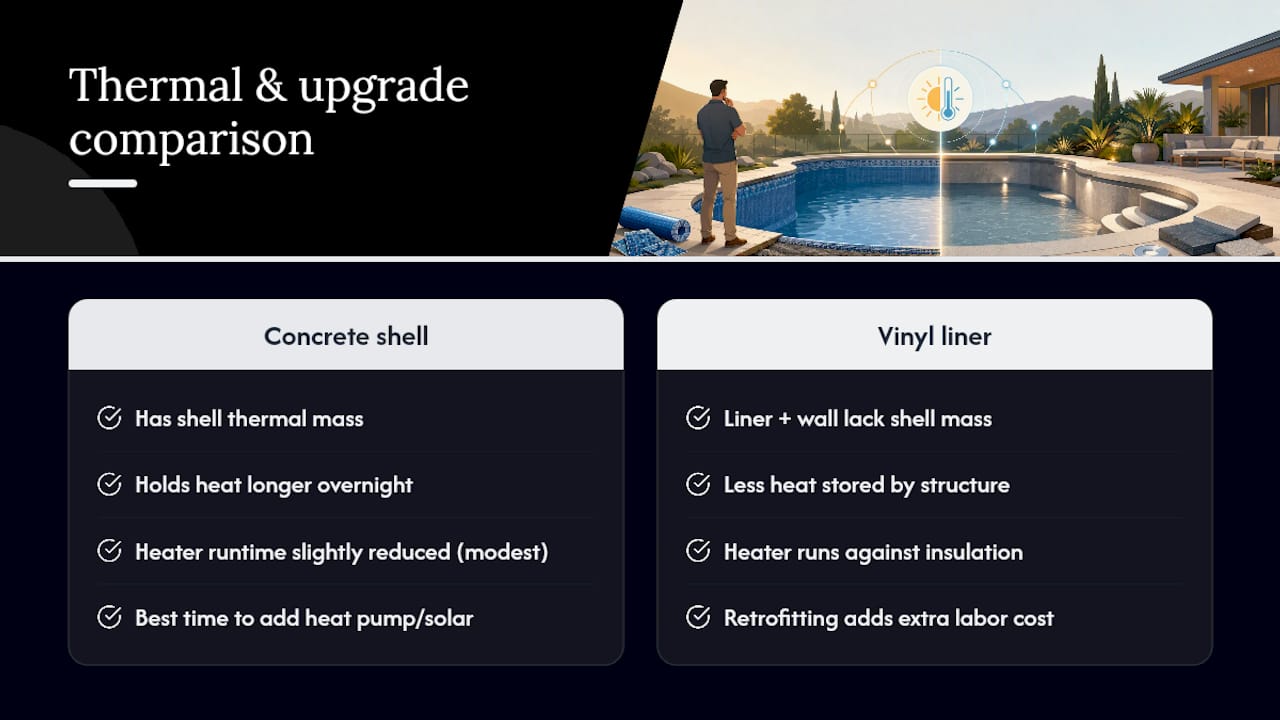
Converting to concrete changes your pool’s thermal behavior more than most homeowners expect. Concrete holds heat differently than a vinyl-lined pool because the shell itself has thermal mass a liner and its underlying wall structure don’t.
A concrete shell tends to hold heat longer overnight once your heater has brought the water up, since the surrounding gunite acts like a heat sink rather than an insulator working against you. That can mean slightly reduced heater run time compared with a vinyl pool of the same size and location, though the effect is modest and depends heavily on your climate, pool cover use, and heater type.
Conversion is also the ideal moment to upgrade heating equipment, since you’re already replacing plumbing and running new electrical anyway. Homeowners installing a heat pump or solar heating system during conversion avoid the extra labor cost of retrofitting those systems onto an existing pad later. If energy efficiency matters to you, ask your contractor to size the new equipment for the finished shell rather than reusing whatever heater came with the vinyl pool, since flow rates and plumbing diameters often change during the rebuild.
Automation upgrades fit into this same window. Variable-speed pumps and smart controllers installed during conversion typically cost less than adding them as a standalone project once the deck is closed back up.
Can You Redesign Your Pool’s Shape During Conversion?
Concrete gives you design freedom vinyl never offered, and conversion is the one time it’s genuinely practical to use it. Vinyl liners come in a limited set of manufactured shapes and sizes, which is part of why so many vinyl pools look like rectangles or simple kidney forms. Gunite and shotcrete get sprayed into whatever form your contractor builds, so free-form curves, tanning ledges, and custom depth profiles all become options.
This is also the point where features like raised walls, spas, or waterfalls make the most sense to add, since the plumbing and electrical work is already open. A pool waterfall added during conversion costs less than retrofitting one onto a finished concrete pool later, because the crew is already trenching for other utilities.
Depth changes are another common request. Homeowners converting an older vinyl pool with a deep end they never use often flatten the profile for a more usable swim space, or add a sun shelf where none existed. None of that is possible with a vinyl liner constrained by manufacturer shapes, but it does add design and engineering time to your project, so mention any layout changes to your contractor before the estimate stage, not after.
Is a Concrete Pool Conversion More Environmentally Sound?
A concrete conversion has a mixed environmental profile, and it’s worth being honest about both sides. On the plus side, eliminating vinyl liner replacements every 6 to 12 years cuts down on the manufacturing and disposal cycle tied to that vinyl material over the life of your pool. Fewer liners in landfills is a real, if modest, benefit.
On the other side, gunite and shotcrete production carry a real carbon footprint. Cement manufacturing is energy-intensive, and a conversion project uses several cubic yards of material for even a modest-sized pool. The demolition phase also generates debris, from old vinyl liner and wall panels to excavated soil, that needs proper disposal.
Where conversion tends to net out better environmentally is the equipment upgrade path. Because you’re already replacing plumbing and electrical during the rebuild, it’s a practical point to add variable-speed pumps, LED lighting, and more efficient heating equipment, all of which lower your pool’s ongoing energy draw for the rest of its life. A pool that runs a smart pump for 20 years offsets a fair amount of the embodied carbon in its initial construction.
Will Converting to Concrete Change Your Pool Insurance?
Converting from vinyl to concrete can affect your homeowners insurance, and it’s worth a call to your carrier before construction starts, not after. Insurers typically look at three things when a pool changes: the type of structure, its safety features, and its replacement value.
A concrete pool generally carries a higher replacement value than the vinyl pool it replaced, since the rebuild cost reflects current construction pricing rather than what the original pool cost decades ago. That higher valuation can shift your dwelling or personal property coverage limits, and some carriers reassess liability coverage once they know a major structural change has occurred on the property.
Permits and inspections completed during conversion tend to work in your favor here. Insurers often want documentation that the new structure meets current code, particularly around electrical bonding and barrier requirements, so keep copies of your permit approvals and final inspection sign-offs. Missing that paperwork is one of the more common reasons a claim gets delayed later, regardless of how well the pool itself was built.
If your policy specifically priced vinyl liner replacement into its terms, expect that clause to disappear once concrete replaces it, which may lower one line item on your premium even as the overall replacement value rises.
Why Feasibility, Not Cost, Should Drive Your Decision
The conventional pitch on vinyl-to-concrete conversion treats it like a renovation, something closer to a new liner or a resurfacing job. That framing undersells what’s actually happening underground, and it sets homeowners up to be blindsided by change orders once demolition starts.
What the evidence actually supports is simpler: treat this like building a new gunite pool that happens to reuse your existing hole. Once you accept that framing, the cost, the timeline, and the permitting requirements all make sense instead of feeling like scope creep.
Where most guides fall short is glossing over site conditions. Soil and groundwater don’t show up in a glossy brochure, but they’re the single biggest reason bids grow mid-project. If you take one thing from this guide, make it this: get a proper site inspection with a written exceptions list before you sign anything, and choose a contractor who’s willing to document that process rather than rush you to a number.
— Results
How R&R Swimming Pools Handles Your Conversion Project
Randrswimmingpools has been building custom concrete pools across Central Florida since 1985, which means we’ve walked this exact conversion process with homeowners who started right where you are now, staring at a tired vinyl liner and wondering if concrete is worth it.

A free quote from our team includes a real site review, not a drive-by estimate. We check soil conditions, evaluate your existing wall panels, and build a phased estimate that spells out demolition, structural work, plumbing and electrical upgrades, and finishes as separate line items so you know exactly what you’re paying for. We also handle permit coordination directly, which removes one of the biggest sources of delay on a project like this. For homeowners weighing the upfront investment, our financing options can spread the cost of a conversion into manageable payments. If you’re ready to see what conversion looks like for your specific backyard, request a free quote through our inground pool installation guide and we’ll schedule a site visit.
Sources
- Changing Vinyl Pool to Concrete: 2026 Costs – Creative Edge Pools
- Swimmingpoolsteve
- How To Convert A Vinyl Pool To A Concrete Pool – Concrete Captain
- How Can You Convert Your Vinyl Liner Pool to Concrete? – Schiller Pools
