
TL;DR:
- Florida well water contains minerals that cause staining and scaling, requiring proactive testing and treatment before pool filling. Proper chemical sequencing, regular testing, and the use of sequestrants are essential to prevent damage from iron, manganese, and calcium. Managing mineral levels ensures clearer water and longer-lasting pool surfaces and equipment.
Florida well water is defined by high mineral content and dissolved metals that directly disrupt pool chemistry, cause staining, and increase maintenance demands before a single swimmer enters the water. Understanding the well water effects on pools in Florida means knowing that calcium, iron, and manganese are your primary adversaries. These minerals arrive in concentrations that can exceed safe pool thresholds from the very first fill. Proactive testing, sequestrant use, and Langelier Saturation Index (LSI) management are the three tools that separate a clear, healthy pool from a stained, scaling one.
What minerals and metals in Florida well water affect your pool?
Florida’s geology is built on limestone aquifers. That geology means calcium hardness is naturally high before any pool chemicals are added. The ideal pool calcium hardness range is 200–400 ppm. Florida well water calcium hardness typically ranges from 200–450 ppm, which means you can exceed the safe ceiling on day one of filling your pool.
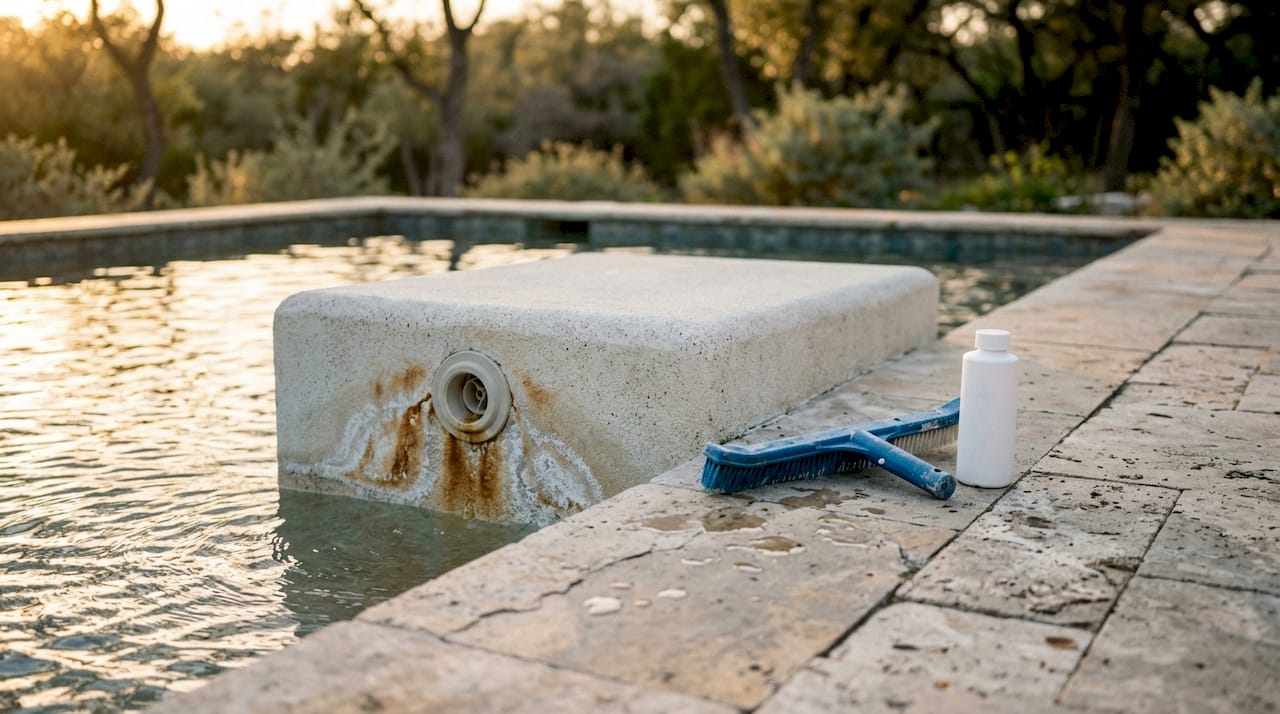
Iron and manganese are the second major concern. Both metals are colorless when dissolved in water, but they oxidize the moment they contact chlorine. Oxidized iron turns water brown or orange and leaves rust-colored stains on plaster, tile grout, and vinyl liners. Oxidized manganese produces black or purple staining that homeowners routinely misidentify as algae.
These minerals also affect your pool’s chemistry in less visible ways:
- Calcium hardness above 400 ppm accelerates scale formation on pool walls, heater elements, and pump impellers, reducing equipment lifespan.
- Iron above 0.3 ppm increases chlorine demand, meaning your sanitizer gets consumed faster and your water stays cloudy longer.
- Manganese above 0.05 ppm creates persistent dark staining that resists standard brushing and shock treatments.
- Elevated mineral content raises total dissolved solids (TDS), which reduces the effectiveness of every chemical you add.
Pro Tip: Test your well water for iron, manganese, and calcium hardness before filling your pool. A baseline reading tells you exactly which problems to expect and prevents expensive reactive treatments later.
High Florida temperatures compound these issues. Chlorine demand doubles above 85°F, and Florida pools sit at or above that threshold for most of the year. When metals are present, that elevated chlorine demand accelerates oxidation and staining. Managing minerals is not optional in Florida. It is the foundation of every other maintenance decision you make.
How do well water minerals affect pool chemistry and maintenance?
The impact of well water on pools goes well beyond surface stains. High calcium and metal content force you to rethink your entire maintenance routine, starting with the order in which you add chemicals.
Proper treatment sequencing is critical: adjust pH first, then add a metal sequestrant, and only shock the pool after metals are managed. Reversing this order is the most common and most costly mistake Florida homeowners make. Shocking a pool with dissolved iron or manganese present causes immediate oxidation. The metals precipitate out of solution and bond to pool surfaces within hours, creating stains that require acid washing or professional removal.
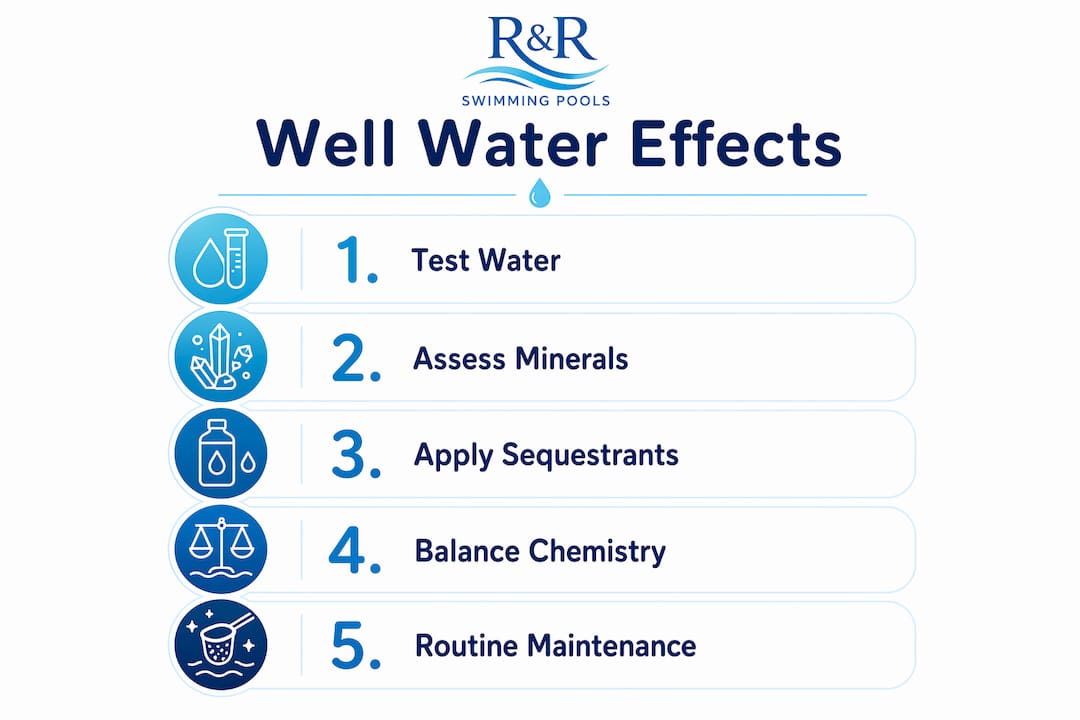
Here is the correct sequence for managing well water chemistry:
- Test your water first. Measure pH, calcium hardness, alkalinity, iron, and manganese before adding anything.
- Adjust pH to 7.2–7.4. Ideal pH is 7.2–7.4; pH above 7.6 reduces chlorine shock efficiency by up to 75%.
- Add a metal sequestrant. Sequestrants bind dissolved metals and keep them in solution rather than letting them oxidize and stain surfaces.
- Wait 24–48 hours. Allow the sequestrant to work before introducing oxidizers.
- Shock the pool. With metals sequestered, chlorine sanitizes without triggering staining.
- Retest and balance. Confirm alkalinity (80–120 ppm), calcium hardness, and cyanuric acid levels are within range.
Managing calcium hardness in a Florida pool relies on LSI balancing and periodic partial water replacement. Calcium removal by chemical means is ineffective. The LSI accounts for pH, temperature, calcium hardness, and alkalinity together. Keeping the LSI between 0 and +0.3 prevents both scaling and corrosion. When calcium hardness climbs above 500 ppm, partial draining and refilling with fresh water is the only practical solution.
Cyanuric acid (CYA) plays a specific role in Florida pools. CYA stabilizes chlorine against UV degradation, which is intense year-round in Central Florida. The recommended CYA range is 30–50 ppm for non-salt pools. Well water pools with high chlorine demand need consistent CYA monitoring because over-stabilization above 80 ppm renders chlorine ineffective, even at correct concentration levels.
Pro Tip: Add a monthly dose of metal sequestrant to your maintenance routine regardless of visible staining. Sequestrants degrade over time, and consistent use prevents metals from accumulating to staining thresholds.
What steps should Florida homeowners take to test well water for pools?
Testing well water for pools is not a one-time task. The Florida Department of Health recommends annual well water testing for coliforms and nitrates at county health labs, with costs ranging from $25–$50. After floods or well repairs, additional testing is mandatory. For pool-specific concerns, a full panel from a private lab covering metals, hardness, and TDS runs $150–$400.
For pool use specifically, your testing checklist should include:
- Calcium hardness (target: 200–400 ppm)
- Iron (target: below 0.3 ppm)
- Manganese (target: below 0.05 ppm)
- pH (target: 7.2–7.4)
- Total alkalinity (target: 80–120 ppm)
- Total dissolved solids (target: below 1,500 ppm)
- Bacteria and nitrates (per Florida Department of Health guidelines)
The table below shows how to interpret common well water test results for pool use:
| Test Parameter | Well Water Reading | Pool Impact | Recommended Action |
|---|---|---|---|
| Calcium hardness | Above 400 ppm | Scaling risk on surfaces and equipment | LSI balance; partial drain if above 500 ppm |
| Iron | Above 0.3 ppm | Brown/orange staining after chlorination | Add sequestrant before filling |
| Manganese | Above 0.05 ppm | Black/purple staining | Add sequestrant; avoid shocking first |
| pH | Below 7.2 or above 7.6 | Corrosion or reduced chlorine efficiency | Adjust before any other treatment |
| TDS | Above 1,500 ppm | Reduced chemical effectiveness | Partial water replacement |
Using metal sequestrants during pool fill prevents immediate staining better than treating after the fact. This is especially true for new plaster surfaces, which are porous and absorb metal stains within hours of exposure. Add sequestrant to the pool as it fills, not after it reaches capacity.
Pro Tip: Bring a water sample to your local pool supply store for a free basic test before committing to a full lab panel. If iron or manganese shows up even at low levels, invest in the full panel before filling.
How do you prevent and remove stains from well water in Florida pools?
Identifying the stain type correctly determines the treatment. Metal stains and organic stains require completely different approaches, and using the wrong treatment wastes money and can worsen the problem.
Identifying stain type
Metal stains from iron appear as brown, orange, or rust-colored marks, often concentrated near return jets or along the waterline where oxidation is highest. Manganese stains are dark brown, purple, or black and tend to spread across flat surfaces. Organic stains from leaves or algae are typically green or brown and follow the shape of the debris that caused them. The key diagnostic test: rub a vitamin C tablet (ascorbic acid) directly on the stain. If it lightens or disappears, the stain is metal-based.
Green water in well water pools is often metal oxidation, not algae. This is a widespread misconception that leads homeowners to add algaecide and shock, which worsens metal staining. Testing metals before treating green water saves chemicals and prevents surface damage.
Removing metal stains
Ascorbic acid treatment is the standard approach for iron and manganese stains. Broadcast ascorbic acid powder across the pool surface at roughly 1 pound per 10,000 gallons. The acid reduces oxidized metals back to their dissolved state, lifting stains from the surface. Follow immediately with a sequestrant to keep the metals in solution. Then rebalance pH and alkalinity before reintroducing chlorine.
For persistent stains, chelating agents provide stronger binding than standard sequestrants. Chelating agents form stable complexes with metal ions, preventing re-precipitation even as pH fluctuates. They are particularly useful in Florida pools where temperature swings and evaporation constantly shift water chemistry.
Preventing recurrence
- Maintain monthly sequestrant dosing to keep dissolved metals bound.
- Keep pH between 7.2 and 7.4 to minimize oxidation risk.
- Perform partial water replacement (10–15% of pool volume) every 6–12 months to reduce TDS and calcium accumulation.
- Monitor pool filtration performance regularly, as filters loaded with mineral deposits lose efficiency and allow metals to recirculate.
- Test well water after any heavy rain event or well service, since ground disturbance can temporarily spike iron and manganese levels.
Key Takeaways
Florida well water requires proactive mineral management, correct chemical sequencing, and regular testing to protect pool surfaces, equipment, and water clarity year-round.
| Point | Details |
|---|---|
| Test before you fill | Measure calcium, iron, manganese, and pH before adding water to prevent immediate staining. |
| Sequence chemicals correctly | Adjust pH first, add sequestrant second, and shock only after metals are managed. |
| Use sequestrants monthly | Regular sequestrant dosing keeps dissolved metals bound and prevents oxidation stains. |
| LSI balance controls scaling | Maintain the Langelier Saturation Index between 0 and +0.3 to prevent calcium scale buildup. |
| Identify stains accurately | Use the ascorbic acid test to confirm metal stains before treating, avoiding wasted chemicals. |
What 38 years of Florida pools taught me about well water
Most homeowners I talk to assume their pool problems are algae. Green water, dark stains, cloudy water after shocking. They have already bought algaecide and shock before they call anyone. Nine times out of ten, the real culprit is iron or manganese from their well. The shock made it worse.
The single biggest misconception I see is that well water pools need more chemicals. They actually need better-sequenced chemicals. A homeowner who adds sequestrant before shocking, keeps pH at 7.2, and doses monthly will spend less on chemicals annually than one who reacts to every stain with a bag of shock and a bottle of algaecide.
Florida’s climate intensifies every chemistry problem. Evaporation concentrates minerals faster here than in any northern state. UV burns through chlorine before it can sanitize. The pool chlorinator setup that works in Ohio needs recalibration the moment it hits a Central Florida summer. Add well water to that equation, and you have a pool that demands consistent, informed attention.
The homeowners who manage well water pools successfully share one habit: they test before they treat. Not after the stain appears. Not after the water turns green. Before. A $50 lab test at the county health department tells you everything you need to know to protect a pool that costs tens of thousands of dollars to build and resurface.
— Results
How Randrswimmingpools helps Florida homeowners get pool chemistry right
Florida well water creates real challenges, but the right guidance from the start prevents most of them. R and R Swimming Pools has been building and advising on custom inground pools across Central Florida since 1985, and well water chemistry is part of every conversation we have with new pool owners.
Whether you are planning a new build or managing an existing pool, the inground pool installation guide covers water source considerations, surface selection, and startup protocols specific to Florida conditions. For homeowners who want to go deeper on water chemistry, the Pool School resource walks through testing, treatment sequencing, and seasonal maintenance in plain language. Contact Randrswimmingpools directly for a consultation tailored to your well water situation and pool type.
FAQ
Does well water damage pool surfaces faster than city water?
Yes. Well water with iron above 0.3 ppm or calcium hardness above 400 ppm accelerates staining and scaling on plaster, tile, and vinyl surfaces. Sequestrant use and LSI management significantly reduce that damage rate.
How often should I test well water for my Florida pool?
Test your well water at least once a year per Florida Department of Health guidelines, and retest after any flood, heavy rain, or well repair. Test pool water weekly during swim season for pH, chlorine, and alkalinity.
Can I shock a pool filled with well water right away?
No. Shocking well water before adding a metal sequestrant causes dissolved iron and manganese to oxidize instantly, bonding to pool surfaces as permanent-looking stains. Always add sequestrant first, wait 24–48 hours, then shock.
What does green well water in my pool mean?
Green water in a well water pool is most often caused by oxidized iron or manganese, not algae. Use the ascorbic acid test on a stained surface to confirm. If the stain lifts, treat with ascorbic acid and sequestrant rather than algaecide.
Is it possible to lower calcium hardness in a Florida pool?
Chemical reduction of calcium hardness is not effective. The practical solution is partial draining and refilling with lower-hardness water when calcium exceeds 500 ppm, combined with LSI balancing to keep the water from scaling between replacements.
