
TL;DR:
- A pool barrier in Florida is a legally required safety enclosure that prevents unsupervised access to residential pools. Homeowners must ensure their barrier meets state and local standards, including height, gate operation, and gap restrictions, to avoid legal liability. Regular inspections, proper maintenance, and compliance verification are essential for safety and legal protection.
A pool barrier in Florida is a legally required safety enclosure or device that isolates a residential swimming pool to prevent unsupervised access, particularly by young children. The Florida Residential Swimming Pool Safety Act, codified under Chapter 515 of the Florida Statutes, mandates that every residential pool holding more than 24 inches of water must have at least one approved safety feature. Florida Building Code Section 454.2.157 sets the technical design standards for these barriers. Understanding what qualifies as a compliant barrier, and what does not, is the difference between a safe backyard and a serious legal liability.
What are the specific legal requirements for pool barriers in Florida?
Florida pool barrier laws apply to all residential pools built since october 1, 2000, and to applicable renovations. The Florida Residential Swimming Pool Safety Act requires at least one of several approved safety features, but a physical barrier remains the most common and most reliable choice.
The core fence and barrier specifications include:
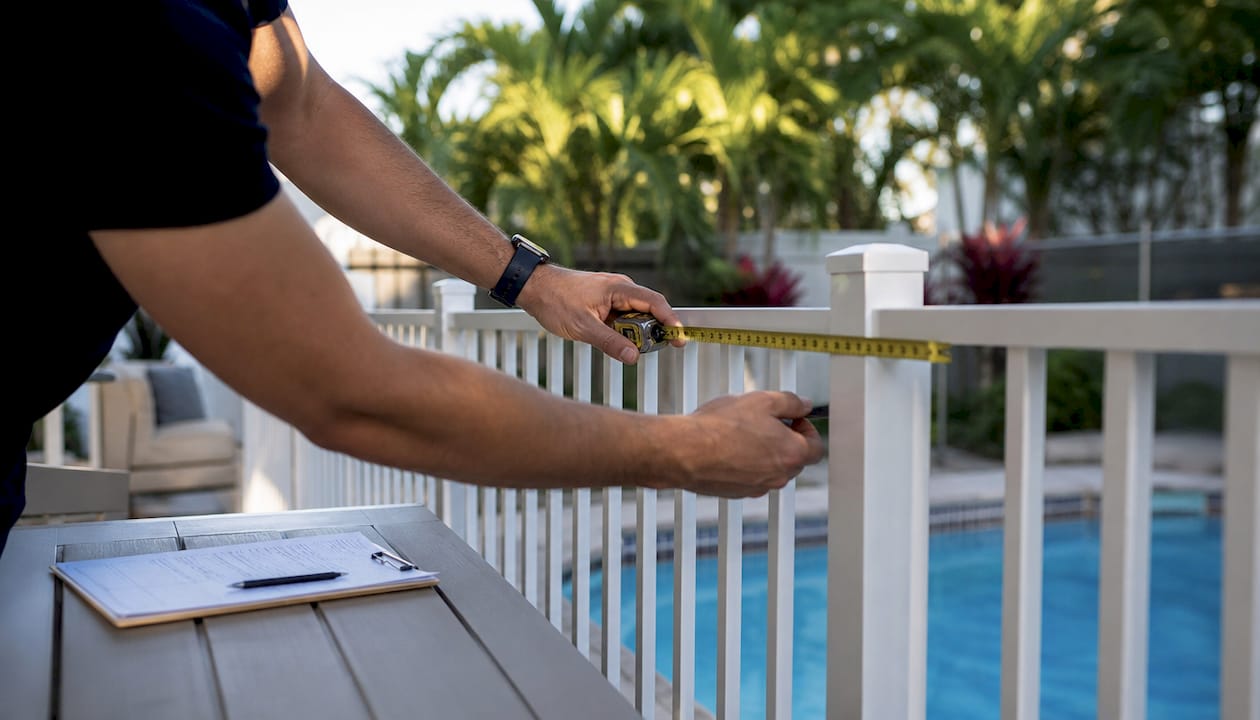
- Minimum height: The barrier must be at least 48 inches tall, measured from the outside ground level, not from the pool side.
- Climb resistance: Horizontal rails, decorative cutouts, or footholds on the exterior face are prohibited. The barrier must not give a child a way to climb over.
- Openings and gaps: Gaps in the fence cannot allow a 4-inch sphere to pass through. This standard prevents small children from squeezing between pickets or rails.
- Gate operation: Pool gates must open outward, away from the pool, and must be self-closing and self-latching at all times.
- Latch placement: The latch must sit on the pool side of the gate. If the latch is positioned below 54 inches from the ground, it must require the simultaneous use of both a hand and a finger to release. This design makes it nearly impossible for a toddler to operate.
- Home walls as barriers: When a wall of the house forms part of the barrier, every door and window opening onto the pool area must have a compliant alarm or be equipped with a self-closing, self-latching mechanism.
The Florida Building Code Section 454.2.157 aligns with the International Swimming Pool and Spa Code (ISPSC) Section 305.2. That alignment means Florida’s standards reflect nationally recognized engineering benchmarks, not just local preferences.
Pro Tip: Measure barrier height from the exterior ground level every time. Many homeowners measure from the interior side and unknowingly fall short of the 48-inch minimum.
How do local municipalities in Florida affect pool barrier rules?
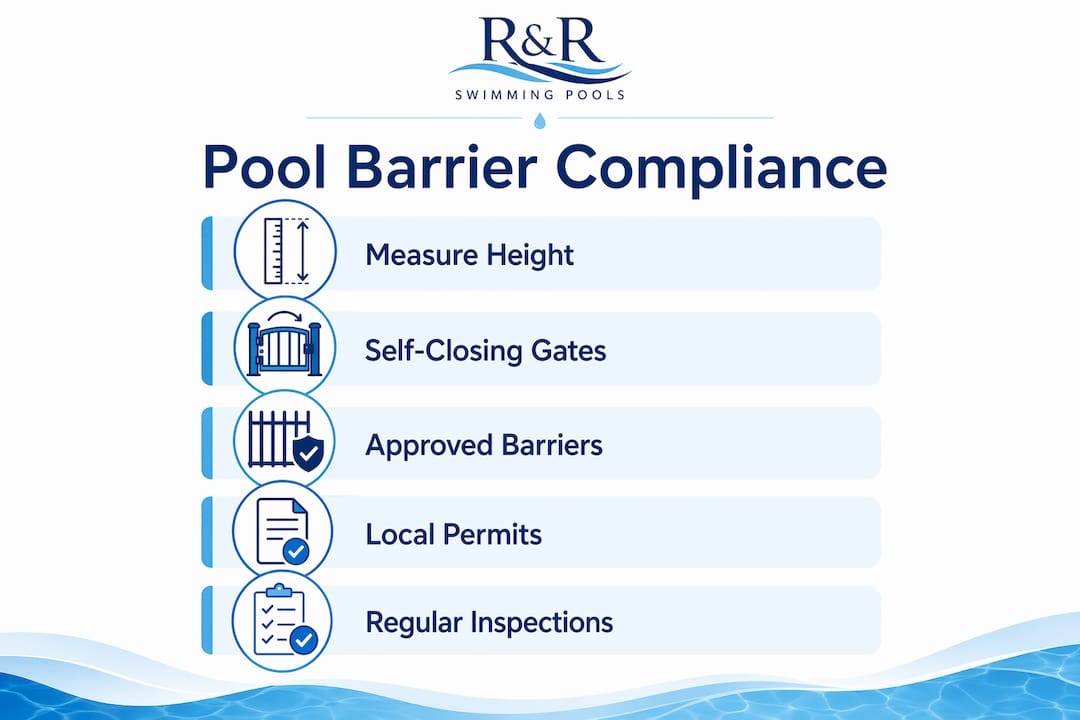
State law sets the floor, not the ceiling. Local municipalities such as Orlando and Cape Coral frequently add requirements beyond the state minimums, and those additions carry full legal weight. Ignoring local rules while following state code still puts you out of compliance.
Local building departments handle enforcement in several ways:
- Permit requirements: Most Florida counties require a permit before you install, replace, or significantly modify a pool barrier. Skipping the permit process can result in fines and mandatory removal of the barrier.
- Inspection at installation: A building inspector must typically sign off on the barrier before the pool can be used. This applies to new pool construction and to barrier replacements.
- Ongoing enforcement: Some municipalities conduct periodic spot checks, especially after a neighbor complaint or a reported incident.
- Variance processes: If your property layout makes standard barrier installation difficult, some local departments offer a variance process. You must apply formally and demonstrate that your alternative solution meets the safety intent of the code.
The consequences of noncompliance are real. Failing a building inspection delays your pool use, triggers re-inspection fees, and can expose you to civil liability if an accident occurs on your property. Regional pool regulations vary enough across Central Florida that what passes in one county may fail in another.
Pro Tip: Call your local building department before you purchase any barrier materials. Ask specifically whether your municipality has adopted any amendments to the state code. That five-minute call can save you thousands in rework.
What are the common types of pool barriers that comply with Florida law?
Common pool barrier types include fences, screen enclosures, safety covers, and door or window alarms. Each option has distinct strengths, and Florida law allows homeowners to combine multiple features for layered protection.
Fences
A fence is the most widely used standalone barrier in Florida. Aluminum, vinyl, and wrought iron are the most common materials. Wood is permitted but requires more maintenance to stay compliant, since warped boards or rotting posts can create gaps that violate the 4-inch sphere rule. The fence must form a continuous enclosure around the pool, with no gaps at the base or sides that a child could exploit.
Screen enclosures
Screen enclosures qualify as approved barriers when they meet structural and door closure requirements. Every door in the enclosure must be self-closing and self-latching. The role of pool enclosures in Florida goes beyond safety. They also keep out insects and debris, which makes them a popular choice for homeowners who want dual functionality.
Safety covers and alarms
A safety cover is a motorized or manual cover that physically prevents access to the water surface. To qualify as a barrier under Florida law, the cover must meet ASTM International standards for load-bearing capacity and must be in place whenever the pool is not in use. Door and window alarms are approved as an alternative safety feature when a home wall forms part of the barrier. The alarm must sound within 7 seconds of the door or window opening and must be loud enough to be heard throughout the home.
The table below compares the primary barrier types on key compliance factors:
| Barrier type | Minimum height required | Self-closing gate required | Approved as standalone barrier |
|---|---|---|---|
| Fence | 48 inches | Yes | Yes |
| Screen enclosure | 48 inches | Yes | Yes |
| Safety cover (ASTM rated) | N/A | N/A | Yes |
| Door/window alarm | N/A | N/A | Yes (when wall is part of barrier) |
Relying solely on door alarms without a continuous physical barrier carries more risk. An alarm can malfunction, batteries can die, and a child can move faster than an adult can respond. The most reliable approach is an independent enclosure that fully isolates the pool from both the home and the yard.
What practical steps should Florida homeowners take for barrier compliance?
Compliance is not a one-time event. It requires an initial setup, periodic checks, and attention to specific life events like selling your home. The pool safety guide for Central Florida homeowners outlines the full process, but the core steps are straightforward.
- Confirm your pool requires a barrier. Any residential pool holding 24 inches or more of water falls under Chapter 515. If your pool was built before october 1, 2000, and has not been renovated since, check with your local building department to confirm your obligations.
- Measure your existing barrier. Use a tape measure on the exterior side of the fence. Check every gate for self-closing and self-latching function. Push a 4-inch object against every gap to test compliance. Do this at multiple points along the fence line, not just at the gate.
- Pull the required permits. Contact your local building department before any installation or repair work begins. Unpermitted barrier work can void your homeowner’s insurance coverage and create problems at resale.
- Maintain your gate hardware. Self-closing hinges and self-latching mechanisms wear out. Test them monthly. Replace springs and latches at the first sign of failure. A gate that swings open and stays open is a code violation, regardless of how compliant the fence itself is.
- Schedule a professional inspection. Hire a certified pool inspector or ask your local building department for a compliance check. Pool inspections in Central Florida catch issues that homeowners routinely miss, including subtle grade changes that reduce effective fence height.
- Address disclosure requirements before selling. Florida common law requires sellers to disclose pool safety features and confirm they are compliant at the time of sale. A non-compliant barrier discovered during a buyer’s inspection can delay or kill a deal.
- Keep records. Save your permits, inspection reports, and any receipts for barrier repairs. These documents protect you if a liability question ever arises.
Pro Tip: After any significant storm, walk the full perimeter of your pool barrier. High winds and flooding can shift fence posts, warp gates, and compromise latch alignment. A post-storm check takes ten minutes and can prevent a compliance failure.
Key Takeaways
Florida pool barriers are legally required safety enclosures under Chapter 515 and Florida Building Code Section 454.2.157, and compliance requires both proper installation and ongoing maintenance.
| Point | Details |
|---|---|
| Legal threshold | Any pool holding 24 inches or more of water requires at least one approved safety feature under Florida law. |
| Minimum fence height | Barriers must reach 48 inches, measured from the exterior ground level, not the pool side. |
| Gate standards | Gates must open outward, self-close, and self-latch, with the latch on the pool side at all times. |
| Local rules add requirements | Municipalities like Orlando and Cape Coral enforce additional standards beyond state minimums. |
| Disclosure at sale | Florida homeowners must confirm pool barrier compliance when selling their property. |
What I’ve learned after decades of building Florida pools
After nearly 40 years of installing pools across Central Florida, the pattern I see most often is not willful neglect. It is honest confusion. Homeowners install a fence, assume they are done, and never realize the gate latch is on the wrong side or that the fence height drops below 48 inches at a low spot in the yard. Those small details are exactly what inspectors look for, and exactly what plaintiff attorneys look for after an accident.
The homeowners who handle this best treat the barrier as a system, not a single item. They check the gate hardware every few months the way they check smoke detector batteries. They call the building department before they make any changes, not after. And they do not rely on alarms as a substitute for a physical enclosure. Alarms are a supplement. A fence that fully isolates the pool is the foundation.
One thing I wish more homeowners understood: the pool safety fencing conversation should happen before the pool is designed, not after it is built. The placement of the pool relative to the house, the grade of the yard, and the location of doors and windows all affect what kind of barrier works best. Getting that right from the start costs far less than retrofitting a non-compliant setup later.
— Results
Randrswimmingpools builds pools that meet Florida’s barrier standards from day one
Randrswimmingpools has been designing and installing custom inground pools across Central Florida since 1985. Every project includes guidance on barrier placement, permit requirements, and local code compliance so you are not left figuring it out after the concrete is poured.

Whether you are planning a new pool or need to bring an existing installation into compliance, the inground pool installation guide covers the full process, including barrier requirements specific to your county. R and R Swimming Pools works directly with local building departments across Central Florida to make sure every pool we build passes inspection the first time. Reach out for a free consultation and get a clear picture of what your project requires before you spend a dollar.
FAQ
What is a pool barrier under Florida law?
A pool barrier is any approved safety feature that isolates a residential pool from unsupervised access. Florida law under Chapter 515 requires at least one approved feature for any pool holding more than 24 inches of water.
How tall does a pool fence need to be in Florida?
Florida pool fence requirements set the minimum at 48 inches, measured from the exterior ground level. The measurement must be taken from the side of the barrier facing away from the pool.
Do pool gates have to be self-closing in Florida?
Yes. Florida pool barrier laws require all pool gates to open outward, away from the pool, and to be both self-closing and self-latching at all times, with the latch positioned on the pool side.
Can a screen enclosure serve as a pool barrier in Florida?
A screen enclosure qualifies as an approved barrier when every door is self-closing and self-latching and the structure meets the required height and structural standards under the Florida Building Code.
Do I need to disclose pool barrier compliance when selling my home?
Yes. Florida common law requires sellers to confirm that pool safety features are compliant at the time of sale. A non-compliant barrier must be disclosed and can affect the transaction.
