
TL;DR:
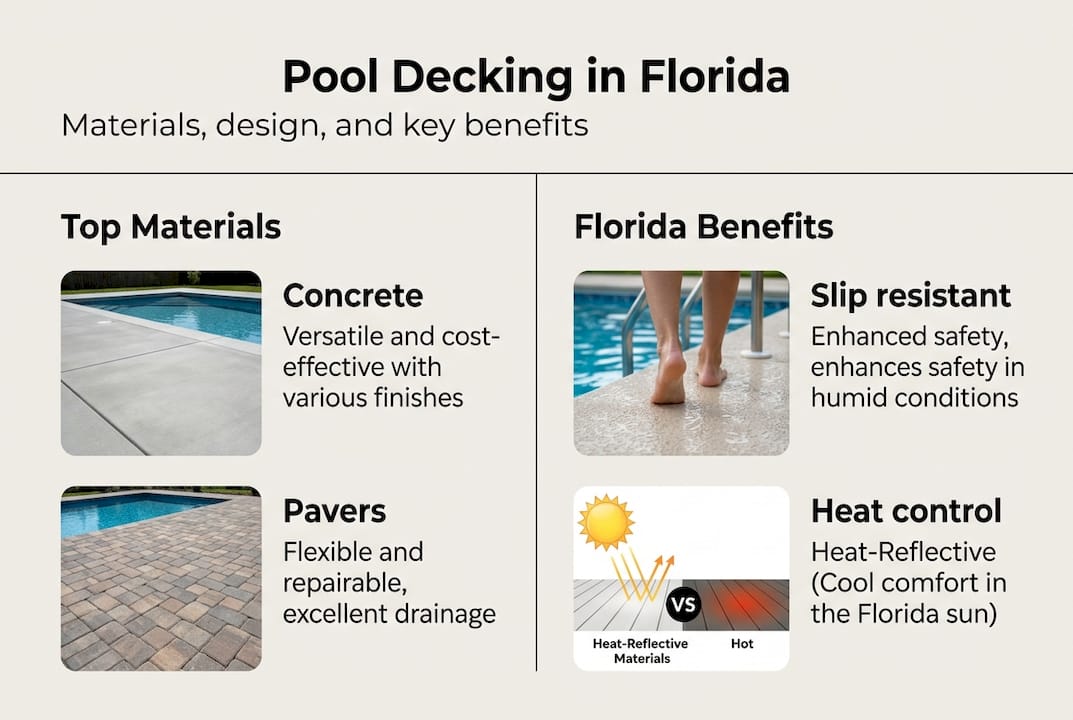
- Proper pool decking enhances safety, comfort, drainage, and aesthetic appeal in backyard pools.
- Lighter-colored pavers and natural stone stay cooler and resist heat better for barefoot use.
- In Central Florida, soil movement, storms, and UV exposure require durable, well-maintained decking solutions.
Most homeowners spend months picking the perfect pool shape, water features, and tile color, then treat the surrounding deck as an afterthought. That’s a costly mistake. Pool decking covers more square footage than the pool itself, takes the most physical abuse from sun, rain, and foot traffic, and directly affects how safe and comfortable your backyard actually feels. In Central Florida, where summer temperatures routinely push past 90°F and afternoon thunderstorms are practically a daily ritual, the wrong decking material can leave you with cracked slabs, scorched feet, and a yard that looks worn out within a few years. Here’s everything you need to know to get it right.
Table of Contents
- What is pool decking and why it matters
- Popular pool decking materials: Pros, cons, and best uses
- Installation and maintenance: What every Florida homeowner should expect
- Resurfacing vs. replacement: When and how to update your pool deck
- Addressing unique Florida challenges: Settlement, storms, and style
- Our take: Rethinking pool decking for lasting enjoyment
- Ready to start your dream pool project?
- Frequently asked questions
Key Takeaways
| Point | Details |
|---|---|
| Pool decking defined | Pool decking is the durable, slip-resistant surface around your pool that enhances safety and style. |
| Material selection matters | Choosing the right deck material impacts comfort, durability, and maintenance in Florida’s climate. |
| Resurfacing vs. replacement | Resurfacing solves minor wear while replacements are needed for major cracks or settling. |
| Regional challenges | Florida homeowners must prepare for storms and soil movement with professional-grade deck solutions. |
What is pool decking and why it matters
Let’s start with a clear definition. Pool decking is the paved or finished surface surrounding an inground swimming pool, typically extending at least 4 feet from the pool edge, providing a functional area for walking, lounging, and safety. It is not the same as pool coping, which is the narrow cap material that borders the pool edge itself. Decking is everything beyond that border, stretching outward to create your outdoor living zone.
People often confuse decking with pure decoration. In reality, it serves several critical functions:
- Safety: A properly finished deck provides a non-slip surface that reduces the risk of falls, especially when wet.
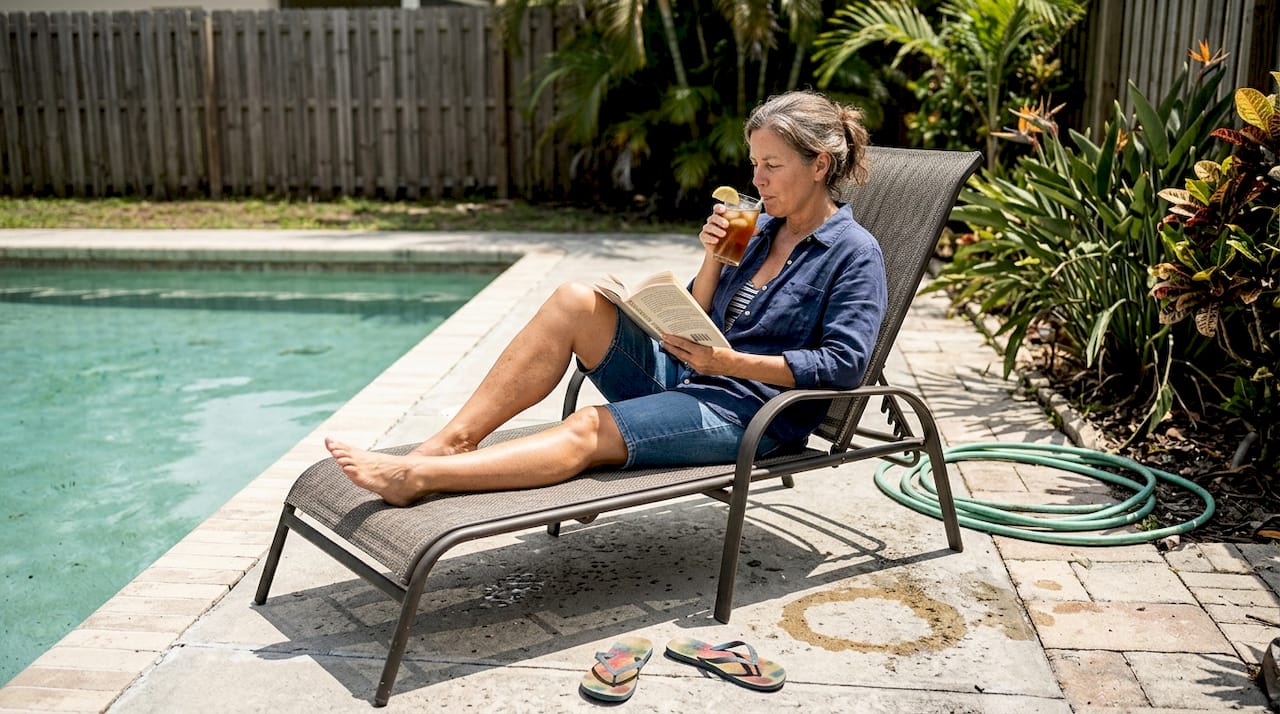
- Comfort: The right material stays cool enough to walk on barefoot, even in July.
- Functionality: It creates space for lounge chairs, outdoor furniture, and entertaining.
- Drainage: A correctly graded deck channels water away from the pool and your home’s foundation.
- Aesthetic integration: It ties your pool visually to the rest of your landscaping and outdoor design.
“The deck is the frame around the painting. Get it wrong, and even the most beautiful pool looks unfinished.”
In Central Florida, these functions carry extra weight. The intense UV exposure fades and degrades certain materials faster than in cooler climates. Heavy seasonal rainfall demands proper drainage slopes. And because most homeowners use their pools year-round, the deck endures far more wear than in northern states. Pairing great pool landscaping ideas with the right decking material creates a cohesive outdoor space that actually holds up over time.
Popular pool decking materials: Pros, cons, and best uses
Choosing a material is where most homeowners feel overwhelmed. There are four main options, and each has real trade-offs worth understanding before you commit.
| Material | Avg. cost per sq. ft. | Heat absorption | Slip resistance | Maintenance level |
|---|---|---|---|---|
| Concrete | $6-$10 | High | Moderate (textured) | Low to moderate |
| Pavers | $10-$20 | Moderate | High | Low |
| Natural stone | $15-$30 | Moderate to low | High | Moderate |
| Composite/wood | $20-$35 | Low | High | Moderate to high |
Concrete is budget-friendly and versatile but prone to cracking and heat absorption, while stone and pavers cost more upfront yet offer longevity, easier repairs, and cooler surfaces ideal for barefoot use in the Florida sun.
Here’s what that looks like in practice:
- Concrete: Great for custom shapes and stamped patterns. Sealing helps, but it still absorbs heat and can crack with soil movement.
- Pavers: Individual units mean one cracked piece gets replaced without tearing up the whole deck. They also allow water to drain between joints. Learn more about pool paver benefits for Florida homes.
- Natural stone: Travertine is especially popular in Florida because it stays noticeably cooler than concrete. Higher upfront cost, but it rarely needs resurfacing.
- Composite/wood: Beautiful look, but wood requires significant upkeep in Florida’s humidity. Composite is more durable but pricier.
For homeowners exploring concrete pool advantages, the deck material should complement the pool shell’s design and long-term maintenance plan.
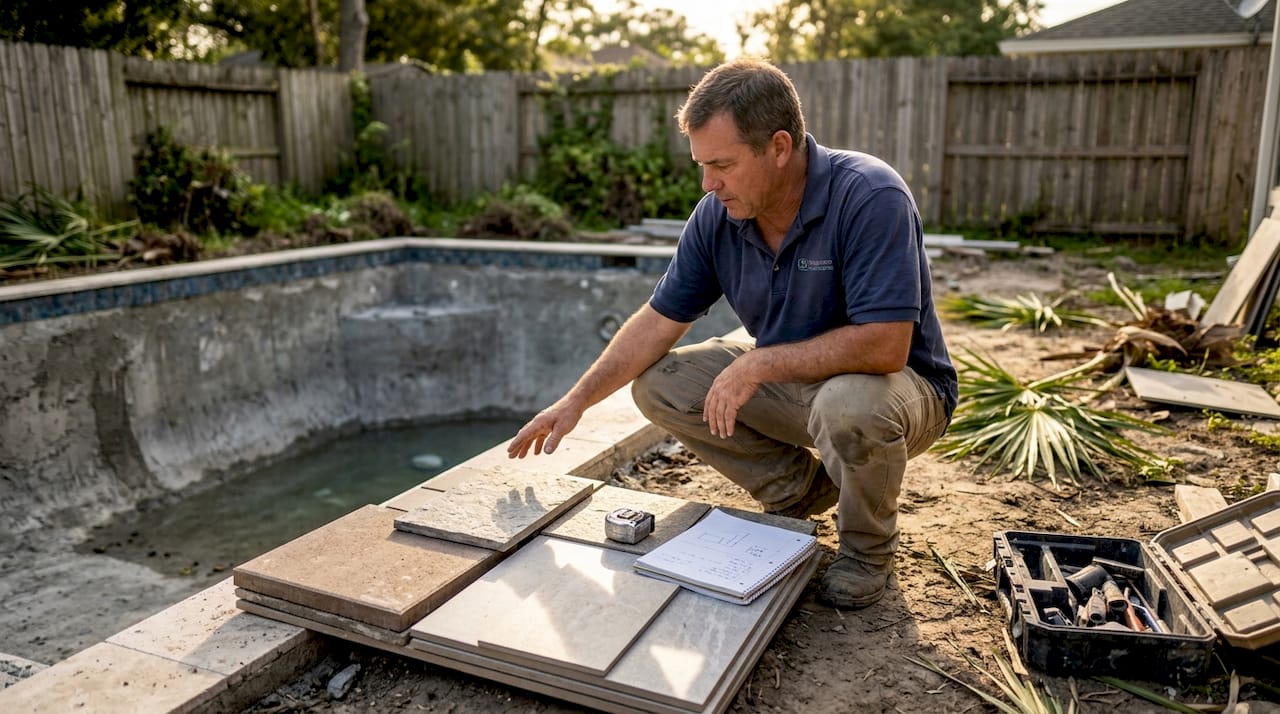
Pro Tip: Choose lighter-colored or textured pavers over dark concrete if barefoot comfort is a priority. Lighter shades reflect more sunlight and can feel 10 to 15 degrees cooler underfoot on a hot afternoon.
Installation and maintenance: What every Florida homeowner should expect
Knowing what to expect during installation prevents surprises and helps you ask the right questions when working with a contractor. Here’s a simplified overview of how pool deck installation typically works:
- Site preparation: The ground is graded and compacted to achieve a 2% slope away from the pool, directing water toward drainage points and protecting your foundation.
- Material placement: Concrete is poured and formed, or pavers are laid and interlocked according to the design plan.
- Finishing: Surfaces are textured for slip resistance. Concrete may be stamped, brushed, or exposed-aggregate finished.
- Sealing: A quality sealant is applied to protect against UV damage, staining, and moisture intrusion. For concrete, isolation joints are cut at the pool edge to allow natural movement without cracking.
Installation involves site grading, compaction for a 2% slope, material placement, texturing for slip resistance, and sealing, with concrete requiring isolation joints at the pool edge to prevent cracking.
Once your deck is installed, maintenance keeps it safe and looking great. Key tasks include:
- Resealing concrete every 2 to 3 years
- Power washing to remove algae, mold, and sunscreen buildup
- Checking for cracks or lifted pavers after heavy storms
- Clearing debris from drainage joints promptly
Pro Tip: Schedule your annual deck inspection right after hurricane season ends in November. That’s when storm-related damage is easiest to catch before it worsens over winter.
Most surface-level touch-ups take 2 to 5 days to complete. Major structural repairs take considerably longer, so catching problems early saves both time and money. Review the full pool installation process to understand how decking fits into the bigger construction picture, and bookmark these pool maintenance tips for ongoing care.
Resurfacing vs. replacement: When and how to update your pool deck
Even a well-maintained deck eventually needs attention. The key question is whether you need resurfacing or a full replacement, because the cost and disruption differ significantly.
| Option | Typical cost savings | Project timeline | Best for |
|---|---|---|---|
| Resurfacing | 30-50% less than replacement | 2-5 days | Cosmetic wear, surface cracks |
| Full replacement | Baseline cost | 1-3 weeks | Structural damage, major settlement |
Resurfacing costs 30 to 50% less than full replacement and wraps up in 2 to 5 days, making it the right call for cosmetic and surface-level issues. Full replacement is necessary when structural settlement or cracking exceeds what a coating can fix.
Warning signs that you likely need full replacement rather than resurfacing:
- Cracks wider than 2 inches or cracks that have shifted vertically
- Sections of the deck that have sunk or heaved noticeably
- Water pooling toward the pool or home instead of draining away
- Widespread surface deterioration beneath the finish layer
“Resurfacing a structurally compromised deck is like painting over rust. It looks better for a season and then the problem comes back worse.”
Central Florida adds specific complications. Hurricane displacement and clay soil settlement are common in Central Florida and require slab lifting with polyurethane foam or paver re-bedding before any refinishing work begins. Skipping that step means your fresh resurfacing job cracks again within a year.
Exploring your pool renovation options alongside a deck update can also be a smart move. Combining a pool renovation with a deck replacement often reduces overall labor costs and minimizes backyard disruption.
Addressing unique Florida challenges: Settlement, storms, and style
Central Florida is not an average pool market. The combination of sandy and clay-heavy soils, intense UV radiation, and a hurricane season that runs June through November creates conditions that demand more from your decking than most guides acknowledge.
Here’s what makes this region uniquely challenging:
- Clay soil movement: Clay expands when wet and contracts when dry, creating constant pressure beneath your slab that leads to cracking and settlement over time.
- Hurricane-force winds and flooding: Storm surges and heavy rain can shift slabs, wash out base material, and undermine pavers.
- Year-round UV exposure: Florida’s sun degrades sealants and surface finishes faster than in northern states, requiring more frequent resealing.
- High humidity: Moisture trapped beneath or within the deck promotes mold, mildew, and surface deterioration.
Clay soil settlement and hurricane displacement are common in Central Florida and often require slab lifting with polyurethane foam or paver re-bedding before any surface work can begin.
Pro Tip: After any named storm passes through your area, walk your entire deck perimeter and look for gaps between the deck and pool coping, lifted pavers, or new cracks. Catching these early prevents water from infiltrating the base layer and making the problem exponentially worse.
Strategic design choices also help. Lighter deck colors reduce heat retention. Permeable paver systems handle heavy rain better than solid concrete. And integrating shade structures or pergolas over seating areas reduces the UV load on your deck surface significantly. Staying on top of deck maintenance in Florida is the single most effective way to protect your investment year after year.
Our take: Rethinking pool decking for lasting enjoyment
After building pools across Central Florida since 1985, we’ve seen a consistent pattern. Homeowners who choose decking based on a photo in a magazine often end up frustrated within three to five years. The material looked stunning in a California backyard with mild weather. In Orlando, it cracked, faded, or turned into a barefoot hazard by midsummer.
The smarter approach is to lead with function and let aesthetics follow. Ask yourself: How hot does this surface get at 2 p.m. in August? How does it handle a three-inch rainstorm? What happens if one section cracks? Materials that answer those questions well, like travertine pavers or textured light-colored concrete, tend to look great for decades because they’re not fighting the climate.
The other lesson we’d share is that decking and integrating landscaping and decking work best when planned together from the start. Homeowners who treat them as separate projects often end up with a beautiful deck that clashes with the surrounding yard, or landscaping that traps moisture against the deck edge. Plan them as one unified outdoor living space and the results are dramatically better.
Ready to start your dream pool project?
You now have a solid foundation for making smart decking decisions. But reading about materials and installation is only part of the picture.
At R&R Swimming Pools, we’ve been designing and building custom inground pools across Central Florida since 1985, and we know exactly how local soil conditions, storm patterns, and sun exposure affect every material choice. Whether you’re starting fresh with our inground pool installation guide, exploring fiberglass pool installation, or considering custom concrete pool options, our team can help you build a backyard that performs beautifully for decades. Reach out today to schedule your free consultation.
Frequently asked questions
What’s the main difference between pool decking and a patio?
Pool decking is the paved or finished surface immediately surrounding the pool, engineered for water resilience and safety, while a patio can sit anywhere in the yard and serves broader outdoor living purposes without the same slip-resistance requirements.
How much does pool deck resurfacing cost in Central Florida?
Resurfacing costs 30 to 50% less than a full replacement, and most projects are completed within 2 to 5 days, making it the most practical solution for surface wear and minor cosmetic damage.
What type of pool decking stays coolest in the Florida sun?
Stone and paver decks in lighter shades stay noticeably cooler than dark concrete, and textured surfaces help reduce heat retention, making them the top choice for barefoot comfort in Florida’s intense summer heat.
What causes pool decking to crack or settle in Central Florida?
Hurricane displacement and clay soil movement are the most common culprits in Central Florida, and serious settlement often requires professional slab lifting with polyurethane foam or paver re-bedding before any surface repairs can hold.
How wide should pool decking be?
Pool decking should extend at least 4 feet from the pool edge to provide safe walking space, room for lounge furniture, and a comfortable buffer between swimmers and surrounding landscaping.
