
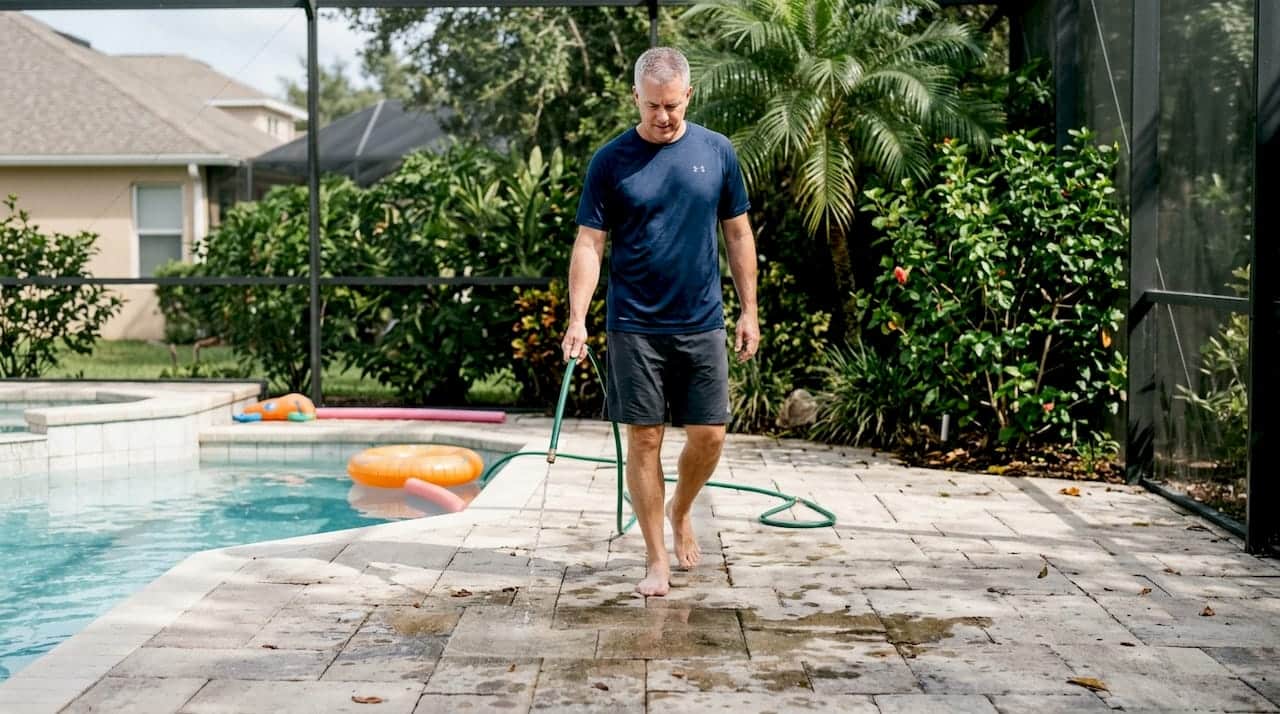
Most Central Florida homeowners don’t realize their pool deck choice directly impacts safety, comfort, and long-term costs. Concrete decks often crack within years due to shifting sandy soil, become dangerously hot underfoot in summer heat, and require expensive full replacements when damaged. Pool pavers offer a smarter alternative, designed specifically to handle Florida’s unique climate challenges while providing superior slip resistance, cooler surfaces, and easy repairs. This guide explores why pavers represent a strategic investment for your pool area, covering safety benefits, durability advantages, cost comparisons, and expert installation tips tailored to Central Florida conditions.
Table of Contents
- Key takeaways
- Safety and comfort benefits of pool pavers in Central Florida
- Durability and maintenance advantages of pavers over concrete
- Cost comparison and home value impact of pool pavers
- Expert tips for installing and maintaining pool pavers in Central Florida
- Explore professional pool installation and renovation services in Central Florida
- Frequently asked questions
Key Takeaways
| Point | Details |
|---|---|
| Safety advantages | Pavers provide textured surfaces and drainage that reduce slip hazards when wet compared with concrete. |
| Cooler surface temps | Travertine and similar cool materials stay 20 to 30 degrees cooler than concrete, making barefoot use comfortable in peak sun. |
| Sandy soil durability | Interlocking pavers flex with shifting sandy soils, distributing movement across joints and reducing cracks unlike rigid concrete. |
| Lower long term costs | Pavers offer easier repairs and potential savings on maintenance and insurance versus repeated concrete crack repairs. |
Safety and comfort benefits of pool pavers in Central Florida
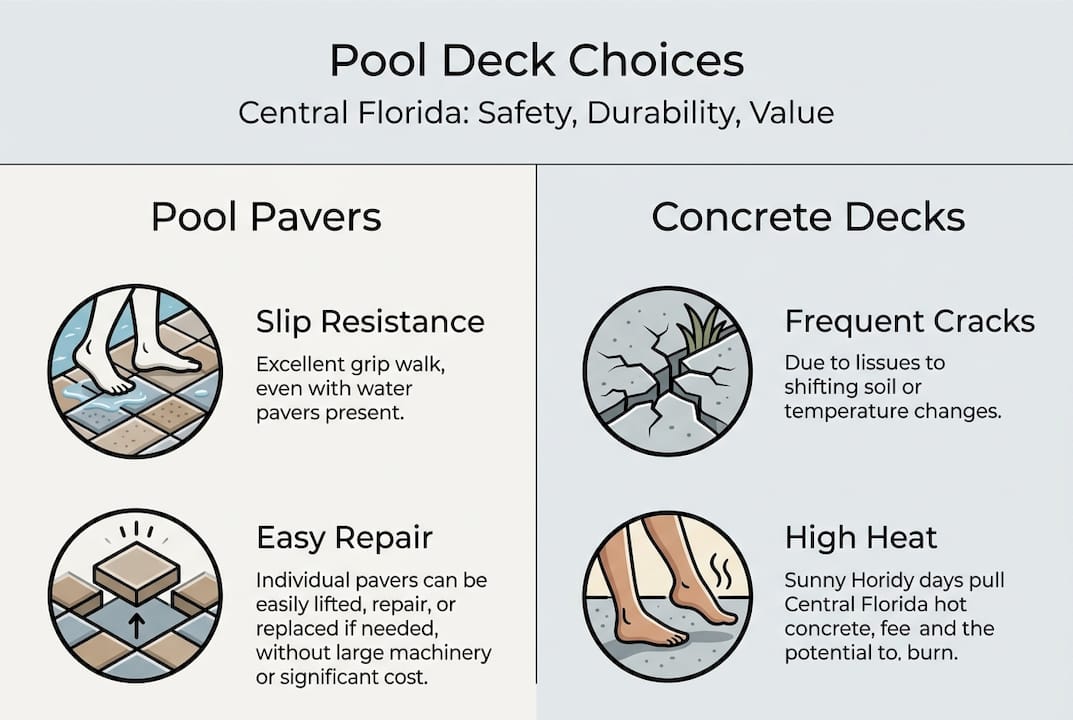
Pool safety becomes critical when wet surfaces meet barefoot swimmers, especially with children around. Pavers provide superior slip resistance compared to concrete, offering better traction when wet through textured surfaces and joint patterns that channel water away from foot contact points. This design significantly reduces accident risk during pool activities.
Central Florida’s intense summer heat creates another challenge concrete simply can’t solve. While concrete absorbs and radiates heat, reaching surface temperatures of 140-150°F on typical 95°F days, travertine pavers stay 20-30°F cooler at just 110-120°F. This temperature difference transforms your pool experience from painful tiptoeing across scorching surfaces to comfortable barefoot movement throughout the day.
Florida’s climate demands materials that perform in humidity, sudden rainstorms, and year round sun exposure. Pavers excel in these conditions through their porous joint system, which allows water to drain quickly rather than pooling on surfaces. This drainage capability keeps your pool deck safer during Florida’s frequent afternoon showers and reduces the slippery algae growth that plagues solid concrete surfaces in humid conditions.
“The textured surface and joint system of pavers creates multiple drainage pathways, significantly reducing standing water and slip hazards compared to smooth concrete decks that can become dangerously slick when wet.”
Key comfort and safety advantages include:
- Textured surfaces provide grip even when saturated with pool water
- Lighter color options reflect rather than absorb solar radiation
- Individual paver edges create natural traction points for bare feet
- Joint spacing allows immediate water drainage after rain or splashing
- Non skid surfaces maintain effectiveness without requiring chemical treatments
Pro Tip: Choose travertine or similarly cool materials for your pool deck to minimize heat discomfort during peak summer months. The natural stone composition reflects heat more effectively than manufactured concrete products, keeping surfaces comfortable even during afternoon sun exposure.
The safety benefits extend beyond immediate accident prevention. When building pools in Central Florida, homeowners must consider long term liability and insurance implications. Pools with documented safety features like slip resistant pavers may qualify for lower insurance premiums and provide legal protection should accidents occur on your property.
Durability and maintenance advantages of pavers over concrete
Central Florida’s sandy soil creates unique challenges that concrete simply wasn’t designed to handle. Unlike stable clay based soils in other regions, Florida’s sandy substrate shifts constantly with moisture changes, seasonal water table fluctuations, and natural settling. Interlocking pavers flex with this movement, distributing ground shifts across multiple joints rather than concentrating stress into catastrophic cracks like rigid concrete slabs.
This flexibility proves especially valuable around pool areas where water saturation accelerates soil movement. Concrete pool decks typically develop their first cracks within three to five years as the ground beneath shifts. These cracks not only look unsightly but also create trip hazards and allow water infiltration that accelerates further deterioration. Pavers eliminate this problem through their segmented design, where each unit moves independently without transferring stress to adjacent pieces.
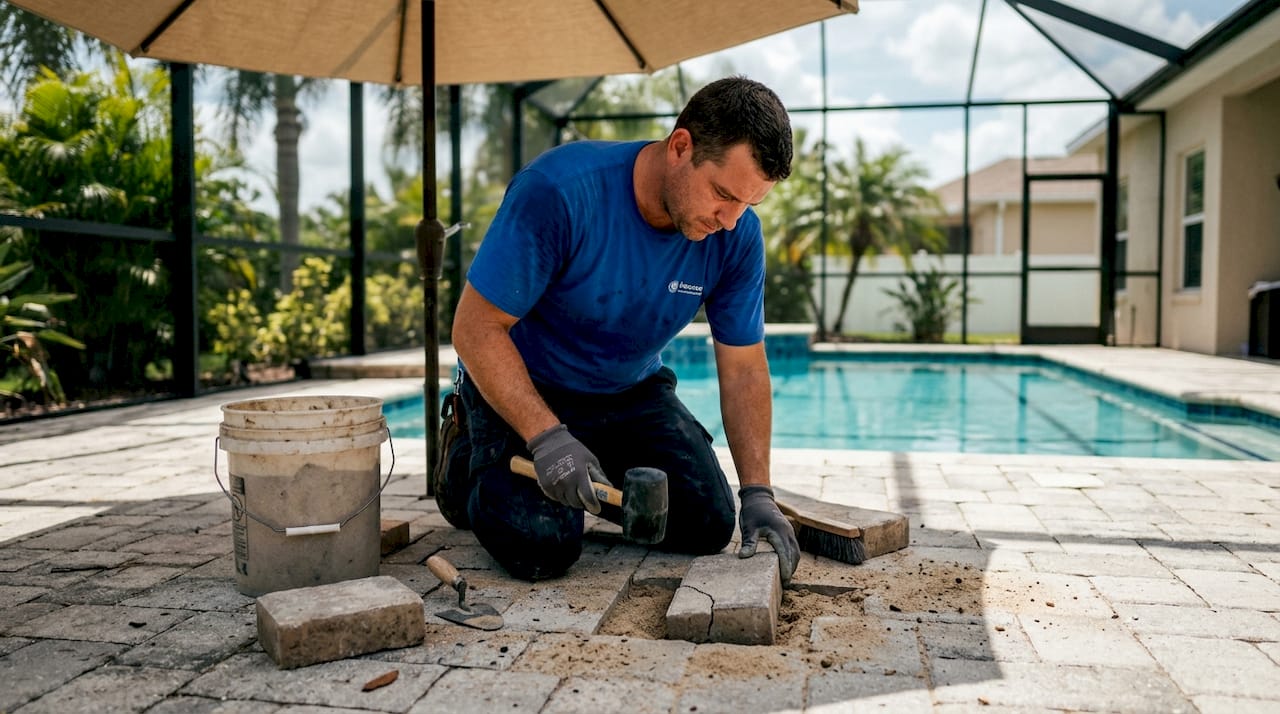
Maintenance becomes dramatically simpler with pavers when damage does occur. Individual pavers allow easy spot repairs by replacing single damaged units rather than cutting out and patching concrete sections. A stained or cracked paver can be lifted, replaced, and the area restored to perfect condition in under an hour. Concrete repairs require jackhammering, disposal of heavy debris, forming, pouring, curing time, and color matching attempts that rarely blend seamlessly with existing surfaces.
Florida’s heavy rainfall patterns, which can dump several inches in a single afternoon storm, demand effective drainage solutions. Paver joints create thousands of small drainage channels across your pool deck, allowing water to percolate into the ground rather than pooling on the surface or running off into your pool. This drainage capability prevents the flooding and standing water problems that plague concrete decks, which rely solely on surface slope for water management.
Maintenance advantages for Florida homeowners:
- No crack repairs needed when installed with proper base preparation
- Individual unit replacement costs $50-$150 versus $500-$2,000 for concrete patches
- Joint sand replacement every few years maintains stability without major work
- Sealing protects against chlorine staining and UV fading
- Pressure washing removes organic growth without damaging surface integrity
- Color fading affects individual pavers that can be selectively replaced
Pro Tip: Use polymeric sand in paver joints and apply sealer every two to three years to maximize durability against Florida’s intense UV exposure and pool chemical splashes. This simple maintenance routine extends paver life significantly and maintains the fresh appearance that adds value to your property.
The modular nature of pavers also simplifies future pool remodeling benefits projects. If you decide to expand your pool, add a spa, or reconfigure your outdoor living space, pavers can be lifted, stored, and reused or rearranged. Concrete demolition creates waste, noise, and expense that pavers completely avoid. This adaptability makes pavers the smart choice for homeowners who value flexibility in their outdoor spaces.
Cost comparison and home value impact of pool pavers
Initial investment often drives material decisions, but smart homeowners look beyond installation costs to total lifetime value. Concrete appears cheaper upfront at $6-$12 per square foot installed, while concrete pavers cost $10-$25 per square foot and premium travertine reaches $15-$40 per square foot. However, this price gap narrows dramatically when you factor in longevity and maintenance expenses over the deck’s lifetime.
| Material Type | Initial Cost per Sq Ft | Expected Lifespan | Maintenance Frequency | Resale Value Addition |
|---|---|---|---|---|
| Poured Concrete | $6-$12 | 15-25 years | Seal every 2-3 years, patch cracks regularly | $2,000-$5,000 |
| Concrete Pavers | $10-$25 | 25-50 years | Seal every 2-3 years, minimal repairs | $5,000-$10,000 |
| Travertine Pavers | $15-$40 | 30-50 years | Seal every 2-3 years, virtually no repairs | $8,000-$15,000 |
The longevity difference becomes the real financial story. Paver pool decks last 25-50 years with basic maintenance like periodic sealing and joint sand replenishment, while concrete typically requires full replacement after 15-25 years. When you amortize costs over actual service life, pavers often prove less expensive per year of use than concrete despite higher upfront investment.
Maintenance expenses compound concrete’s disadvantage. Crack repairs start small at $200-$500 but escalate as damage spreads. Eventually, most concrete pool decks need complete replacement costing $8,000-$15,000 for an average pool area. Pavers avoid these catastrophic replacement costs through their damage resistant design and simple spot repair capability.
Resale value considerations matter significantly in Central Florida’s active real estate market. Pavers add $5,000-$15,000 to home value through enhanced curb appeal and buyer perception of quality construction. Real estate agents consistently report that homes with paver pool decks sell faster and command premium prices compared to identical homes with concrete decks. Buyers recognize pavers as a premium feature worth paying extra to acquire.
Financial and aesthetic benefits of choosing pavers:
- Design versatility with hundreds of color, texture, and pattern options
- Recoup 70-85% of installation cost through added home value
- Avoid the $10,000-$20,000 concrete replacement cost after 15-20 years
- Premium appearance signals quality throughout the property
- Customizable patterns create unique outdoor spaces that stand out
- Color options coordinate with home exterior and landscaping
The aesthetic advantage shouldn’t be underestimated in value calculations. Pavers transform functional pool decks into design statements that enhance your entire outdoor living experience. The ability to create custom patterns, borders, and color combinations allows you to express personal style while adding tangible market value. This design flexibility explains why luxury homes almost universally choose pavers over concrete for pool areas.
When evaluating pool design home value in Florida, remember that buyers pay premiums for features that reduce their future maintenance burden. A well maintained paver deck signals decades of remaining service life, while even a pristine concrete deck raises concerns about inevitable cracking and replacement costs. This perception difference directly impacts negotiating power and final sale prices.
Expert tips for installing and maintaining pool pavers in Central Florida
Proper installation determines whether your paver pool deck delivers decades of service or disappoints within years. The base preparation matters far more than the visible paver surface. Follow these professional installation steps for optimal results:
- Excavate to proper depth, typically 8-12 inches below finished grade to accommodate base layers and pavers
- Install landscape fabric to prevent soil migration into base material
- Compact 4-6 inches of crushed limestone base in two inch lifts using a plate compactor
- Add one inch of concrete sand leveling course, screeded perfectly flat
- Lay pavers in your chosen pattern, maintaining consistent joint spacing
- Fill joints with polymeric sand and activate with water misting
- Apply penetrating sealer after 30 days to protect against staining and UV damage
Drainage design proves critical in Florida’s heavy rainfall environment. Slope your deck at one quarter inch per foot away from the pool and house to prevent water accumulation. This seemingly minor detail prevents the standing water problems that lead to algae growth, staining, and premature deterioration. Many DIY installations fail because homeowners skip proper grading and compaction steps that professionals know make the difference between success and failure.
Pro Tip: Hiring experienced professionals for paver installation ensures proper base preparation and precise grading that DIY attempts often miss. The base accounts for 80% of installation success, and mistakes here cannot be corrected without complete removal and reinstallation.
Maintenance requirements remain minimal but shouldn’t be ignored. Florida’s intense UV radiation and pool chemical exposure demand protective measures that extend paver life and maintain appearance. Seal every two to three years using a quality penetrating sealer designed for pool environments. This protection prevents chlorine bleaching, organic staining, and color fading that occur on unsealed pavers.
Regular cleaning removes the organic material, sunscreen oils, and pool chemicals that accumulate on any pool deck. Pressure washing once or twice yearly keeps pavers looking fresh without damaging the surface. Use a fan tip nozzle and maintain 12-18 inches distance to avoid dislodging joint sand. After pressure washing, inspect joints and add polymeric sand where needed to maintain stability.
Joint maintenance prevents the weed growth and ant colonization that plague neglected paver installations. Polymeric sand hardens when wet, creating a semi rigid joint that resists erosion and blocks weed seeds. Reapply polymeric sand every three to five years or whenever you notice significant joint material loss. This simple maintenance task costs under $200 for most pool decks and prevents problems that would cost thousands to correct.
Consider professional maintenance services if you lack time or equipment for proper care. Many paver installation companies offer annual maintenance packages including cleaning, joint refilling, and sealing for $300-$600. This investment protects your much larger paver investment and ensures optimal performance throughout Florida’s challenging climate conditions.
When planning smart pool renovation ideas, coordinate paver installation with other upgrades to minimize disruption and potentially reduce costs through combined project pricing. Installing pavers during pool resurfacing or equipment upgrades allows contractors to stage work efficiently and often results in better pricing than separate projects.
Explore professional pool installation and renovation services in Central Florida
Transforming your pool area with quality pavers requires expertise in both pool construction and hardscape installation. R & R Swimming Pools brings over three decades of Central Florida experience to every project, understanding exactly how local soil conditions, climate factors, and lifestyle needs influence material selection and design choices. Their team coordinates pool and deck installations seamlessly, ensuring proper integration between pool structure and surrounding pavers for optimal drainage and longevity.
Whether you’re planning a new pool installation or renovating an existing space, professional guidance helps you navigate material options, design possibilities, and budget considerations specific to Central Florida conditions. The inground pool installation guide walks through each decision point, while the pool remodeling process guide helps existing pool owners understand renovation possibilities. For those starting from scratch, the custom pool planning guide provides comprehensive planning frameworks that ensure your project delivers exactly what you envision.
Frequently asked questions
Are pool pavers better than concrete decks for Florida pools?
Yes, pavers excel in slip resistance, durability, cooling, and maintenance compared to concrete in Florida’s challenging climate. While concrete costs less initially, it typically cracks within years due to shifting sandy soil and becomes dangerously hot underfoot during summer months. Pavers stay significantly cooler, resist cracking through their flexible interlocking design, and allow easy repairs when damage occurs.
How long do pool pavers typically last in Central Florida?
Paver pool decks last 25-50 years with proper maintenance including periodic sealing and joint care, significantly outlasting concrete’s typical 15-25 year lifespan. The longevity advantage comes from pavers’ ability to flex with ground movement rather than cracking like rigid concrete. Premium materials like travertine can reach the upper end of this range when properly maintained, while concrete often requires complete replacement before reaching even 20 years of service.
What maintenance do pool pavers require in Florida?
Regular maintenance includes sealing every two to three years to protect against UV damage and pool chemical staining, plus using polymeric sand in joints to prevent weed growth and erosion. Annual pressure washing removes accumulated dirt and organic material, while periodic joint inspection ensures sand levels remain adequate. This maintenance routine takes minimal time and costs far less than the crack repairs and eventual replacement that concrete demands.
Do pavers increase home resale value in Central Florida?
Yes, quality paver installations add substantial resale value through enhanced curb appeal and buyer perception of premium construction. Central Florida real estate agents report that paver pool decks help homes sell faster and command higher prices, with buyers willing to pay premiums for features that reduce future maintenance concerns and provide immediate aesthetic appeal.
