
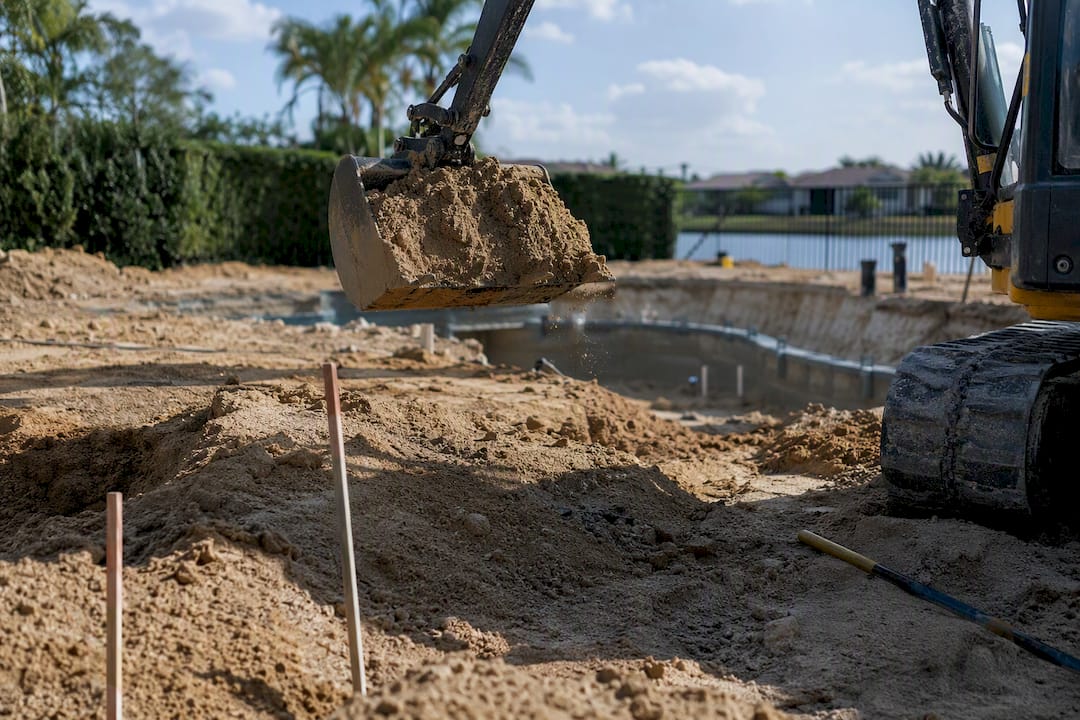
Yes, you can build a pool on sandy soil, and it can last just as long as one built on clay or loam. But sandy soil pool construction demands a different playbook than a standard build, because loose, well-draining sand puts you closer to the water table and closer to hydrostatic uplift risk. Before you sign anything, get:
- A geotechnical report with soil borings and water-table depth
- Engineer-stamped structural drawings, not just a standard permit set
- A written drainage and hydrostatic-relief plan specific to your lot
Skip these and you’re gambling on a shell that could crack, float, or settle unevenly within a few years.
Key Takeaways
Sandy soil pool construction succeeds when a geotechnical report, engineer-stamped drawings, and permanent hydrostatic relief work together from day one, not as afterthoughts.
| Point | Details |
|---|---|
| Get soil data first | Order a geotechnical report with borings and water-table depth before finalizing any design. |
| Match shell to risk | Concrete’s mass resists uplift best on severe sites; fiberglass works where water tables cooperate. |
| Demand engineered drainage | Insist on perimeter drains, gravel blankets, and at least two hydrostatic relief valves. |
| Verify compaction | Require written compaction test results before shell placement, not just verbal assurance. |
| Choose an experienced builder | Randrswimmingpools coordinates geotechnical reports and engineered shell design for sandy Central Florida lots. |
Table of Contents
- What Sandy Soil Pool Construction Requires That Standard Builds Don’t
- Which Pool Shell Types Hold Up Best on Sandy Sites?
- How Engineers Turn Risky Soil Into a Reliable Foundation
- How Do You Stop Hydrostatic Pressure From Cracking or Lifting a Pool?
- How Contractors Adjust Construction Methods for Sand
- What Should You Require Before Signing a Contract?
- What Maintenance Issues Show Up on Sandy-Soil Pools Over Time?
- What Should R & R Swimming Pools’ Track Record Tell You?
- How Do You Stop Erosion From Undermining Your Pool Surroundings?
- Does Sandy Soil Affect Pool Waterproofing and Liner Life?
- A Builder’s Take on Sandy-Soil Pool Projects
- How Randrswimmingpools Handles Sandy-Site Pool Projects
- Sources
What Sandy Soil Pool Construction Requires That Standard Builds Don’t
Sand behaves nothing like the clay-heavy soils most inland pool designs assume. Loose or uncompacted sand can shift under load, and if backfill isn’t compacted to spec, you get settlement pockets that stress the shell unevenly over time. Sand also drains fast, which sounds like a benefit until you realize it puts your excavation in closer contact with fluctuating groundwater.
That’s where hydrostatic uplift enters the picture. When rain saturates the surrounding sand, water pressure builds beneath an empty or partially empty pool shell and can literally push it upward out of the ground. Installers determine risk partly through water-table depth. A table sitting within roughly 3 to 4 feet of the pool floor is generally considered high risk and typically triggers engineered mitigation. Compaction testing and percent-fines analysis (how much silt or clay is mixed into the sand) tell your engineer exactly how the soil will behave under the shell’s weight.
Which Pool Shell Types Hold Up Best on Sandy Sites?
Not every shell material handles sandy, high water-table lots the same way, and the differences matter more here than on a typical build.
- Concrete. Mass works in your favor. A poured concrete or gunite shell is heavy enough to resist uplift on its own in many cases, though sites with severe water-table issues still call for thicker walls, additional rebar, or a heavier floor slab. It’s the option most engineers reach for first on tough sandy lots, and it’s the concrete pool building approach Randrswimmingpools recommends for Central Florida’s sandier, higher water-table neighborhoods.
- Fiberglass. Installation is fast and the composite shell drains well, but fiberglass is lightweight relative to concrete, which means it’s more susceptible to floating if groundwater rises during an empty or low-water period. Anchoring systems and permanent dewatering often become mandatory add-ons, not optional upgrades. Randrswimmingpools still installs fiberglass pools successfully on many lots where the water table cooperates.
- Vinyl liner. Performance rides almost entirely on subgrade prep. A poorly compacted base under a vinyl liner shows every flaw within a season, and uplift concerns mirror fiberglass since the structure itself carries little mass.
How Engineers Turn Risky Soil Into a Reliable Foundation
A geotechnical report is the document that decides everything downstream. It should include boring logs at multiple points across the pool footprint, a measured water-table depth, and an estimated bearing capacity for the soil layers your excavation will actually touch. Skip this step and your contractor is designing blind.
From there, engineering intervention typically follows one of a few paths:
- Engineered fill. Over-excavate beyond the planned footprint, replace with compacted gravel or select fill, and verify density with field testing before any shell work begins.
- Deep foundations. Concrete piers or helical piles get specified when soil borings show weak bearing capacity at typical footing depth, transferring the load to firmer strata below.
- Reinforced shell design. Wall thickness and rebar spacing get calculated to resist both soil pressure and hydrostatic uplift forces, a calculation that belongs on stamped engineering drawings, not a generic spec sheet.
Pro Tip: Ask your contractor whether the geotechnical firm and the structural engineer are actually talking to each other before drawings get stamped. A soil report that never reaches the engineer’s desk is just paperwork.
How Do You Stop Hydrostatic Pressure From Cracking or Lifting a Pool?
Hydrostatic uplift is the single biggest structural threat on a sandy, high water-table lot, and it’s manageable with permanent design features rather than luck. When groundwater saturates the sand beneath an empty shell, upward pressure can exceed the shell’s own weight, and that’s when floors crack or entire shells shift.
Standard permanent mitigations include:
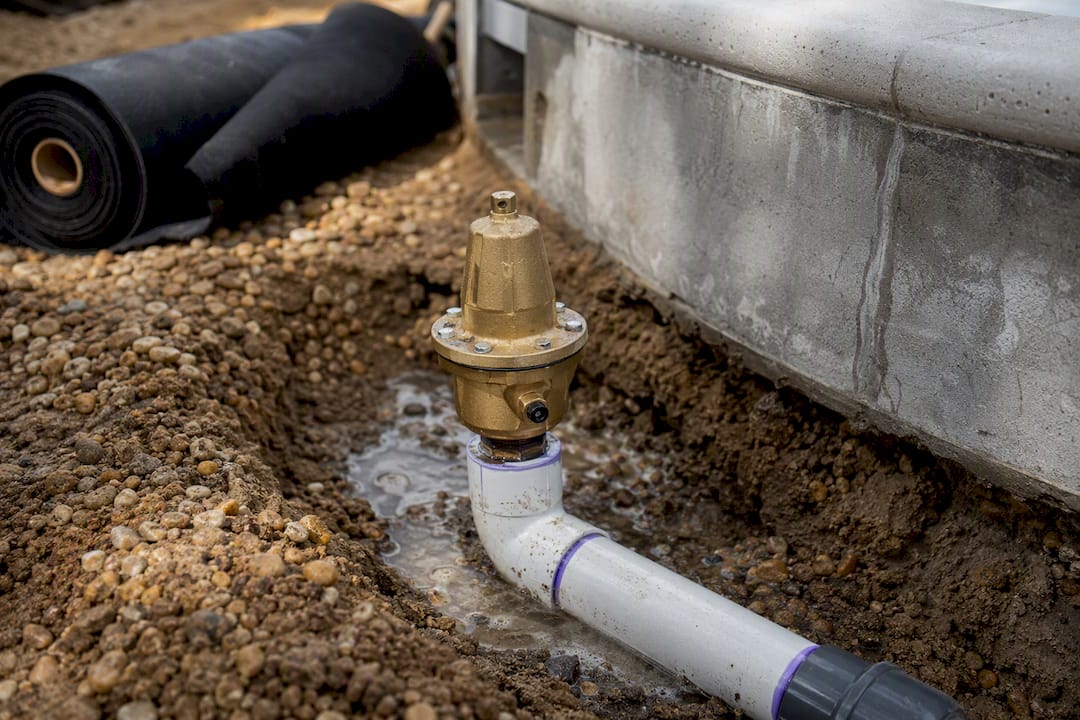
- A perimeter French drain routing groundwater away from the pool structure
- A gravel blanket beneath the floor slab that lets water move rather than pool
- A minimum of two hydrostatic relief valves, since multiple valves help equalize pressure across variable water tables better than a single point of relief
- A properly sized sump system for sites with persistent high groundwater
During construction, active dewatering is often necessary just to keep the excavation dry enough to work in, and pumping groundwater from an open excavation changes the soil’s stability. That’s exactly the scenario OSHA’s excavation standards address, requiring protective systems for any excavation five feet deep or greater, with stricter sloping ratios for loose, granular soils.
How Contractors Adjust Construction Methods for Sand
Job-site practices shift noticeably once soil reports come back sandy. The sequence and methods change, and so does the schedule.
- Shoring or sloping first. OSHA’s Type C soil classification covers loose, granular sand, requiring gentler slope ratios or temporary shoring, which eats into usable yard access during the dig.
- Shotcrete versus formwork. Gunite crews need a vertical cut that holds its shape; loose sand often won’t cooperate, pushing the project toward formed panels or braced forms instead, which adds labor and time.
- Drainage before shell. Perimeter drains, gravel blankets, and plumbing rough-ins go in before a single yard of concrete gets placed, then compaction gets verified again before the pour.
Each adjustment adds cost, but skipping any one of them is how a pool ends up back on a punch list two years later.
What Should You Require Before Signing a Contract?
Treat this as your pre-construction checklist, because a contractor who balks at any of these items is telling you something.
- A completed geotechnical report and engineer-stamped structural drawings, not a verbal assurance
- Written compaction test results confirming fill meets required density
- A documented hydrostatic and drainage specification, not a vague “we’ll handle it” line item
- A written excavation safety plan referencing OSHA shoring/sloping requirements
- Clear change-order terms covering unexpected subsurface conditions found mid-dig
- References or photos from prior sandy-site or high water-table projects
Pro Tip: Ask to see compaction test paperwork from a past project, not just a sales brochure. A contractor with real sandy-site experience will have it ready without hesitation.
What Maintenance Issues Show Up on Sandy-Soil Pools Over Time?
Ongoing care looks mostly familiar, with a few sandy-soil specific habits layered on top.
- Never fully drain a pool without professional guidance if the water table runs high. An empty shell in saturated sand is exactly when uplift happens.
- Watch for gaps between the deck and coping, shell cracks, or sudden unevenness in the pool deck. These can signal settlement or early uplift and warrant an engineer’s inspection, not a DIY patch.
- Keep perimeter drains clear of debris, test sump pumps seasonally, and maintain grading that slopes away from the pool rather than toward it.
What Should R & R Swimming Pools’ Track Record Tell You?
Randrswimmingpools has built and renovated pools across Central Florida since 1985, a region where sandy soils and seasonal high water tables are common, not rare exceptions. That kind of tenure means the firm has coordinated geotechnical reports, adjusted foundation plans, and specified hydrostatic relief systems across dozens of lot conditions, not just one favorable soil type.
A reputable contractor should hand you, unprompted:
- The soil report and boring logs for your specific lot
- Engineer-stamped drawings showing shell thickness and reinforcement
- Compaction test results from the fill phase
- Photos or references from comparable sandy-site or high-water-table builds
- Clear warranty terms covering structural issues, not just surface finishes
| What you should ask for | Why it matters |
|---|---|
| Geotechnical report | Confirms bearing capacity and water-table depth before design begins |
| Engineer-stamped drawings | Verifies shell thickness and rebar are sized for your actual soil conditions |
| Compaction test results | Proves backfill meets required density before the shell goes in |
| Sandy-site project references | Shows the contractor has handled your specific soil challenge before |
How Do You Stop Erosion From Undermining Your Pool Surroundings?
Sandy soil erodes faster than clay or loam once it loses vegetation cover or gets exposed to concentrated runoff, and eroded soil near a pool deck creates its own set of problems, from uneven pavers to exposed footings. The fix starts before construction ends, not after.
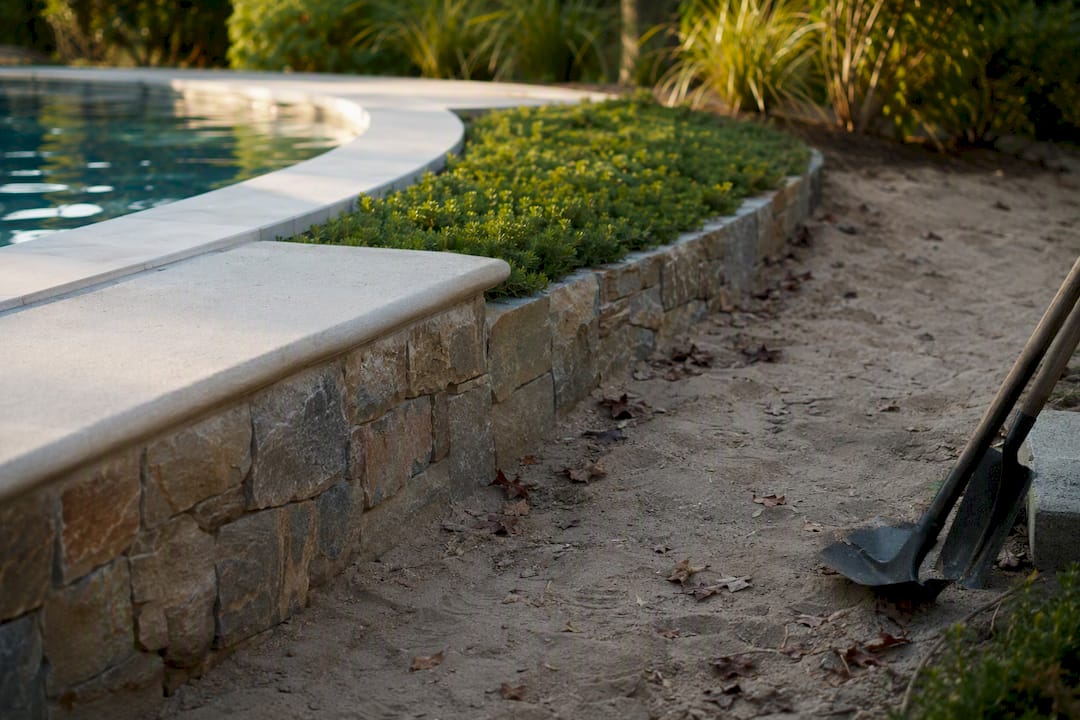
Retaining walls or edging along slope transitions hold soil in place where grading changes elevation near the pool. Ground cover, dense turf, or root-binding landscaping planted immediately around the pool perimeter does more to stabilize loose sand than most homeowners expect. Bare sand left exposed after construction is an invitation for wind and rain to carry it away within a single season.
Grading matters just as much as planting. Positive drainage that slopes away from the pool at a consistent grade keeps runoff from concentrating in one spot and carving channels through loose fill. Splash pads, French drains, or gravel swales positioned at natural water paths intercept runoff before it reaches vulnerable soil near the shell or deck.
Deck and coping design also plays a role. A properly engineered bond beam and deck edge reduce the chance that soil erodes out from under paving, which is what eventually causes deck settlement, cracking, and that uneven “sinking” feeling homeowners sometimes report years after installation. None of this is exotic engineering. It’s routine landscape and drainage planning applied with sandy soil’s faster erosion rate in mind, and it’s far cheaper to build in during construction than to retrofit after the yard has already started shifting.
Does Sandy Soil Affect Pool Waterproofing and Liner Life?
Sandy soil doesn’t attack waterproofing membranes or liners directly, but the conditions it creates certainly do. Fast-draining sand means groundwater moves more freely around and beneath the shell, and that movement puts sustained pressure on waterproofing systems and liner seams that a denser, slower-draining soil wouldn’t generate.
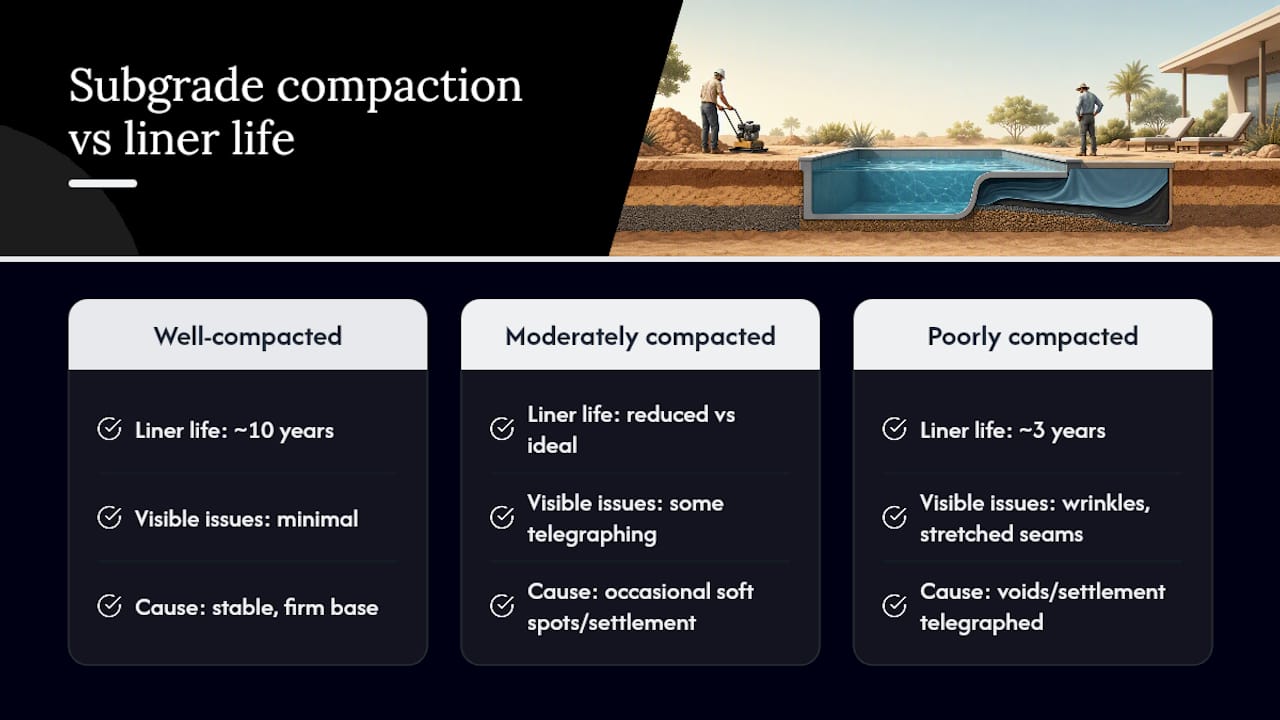
For vinyl liner pools, subgrade preparation is the whole game. A liner stretched over a poorly compacted sandy base will telegraph every soft spot, void, or settlement pocket within a season or two, showing up as wrinkles, stretched seams, or premature wear at the floor-to-wall transition. Compaction testing before liner installation isn’t a formality here; it’s the difference between a liner that lasts a decade and one that needs replacing in three years.
For concrete shells, waterproofing coatings and hydrostatic relief systems work together. If a relief valve fails or a perimeter drain clogs, trapped water pressure can push moisture through hairline cracks in the shell over time, degrading interior finishes and plaster from behind rather than from pool-side wear. That’s part of why routine drain and sump maintenance matters as much as pool chemistry.
Fiberglass shells resist water intrusion well on their own, since the gel coat is essentially a single continuous barrier, but the anchoring and drainage systems around the shell still need to function correctly to keep external water pressure from stressing seams at plumbing penetrations. In every case, waterproofing durability on sandy soil comes down to managing the water around the shell, not just sealing the shell itself.
A Builder’s Take on Sandy-Soil Pool Projects
Concrete earns its reputation on tough sandy lots for a simple reason: mass beats gravity when groundwater is working against you. Fiberglass still makes sense where the water table cooperates. Expect geotechnical mitigation to add real time and cost to a project, not a token line item. If your lot is sandy, the smartest first move is ordering a soil boring and getting an engineer on a scoping call before you fall in love with a design.
— Results
How Randrswimmingpools Handles Sandy-Site Pool Projects
Sandy lots are common across Central Florida, and Randrswimmingpools has built the coordination process around exactly the risks this article covers. That means managing the geotechnical report, translating boring logs into engineer-stamped shell designs, specifying permanent hydrostatic relief systems, and choosing between engineered fill and deep foundations based on what the soil actually shows, not a generic template.

The services that matter most on sandy or high water-table lots include engineered concrete shells sized for uplift resistance, drainage and dewatering systems built into the design from day one, and fiberglass options where site conditions allow a faster install without cutting corners on anchoring. Every project starts with a site visit, followed by soil coordination and a scoped proposal rather than a one-size quote.
If your property sits on sandy soil, the next step is straightforward: request a free site visit and quote through the custom pool installation guide for Central Florida, and Randrswimmingpools will walk your lot, flag the soil questions worth investigating, and scope the engineering your specific site needs before you commit to a design.
Sources
- OSHA trench and excavation safety (fact sheet)
- How soil conditions can affect swimming pools and their construction — Aquatics International
- Pool Installation Soil and Ground Conditions: Installer Considerations — Pool Installer Authority