
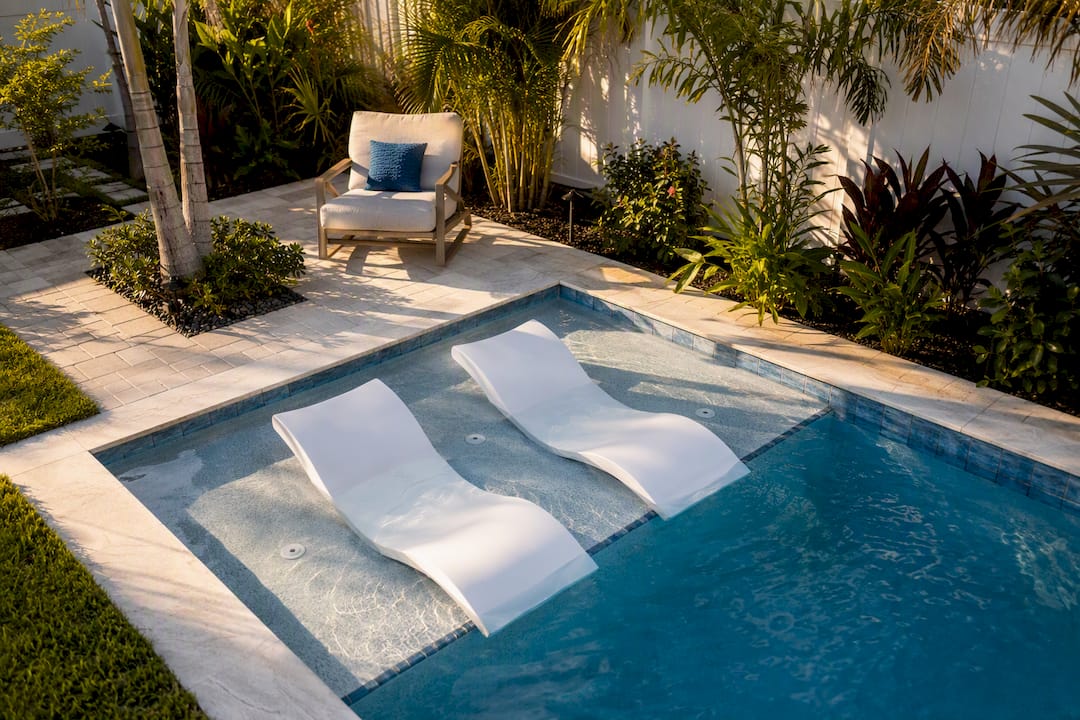
A spool is a hybrid spa and pool, usually 10 to 16 feet long, built for soaking and a few strokes rather than laps. It suits owners with tight side yards, patios, or courtyards who want water features without sacrificing the whole backyard. Expect a footprint under 200 square feet and a budget ranging from a few thousand dollars for a kit to a significant investment for a custom in-ground build.
TL;DR:
- A standard spool measures 10 to 16 feet long and costs between $5,000 and $20,000 for installation, depending on site work and finishes.
- Vinyl liners are the cheapest material but require more maintenance, while fiberglass offers durability and ease of care for small spools.
- Custom in-ground spools take 4 to 12 weeks to install and can cost $20,000 or more, with excavation and permits being significant factors.
- Features like LED lighting, water features, and built-in seating can enhance a spool’s appeal, but priorities should match usage and budget.
- Proper site preparation, drainage, and early permit planning are crucial to avoid costly delays and rework in small backyard spool installations.
Table of Contents
- Spool Pool Ideas For Small Backyards
- Spool Types, Sizes, and What They Cost
- Which Materials Hold Up Best in a Small Spool?
- How Long Does Installing a Spool Pool Take?
- Maintaining a Small-Volume Spool Pool
- Choosing the Right Spool for Your Yard
- What Contractors Wish Homeowners Knew Before Building
- Is a Spool the Right Call for Your Yard?
- Build A Custom Spool With A Central Florida Team That Knows Small Yards
- Sources
Spool Pool Ideas For Small Backyards
Most people start their search on photo galleries, and that instinct is right. Design inspiration for spools comes almost entirely from visual references because the format lives and dies on how well it fits a specific footprint. Design galleries consistently show a handful of layouts working harder than the rest.
A rectangular plunge spool with a built-in bench and a shallow tanning ledge is the workhorse option. It reads clean, fits almost any lot shape, and the ledge doubles as a spot for kids or lounge chairs half-submerged in water.
Corner placement is the smartest move for anyone who still wants a usable patio. Tucking the spool into a back corner instead of centering it keeps sightlines open and leaves room for a dining set or fire pit.
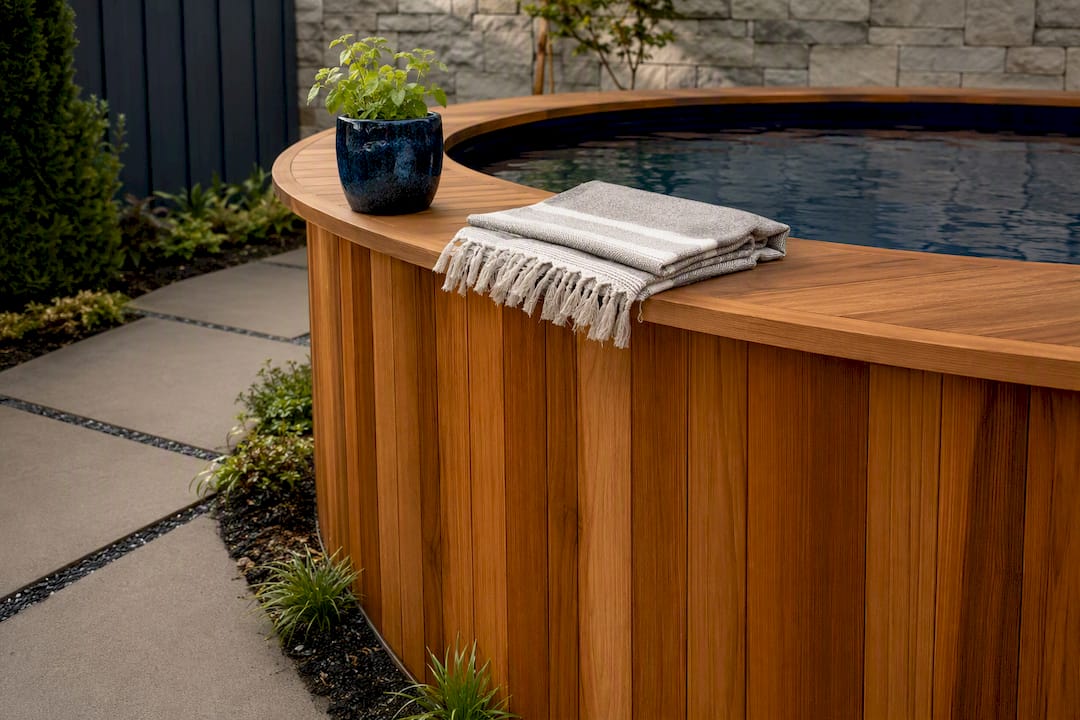
Raised, cedar-clad above-ground spools solve a different problem: uneven ground or a desire to skip excavation. The wood cladding disguises the mechanical shell and creates instant deck integration, since the top rim can double as bench seating.
Infinity edges and spillover walls sound like luxury-home features, but they scale down surprisingly well. A spillover wall between the spa and pool sections creates a soundtrack of moving water in a footprint smaller than a one-car garage.
For year-round climates or covered patios, an indoor or screened spool removes bugs, leaves, and evaporation loss from the equation entirely.
Small details separate an average build from a memorable one:
- LED color-changing lights built into the wall for nighttime ambiance
- A narrow sheer-descent water feature along one wall
- Built-in bar-height seating that faces outward, not inward
- Sun shelf with umbrella sleeve for shade on demand
A narrow-yard layout often unlocks options homeowners assume won’t fit, and a luxury design gallery is worth a look before finalizing finishes.
Spool Types, Sizes, and What They Cost
A standard spool runs 10 to 16 feet long, 6 to 8 feet wide, and about 3 to 4 feet deep, which is enough for soaking and light movement but not real swimming. That size range shapes almost every cost decision that follows.
Budgets split into three clear tiers:
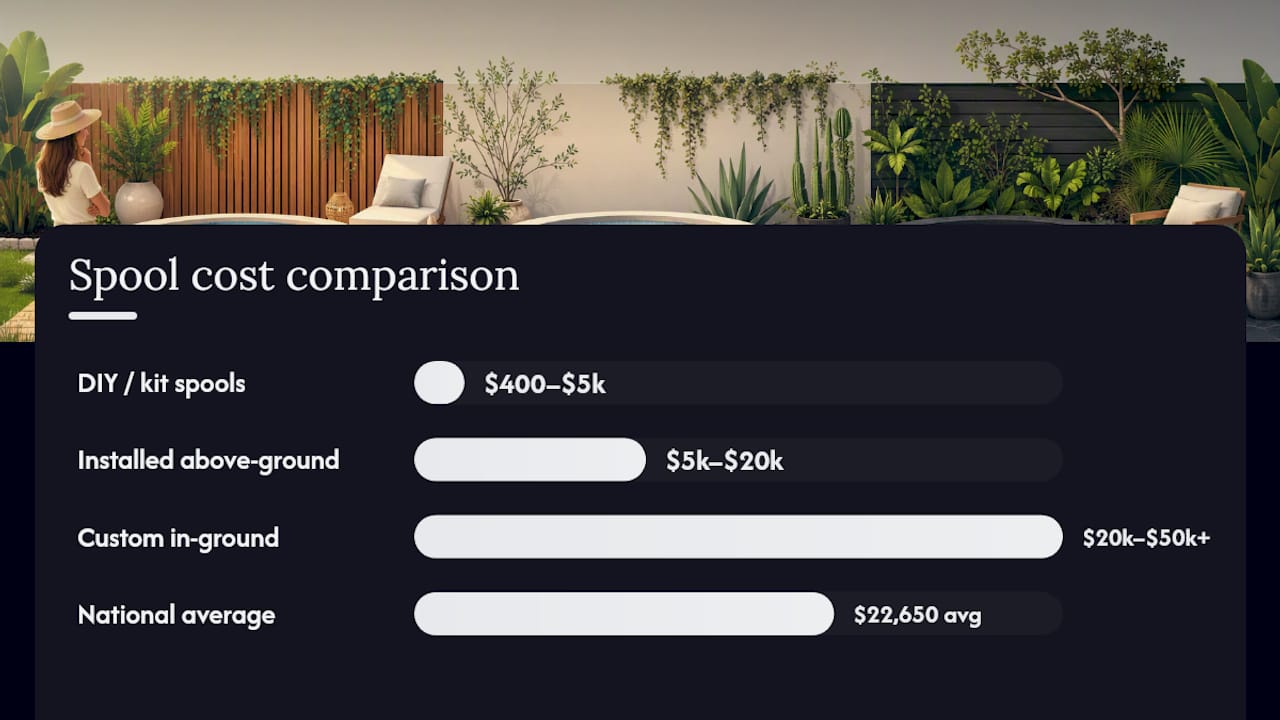
- DIY or kit spools: roughly $400 to $5,000, using a soft-sided or hard-shell prefab unit
- Installed above-ground spools: $5,000 to $20,000, including a base pad and basic equipment
- Custom in-ground spools: $20,000 to $50,000 or more, depending on finish and site work
Nationally, spool pool installations average around $22,650, with the full range spanning $5,500 to $50,000. Excavation, permits, jet packs, heaters, and decorative finishes drive most of that spread, and HomeAdvisor’s cost breakdown shows labor and site prep often outweigh the shell itself.
Pro Tip: Get a written estimate that separates excavation and site prep from the pool shell cost. That single line item is where quotes vary the most between contractors.
Which Materials Hold Up Best in a Small Spool?
Material choice matters more in a spool than a full-size pool because there’s less water to buffer temperature swings and chemical shifts.
- Vinyl liner: lowest upfront cost, but liners in small spools face more wear from concentrated jet turbulence
- Fiberglass: smooth, durable, and resists algae well; a strong fit for a compact shell that gets delivered pre-formed
- Concrete/gunite: fully custom shape, best for infinity edges or spillovers, but the slowest and priciest option
- Cedar or composite wood: ideal for above-ground builds needing a finished look without decking add-ons
- Stainless steel or metal panel: modern look, holds up outdoors, though it runs warmer to the touch in direct sun
Not every upgrade pays off equally. A heater, jets, and a fitted cover return the most daily value in a small spool. Variable-speed pumps and covers cut operating costs substantially and are worth prioritizing over decorative tile or an oversized water feature.
Pro Tip: Skip the premium stone coping if resale isn’t the goal. Spend that money on the heater instead. You’ll use it every week; buyers may never notice the coping.
How Long Does Installing a Spool Pool Take?
- Above-ground kits install in days to a couple of weeks once the pad is ready.
- Custom in-ground spools typically take 4 to 12 weeks from groundbreaking to first fill.
- Site prep includes utility locates, drainage checks, and grading before any concrete or shell arrives.
- Permitting adds its own timeline; budget a separate allowance for permit fees and required safety fencing inspections.
- Trade coordination matters for electrical (heaters, lighting) and plumbing (jets, filtration), so licensed electricians and plumbers should be scheduled early, not as an afterthought.
Maintaining a Small-Volume Spool Pool
Small spools hold roughly 2,000 to 4,000 gallons, and that smaller volume means chemistry swings faster than in a standard pool. A single pool party can shift sanitizer levels more in a spool than the same crowd would in a full-size pool.
A workable routine looks like this:
- Daily: check water clarity and skim debris
- 2 to 3 times weekly: test sanitizer and pH, adjust as needed
- Weekly: rinse or backwash the filter
- Monthly: shock treatment and a full chemical panel
Equipment that reduces the workload includes a salt chlorine system, a robotic cleaner, and a fitted cover that limits evaporation. Randrswimmingpools’ Pool School breaks down seasonal winterization steps and heating strategy for owners who want water-ready spas year-round.
Choosing the Right Spool for Your Yard
Start with how you’ll actually use it. A soak-focused spool wants stronger jets and shallower depth; a spool meant for light laps needs the full 16-foot length and a flatter floor.
Before signing anything, walk the yard and confirm:
- Clearance from property lines and fence codes
- Privacy from neighboring windows or decks
- Sun exposure for solar heating potential
- Drainage flow away from the house foundation, not toward it
Four questions worth asking any contractor: What’s included in the base price versus listed as an add-on? What’s the realistic timeline given current permit backlogs? Which finish holds up best in your climate? What warranty covers the shell versus the equipment? Randrswimmingpools’ pool size selection guide walks through these trade-offs in more depth.
What Contractors Wish Homeowners Knew Before Building
Poor drainage and inadequate backfill compaction cause more rework on small custom pools than any other single factor, based on Randrswimmingpools’ decades of Central Florida installations. Start permits early, and schedule equipment delivery around inspection windows to avoid costly delays. The inground pool installation guide and Pool School cover both in detail.
Is a Spool the Right Call for Your Yard?
A spool makes sense for anyone who wants daily soaking, light exercise, and a social gathering spot without giving up the whole yard to a full pool. It costs less to run, heats faster, and suits smaller lots better than a traditional pool ever could. Homeowners chasing a fully integrated, resale-ready backyard should still request a site consult for a custom in-ground build.
— Results
Build A Custom Spool With A Central Florida Team That Knows Small Yards
Randrswimmingpools has designed and built custom inground pools across Central Florida since 1985, including compact spool-style layouts for yards where every foot counts. Getting a spool right on a tight lot takes more precision than a standard pool, and that’s exactly where decades of local site experience pays off.
A consultation with Randrswimmingpools covers a full site review, realistic budget ranges for your lot and finish choices, and a timeline estimate based on current permit turnaround. Concrete and fiberglass are both available, and the team can walk you through which shell fits your soil conditions and drainage needs before you commit to a design. If you’re ready to move from inspiration to a real plan, start with the Inground Pool Installation Guide and request a site visit to get exact numbers for your yard.
Sources
For more cost detail and design inspiration, see Angi’s spool pool cost guide, HomeAdvisor’s breakdown, and landscape ideas from Sacred Garden Designs.
- How Much Does a Spool Pool Cost? 2026 Guide | Angi
- How Much Does a Spool Pool Cost to Install? 2025 Data | HomeAdvisor
- What Is a Spool Pool? Sizing, Installation, Water Care, and Maintenance
- Spool Pools: A Budget-Friendly Option for Small Backyards … | BHG
- Inground pool cost and operational guidance | hammerio