
TL;DR:
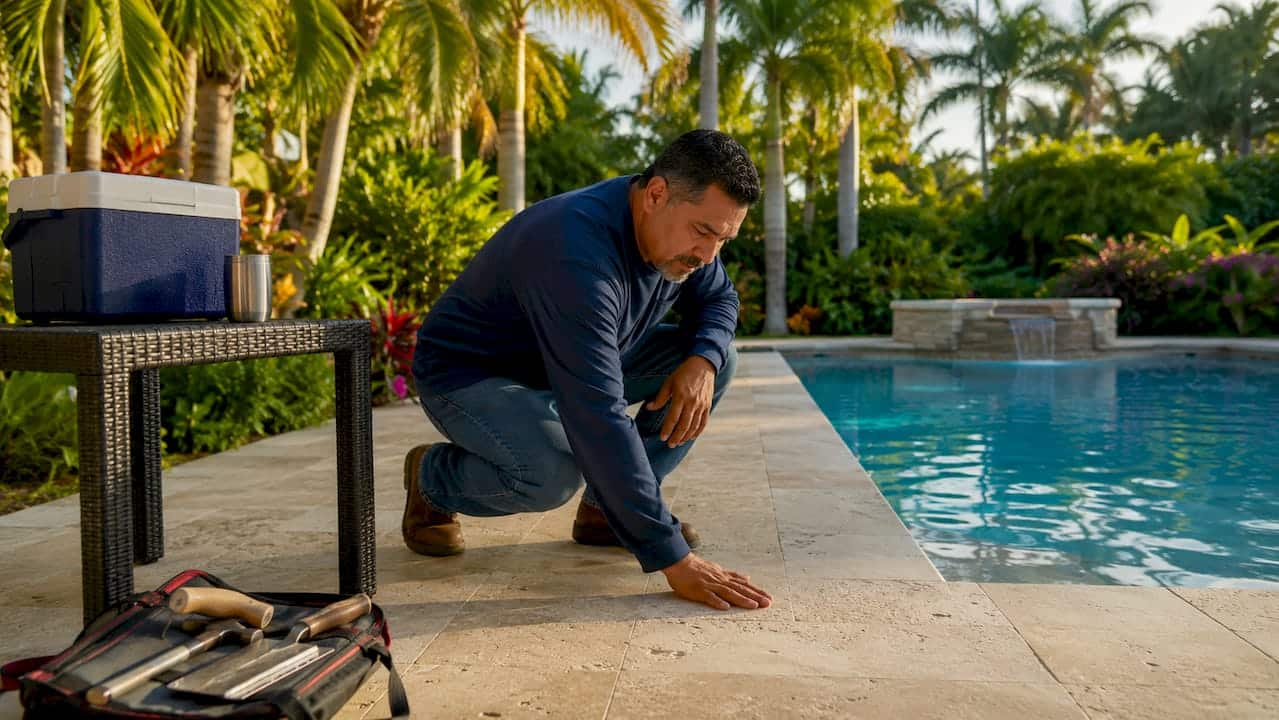
- The best pool patio materials in Central Florida are travertine, porcelain pavers, concrete pavers, and natural stone, chosen for slip resistance, heat tolerance, durability, and low maintenance. Travertine offers superior heat reduction and slip resistance, but requires regular sealing, while porcelain provides low-maintenance, non-porous surfaces with high slip resistance when specified correctly. Proper installation and regional expertise are essential for long-lasting, safe, and attractive pool decks.
The best patio materials for pools are defined by four criteria: slip resistance, heat tolerance, durability, and maintenance demand. In Central Florida, where summer temperatures regularly exceed 90°F and UV intensity is among the highest in the country, those criteria are not optional. They determine whether your pool deck stays comfortable, safe, and attractive for years. Travertine, porcelain pavers, concrete pavers, natural stone, and composite decking each perform differently under Florida’s conditions. This guide breaks down exactly what each material delivers, what it costs, and where it falls short.
1. patio materials for pools: why central florida changes everything
Central Florida’s climate creates conditions that disqualify several materials that perform fine in cooler states. The combination of intense UV radiation, high humidity, frequent rain, and sandy soil means your pool deck faces stressors that a patio in, say, Colorado never encounters. Pool material durability in this region depends on how well a surface handles thermal expansion, moisture cycling, and chemical exposure from chlorine or saltwater.
Florida’s soil also shifts. Sandy and clay-heavy ground expands and contracts with moisture changes. That movement stresses rigid surfaces. It is why poured concrete cracks more readily than individual paver systems, which flex independently and allow localized repairs without tearing out the entire deck.
Pool coping, the material that caps the pool edge, also matters here. Coping affects water drainage and edge durability, and poor installation allows water to seep behind the bond beam, causing structural damage over time. Your patio material choice and your coping choice should be made together.
2. travertine: the gold standard for florida pool decks
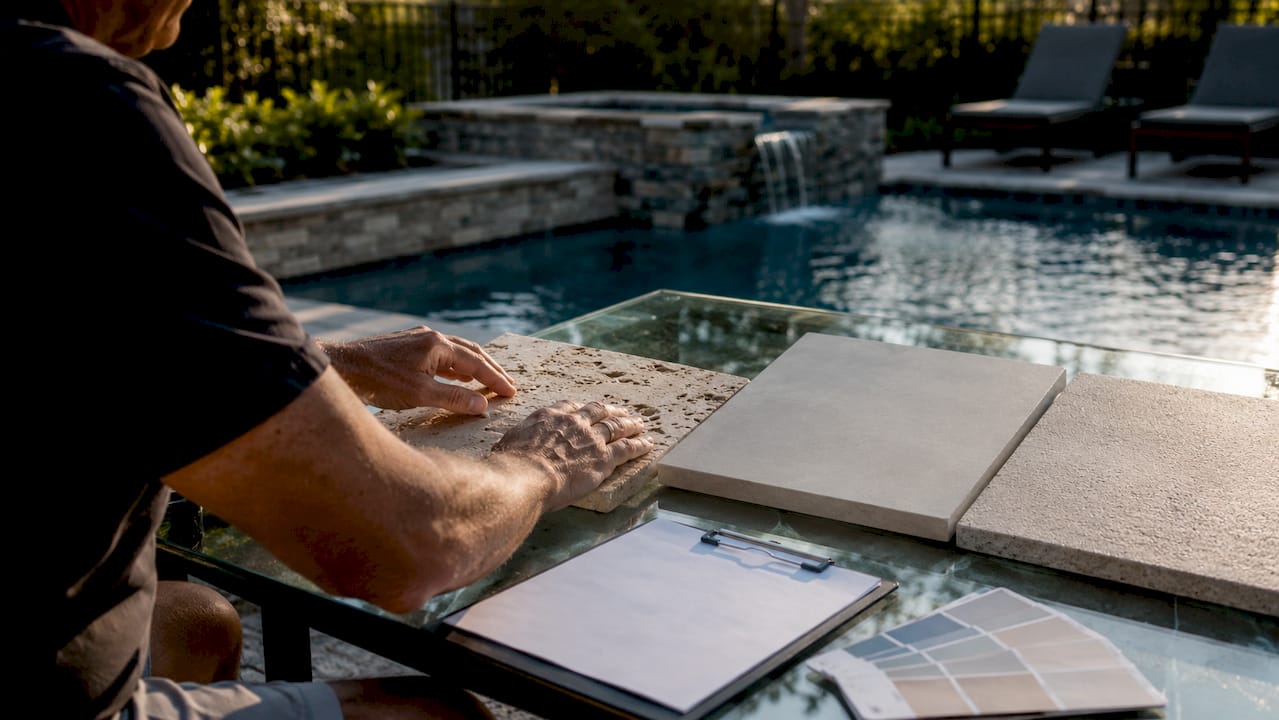
Travertine is a natural limestone formed by mineral springs, and its crystalline porous structure is what makes it exceptional for Florida pools. Travertine stays 20–30°F cooler underfoot than dense concrete under peak sun. That difference is the gap between a comfortable barefoot walk and a painful one at 2 p.m. in July.
Central Florida’s intense UV exposure makes color choice critical. Light-colored travertine reduces heat absorption significantly compared to darker shades, keeping the surface comfortable even during the hottest months. Classic ivory and walnut tones are the most popular choices among Florida luxury homeowners for exactly this reason.
Key advantages of travertine for pool patios:
- Slip resistance: Tumbled or brushed finishes provide natural grip even when wet
- Heat management: Porous structure dissipates heat rather than storing it
- Aesthetics: Resort-style appearance that complements both modern and Mediterranean architecture
- Longevity: Properly sealed travertine lasts decades in Florida’s climate
The main trade-off is maintenance. Travertine requires sealing every 1–2 years to prevent staining from pool chemicals, sunscreen, and organic debris. Installed costs typically run $25–$35 per square foot, placing it in the premium category.
Pro Tip: Choose a tumbled finish over a polished one for poolside travertine. Polished travertine looks stunning in showrooms but becomes dangerously slick when wet. Tumbled edges and a brushed face give you the same visual warmth with far better traction.
3. porcelain pavers: low maintenance, high performance
Porcelain pavers are manufactured under extreme heat and pressure, which makes them non-porous and nearly impervious to staining. Chlorine, saltwater, and UV rays do not degrade porcelain the way they affect natural stone. That makes porcelain one of the most practical outdoor patio flooring options for pool environments.
Safety ratings matter more than most homeowners realize. Porcelain pavers rated R11 or higher provide adequate traction to reduce slipping in wet poolside areas. R11 is the industry benchmark for wet-area applications as of 2026. Anything rated below R10 is a liability around a pool.
Finish selection is equally important. Polished or honed finishes create safety hazards around pools. Matte, grooved, or textured surfaces maintain grip when water is present. Many homeowners choose wood-look or stone-look porcelain to get a natural aesthetic without the maintenance burden.
What porcelain delivers:
- No sealing required: The non-porous surface resists stains without annual treatment
- Chemical resistance: Handles chlorine and saltwater without surface degradation
- Design range: Available in large-format slabs, wood-look planks, and stone-look tiles
- Consistent sizing: Factory production means tighter joints and cleaner installation lines
Porcelain typically costs slightly more than concrete pavers but less than premium natural stone. The long-term savings on maintenance often offset the higher upfront cost within a few years.
Pro Tip: Request the manufacturer’s slip resistance certificate before purchasing porcelain pavers. Retailers sometimes display pavers without listing the R-rating. If the spec sheet does not confirm R11 or higher, do not use it poolside.
4. concrete pavers: budget-friendly and versatile
Concrete pavers are the most widely used durable pool deck option in Central Florida, and for good reason. They cost approximately $20–$30 per square foot installed, making them accessible for a wide range of budgets. They come in dozens of shapes, colors, and patterns, so you can match nearly any architectural style.
The critical distinction most homeowners miss is the difference between poured concrete and concrete paver systems. Poured concrete is more prone to cracking than individual paver systems, which flex independently and allow easier local repairs. In Florida’s shifting soil, that flexibility is not a luxury. It is a practical necessity.
| Feature | Poured Concrete | Concrete Pavers |
|---|---|---|
| Cost per sq ft | $15–$20 | $20–$30 |
| Crack resistance | Lower | Higher |
| Repair ease | Difficult (full section) | Easy (individual units) |
| Slip resistance | Broomed finish needed | Textured options available |
| Customization | Limited | High |
Light-colored concrete pavers absorb less heat than dark shades. Broomed or textured finishes improve slip resistance significantly. One maintenance task that surprises new owners is polymeric sand replenishment. The jointing sand between pavers washes out over time and needs periodic replacement to prevent weed growth and paver shifting.
5. natural stone: bluestone, flagstone, and beyond
Natural stone beyond travertine includes bluestone and flagstone, both of which appear frequently in premium Florida pool projects. Bluestone offers a natural cleft texture that provides moderate slip resistance and a distinctive blue-gray color that complements water beautifully. The trade-off is heat absorption. Darker bluestone can get uncomfortably hot underfoot in direct Florida sun.
Flagstone gives you the most visual variety of any patio material. Each piece is unique in shape, color, and texture, which creates an organic, one-of-a-kind pool deck. Flagstone’s irregular surface provides natural grip, though the uneven joints require careful installation to avoid trip hazards.
Both bluestone and flagstone fall into the premium cost range of $25–$35 per square foot installed. Both require periodic sealing for stain and weather protection, similar to travertine. The maintenance commitment is real, and homeowners who skip sealing cycles will see staining from pool chemicals and organic debris within a season or two.
Natural stone suits homeowners who prioritize a high-end, custom aesthetic and are willing to invest in upkeep. For those who want the look without the labor, large-format porcelain in a stone pattern is a practical alternative worth considering. You can explore how to choose pool materials based on your specific priorities before committing to a premium natural stone installation.
6. wood decking and alternative materials
Wood decking delivers warmth and a resort-style feel that no manufactured product fully replicates. Pressure-treated pine, cedar, and tropical hardwoods like Ipe are the most common choices for poolside use. The visual appeal is undeniable. The maintenance reality in Florida is demanding.
Central Florida’s humidity accelerates wood degradation. Without frequent sealing and staining, wood decks develop rot, warping, and splinters within a few seasons. Splinters around a pool are a safety issue, not just a cosmetic one. Slip resistance also varies widely depending on the wood species, finish, and how much algae or mildew accumulates on the surface.
Composite decking addresses most of wood’s weaknesses. Brands like Trex and TimberTech manufacture composite boards from wood fiber and recycled plastic, producing a surface that resists rot, fading, and moisture without annual sealing. Slip resistance ratings vary by product line, so verify the wet-traction specs before purchasing.
- Wood: High aesthetic appeal, high maintenance, moderate slip risk if not treated
- Composite: Lower maintenance, consistent slip resistance, higher upfront cost than wood
- Unglazed ceramic tile: Suitable for covered patios adjacent to pools, not ideal for full sun exposure
Pro Tip: If you love the look of wood but not the upkeep, choose a composite product with a brushed or embossed surface texture. Smooth composite boards can become slippery when wet, which defeats the purpose of a safer alternative.
Key takeaways
The right pool patio material for Central Florida combines heat management, slip resistance, and a maintenance commitment you will actually follow through on.
| Point | Details |
|---|---|
| Travertine leads for heat comfort | Its porous structure keeps surfaces 20–30°F cooler than dense concrete in Florida sun. |
| Porcelain requires R11 or higher | Slip resistance rating R11 is the minimum safe standard for wet poolside areas. |
| Pavers outperform poured concrete | Individual paver systems flex with Florida’s shifting soil and allow localized repairs. |
| Maintenance varies widely by material | Travertine and natural stone need sealing every 1–2 years; porcelain needs none. |
| Color affects surface temperature | Light-colored materials absorb less heat, a critical factor for barefoot comfort in Central Florida. |
What four decades around florida pools taught me about deck materials
After watching hundreds of pool patios perform across Central Florida, the pattern is clear. Homeowners who choose materials based on photos alone almost always regret it within three years. The ones who ask “how much maintenance will I actually do?” make better long-term decisions.
Travertine is genuinely the best all-around choice for most Central Florida homeowners. The heat reduction is real and noticeable. The slip resistance on a tumbled finish is excellent. The aesthetic holds up over time in ways that stamped concrete rarely does. The sealing requirement is manageable if you schedule it like any other home maintenance task.
Porcelain is the right call for homeowners who want zero maintenance and a clean, modern look. The R11 rating requirement is non-negotiable. I have seen beautiful porcelain installations become liability issues because the contractor chose a polished finish that looked great in the showroom and became a skating rink when wet.
The insight most homeowners miss is that installation quality matters as much as material quality. A premium travertine installation done poorly will fail faster than a mid-range concrete paver job done right. Proper base preparation, correct joint spacing, and quality coping installation determine long-term performance more than the material price tag. Consult a contractor who has worked specifically in Central Florida’s soil conditions. The regional knowledge is not interchangeable with general paving experience.
— Randrswimmingpools
Plan your pool patio with Randrswimmingpools
Choosing the right deck material is only one part of a successful pool project. How that material integrates with your pool shell, coping, drainage, and landscaping determines the final result.
R and R Swimming Pools has been building custom inground pools across Central Florida since 1985. The team understands how local soil conditions, sun exposure, and HOA requirements affect material performance. Whether you are starting from scratch or updating an existing deck, the inground pool installation guide walks you through every decision point, including patio planning. For homeowners already thinking about a full renovation, the pool renovation checklist covers material selection, contractor vetting, and project timelines specific to Central Florida conditions. Contact Randrswimmingpools for a free quote and bring your material shortlist to the conversation.
FAQ
What is the coolest patio material for florida pools?
Travertine is the coolest option for Florida pool decks. Its porous crystalline structure keeps surfaces 20–30°F cooler than dense concrete under peak sun, making it the top choice for barefoot comfort.
What slip resistance rating do pool pavers need?
Porcelain and ceramic pavers used around pools should carry a minimum R11 slip resistance rating. This is the industry benchmark for wet-area traction as of 2026.
Do concrete pavers crack in florida’s soil?
Individual concrete paver systems resist cracking better than poured concrete because each unit flexes independently with soil movement. Florida’s sandy and clay-heavy soil shifts with moisture changes, making paver systems the more durable long-term choice.
How often does travertine need to be sealed around a pool?
Travertine requires sealing every 1–2 years to protect against staining from pool chemicals, sunscreen, and organic debris. Porcelain pavers require no sealing, making them the lower-maintenance alternative.
Is composite decking safe around a pool?
Composite decking from brands like Trex and TimberTech can be safe around pools when you select products with brushed or embossed surface textures. Smooth composite boards become slippery when wet, so always verify the wet-traction specification before purchasing.
