
TL;DR:
- Choosing a built-in spa involves considering purpose, space, budget, and accessibility for long-term enjoyment.
- Popular designs include fully recessed, semi-inground, custom-shaped, and spillover spas, each offering unique aesthetics and functions.
Choosing a built-in spa is one of those decisions that looks simple on the surface until you start pulling on the threads. The examples of built-in spas you see in design magazines rarely come with price tags, permit requirements, or honest notes about repair complexity. For Central Florida homeowners, the challenge is real: you want something that looks stunning next to your pool, holds up against the humidity and sun, and actually fits your backyard layout and budget. This guide cuts through the noise with real design examples, honest comparisons, and practical advice built for Florida living.
Table of Contents
- Criteria for selecting built-in spas
- Popular examples of built-in spa designs
- Comparison table: built-in spa types and features
- How to choose the best built-in spa for your Central Florida home
- Why built-in spas really transform your outdoor living experience
- Explore custom built-in spa and pool installations in Central Florida
- Frequently asked questions
Criteria for selecting built-in spas
To make a confident choice, start by understanding the key criteria that affect built-in spa selection. Before you fall in love with a design you saw on Pinterest, there are four questions you need to answer first.
What is the primary purpose? This is the most important question, and experts emphasize deciding early on the intended use case when selecting between spa and plunge pool options. Relaxation and hydrotherapy call for heated water, targeted jets, and ergonomic seating. Cooling off on a hot August afternoon calls for something entirely different. Getting this wrong means spending serious money on the wrong feature.
What does the space actually allow? Built-in spas are permanent. Unlike a portable hot tub you can move off the patio or sell, a built-in spa involves excavation, concrete, and utility connections. Measure your yard carefully, and factor in setback requirements from your property line. Many Central Florida counties have specific rules about how close a spa can sit to a fence or structure.
What is the real budget, including the parts nobody mentions? Installation is just the start. Ongoing chemical treatments, equipment maintenance, electricity costs for heating, and future repairs all add up. Our pool spa installation guide walks through the full cost picture so there are no surprises after groundbreaking.
Who needs access, and how often? Families with young children, older adults, or guests with mobility needs should think carefully about entry depth, step configuration, and handrail options before committing to a design.
Key selection factors at a glance:
- Use case: Hydrotherapy vs. cooling
- Permanent installation: Excavation, concrete, and plumbing are not reversible decisions
- Space: Actual yard dimensions plus setback requirements
- Budget: Installation, utilities, chemicals, and long-term repairs
- Access: Entry steps, seat heights, and handrails for all users
Pro Tip: Pull your county’s permit requirements before you finalize any design. In Orange, Osceola, and Seminole counties, spa installations require separate permits from the pool itself, and inspections can add weeks to a project timeline if not planned for early.
Popular examples of built-in spa designs
With the selection criteria clear, let’s explore some examples of popular built-in spa designs suited for Florida homes.
Fully recessed built-in spas sit entirely at or below ground level, creating a seamless visual connection with the surrounding deck or landscaping. In-ground spas can be fully recessed or semi-inground to blend with landscape and pool design, offering clean, low-profile aesthetics. For Florida homes with large travertine or paver decks, a fully recessed spa almost disappears into the landscape until you look closely. Entry is easy since you simply step down into the water, and the result feels genuinely resort-like.
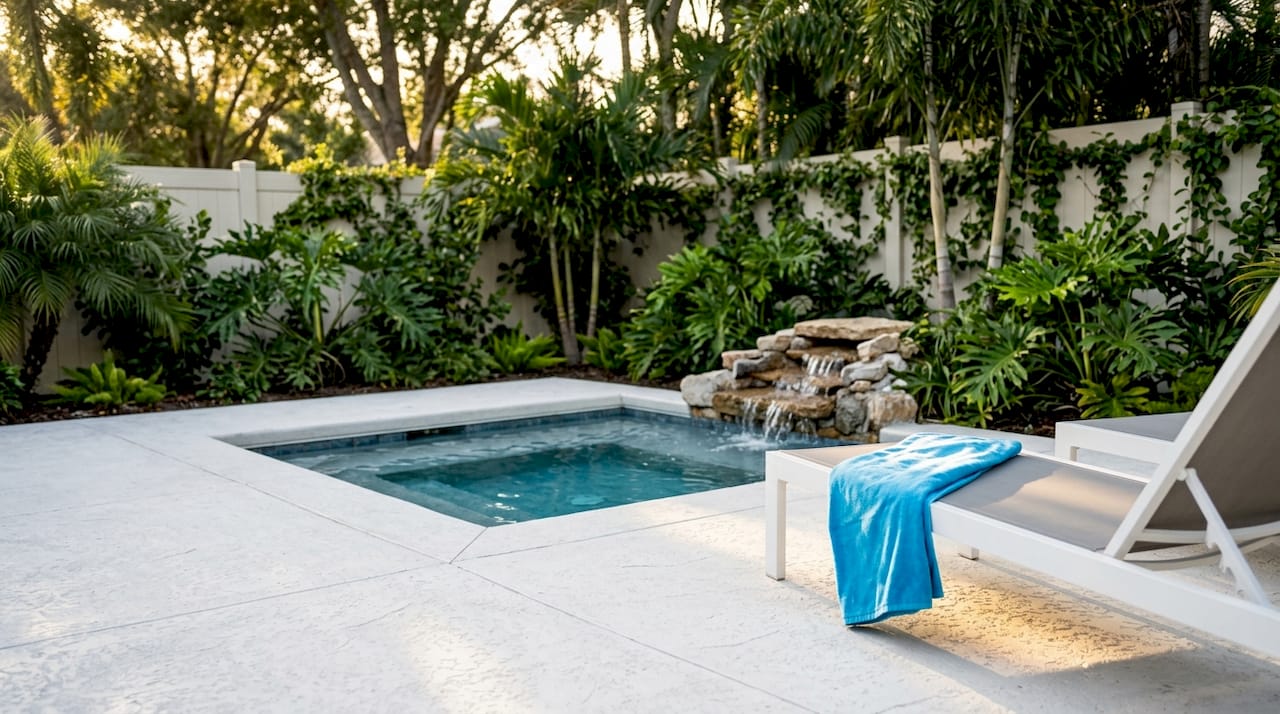
Semi-inground spas sit partially above the surrounding grade, which works beautifully when your yard has a natural slope or when you want the spa to serve as a visual anchor for the outdoor space. Raised walls can be finished in stone veneer, brick, or stucco to match the home’s exterior. They also solve drainage challenges common in low-lying Central Florida lots.
Custom-shaped spas are where things get interesting. These are designed around your specific yard dimensions, home architecture, and lifestyle preferences. A kidney-shaped spa that mirrors a curved pool edge, a geometric spa that complements a modern home’s clean lines, or a freeform spa tucked into a garden corner with tropical landscaping around it. Custom shapes take more design and installation time, but the result is a backyard that looks like it was designed as a single unified space rather than assembled from catalog options.
Spillover spa designs combine function and drama. Water flows continuously from the spa over a raised edge into the connected pool below, creating the sound and visual effect of a waterfall. This is one of the most popular configurations we see in Central Florida because it adds movement and energy to the pool area without requiring a separate water feature. Our spa and pool combo ideas page shows how spillover designs can be integrated into different yard sizes.
Popular built-in spa features worth considering:
- Integrated bench seating molded directly into the spa shell
- Adjustable hydrotherapy jets positioned for back, shoulder, and leg therapy
- LED lighting for nighttime use and ambiance
- Spillover edges that connect to the main pool
- Raised spa walls finished with matching pool coping or natural stone
Comparison table: built-in spa types and features
Now that you understand various examples, this table summarizes key differences to aid your choice.
One number worth keeping in mind: built-in spas cost 2 to 4 times more than portable hot tubs due to excavation, concrete work, and permanent utilities. That gap is where homeowners often get surprised. The table below puts the main types side by side to make the trade-offs visible.
| Spa type | Estimated cost range | Installation complexity | Maintenance access | Best for |
|---|---|---|---|---|
| Fully recessed | $15,000 to $30,000+ | High (full excavation) | Moderate (buried plumbing) | Seamless pool integration |
| Semi-inground | $10,000 to $22,000 | Medium (partial dig) | Better than fully recessed | Sloped yards, visual anchors |
| Custom-shaped | $20,000 to $45,000+ | High (custom forms and design) | Varies by configuration | Unique yards and architecture |
| Spillover combo | $18,000 to $35,000+ | High (pool and spa plumbing) | Moderate | Pool and spa as one feature |
The long-term home value benefits of a well-designed built-in spa can offset some of the higher upfront cost, especially in Central Florida’s competitive real estate market where outdoor living spaces carry real weight with buyers.
How to choose the best built-in spa for your Central Florida home
With all factors considered, here’s how to decide on the best built-in spa option for your needs.
- Identify your primary use case first. Experts suggest choosing hot tubs for year-round hydrotherapy and plunge pools for cooling in warmer climates. Florida’s climate means you may want a spa that serves both purposes, which shapes the heating system, depth, and jet configuration you choose.
- Map your available space. Measure the actual usable area after accounting for setbacks, equipment pad placement, and existing landscaping. A spa that looks right in a design rendering can feel cramped when built into a 12-by-15-foot area with a screen enclosure nearby.
- Build your full budget, not just the installation quote. Monthly electricity costs for a heated spa in Florida typically run $50 to $100 per month depending on usage and insulation. Chemical costs, annual equipment checks, and a reserve for occasional repairs should all be part of the financial picture from day one.
- Design the spa to work with your pool and yard. Review our guide on pool and spa integration to understand how the placement, shape, and finish of a spa affects the entire backyard composition. Landscaping choices also matter more than most homeowners realize. Native Florida plants that frame a spa create a finished look that tropical or subtropical plantings support naturally. The role of landscaping in pool design goes deeper on this point.
- Verify permit and inspection requirements. Contact your county’s building department or work with a licensed pool contractor who handles permitting as part of their service. Missing a permit can mean a mandatory teardown.
Pro Tip: If you plan to sell your home within 10 years, talk to a local real estate professional before finalizing your spa design. Spillover combos and fully recessed spas with quality finishes typically photograph better and resonate more with Central Florida buyers than simpler standalone spa configurations.
Why built-in spas really transform your outdoor living experience
Here is the honest perspective that most articles skip: a built-in spa is not just a feature. It is a permanent architectural decision that reshapes how you use your entire backyard.
We have worked on hundreds of pool and spa projects across Central Florida since 1985, and the homeowners who get the most satisfaction from their built-in spas are the ones who treated the decision like a room addition rather than a product purchase. They asked how the spa would change their evening routines, how it would age as their family did, and how it would read visually from the kitchen window and from the street.
Built-in spas offer seamless architectural integration and resort-style aesthetics that can increase property value in ways portable hot tubs simply cannot match. That is real and worth acknowledging. But the other side of that truth is also real: repairing built-in spa plumbing and electrical often requires specialized construction, increasing time and costs significantly compared to swapping out a component in a portable unit.
The homeowners who end up disappointed are usually the ones who focused entirely on the look and underestimated the operational reality. Buried plumbing leaks. Jets need replacing. Control panels fail. None of this is a reason to avoid a built-in spa, but it is a reason to choose a contractor who builds with quality materials and installs with access panels and service points designed into the structure from the start.
The long-term value of owning a pool and spa in Central Florida is genuinely strong. But the people who realize that value are the ones who planned carefully, budgeted honestly, and partnered with experienced local contractors rather than chasing the lowest bid.
Explore custom built-in spa and pool installations in Central Florida
Ready to transform your backyard? Here’s how to get started with professional guidance tailored for Central Florida.
At R&R Swimming Pools, we have been designing and building custom inground pools and built-in spas across Central Florida since 1985. We know the permitting landscape, the soil conditions, and the design preferences that define this region. Whether you are starting from scratch or adding a spa to an existing pool, our inground pool installation guide gives you a clear view of what the process looks like from first consultation to final inspection.
If you want a fully customized design that matches your yard, your home’s architecture, and your lifestyle, our custom pool installation guide walks you through every decision point. And if you are still exploring the possibilities, our spa and pool combination ideas page is the best place to start building your vision. Reach out for a free quote and let’s talk through your project.
Frequently asked questions
What are the main types of built-in spas for home pools?
The main types include fully recessed spas that sit flush with the ground, semi-inground spas that are partially above grade, and custom-shaped spas built to integrate directly with pool designs and yard layouts.
How much more expensive are built-in spas compared to portable hot tubs?
Built-in spas cost 2 to 4 times more than portable hot tubs because of excavation, permanent plumbing connections, and electrical installations that portable units do not require.
Are built-in spas easier to maintain than portable hot tubs?
No. Built-in spa repairs are more complex and costly because the plumbing and electrical systems are buried or enclosed, requiring specialized work to access compared to the exposed equipment on portable units.
Which built-in spa type is best for year-round use in Central Florida?
Hot tubs with dedicated heating and hydrotherapy jets work well year-round, while plunge pools suit warm-weather cooling primarily. For Central Florida’s year-round warmth, a heated spillover spa connected to your pool offers the most flexibility across all seasons.
