
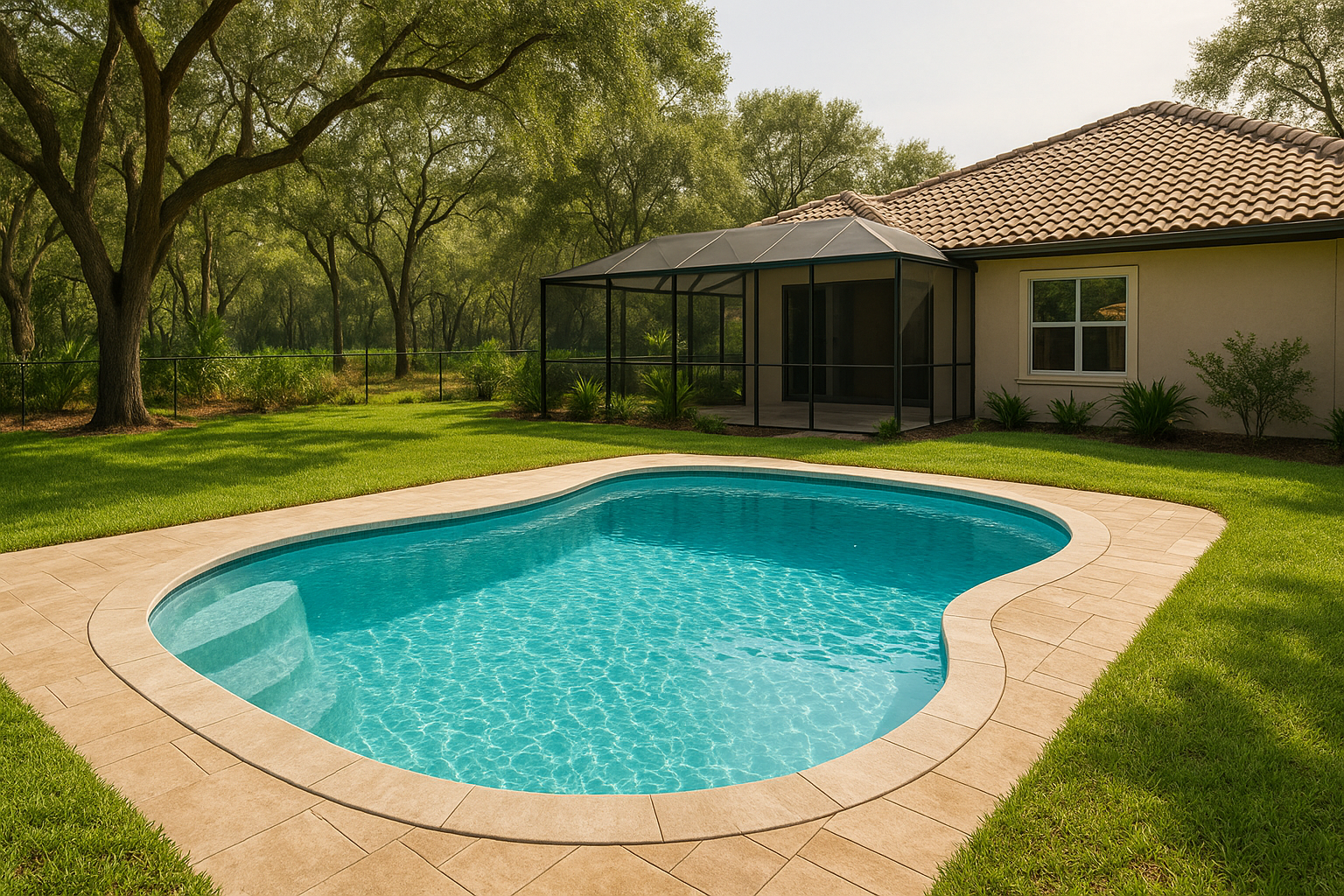
TL;DR: Fiberglass pools install faster, cost less to maintain, and resist algae better than concrete—but they cap out around 16 feet wide and limit your shape options. This guide walks through every major pro and con so Central Florida homeowners can make a confident, informed choice.
A fiberglass pool is one of the most popular inground pool choices in Central Florida—and for good reason. Fast build times, smooth surfaces, and lower long-term upkeep make them a natural fit for the Florida lifestyle. But they are not perfect for every yard or every homeowner.
Below is a straight-talking list of the biggest fiberglass pool pros and cons, grounded in real numbers. Read through, then decide whether fiberglass or custom gunite concrete makes more sense for your backyard. (Need a side-by-side comparison? See our full Fiberglass vs. Concrete Pool Cost breakdown.)
The Pros of a Fiberglass Pool
1. Faster Installation Gets You Swimming Sooner
A fiberglass shell arrives at your property pre-manufactured and drops into the excavated hole as a single finished piece. Because the shell is built offsite in a controlled factory environment, installation typically takes weeks rather than months, allowing you to enjoy your pool sooner with far less backyard disruption.
At R & R Swimming Pools, fiberglass projects typically run 2 to 4 months from contract to final walkthrough—compared to 4 to 6 months for a custom gunite build. For families, retirees, and new-construction buyers who want to be swimming before summer ends, that schedule matters.
2. Dramatically Lower Maintenance Time and Costs
This is the number-one reason Florida homeowners choose fiberglass. The gelcoat surface is smooth and non-porous, which means algae cannot pit and take root the way it does on rough concrete. Studies and industry sources consistently note that fiberglass pools require up to 30% less chlorine than concrete or gunite pools because the inert gelcoat surface does not absorb or react with chlorine.
Annual maintenance costs for fiberglass pools typically run $600 to $1,200 per year—well below the cost for concrete pools with their porous surfaces and heavier chemical demand. Less time scrubbing walls means more time in the water.
3. Better Water Chemistry Stability
Concrete constantly leaches calcium and other minerals into pool water, which raises pH and demands frequent chemical correction. Fiberglass has a naturally neutral pH that does not interfere with water chemistry the way concrete does. Stable chemistry means less guesswork, fewer chemical purchases, and gentler water on swimmers’ eyes and skin.
Fiberglass also pairs exceptionally well with saltwater chlorination systems. The inert gelcoat is not degraded by salt the way some concrete finishes or metal components can be—making a salt system an easy, popular upgrade.
4. Smooth, Comfortable Surface
Anyone who has scraped a knee or elbow on a rough plaster wall knows the difference. A fiberglass gelcoat surface is completely smooth, making it comfortable and safe for children, seniors, and anyone pushing off the walls during a swim. Non-skid texture is applied only where traction matters—steps and ledges—so you get the grip where you need it without roughness everywhere else.
5. Long Lifespan with No Replastering Required
On average, a properly maintained fiberglass pool lasts 25 to 30 years or more without major structural repairs. The shell never needs replastering—a significant cost you completely avoid.
By contrast, concrete pool resurfacing costs $6,000 to $15,000 and is typically needed every 10 to 15 years. In Florida’s punishing heat and UV environment, plaster surfaces can age even faster. Over a 30-year ownership period, those replastering bills add up to a substantial hidden expense that fiberglass owners never face.
R & R Swimming Pools backs every fiberglass shell we install—factory-built by Latham Pool Products, an authorized manufacturer—with a limited lifetime shell warranty.
6. Built-In Features at No Extra Construction Cost
Fiberglass shells come out of the mold with benches, tanning ledges, swim-out steps, and therapy seats already integrated. With a concrete pool, every one of those features is custom-formed and adds labor cost. With fiberglass, you get them included in the shell price—a genuine value advantage for families who want a feature-rich pool without a runaway budget.
7. Energy Efficiency — Fiberglass Insulates Naturally
Fiberglass acts as a natural insulator. Your heater and filter run less frequently compared to concrete or vinyl pools, which translates to real monthly savings on your electric bill. Less pump run-time also extends the life of your equipment.
The Cons of a Fiberglass Pool
8. Size and Width Are Capped at 16 Feet
This is the single biggest limitation of fiberglass, and every honest builder will tell you upfront. Because fiberglass pools ship as one-piece shells by road, most states set an oversized-load limit of 16 feet—capping pool width at that dimension. Most models also max out around 40 feet in length and 8 feet in depth, which rules out true diving pools.
In practical terms: the overwhelming majority of residential backyards in Lake County and Central Florida fit comfortably within those dimensions. But if you want an L-shaped pool, a pool wider than 16 feet, or a depth beyond 8 feet, custom gunite is the right path. Our in-house gunite crew builds fully custom concrete pools with no shape or depth restrictions—see our Fiberglass vs. Gunite guide for a detailed comparison.
9. Fewer Custom Shape Options
Fiberglass pools are manufactured in pre-set molds—rectangles, freeform, Roman, Grecian, and specialty designs like beach-entry and plunge styles. Modern manufacturers offer dozens of models, and the catalog covers the needs of most homeowners. But if your vision is a truly one-of-a-kind shape tailored to an irregularly shaped yard, a fully custom concrete build is the more flexible option.
That said, the shape catalog has grown substantially. As an authorized Latham Pool Products dealer, R & R Swimming Pools offers a wide range of fiberglass models to suit different yard sizes and aesthetic preferences—from compact cocktail pools to spacious family layouts.
10. Higher Upfront Cost Than Vinyl Liner Pools
Fiberglass pools carry a higher upfront price tag than above-ground or vinyl liner pools. The shell itself can range widely depending on model and size, and professional installation adds to that total. However, when you factor in the elimination of replastering, reduced chemical bills, lower energy costs, and no liner replacements, most fiberglass owners come out ahead over a 15- to 20-year period.
Financing makes the upfront cost manageable. R & R Swimming Pools works with Lyon Financial and Viking Capital—two pool-specialist lenders who understand construction timelines. Learn more in our pool financing guide for Florida homeowners.
11. Gelcoat Can Fade or Stain If Chemistry Drifts
Fiberglass is stain-resistant when pool pH stays in the normal 7.2–7.6 range. Let chemistry drift, and mineral staining or discoloration can develop on the gelcoat surface. This is not unique to fiberglass—every pool surface suffers from poor water chemistry—but the fix on a fiberglass pool involves professional refinishing rather than a simple acid wash, which can be more involved. Consistent water testing (weekly in Florida’s heat) prevents this issue almost entirely.
12. Delivery Requires Yard Access
The shell arrives as a single piece on a flatbed truck and must be craned or moved into the backyard. Narrow side-yard gates, low-hanging utility lines, or dense landscaping can complicate delivery and occasionally increase installation cost. R & R Swimming Pools assesses site access during the design consultation so there are no surprises on installation day.
Is a Fiberglass Pool Right for You?
Choose fiberglass if:
- You want to be swimming within a few months, not six or more.
- Low ongoing maintenance is a priority—especially important for retirees and busy families.
- Your yard comfortably fits a pool up to 16 feet wide.
- You value built-in features like benches and tanning ledges without custom construction costs.
- You want a salt system with minimal compatibility concerns.
Consider custom gunite if:
- You need a pool wider than 16 feet or deeper than 8 feet.
- Your design vision requires a truly unique shape or size.
- You have a non-standard yard layout that no standard mold addresses.
R & R Swimming Pools has been building both fiberglass and custom gunite pools in Lake County and Central Florida since 1985—over 1,000 completed projects. We can help you run the numbers on your specific yard, budget, and lifestyle so the choice is clear before you sign anything.
Ready to see what your backyard could look like? Contact R & R Swimming Pools for a free design consultation serving The Villages, Clermont, Mount Dora, Leesburg, Eustis, Lady Lake, Tavares, Groveland, and 30+ surrounding communities.
Recommended Reads
- Is a Pool Worth It in Florida? Honest Pros, Cons, and ROI
- Fiberglass vs. Concrete Pool Cost in Florida: A Side-by-Side Breakdown
- Fiberglass vs. Gunite Pool: Which Is the Better Choice for Florida Homeowners?
