
TL;DR:
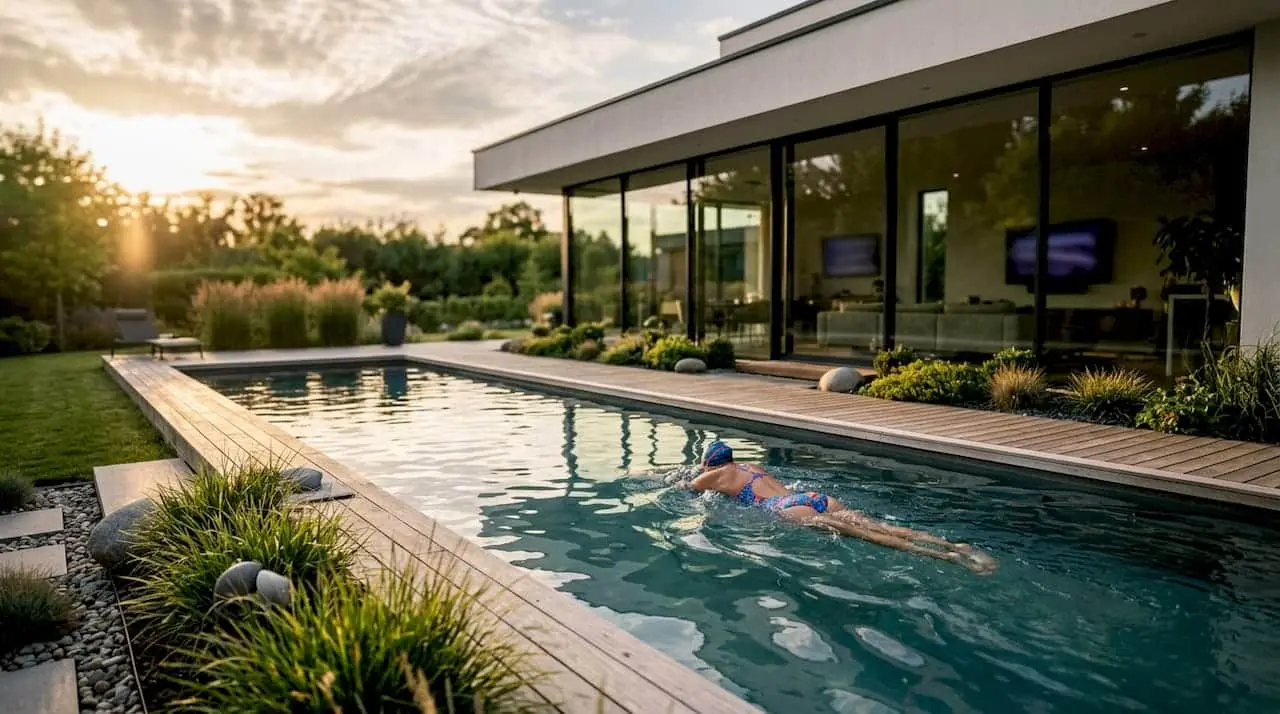
- A lap pool is a long, narrow swimming pool designed mainly for fitness swimming and architectural appeal. It typically measures 40 to 75 feet in length, 8 to 10 feet in width, and has a uniform depth of 4 to 5 feet. Proper design emphasizes function, minimal disruptions, and seamless integration with luxury architecture.
A lap pool is defined as a long, narrow swimming pool built specifically for continuous fitness swimming, and in luxury homes, it doubles as a statement of lifestyle and design intent. The industry standard for a residential lap pool runs 40–75 ft long and 8–10 ft wide, with a uniform depth of 4–5 ft throughout. Unlike a recreational pool, a lap pool prioritizes function: clean lines, consistent geometry, and unobstructed swim lanes. Understanding what is a lap pool in luxury homes means recognizing that these pools serve both athletic performance and architectural ambition at the same time.
What is a lap pool in luxury homes, and how is it defined?
A lap pool is purpose-built for fitness swimming, not casual recreation. The defining characteristic is its elongated shape, which allows a swimmer to complete full strokes from one end to the other without turning every few feet. Randrswimmingpools describes this as the clearest distinction between a lap pool and a standard backyard pool.
The standard lap pool dimensions run 40–75 ft in length, 8–10 ft in width, and 4–5 ft in depth. That depth is intentional. A consistent 4–5 ft depth supports effective swim training while minimizing the energy and chemical costs associated with deeper recreational pools. In luxury settings, these proportions get wrapped in premium materials, refined finishes, and architectural details that make the pool feel like a natural extension of the home.
The term “lap pool” is the recognized industry standard. You may also hear “fitness pool” or “exercise pool” used interchangeably, but lap pool remains the most widely used term among pool contractors and designers. For luxury homeowners, the distinction matters because it shapes every decision from site planning to feature selection.
What are the typical dimensions and design features of luxury lap pools?
Lap pool dimensions follow a consistent pattern, but luxury builds add layers of customization that standard pools never include. The core measurements stay fixed for functional reasons, while the surrounding design choices reflect the homeowner’s taste and the property’s architecture.
Standard dimension benchmarks:
- Length: 40–75 ft, with 45 ft being the most common residential choice
- Width: 8–10 ft, enough for one or two swim lanes
- Depth: 4–5 ft uniform, since deep ends add cost without fitness value
- Outdoor cost range: $30,000–$150,000; indoor installations can exceed $200,000
Luxury design features that complement function:
- Infinity edges that create a visual vanishing point at the pool’s far end
- Smart LED lighting systems with programmable color and intensity settings
- Energy-efficient variable-speed filtration that reduces operating costs
- Integrated spa or hot tub at one end for recovery after swimming
- Travertine, porcelain, or natural stone decking that frames the pool cleanly
Pro Tip: Keep the swim lane completely clear of tanning ledges, lounge steps, or water features. Place those elements at one end or along the pool’s perimeter so they never interrupt stroke mechanics.
Customization in luxury lap pools works best when it stays at the edges. The center of the pool is a performance space. Lighting, sound, and temperature controls add genuine value without touching the swim lane. That principle separates a well-designed luxury lap pool from one that looks impressive but swims poorly.
What benefits do lap pools offer luxury homeowners compared to traditional pools?
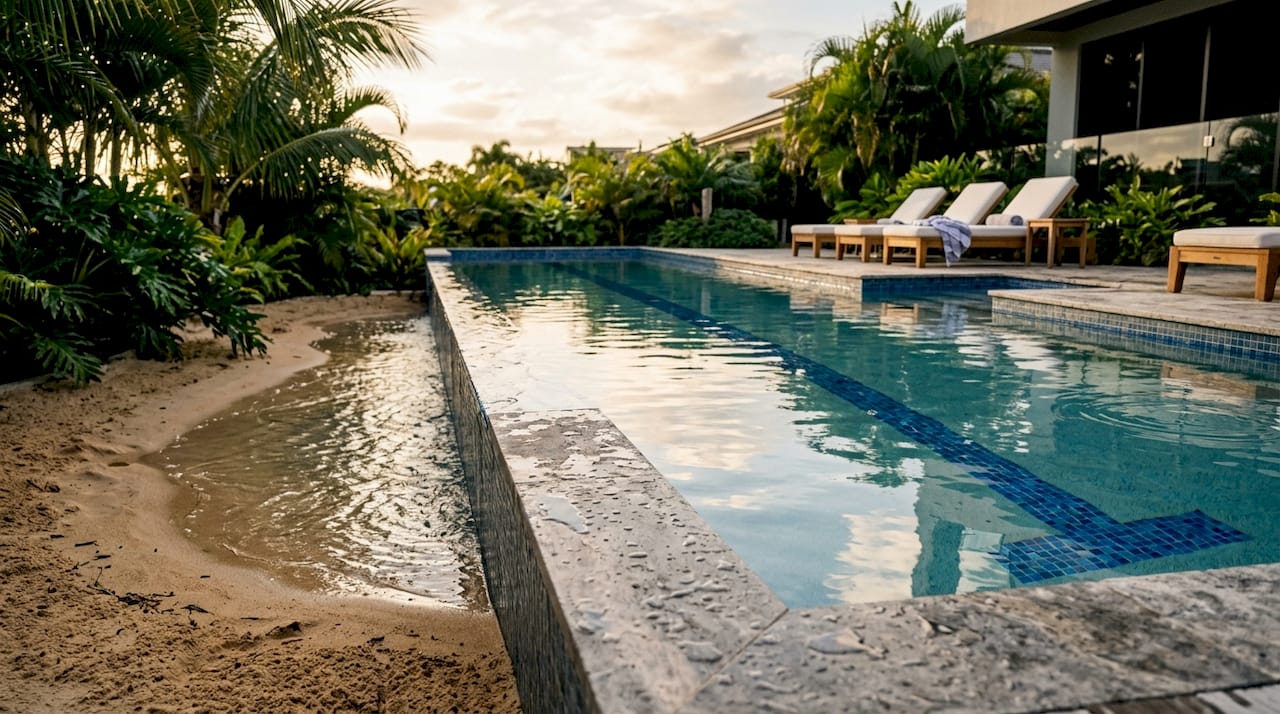
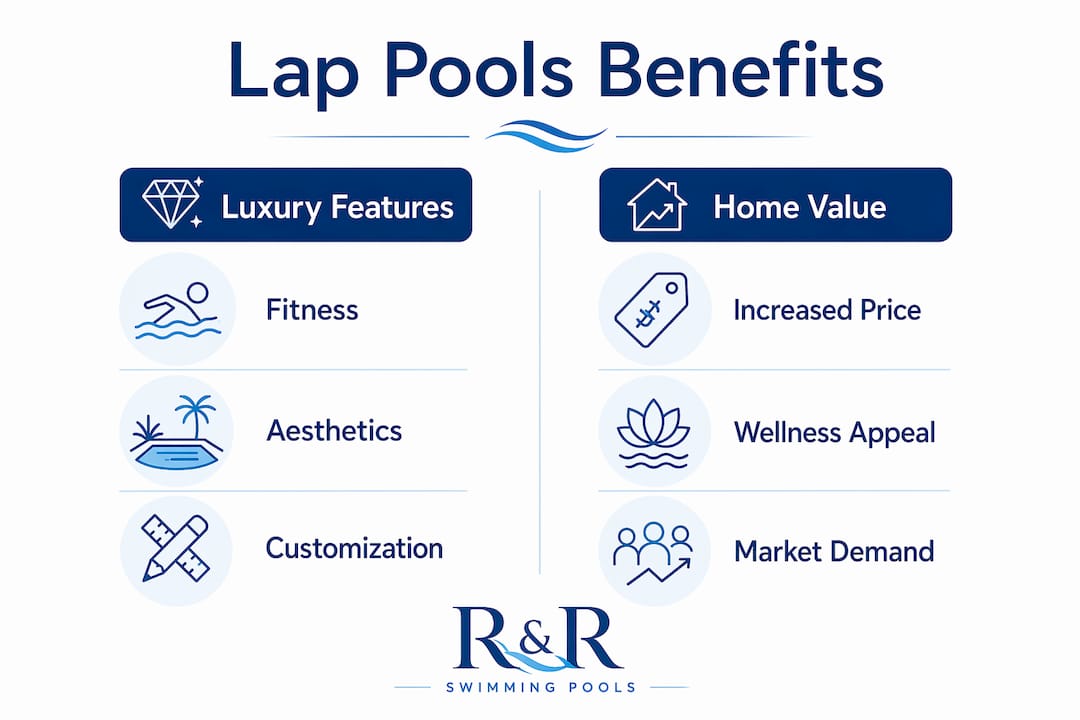
Lap pools deliver four distinct advantages that standard recreational pools cannot match: fitness utility, lower maintenance costs, space efficiency, and measurable property value gains.
- Fitness-centered design. A lap pool supports aquatic exercise, physical therapy, and endurance training in a way that a freeform pool never can. Swimmers complete full strokes without interruption, and the consistent depth supports both swimming and water-based resistance training.
- Lower maintenance costs. Smaller surface area reduces filtration time, chemical use, and evaporation compared to a larger recreational pool. For homeowners who want a pool that earns its keep without demanding constant attention, that efficiency matters.
- Space efficiency. A lap pool fits on narrow lots, along side yards, or in spaces where a traditional pool would never work. The elongated shape uses linear footage rather than square footage, which opens up options on properties where space is genuinely limited.
- Property value increase. Installing a lap pool can raise property value up to 7% in markets where wellness amenities are desirable. That figure reflects buyer demand for homes that support an active lifestyle without requiring a gym membership.
- Energy and environmental savings. Modern lap pools pair well with variable-speed pumps, solar heating, and automated chemical dosing systems. The smaller water volume means those systems work less to maintain water quality, which cuts both energy bills and chemical consumption.
The property value connection is worth examining closely. A lap pool signals a wellness-oriented lifestyle, and that signal resonates with buyers in luxury markets. It is not just a pool. It is a feature that positions the home in a specific category of upscale living.
How do lap pool designs integrate luxury features without compromising functionality?
The most common mistake in luxury lap pool design is treating the pool like a resort amenity rather than a performance space. Experts caution that oversized tanning ledges or lounge steps placed inside the swim lane disrupt stroke mechanics and undermine the pool’s fitness purpose. The fix is straightforward: place every entertainment feature outside the swim corridor.
Luxury elements that work well with lap pool function include:
- Smart temperature control. Automated heating systems maintain water at a consistent temperature, which matters for both comfort and muscle performance during early morning or evening swims.
- Integrated sound systems. Waterproof speakers mounted at the pool’s edge or in surrounding landscaping add atmosphere without touching the water.
- Architectural lighting. Underwater LED strips along the pool’s length create a dramatic visual effect at night while also improving safety and visibility for evening swims.
- Spa integration. A compact spa at one end of the pool provides recovery benefits and adds a social element without narrowing the swim lane.
- Premium decking materials. Travertine and large-format porcelain tiles stay cool underfoot in direct sun, which matters in warm climates like Central Florida.
Pro Tip: Ask your pool designer to show you a top-down plan view of the finished pool before construction begins. If any feature overlaps the swim lane, move it. That one review step prevents the most expensive design mistakes.
The luxury pool features that hold their value over time are the ones that serve both aesthetics and function. A pool that looks stunning but swims poorly will frustrate a fitness-focused homeowner within the first season.
What are the common installation challenges for lap pools in upscale homes?
Installation is where many lap pool projects run into unexpected costs and delays. The design phase feels straightforward, but the physical reality of building a 60 ft pool on a luxury property introduces constraints that require careful planning.
Site accessibility is often a bigger challenge than the design itself. Excavation equipment needs clear access to the dig site, and gated communities, narrow driveways, or mature landscaping can all block that access. When equipment cannot reach the site directly, contractors use smaller machinery or hand-dig sections, which adds time and cost to the project.
Lot size is the second constraint. A 40–75 ft pool requires roughly 50–85 ft of usable lot length once setbacks, deck space, and equipment clearance are factored in. Local zoning codes set minimum distances from property lines, structures, and utilities. Those setbacks vary by municipality, so verifying them early in the planning process prevents costly redesigns.
| Installation factor | Key consideration |
|---|---|
| Lot length required | 50–85 ft total for pool, deck, and setbacks |
| Pool length range | 40–75 ft standard residential |
| Typical depth | 4–5 ft uniform throughout |
| Outdoor cost range | $30,000–$150,000+ |
| Site access | Clear path for excavation equipment required |
| Permitting | Local zoning and construction codes vary by municipality |
Heating and seasonal use planning also shape the installation. Outdoor lap pools in warm climates like Florida operate year-round with minimal heating costs. In cooler regions, homeowners often choose to enclose the pool or invest in a high-efficiency heat pump. For properties where outdoor space is limited, resistance swim jets turn a pool under 30 ft into a stationary swim training environment, which solves the space problem without sacrificing fitness function.
The pool remodeling process for existing properties adds another layer of complexity. Retrofitting a lap pool into a yard that already has landscaping, hardscaping, or an existing pool requires a full site assessment before any design work begins.
Key Takeaways
A lap pool in a luxury home is the most direct way to combine fitness infrastructure with upscale backyard design, and it delivers measurable returns in both lifestyle quality and property value.
| Point | Details |
|---|---|
| Standard dimensions | Lap pools run 40–75 ft long, 8–10 ft wide, and 4–5 ft deep throughout. |
| Property value gain | Lap pools can raise home value up to 7% in wellness-focused luxury markets. |
| Maintenance advantage | Smaller water volume reduces chemical use, filtration time, and energy costs. |
| Design rule | Keep the swim lane clear; place luxury features at the pool’s ends or perimeter. |
| Site planning | Budget 50–85 ft of lot length to accommodate pool, deck, and required setbacks. |
What I’ve learned after 40 years of building luxury pools in Central Florida
Most homeowners come to us with a clear vision of what their lap pool should look like. Fewer have thought through what it should feel like to swim in it every morning. That gap between aesthetics and function is where most design regrets originate.
The homeowners who get the most out of their lap pools are the ones who treat the swim lane as non-negotiable. They add the infinity edge, the integrated spa, the smart lighting. But they never let those features creep into the swim corridor. The pool looks extraordinary and performs exactly as intended.
The second thing I tell every client is to budget for site access before budgeting for finishes. A stunning tile selection means nothing if the excavation costs double because the equipment could not reach the site. Get a site assessment done before you fall in love with a specific design.
Lap pools also tend to age better than freeform recreational pools in luxury markets. Their clean geometry stays current across design trends, and their fitness function never goes out of style. A well-built lap pool from 1995 still looks intentional today. The same cannot be said for every novelty pool shape from that era.
If you are weighing whether a lap pool fits your property and your lifestyle, the answer almost always comes down to how you plan to use your backyard. If fitness and clean design matter to you, a lap pool is the right choice. If you want a social entertainment pool with a beach entry and a water slide, a different design will serve you better. Knowing which one you are building before you break ground saves time, money, and disappointment.
— Results
Randrswimmingpools builds luxury lap pools across Central Florida
R and R Swimming Pools has designed and installed custom inground pools in Central Florida since 1985, and lap pools represent some of the most technically demanding work the team handles. Every project starts with a full site assessment, permitting review, and a design consultation that keeps fitness function at the center of every decision.
The team manages the full process from initial design through final inspection, including excavation logistics, local permit coordination, and material selection for premium finishes. For homeowners ready to move from concept to construction, the Central Florida installation guide walks through every phase of the build in detail. Randrswimmingpools also offers pool financing options for homeowners who want to start the project without waiting.
FAQ
What is the standard length of a lap pool?
A residential lap pool typically runs 40–75 ft long and 8–10 ft wide. The most common choice for luxury homes is 45 ft, which provides enough distance for a full swimming workout.
How much does a luxury lap pool cost?
Outdoor lap pools cost $30,000–$150,000 depending on size, materials, and features. Indoor installations and premium finishes can push the total above $200,000.
Do lap pools increase home value?
Lap pools can raise property value up to 7% in markets where wellness amenities attract buyers. The increase is most consistent in luxury neighborhoods where fitness-oriented features are expected.
Can a lap pool work on a small lot?
Yes. Resistance swim jets turn pools under 30 ft into effective stationary swim training environments, which makes lap swimming possible on lots too small for a full-length pool.
What is the best depth for a lap pool?
A uniform depth of 4–5 ft is the industry standard for lap pools. Deeper sections add construction cost without improving swim performance or safety.
