
TL;DR:
- Florida’s climate exposes pools to intense UV, humidity, storms, and strict safety codes that influence design and maintenance. Proper chemical balance and structural choices tailored to weather conditions help pools stay safe, beautiful, and compliant across all seasons. Active management, professional inspections, and adherence to regulations ensure long-term pool performance in Florida’s challenging environment.
Florida pool weather considerations are defined by the state’s year-round heat, intense UV exposure, high humidity, seasonal storms, and strict safety codes that together shape every decision from pool design to daily maintenance. No other state puts a pool through this much stress across all four seasons. Getting these factors right from the start determines whether your pool stays beautiful and safe for decades or becomes a constant source of repairs and compliance headaches. Randrswimmingpools has built custom inground pools across Central Florida since 1985, and the patterns are clear: homeowners who understand the climate before they build make far better decisions than those who learn by trial and error.
How does Florida’s climate affect pool water chemistry?
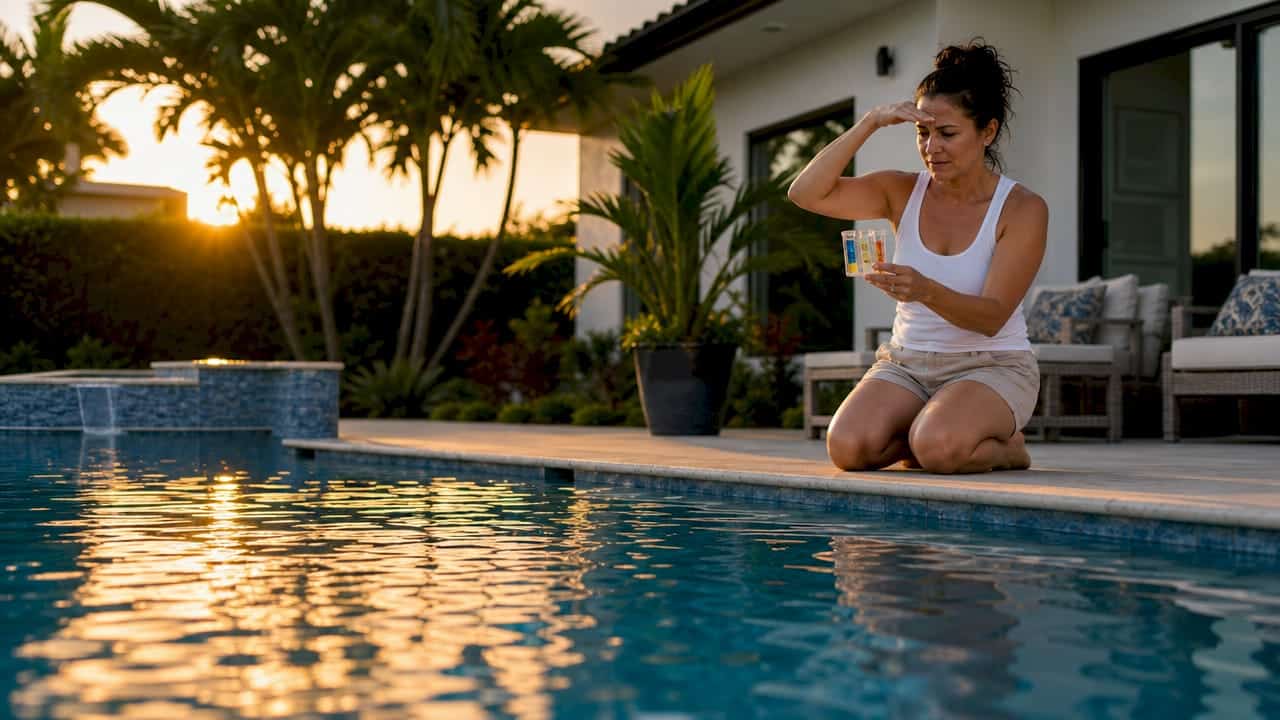
Florida’s extreme UV exposure, high humidity, and heavy rain cause rapid chlorine loss and unstable pH levels that make chemical balance harder to maintain than in most other states. Sunshine alone does not determine pool health. Intense UV, high humidity, and sudden rain create a chemical rollercoaster that demands consistent attention.
Chlorine breaks down fast under direct Florida sunlight. Cyanuric acid, a chlorine stabilizer, slows that breakdown by shielding chlorine molecules from UV degradation. Without it, you can add chlorine in the morning and measure near-zero levels by afternoon on a bright summer day.
Humidity and heat accelerate algae growth. Warm water combined with organic debris from Florida’s lush vegetation creates the perfect conditions for green or black algae to take hold within days of a chemical imbalance. Rain compounds the problem by diluting your pool’s chemicals and shifting pH toward the acidic end of the scale.
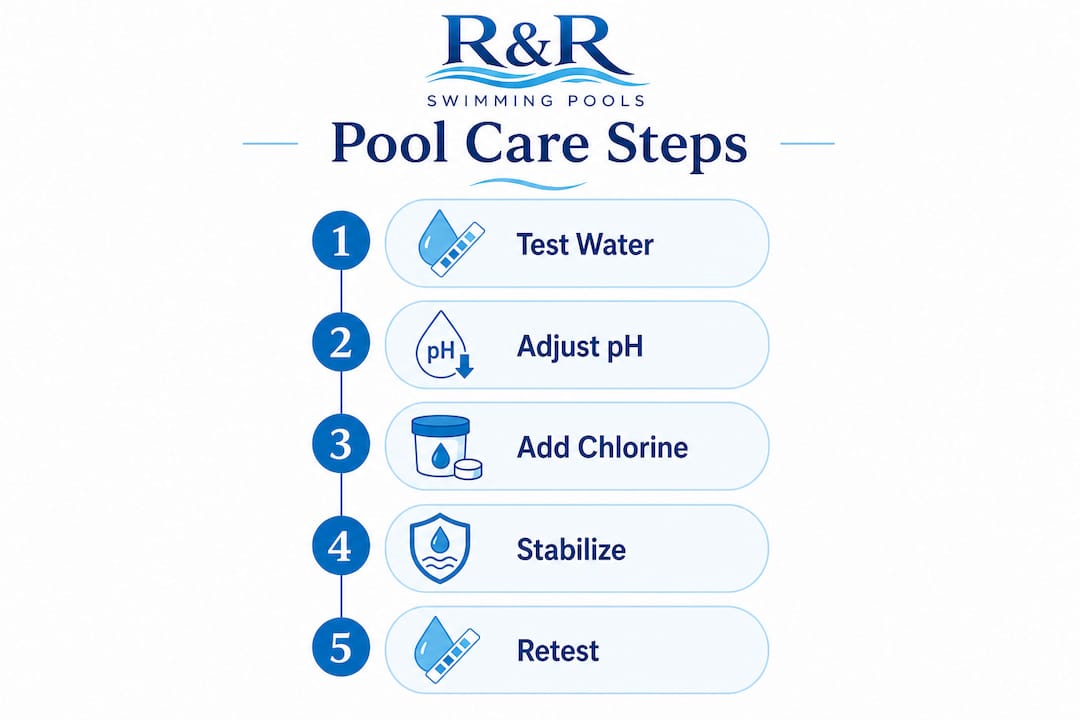
The best defense is a consistent testing and treatment routine:
- Test water 2–3 times per week, not just on weekends, especially during summer
- Use cyanuric acid to protect chlorine from UV degradation
- Increase filter run time during heat and rain cycles, targeting 10–12 hours daily
- Adjust pH and alkalinity after every significant rain event
- Consider a saltwater chlorination system or automated chemical feeder for consistent sanitation without daily manual dosing
Pro Tip: After a heavy Florida rainstorm, test your pool within 24 hours. Rain can drop pH below 7.0 quickly, and acidic water corrodes equipment and irritates skin faster than most homeowners expect.
Professional pool maintenance tailored to Florida’s climate adjusts chemical dosing based on weather forecasts, not just fixed schedules. That proactive approach prevents the algae blooms and equipment corrosion that catch reactive homeowners off guard.
What are the best times for pool use in Florida throughout the year?
Pool water temperature in Florida generally stays comfortable between 78°F and 88°F depending on the season and your location in the state. That range covers the sweet spot where most swimmers feel comfortable without the water feeling either cold or bath-like.
Regional differences matter more than most homeowners realize. South Florida pools stay swimmable virtually every month of the year. Central Florida pools cool noticeably from december through february, with water temperatures sometimes dropping below 70°F on cold nights. North Florida homeowners face the most seasonal variation, with winter months requiring heating to maintain comfortable temperatures.
Here is how pool use typically shifts across the year for Central Florida homeowners:
- March through May: Water warms quickly after winter. Comfortable swimming returns by mid-march, and this is one of the best periods to use your pool before summer heat peaks.
- June through September: Peak swimming season, but afternoon thunderstorms are nearly daily. Morning swims before noon avoid both the storms and the most intense UV hours.
- October and November: Water stays warm from summer heat retention. October is arguably the best month for pool use in Central Florida: warm water, lower humidity, and fewer storms.
- December through February: Cooler nights drop water temperatures. A pool heater or solar cover extends comfortable swimming through these months without large energy bills.
Pool covers serve double duty in Florida. In winter, they retain heat overnight. In summer, they reduce evaporation, which can be significant given Florida’s heat. A quality solar cover can raise water temperature by several degrees on cool nights while cutting chemical loss from evaporation.
Which design and structural factors matter most for Florida pools?
Florida pool construction must account for hurricane wind loads, coastal salt air, shifting sandy soils, and flood zone requirements that do not apply in most other states. These are not optional upgrades. They are the difference between a pool that survives a major storm and one that requires expensive structural repairs.
Material choice is the first major decision. Fiberglass pools offer superior resistance to salt air corrosion and algae buildup compared to concrete in Florida’s coastal climate. Concrete pools, by contrast, offer greater design flexibility and can be customized to any shape or size. Both materials work well in Florida when built correctly. The right choice depends on your location, budget, and design priorities.
Key structural and design considerations for Florida pool installations include:
- Hurricane wind load compliance: Miami-Dade and Broward counties fall under High-Velocity Hurricane Zone standards, requiring materials with Miami-Dade Notice of Acceptance (NOA) ratings and engineering for wind loads between 130 and 180 mph
- Drainage and flood zone planning: Pools in FEMA flood zones require elevation certificates and specific drainage designs to prevent hydrostatic pressure from lifting the pool shell out of the ground
- Corrosion-resistant equipment: Salt air degrades standard steel and aluminum components. Specify marine-grade or polymer fittings for any pool within several miles of the coast
- UV-resistant finishes: Pool plaster and deck coatings fade faster under Florida’s UV index. Quartz or pebble finishes outlast standard white plaster by years in direct sun
- Soil assessment: Florida’s sandy soils shift more than clay-based soils in other states. A proper soil compaction report before excavation prevents settling cracks in the pool shell
The Central Florida pool installation process accounts for all of these factors through permit drawings, engineering reviews, and inspection stages. Skipping any step creates liability and structural risk that shows up years later.
What Florida pool safety codes must homeowners follow?
Florida law requires residential pool barriers at least 48 inches high with self-closing, self-latching gates that open outward away from the pool. This is not a local ordinance. It is state law under Florida Statute 515.29, and it applies to every residential pool in the state.
Gate latch placement is where many homeowners get tripped up. The latch release mechanism must be located at least 54 inches above the ground or no more than 3 inches below the top of the gate. That height keeps young children from reaching the latch even if they can grip the fence. Self-closing mechanisms must return the gate to the closed and latched position without assistance every time.
Safety barrier failures are one of the most common causes of pool permit rejections during local inspections in Florida. A barrier that is 47 inches instead of 48 inches fails. A gate that swings inward fails. A latch at the wrong height fails. Each failure delays your certificate of occupancy and your first swim.
Additional compliance points every homeowner should verify:
- Setback distances vary by county. Check your local zoning code before finalizing pool placement on your site plan
- Health Department approval is required for properties on septic systems before a pool permit is issued
- Barrier materials must meet local wind load requirements in hurricane zones, not just height requirements
- Alarm systems on doors leading from the house to the pool area satisfy one of Florida’s four approved barrier methods
The Florida pool barrier laws page from Randrswimmingpools covers each compliance requirement in detail. Understanding these rules before you finalize your design prevents costly last-minute changes during the permit review process.
How should Florida homeowners prepare pools for storms and severe weather?
Storm preparation is a recurring responsibility for every Florida pool owner, not a one-time event. The Atlantic hurricane season runs from june through november, and Central Florida also faces severe thunderstorms, flooding rains, and occasional cold snaps throughout the year.
Follow these steps before and after any major storm:
- Secure all loose equipment. Remove pool toys, floats, and furniture from the pool area. Flying debris causes more pool damage during storms than wind alone.
- Do not drain your pool before a storm. An empty pool shell can float out of the ground if the water table rises. Keep the pool full to counteract hydrostatic pressure.
- Adjust chemical levels before the storm hits. Raise chlorine slightly above normal range. Rain will dilute it, and starting higher gives you a buffer.
- Turn off and protect electrical equipment. Shut off the pump, heater, and automation systems. Cover electrical panels if flooding is possible.
- After the storm, test water before swimming. Post-storm maintenance includes testing pH and chlorine, removing debris, inspecting the pool shell for cracks, and checking all equipment connections before restarting the system.
Pro Tip: Keep a storm kit near your pool equipment pad: a waterproof bag with test strips, a bottle of chlorine shock, pH increaser, and pH decreaser. After a storm, you can test and treat within minutes instead of waiting for a store run.
Scheduling regular professional inspections after storm season ends catches hidden damage before it becomes a major repair. Equipment corrosion, hairline cracks in the shell, and shifted coping stones are all easier and cheaper to fix when caught early.
Key Takeaways
Florida pool ownership requires active management of climate, chemistry, safety codes, and storm readiness to protect your investment and your family year-round.
| Point | Details |
|---|---|
| Chemical testing frequency | Test pool water 2–3 times weekly and adjust after every rain event to prevent algae and equipment damage. |
| Seasonal swim patterns | Central Florida pools are most comfortable from march through november; heating extends the season through winter months. |
| Safety barrier compliance | Florida law requires 48-inch minimum barriers with self-closing, self-latching gates and latch height of at least 54 inches. |
| Storm preparation | Keep pools full before storms, adjust chemicals in advance, and test water thoroughly before swimming after any major weather event. |
| Material and design choices | Match pool materials and structural engineering to your location’s wind zone, soil type, and proximity to salt air. |
What I’ve learned after decades of Florida pool installations
The homeowners who get the most out of their pools are not the ones with the biggest budgets. They are the ones who treat pool ownership as an ongoing relationship with Florida’s climate rather than a one-time purchase. That shift in mindset changes everything.
The most common misunderstanding I see is that a well-built pool takes care of itself. It does not. Florida’s UV index, humidity, and storm frequency create conditions that require consistent attention. Automated systems help enormously, but they do not replace regular testing and seasonal adjustments.
The second misunderstanding is that code compliance is just a bureaucratic hurdle. Every safety barrier requirement in F.S. 515.29 exists because of documented drowning incidents involving young children. A gate that latches correctly is not a technicality. It is the reason a child does not access the pool unsupervised.
My honest recommendation: invest in quality equipment from the start, build to the correct structural standards for your wind zone, and schedule professional inspections at least twice a year. The homeowners who cut corners on installation or skip maintenance cycles spend far more money over ten years than those who do it right the first time.
— Results
Randrswimmingpools: built for Florida’s climate from the ground up
Randrswimmingpools has designed and installed custom inground pools across Central Florida since 1985. That experience covers every weather pattern, code update, and soil condition the region produces.
Every pool R and R Swimming Pools builds is engineered for Florida’s specific climate demands: UV-resistant finishes, hurricane-compliant structures, proper drainage planning, and full barrier compliance from day one. Whether you are planning a new installation or renovating an existing pool, the inground pool installation guide walks you through every step of the process with Central Florida conditions built into every recommendation. For homeowners weighing design options, the expert guide to inground pools covers material choices, feature options, and what to expect at each stage of construction. Contact Randrswimmingpools for a free quote and get a pool designed to perform in Florida’s climate for decades.
FAQ
What is the minimum pool barrier height required in Florida?
Florida law under F.S. 515.29 requires residential pool barriers to be at least 48 inches high. Gates must be self-closing, self-latching, and open outward away from the pool.
How often should I test my Florida pool water?
Test pool water 2–3 times per week during normal conditions. Test immediately after any significant rain event, since rain dilutes chemicals and shifts pH quickly.
What is the best time of year to swim in a Central Florida pool?
October is widely considered the best month: water stays warm from summer, humidity drops, and afternoon storms become less frequent. March through november covers the full comfortable swim season.
Do Florida pools need special construction for hurricanes?
Pools in Miami-Dade and Broward counties must meet High-Velocity Hurricane Zone standards, including wind load engineering for 130–180 mph winds and Miami-Dade NOA-rated materials. Other Florida counties follow Florida Building Code wind zone requirements based on location.
Should I drain my pool before a hurricane?
No. Draining a pool before a storm increases the risk of the shell floating out of the ground as the water table rises. Keep the pool full and adjust chemical levels upward before the storm arrives.
