
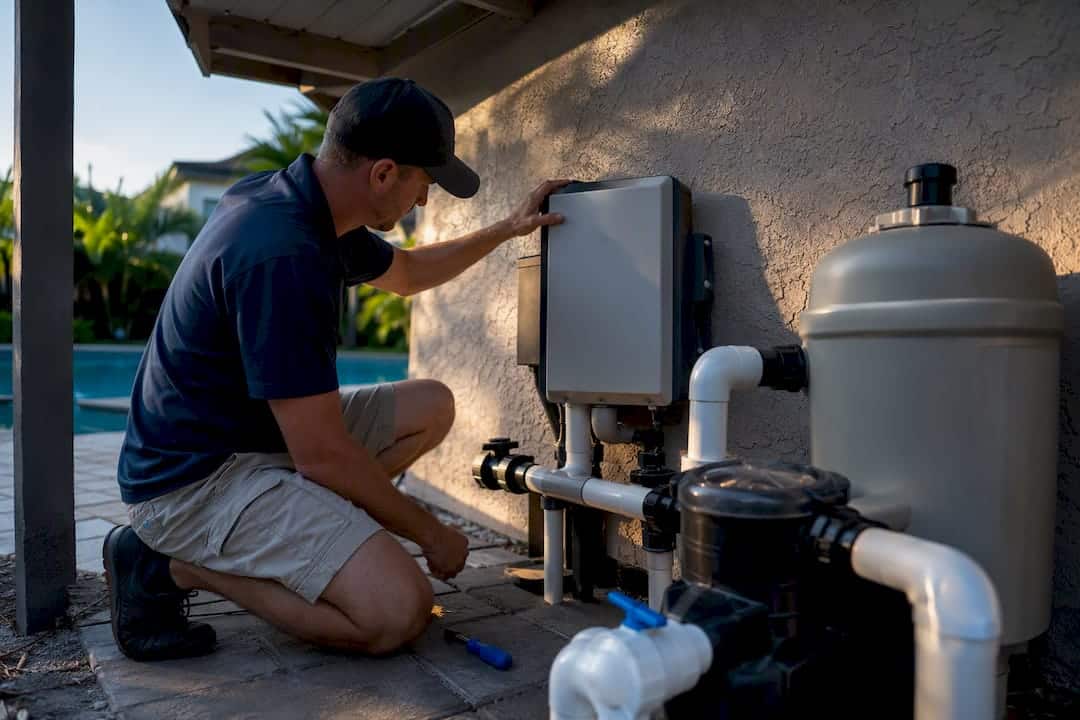
Most homeowners get real, day-to-day value from pool automation for $500 to $3,000 by upgrading one or two components. Fully integrated panels that control everything from heat to chemistry run $3,000 to $10,000 or more installed. Start with a smart timer or a variable-speed pump controller. Skip the whole-panel purchase unless you’re building new or juggling five-plus features.
TL;DR:
- Retrofitting existing pools typically increases automation costs due to outdated equipment, while new builds allow cheaper conduit installation and wiring.
- A basic timer costs less than $200 and can save up to 40% on pump energy, providing quick payback within one summer in warm climates.
- Labor costs vary widely based on scope, with component replacement, trenching, or cramped equipment pads adding significantly to installation time and expenses.
- Regional climate, permit requirements, and existing electrical capacity substantially influence overall automation pricing and future maintenance costs.
Table of Contents
- How Much Does Pool Automation Cost, and What Drives the Price?
- What Are the Installed Cost Tiers for Pool Automation?
- How Do Installers Actually Price the Job?
- What Energy Savings Can You Expect, and When Does It Pay Back?
- What Should You Ask Before You Sign a Pool Automation Quote?
- Does Climate or Region Change Pool Automation Cost?
- Is a DIY Automation Kit Cheaper Than Professional Installation?
- What Does Smart Home Integration Add to the Price?
- What Hidden Costs Should You Budget For?
- What Actually Matters: Buy the High-ROI Piece First
- How Do You Get a Pool Automation Quote from Randrswimmingpools?
- Sources
How Much Does Pool Automation Cost, and What Drives the Price?
Pool automation cost swings wildly because “automation” covers everything from a $100 mechanical timer to a touchscreen panel that runs your heater, lights, salt cell, and cover from your phone. The system controls some combination of pump speed, lighting scenes, water chemistry, valves for spa or waterfall features, and heating. What you already own decides half your budget before an installer ever shows up.
Retrofitting an existing pool almost always costs more than wiring automation into a new build. Older single-speed pumps, gas heaters without digital interfaces, and equipment pads crammed against a fence line all add labor hours a new install never sees. New construction lets an electrician run conduit while the deck is still open, which is dramatically cheaper than trenching through finished concrete or pavers later.
A few factors move the price more than anything else:
- Number of functions controlled. One relay for pump scheduling costs far less than a panel juggling six devices.
- Equipment compatibility. Pairing a new controller with a decade-old heater sometimes requires an adapter kit or a full heater swap.
- Wiring and conduit runs. Distance from the equipment pad to the breaker panel and any buried-line work adds hours fast.
- Smart-home integration. Linking to Alexa, Google Home, or a whole-house system adds setup time and occasionally a bridge device.
Homeowners weighing pool automation pros and cons usually find the decision comes down to how many of those four variables apply to their backyard.
What Are the Installed Cost Tiers for Pool Automation?
Think of pool automation cost in three tiers rather than one number, because a $150 timer and a $12,000 estate panel both technically qualify as “automation.”
Tier 1 is a basic timer or single-function controller. This handles pump scheduling and maybe one light circuit, typically installed for a low cost in parts, with straightforward labor on top. Tier 2 adds a variable-speed pump paired with a smart controller, plus multi-function integration such as lighting and basic chemistry feedback. Installed, this tier commonly lands between $1,500 and $3,000, according to Modern Pool Tools’ cost breakdown. Tier 3 is full automation: a central panel commanding heat, valves, lighting scenes, chemistry, and remote app access. Expect $3,000 to $10,000+ for a standard residential install, and in high-end markets, panel-based systems with multi-feature integration can reach $4,200 to $14,500, with estate-grade setups climbing to $14,500 to $32,500 according to luxury-market pricing data out of Scottsdale.
| Tier | What it controls | Typical installed cost |
|---|---|---|
| Basic timer / single function | Pump on/off schedule, one circuit | $100 to $200 |
| Mid-range (VS pump + controller) | Pump speed, lighting, basic chemistry feedback | $1,500 to $3,000 |
| Full automation panel | Heat, valves, lighting scenes, chemistry, remote app | $3,000 to $10,000+ |
| Estate-grade integrated system | Multi-feature, whole-property integration | $14,500 to $32,500 |
Certain add-ons sit outside these tiers because they’re specialty equipment, not core control logic:
- Automatic chemical dosing systems typically run $1,500 to $4,000 installed.
- Motorized pool covers cost $8,000 to $15,000, offsetting the price with real safety and evaporation-reduction benefits, per Modern Pool Tools.
- Full home integration (tying the pool into a whole-house smart system) adds setup complexity that can push a Tier 3 quote several hundred dollars higher.
For a deeper technical walkthrough of what each tier actually does mechanically, see this pool automation systems explainer.
How Do Installers Actually Price the Job?
Labor is where two quotes for the “same” job can differ by thousands, and it’s usually because installers are pricing different things.
Some contractors quote flat-rate by job type. Others bill hourly plus a trip fee, especially for smaller retrofit jobs that don’t justify a fixed price. Industry pricing data shows automation installs commonly run from under ten to over sixty hours depending on scope, and pros typically build in a target margin of a couple thousand dollars on a clean install, according to PoolDial’s 2026 labor-rate data. That margin covers commissioning time, troubleshooting, and callback risk, not just the hours spent running wire.
A handful of things reliably add time and cost to the labor line:
- Replacing an incompatible heater or pump instead of just wiring the new controller to it.
- Trenching new conduit because the existing wiring can’t carry a smart controller’s signal.
- Cramped equipment pads that slow down access and force awkward mounting.
- Retrofitting valves for water features that weren’t automated originally.
A sample line-item quote for a Tier 2 install might break down like this:
- Variable-speed pump and controller hardware: $900 to $1,400
- Electrical and conduit labor: $400 to $900
- Commissioning, app setup, and homeowner training: $200 to $500
- Trip fee or permit pull (if applicable): $50 to $150
Compare any quote you receive against that structure. If an installer’s number is a single lump figure with no breakdown, ask them to itemize it before you sign anything.
What Energy Savings Can You Expect, and When Does It Pay Back?
A basic timer alone can cut pump runtime enough to save 30 to 40% on pump-related energy costs compared with running a pump continuously at high speed, according to Modern Pool Tools’ savings data. That’s the single highest-leverage dollar you can spend on pool automation cost, because a $150 timer often pays for itself within one summer of reduced runtime.
Variable-speed pumps paired with a scheduling controller add a further fraction of circulation-energy savings on top of that, and considerably more when compared against an old single-speed pump running full blast around the clock. If your pump is more than eight years old, the math tends to favor a pump swap over almost any other automation dollar you could spend, a point covered in more detail in why upgrading your pool pump matters.
Here’s how the payback typically shakes out:
- A $150 timer saving 30 to 40% on pump energy often pays back inside one cooling season for a typical Florida pool.
- A $1,500 to $3,000 variable-speed pump and controller package usually pays back over two to four years, depending on local electricity rates and pump size.
- A full $8,000+ automation panel rarely pays for itself through energy savings alone. Its value is convenience, remote monitoring, and integrated safety features, not the electric bill.
Ongoing costs matter too. Budget for occasional sensor replacement and occasional controller troubleshooting, which most owners handle through their installer’s service plan. If your only goal is cutting utility bills, a timer and a pump upgrade will outperform a full panel on cost-per-dollar-saved every time. For a fuller cost-versus-benefit read, pool automation pros and cons walks through more scenarios.
What Should You Ask Before You Sign a Pool Automation Quote?
Getting three quotes for the same job only works if you’re comparing the same scope. Ask every installer these questions before you commit:
- Is my existing pump, heater, and valve setup compatible with this controller, or does something need replacing?
- What’s covered under warranty, and for how long, on both hardware and labor?
- Does the quote include commissioning and a walkthrough of the app, or is that billed separately?
- What happens if the controller loses Wi-Fi or the app stops syncing? Is troubleshooting included or hourly?
When you’re comparing numbers side by side, separate the quote into equipment cost, labor cost, materials (conduit, wire, mounting hardware), and markup. A quote that’s suspiciously low on equipment but vague on labor hours is a red flag. Demand a written commissioning guarantee, meaning the installer verifies every function works before they leave.
Pro Tip: If you already have resurfacing, pump replacement, or a heater swap on the calendar, ask your installer to bundle the automation work into that same visit. Sharing equipment-pad access and truck-roll time across jobs commonly saves hundreds to thousands of dollars versus scheduling automation as a separate project.
Does Climate or Region Change Pool Automation Cost?
Pool automation cost isn’t uniform across the country, and climate is a bigger factor than most homeowners expect. In year-round warm climates like Central Florida, pumps and heaters run more total hours annually, which means automation’s energy-savings math pays back faster here than in a region where the pool sits covered for five months.
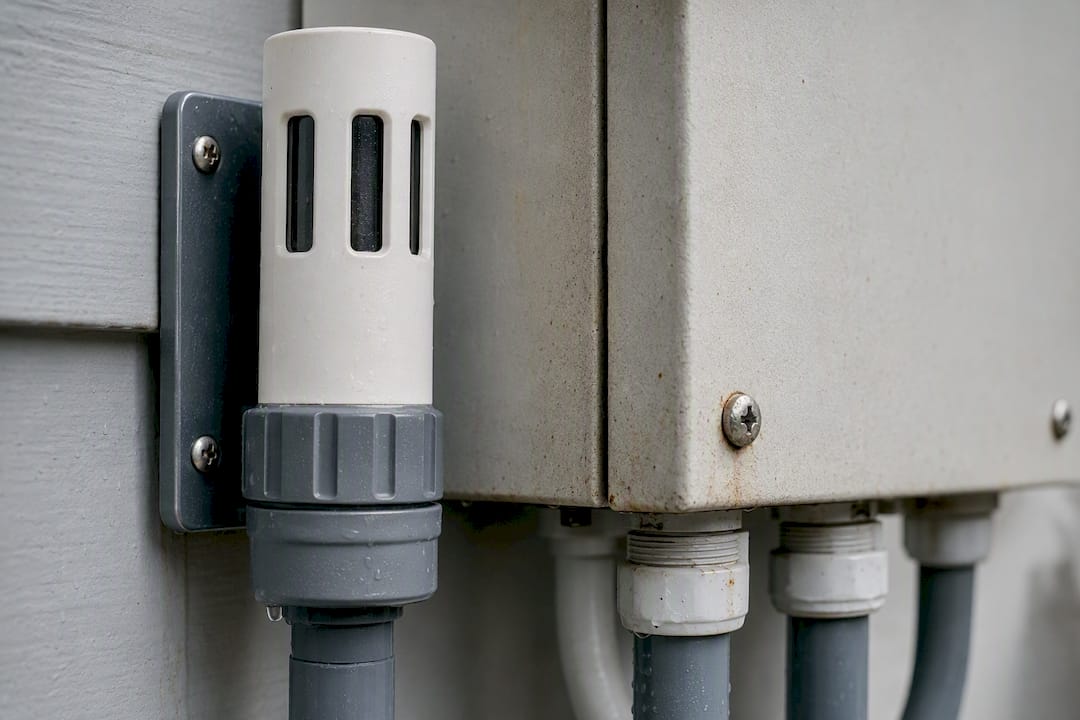
Installation costs themselves shift with regional labor rates and permit requirements. Areas with stricter electrical code enforcement around pool equipment sometimes require additional grounding or bonding work when a new controller gets wired in, adding a line item that wouldn’t show up in a looser jurisdiction. Coastal and high-humidity regions also see faster wear on control panels and sensors, since salt air and moisture degrade electronics quicker than in a dry climate, which can shorten the practical replacement cycle on sensitive components.
Labor availability plays a role too. Markets with more established pool-service infrastructure, like much of Florida, tend to have more competitive labor pricing simply because more contractors specialize in this exact work. In markets where pool ownership is less common, you may pay a premium simply because fewer installers have the specific experience automation retrofits require.
Is a DIY Automation Kit Cheaper Than Professional Installation?
DIY kits look tempting on price. A basic Wi-Fi-enabled timer or single-relay controller kit can run $80 to $250 retail, and plenty of homeowners install these themselves in an afternoon with basic electrical comfort.
The gap widens fast once you move past the simplest tier. Multi-function DIY kits that promise to control pump speed, lighting, and a valve or two often cost $300 to $800 in hardware, but they assume compatible existing wiring and equipment, an assumption that fails more often than kit marketing suggests. When a DIY install goes wrong, whether from a wiring mismatch, a fried relay, or a controller that never properly syncs with an aging pump, the cost of hiring a professional to fix it usually exceeds what professional installation would have cost from the start.
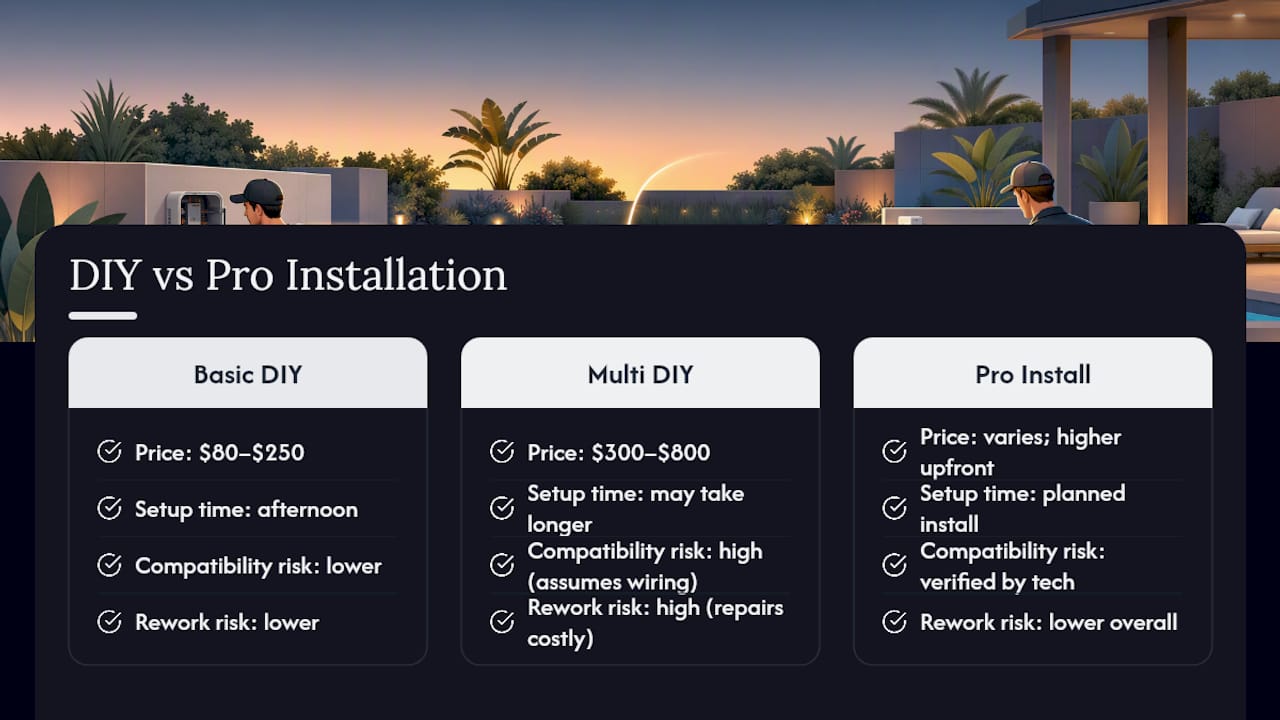
Professional installation also includes something no kit box provides: commissioning. That’s the step where a technician verifies every function actually works together before calling the job done. DIY installers frequently discover compatibility issues only after the system is already wired in, at which point a service call to diagnose and correct the problem often costs more per hour than a planned installation would have. For anything beyond a basic single-function timer, professional installation tends to be the more cost-effective path once you count the real risk of rework.
What Does Smart Home Integration Add to the Price?
Linking your pool controller to Alexa, Google Home, or a broader smart-home hub is one of the more variable line items in a pool automation quote. Basic app control, meaning a phone app that talks directly to your pool’s own controller, is usually included in the base cost of a Tier 2 or Tier 3 system with no extra charge.
True smart-home integration, where your pool responds to voice commands or shows up inside a unified home dashboard alongside your thermostat and lights, is a different job. Some controllers integrate natively and only need a software step during commissioning, adding little to the invoice. Others require a bridge device or hub, typically $50 to $150 in hardware plus additional setup labor, especially if your home network needs a stronger Wi-Fi signal reaching the equipment pad.
Weak Wi-Fi signal at the pool equipment pad is one of the most common integration cost surprises. Equipment pads are often tucked against the house or behind a fence, exactly where router signal drops off. A mesh extender or dedicated access point near the pad, usually another $100 to $300, sometimes becomes a mandatory add to make remote and voice control actually reliable.
What Hidden Costs Should You Budget For?
The quoted installed price rarely covers everything you’ll actually pay. Permit fees for electrical work around pool equipment vary by municipality, but budgeting an extra $50 to $250 for permitting and inspection is reasonable in most areas that require it for new circuits or panel upgrades.
System upgrades are the second surprise. If your electrical panel is already near capacity, adding a new automation controller might require a subpanel or breaker upgrade, easily adding several hundred dollars beyond the base automation quote. Older pools sometimes need bonding or grounding work brought up to current code as part of any electrical modification, which inspectors will flag during permitting.
Troubleshooting fees after the warranty period are worth asking about upfront. Controllers that lose sync with an app, sensors that drift out of calibration, or firmware updates that require an in-person visit all generate service calls down the line. Ask whether your installer offers a flat-rate service visit or bills hourly for post-warranty troubleshooting, since that answer affects your real long-term pool automation cost far more than the sticker price on installation day.
What Actually Matters: Buy the High-ROI Piece First
Most guidance on pool automation cost buries the real answer under a pile of feature comparisons. The honest take: a full panel is overkill for the majority of homeowners, and the industry pushes it because it’s the higher-margin sale, not because most backyards need it.
The upgrade order that actually pays off is timer first, variable-speed pump second, chemistry monitoring third, and full panel integration only in select cases such as new builds or when controlling many functions. That sequence follows the money, not the marketing.
Where conventional advice falls short is treating automation as one purchase decision. It’s really three or four separate decisions, each with its own payback timeline. Decades of retrofit work across Central Florida backyards show the same pattern again and again: the homeowners happiest with their investment bought incrementally and let each upgrade prove its value before adding the next. Start small, add later. It’s a better financial strategy than most installers will volunteer.
— Results
How Do You Get a Pool Automation Quote from Randrswimmingpools?
If you’ve read this far, you already know pool automation cost depends entirely on what you have now and what you actually need controlled. That’s exactly the gap a line-item quote closes. Experienced pool contractors have been building and retrofitting pools in Central Florida for decades, meaning equipment recommendations can come with practical knowledge of pumps, heaters, and panels that pair well together in this climate, rather than generic parts lists.
A professional quote typically includes specific equipment recommendations based on your existing setup, a line-item cost breakdown so you can see what you’re paying for labor versus hardware, and a realistic installation timeline. If you’re weighing a bigger renovation alongside automation, bundling the two often reduces total labor cost since the equipment pad only gets opened up once.
Start with a custom pool installation guide to see how automation fits into a broader renovation, or go ahead and request your line-item quote today to find out exactly what upgrading your setup will cost.
Sources
- What Pool Pros Actually Charge for Equipment Installs in 2026 | PoolDial
- Pool Automation Systems Explained: What They Do, Cost, and Whether You Need One – Modern Pool Tools
- Pool Automation Controller Cost for Scottsdale Luxury Pools (2026)